Loading...
Darius III vs Psamtik III
Psamtik III leads by 1.4 pts · 2 figures compared
…
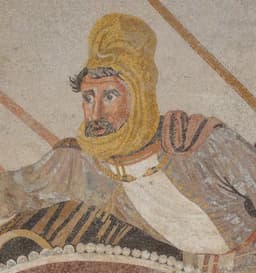
Darius III
Emperor · Ancient
40.8Total

Psamtik III
Emperor · Ancient
42.2Total
Basic Information
Born
-380
-526
Died
-330
-525
Era
Ancient
Ancient
Nationality
Persia
Egypt
Occupation
Emperor
Emperor
Civilization
Middle Eastern
Middle Eastern
Score Comparison
Military (10%)
50.0
47.5
Political (20%)
25.0
27.9
Influence (20%)
47.9
45.5
Legacy (20%)
43.3
34.2
Leadership (15%)
38.1
55.3
Strategy (15%)
35.7
50.0
TOTAL
40.8
42.2
Darius III — Complete Timeline
333 BC
Battle of IssusWar◆ Major
Darius III commanded the Persian army against Alexander the Great at Issus in Cilicia. Alexander's forces defeated the larger Persian army, and Darius fled the battlefield, leaving his family and baggage train to be captured.
Wars of AlexanderBattlePersian Empire
Impact: global
331 BC
Battle of GaugamelaWar
Darius III assembled a massive army from across the empire to confront Alexander near Arbela. Alexander's tactical brilliance led to a decisive Persian defeat, and Darius again fled the field, effectively ending Achaemenid resistance.
Wars of AlexanderBattlePersian Empire
Impact: global
330 BC
Loss of the Persian Capital PersepolisWar◆ Major
Alexander the Great captured and sacked Persepolis, the ceremonial capital of the Achaemenid Empire. The palace complex was burned, symbolizing the end of Persian imperial power and the transfer of hegemony to Macedonia.
Wars of AlexanderSackPersepolis
Impact: globaldestructive
Flight and Death of Darius IIIPolitical Action◆ Major
After Gaugamela, Darius fled eastward through Media and Parthia. He was deposed and imprisoned by his own satrap Bessus, then murdered by Bessus's followers near Hecatompylos. Alexander later gave Darius a royal burial at Persepolis.
DeathSuccessionAchaemenid Empire
Impact: globaltragic
Psamtik III — Complete Timeline
526 BC
Short reign of six monthsPolitical Action
Psamtik III ruled for only six months before the Persian invasion. His brief reign was marked by the looming threat of the Persian army. He had little time to implement any significant policies or reforms. His reign is primarily remembered for its abrupt end with the Persian conquest.
Brief ReignInvasionCrisis
Impact: nationaltragic
525 BC
Battle of Pelusium (525 BC)War◆ Major
Psamtik III's Egyptian army was defeated by the Persian forces under Cambyses II at Pelusium. The Persians used a strategy of placing cats and other sacred animals in front of their lines, causing Egyptian archers to hesitate. This defeat led to the fall of Egypt to the Achaemenid Empire.
PersiaConquestBattle
Impact: globaltragic
Capture and execution by PersiansPolitical Action◆ Major
After the defeat at Pelusium, Psamtik III was captured by the Persians. He was initially treated with respect but later executed for plotting a rebellion. His death marked the end of the 26th dynasty and the beginning of Persian rule over Egypt, which lasted for over a century.
ExecutionPersiaEnd of Dynasty
Impact: globaltragic
Expert Analysis
Origins
Darius III, born in 380 BC as Artashata, was a member of the Achaemenid royal family but not in the direct line of succession. His father was a son of Ostanes, a brother of King Artaxerxes II. Before becoming king, Darius served as a satrap of Armenia and was known for his physical strength. He was not a military commander before his accession. In contrast, Psamtik III, whose Egyptian name was Ankhkaenre, was the son of Pharaoh Amasis II. He was born around 550 BC and inherited a stable and prosperous Egypt, the last independent native dynasty before Persian conquest. Psamtik's reign was extremely short, lasting only six months in 526–525 BC. His father had prepared defenses against the Persian threat but died before the invasion.
Rise to Power
Darius III came to the throne in 336 BC after the death of Artaxerxes III, who had been poisoned by the eunuch Bagoas. Bagoas then placed Artaxerxes IV Arses on the throne but later poisoned him and elevated Darius. Darius quickly forced Bagoas to drink poison himself, securing his rule. His rise was marked by court intrigue and assassination. By contrast, Psamtik III inherited the throne peacefully after his father Amasis II's natural death. He faced no internal rivals, but the external threat of Cambyses II's Persian army was imminent. Psamtik's rise was straightforward but doomed from the start.
Leadership & Governance
Darius III ruled the largest empire of the time, but his leadership proved inadequate against Alexander. He preferred to avoid direct command, often delegating to satraps and mercenaries. At the Battle of Issus in 333 BC, Darius fled the field, abandoning his family, which damaged his prestige. His governance was reactive, and he failed to unite the Persian nobility. Psamtik III, despite his short reign, attempted to defend Egypt. He gathered an army and met the Persians at Pelusium. However, his strategy was conventional and he was defeated. Psamtik's leadership score of 55.3 is slightly higher than Darius's 38.1, but both were overwhelmed by superior opponents.
Triumph & Tragedy
Darius III's only triumph was surviving the court intrigues to become king. His tragedy was total: the loss of his empire, his family captured, and his own death at the hands of his satrap Bessus. His flight after Gaugamela in 331 BC was a low point. Psamtik III's triumph was briefly resisting the Persian invasion; his tragedy was capture and execution after a short reign. Both were the last rulers of their dynasties, but Darius's fall was more dramatic and historically significant.
Character & Destiny
Darius III was physically brave but indecisive and prone to panic. His decision to flee battles cost him the loyalty of his troops. His character was not suited for crisis. Psamtik III, according to Herodotus, was dignified in defeat; when his daughter was enslaved and his son executed, he remained composed. His character showed stoicism, but his lack of military innovation sealed his fate. Both were victims of larger historical forces, but Psamtik's fate was sealed in a single battle, while Darius's collapse took years.
Legacy
Darius III is remembered as the last Achaemenid king, whose defeat ended the Persian Empire. His legacy is tied to Alexander's triumph. Psamtik III is a footnote in Egyptian history, the last native pharaoh before Persian domination. Neither left lasting institutions. Darius's score of 43.3 in legacy slightly exceeds Psamtik's 34.2, reflecting the scale of his empire's fall. However, Psamtik's total score of 42.2 is higher than Darius's 40.8, but this is marginal.
Conclusion
While Psamtik III scored higher overall (42.2 vs 40.8), Darius III's impact on world history was greater. His defeat by Alexander reshaped the ancient world, leading to the Hellenistic era. Psamtik's defeat only confirmed Egyptian subjugation. Therefore, Darius III had greater historical significance despite his lower score.
Rankings
🥇
Psamtik IIILeader
Mil: 47.5Pol: 27.9Inf: 45.5
42.2
🥈
Darius III
Mil: 50.0Pol: 25.0Inf: 47.9
40.8
+1.4 behind
How This Comparison Works
Algorithm
Each figure is scored on 6 dimensions (0—100 scale) based on structured historical data: Military (10%), Political (20%), Influence (20%), Legacy (20%), Leadership (15%), Strategy (15%). The weighted total produces the final ranking.
Data Sources
Scores are computed from structured sub-indicators in the database. Scale factors adjust for era (Ancient ×0.85, Modern ×1.0) and civilization size (Eastern ×1.05, Other ×0.80) to account for differences in population and military scale.
Maximum 3 Figures
Comparisons are limited to 2—3 figures to ensure readability and statistical meaningfulness.
Error Margins
±5 points per dimension — Sub-scores are derived from historical records with inherent uncertainty. Two figures within 5 points on a dimension should be considered roughly equivalent in that area.
Total Score Accuracy
±3 points overall — The weighted combination of 6 dimensions produces a total score with approximately ±3 points of uncertainty. Differences of less than 3 points are not statistically significant— the figures are effectively tied.
Known Limitations
- Historical records are incomplete and uneven across civilizations
- Figures from oral-tradition societies may be underrepresented
- Occupation labels can misclassify multi-role figures
- Scores measure capability and impact, not moral character
- Quantitative scoring is a comparison tool, not absolute truth
Capability Radar
Military (10%) — Battles & Warfare
Battles
15
5
Win Rate
10
5
Expansion
10
0
Political (20%) — Governance & Reform
Reform
10
0
Diplomacy
20
10
Economy
25
5
Influence (20%) — Cultural & Global Reach
Cultural
20
5
Global
25
5
Legacy (20%) — Historical Impact
Historical
40
10
Longevity
30
5
Leadership (15%) — Power & Stability
Tenure
30
5
Stability
15
5
Strategy (15%) — Tactics & Innovation
Strategy
15
10
Tactics
20
10
Reform
10
0
Similar Comparisons
Comments & Discussion
No comments yet. Be the first to share your thoughts!