Loading...
David I of Scotland vs Stephen the Great
Stephen the Great leads by 5.4 pts · 2 figures compared
…
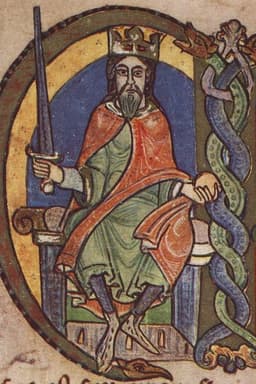
David I of Scotland
Emperor · Medieval
56.2Total
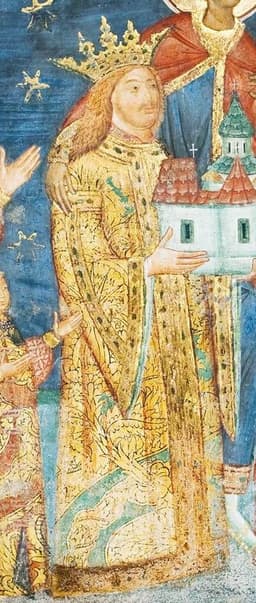
Stephen the Great
Emperor · Medieval
61.6Total
Basic Information
Born
1084
1433
Died
1153
1504
Era
Medieval
Medieval
Nationality
Scotland
Moldavia
Occupation
Emperor
Emperor
Civilization
Western
Western
Score Comparison
Military (10%)
50.0
67.3
Political (20%)
68.0
59.3
Influence (20%)
56.4
55.0
Legacy (20%)
50.0
55.0
Leadership (15%)
72.0
78.0
Strategy (15%)
35.7
68.1
TOTAL
56.2
61.6
David I of Scotland — Complete Timeline
1124 AD
Introduction of Feudalism to ScotlandReform
David I introduced Norman-style feudalism to Scotland, granting lands to Anglo-Norman knights in exchange for military service. He established a system of sheriffdoms and castles, transforming Scottish governance and land tenure. This laid the foundation for a centralized medieval kingdom.
FeudalismGovernanceNorman Influence
Impact: nationalconstructive
1128 AD
Foundation of MonasteriesCultural◆ Major
David I founded several monasteries, including Melrose Abbey (Cistercian) and Holyrood Abbey (Augustinian). He also supported the establishment of other religious houses, bringing continental monastic orders to Scotland. These foundations promoted religious reform and economic development.
MonasteriesReligionCistercians
Impact: regionalconstructive
1130 AD
Creation of Royal BurghsReform◆ Major
David I created the first royal burghs in Scotland, including Berwick, Roxburgh, and Edinburgh. These towns were granted trading privileges and self-government, stimulating commerce and urban growth. The burgh system became a key feature of Scottish economic life.
BurghsTradeUrbanization
Impact: nationalconstructive
1138 AD
Invasion of England (1138)War◆ Major
David I invaded northern England during the civil war between Stephen and Matilda. He was defeated at the Battle of the Standard near Northallerton in August 1138. Despite the defeat, he negotiated the Treaty of Durham, which secured control of Cumberland and Northumberland for Scotland.
InvasionBattle of the StandardTreaty of Durham
Impact: regional
1139 AD
Treaty of DurhamPolitical Action◆ Major
After the Battle of the Standard, David I negotiated the Treaty of Durham with King Stephen. The treaty granted David control of the earldoms of Cumberland and Northumberland, significantly expanding Scottish territory. This was a diplomatic success despite the military defeat.
TreatyTerritorial ExpansionDiplomacy
Impact: regionalconstructive
Stephen the Great — Complete Timeline
1470 AD
Construction of Fortresses and ChurchesCultural◆ Major
Stephen the Great commissioned the construction of numerous fortresses, including those at Suceava, Neam
ArchitectureFortificationsOrthodox Church
Impact: nationalconstructive
1475 AD
Battle of VasluiWar
Stephen the Great led a Moldavian army of about 40,000 men against an Ottoman force of up to 120,000 under Had
BattleOttoman EmpireMoldavia
Impact: regional
1476 AD
Battle of Valea AlbăWar◆ Major
Stephen the Great suffered a major defeat at Valea Alb
BattleMehmed IIDefeat
Impact: regionaltragic
1489 AD
Treaty with the Ottoman EmpirePolitical Action◆ Major
Stephen the Great signed a treaty with Sultan Bayezid II, agreeing to pay an annual tribute to the Ottoman Empire in exchange for peace. The treaty recognized Moldavia's autonomy and ended decades of warfare, though it placed Moldavia in a vassal relationship with the Ottomans.
TreatyVassalageBayezid II
Impact: regional
Expert Analysis
Origins
David I of Scotland, born around 1084, was the youngest son of King Malcolm III and Queen Margaret. He spent much of his youth at the Anglo-Norman court of King Henry I of England, where he absorbed Norman culture and governance. This exposure shaped his later policies. Stephen the Great, born around 1433, was the son of Bogdan II of Moldavia. His early life was marked by political turmoil; his father was murdered, and Stephen fled to the court of his cousin, Vlad III Dracula, in Wallachia. These formative experiences instilled in him a fierce determination to defend Moldavian independence.
Rise to Power
David I became King of Scots in 1124 after the death of his brother, Alexander I. He consolidated power by leveraging his Anglo-Norman connections, granting lands to Norman knights in exchange for military service. His rise was relatively peaceful, but he soon became embroiled in English civil wars. Stephen the Great rose to power in 1457 after leading a rebellion against Petru Aron, the usurper who murdered his father. With support from Wallachia, Stephen seized the throne and immediately faced external threats, particularly from the Ottoman Empire and the Kingdom of Poland.
Leadership & Governance
David I's governance was transformative. He introduced feudalism, which restructured Scottish society by creating a hierarchy of land tenure and military obligations. He founded royal burghs, granting trading privileges to towns like Edinburgh and Berwick, stimulating economic growth. His support for monasteries, including Melrose and Holyrood, promoted religious reform and literacy. In contrast, Stephen the Great's leadership focused on military defense and state-building. He strengthened Moldavia's fortifications, building fortresses at Suceava, Neamț, and Hotin. He also centralized authority, curbing the power of boyars (nobles) and creating a loyal administrative class. His scores reflect this: David I scored 72.0 in leadership, while Stephen scored 78.0, but David's political score of 68.0 edged Stephen's 59.3.
Triumph & Tragedy
David I's greatest success was the introduction of feudalism and the creation of burghs, which laid the foundations for medieval Scotland's economic and military development. His greatest failure was the invasion of England in 1138, which ended in defeat at the Battle of the Standard. The resulting Treaty of Durham granted him control of Cumberland and Westmorland, but the campaign drained resources. Stephen the Great's triumph was the Battle of Vaslui in 1475, where his smaller army defeated a much larger Ottoman force, securing his reputation as a defender of Christianity. However, his tragedy came at the Battle of Valea Albă in 1476, where Sultan Mehmed II overwhelmed his forces, forcing Stephen to accept tributary status to the Ottomans. Stephen's military score of 67.3 surpasses David's 50.0, but David's political score of 68.0 is higher than Stephen's 59.3.
Character & Destiny
David I was pious and pragmatic, earning him sainthood but also criticism for his Norman-friendly policies. His character shaped a peaceful transition to feudalism, but his military ambitions were checked. Stephen the Great was tenacious and strategic, with a deep sense of duty. His character drove him to constant warfare, but his resilience earned him canonization by the Romanian Orthodox Church. His strategy score of 68.1 dwarfs David's 35.7, highlighting his tactical acumen.
Legacy
David I's legacy is the feudal system and monastic foundations that defined medieval Scotland. The royal burghs he created became centers of commerce and governance. However, his reforms also increased English influence, which later contributed to conflicts. Stephen the Great is remembered as a national hero in Romania and Moldavia, a symbol of resistance against Ottoman expansion. His fortresses and churches, many now UNESCO World Heritage sites, stand as testaments to his reign. His canonization in 1992 solidified his spiritual legacy.
Conclusion
While David I transformed Scotland through peaceful reforms, Stephen the Great's military achievements and defense of Moldavian sovereignty had a more profound immediate impact. Stephen's total score of 61.6 exceeds David's 56.2, reflecting his superior military and strategic capabilities. Stephen's legacy as a defender of Christianity and Moldavian independence resonates more strongly in national identity. Therefore, Stephen the Great had a greater impact in his region and era.
Rankings
🥇
Stephen the GreatLeader
Mil: 67.3Pol: 59.3Inf: 55.0
61.6
🥈
David I of Scotland
Mil: 50.0Pol: 68.0Inf: 56.4
56.2
+5.4 behind
How This Comparison Works
Algorithm
Each figure is scored on 6 dimensions (0—100 scale) based on structured historical data: Military (10%), Political (20%), Influence (20%), Legacy (20%), Leadership (15%), Strategy (15%). The weighted total produces the final ranking.
Data Sources
Scores are computed from structured sub-indicators in the database. Scale factors adjust for era (Ancient ×0.85, Modern ×1.0) and civilization size (Eastern ×1.05, Other ×0.80) to account for differences in population and military scale.
Maximum 3 Figures
Comparisons are limited to 2—3 figures to ensure readability and statistical meaningfulness.
Error Margins
±5 points per dimension — Sub-scores are derived from historical records with inherent uncertainty. Two figures within 5 points on a dimension should be considered roughly equivalent in that area.
Total Score Accuracy
±3 points overall — The weighted combination of 6 dimensions produces a total score with approximately ±3 points of uncertainty. Differences of less than 3 points are not statistically significant— the figures are effectively tied.
Known Limitations
- Historical records are incomplete and uneven across civilizations
- Figures from oral-tradition societies may be underrepresented
- Occupation labels can misclassify multi-role figures
- Scores measure capability and impact, not moral character
- Quantitative scoring is a comparison tool, not absolute truth
Capability Radar
Military (10%) — Battles & Warfare
Battles
15
72
Win Rate
10
78
Expansion
20
65
Political (20%) — Governance & Reform
Reform
65
75
Diplomacy
60
80
Economy
55
70
Influence (20%) — Cultural & Global Reach
Cultural
50
65
Global
30
55
Legacy (20%) — Historical Impact
Historical
55
70
Longevity
50
60
Leadership (15%) — Power & Stability
Tenure
70
85
Stability
60
75
Strategy (15%) — Tactics & Innovation
Strategy
15
80
Tactics
10
75
Reform
20
70
Similar Comparisons
Comments & Discussion
No comments yet. Be the first to share your thoughts!