Loading...
Stephen the Great vs Wang Shichong
Stephen the Great leads by 14.6 pts · 2 figures compared
…
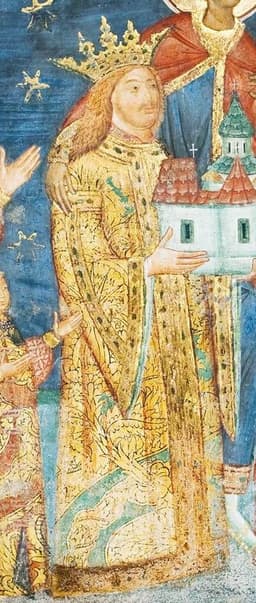
Stephen the Great
Emperor · Medieval
61.6Total
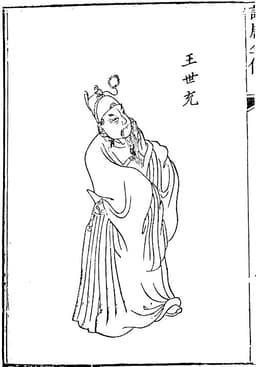
Wang Shichong
Emperor · Medieval
47.0Total
Basic Information
Born
1433
570
Died
1504
621
Era
Medieval
Medieval
Nationality
Moldavia
China
Occupation
Emperor
Emperor
Civilization
Western
Eastern
Score Comparison
Military (10%)
67.3
60.0
Political (20%)
59.3
35.1
Influence (20%)
55.0
50.2
Legacy (20%)
55.0
40.8
Leadership (15%)
78.0
48.4
Strategy (15%)
68.1
57.5
TOTAL
61.6
47.0
Stephen the Great — Complete Timeline
1470 AD
Construction of Fortresses and ChurchesCultural◆ Major
Stephen the Great commissioned the construction of numerous fortresses, including those at Suceava, Neam
ArchitectureFortificationsOrthodox Church
Impact: nationalconstructive
1475 AD
Battle of VasluiWar
Stephen the Great led a Moldavian army of about 40,000 men against an Ottoman force of up to 120,000 under Had
BattleOttoman EmpireMoldavia
Impact: regional
1476 AD
Battle of Valea AlbăWar◆ Major
Stephen the Great suffered a major defeat at Valea Alb
BattleMehmed IIDefeat
Impact: regionaltragic
1489 AD
Treaty with the Ottoman EmpirePolitical Action◆ Major
Stephen the Great signed a treaty with Sultan Bayezid II, agreeing to pay an annual tribute to the Ottoman Empire in exchange for peace. The treaty recognized Moldavia's autonomy and ended decades of warfare, though it placed Moldavia in a vassal relationship with the Ottomans.
TreatyVassalageBayezid II
Impact: regional
Wang Shichong — Complete Timeline
618 AD
Rebellion at LuoyangPolitical Action◆ Major
Wang Shichong, a Sui general, staged a coup in Luoyang, killing the Sui regent and declaring himself emperor of the short-lived Zheng dynasty. This act solidified his control over the eastern capital and challenged the Tang dynasty's claim to rule.
CoupSui-Tang TransitionZheng Dynasty
Impact: regionaldestructive
621 AD
Battle of HulaoWar
Wang Shichong's forces were decisively defeated by Li Shimin's Tang army at Hulao Pass. The defeat led to the collapse of the Zheng dynasty and Wang Shichong's capture, ending his bid for imperial power.
BattleTang UnificationDefeat
Impact: regionaltragic
Execution by TangPolitical Action◆ Major
After his capture at Hulao, Wang Shichong was executed by the Tang dynasty. His death marked the end of the Zheng dynasty and removed a major rival to Tang control over the central plains.
ExecutionTang Unification
Impact: regionaltragic
Expert Analysis
Origins
Stephen the Great, born in 1433, was the son of Bogdan II, Prince of Moldavia. His early life was marked by political turmoil: his father was assassinated in 1451, and Stephen fled to Transylvania, seeking protection from John Hunyadi. He returned to Moldavia in 1457 with the help of Vlad III Drăculea (Vlad the Impaler) and seized the throne. His upbringing in a violent, contested region shaped his military focus.
Wang Shichong (born c. 597) was a descendant of a Xianbei noble family, originally named Lü. He served as a general under the Sui dynasty, rising through military ranks. His early career included suppressing rebellions, which gave him command experience but also exposed him to the fragmentation of the Sui state. Unlike Stephen, Wang's background was within a centralized imperial system.
Rise to Power
Stephen's rise began with his coronation as Prince of Moldavia in 1457, after ousting his uncle Petru Aron. He consolidated power by executing rival boyars and forming alliances with the Kingdom of Hungary and Wallachia. His key turning point came in 1475 at the Battle of Vaslui, where he led 40,000 Moldavians against 120,000 Ottomans under Hadım Suleiman Pasha. The victory was a major upset, but he failed to secure lasting support from Christian powers.
Wang Shichong rose by exploiting Sui instability. In 618, after the death of Emperor Yang, he staged a coup in Luoyang, killing the Sui regent and declaring himself emperor of the Zheng dynasty. He controlled a key strategic city but faced immediate threats from Li Shimin, the Tang prince. Wang's rise was based on opportunism rather than popular support, scoring 35.1 in political compared to Stephen's 59.3.
Leadership & Governance
Stephen's leadership style was autocratic but effective in rallying Moldavian resistance. He built fortresses (Suceava, Neamț, Hotin) and funded 44 churches and monasteries, using religion to unify his people. His military strategy scored 68.1, relying on defensive terrain and scorched-earth tactics. However, his governance was hindered by a lack of centralization; he often had to negotiate with boyars.
Wang Shichong ruled as a dictator from Luoyang, but his political scores (35.1) reflect poor governance. He alienated officials and failed to secure grain supplies, leading to famine. His military score of 60.0 is lower than Stephen's 67.3, as he was decisively defeated at the Battle of Hulao in 621, where Li Shimin's army of 50,000 trapped and annihilated his forces. Wang's leadership score of 48.4 contrasts with Stephen's 78.0, indicating weaker command.
Triumph & Tragedy
Stephen's greatest triumph was the Battle of Vaslui (1475), where his tactical brilliance defeated a larger Ottoman force. He also repelled a Hungarian invasion in 1467. However, his tragedy came in 1476 at the Battle of Valea Albă, where Sultan Mehmed II personally led an army that overwhelmed Stephen's 12,000 men. He was forced to pay tribute to the Ottomans in 1486, ending his dream of independence.
Wang's triumph was briefly seizing Luoyang and crowning himself emperor in 619. But his tragedy was total: after Hulao, he was captured and executed by the Tang in 621. His dynasty lasted only three years. Unlike Stephen, who died in 1504 as a respected prince, Wang left no lasting legacy.
Character & Destiny
Stephen was pious, determined, and strategic. He sought Western aid but never received it, leading to eventual submission. His canonization as a saint by the Romanian Orthodox Church reflects his perceived moral standing. His character scored high in leadership (78.0) but his influence (55.0) was limited by Moldavia's small size.
Wang was ambitious but ruthless and short-sighted. He killed his benefactors and failed to build alliances. His low political score (35.1) shows his inability to govern. His destiny was sealed by Li Shimin, one of China's greatest generals. Wang's total score of 47.0 is 14.6 points below Stephen's 61.6.
Legacy
Stephen's legacy endures in Romania as a national hero and saint. His churches are UNESCO World Heritage sites. He is remembered for defending Christianity and Moldavian identity. His military innovations influenced later Romanian rulers.
Wang Shichong is a footnote in Chinese history, remembered as a failed usurper. The Tang dynasty he opposed became a golden age. His influence score of 50.2 is slightly lower than Stephen's 55.0, but his legacy score of 40.8 is far behind Stephen's 55.0.
Conclusion
Stephen the Great had a greater impact. His total score of 61.6 versus Wang's 47.0 reflects his superior military (67.3 vs 60.0), political (59.3 vs 35.1), and leadership (78.0 vs 48.4). While Wang briefly held power, Stephen's 47-year reign stabilized Moldavia and left a cultural and religious legacy that persists. Wang's dynasty vanished without trace. Stephen's defense against the Ottoman Empire had regional significance, whereas Wang's rebellion was a minor episode in China's unification. Thus, Stephen the Great is the more consequential figure.
Rankings
🥇
Stephen the GreatLeader
Mil: 67.3Pol: 59.3Inf: 55.0
61.6
🥈
Wang Shichong
Mil: 60.0Pol: 35.1Inf: 50.2
47.0
+14.6 behind
How This Comparison Works
Algorithm
Each figure is scored on 6 dimensions (0—100 scale) based on structured historical data: Military (10%), Political (20%), Influence (20%), Legacy (20%), Leadership (15%), Strategy (15%). The weighted total produces the final ranking.
Data Sources
Scores are computed from structured sub-indicators in the database. Scale factors adjust for era (Ancient ×0.85, Modern ×1.0) and civilization size (Eastern ×1.05, Other ×0.80) to account for differences in population and military scale.
Maximum 3 Figures
Comparisons are limited to 2—3 figures to ensure readability and statistical meaningfulness.
Error Margins
±5 points per dimension — Sub-scores are derived from historical records with inherent uncertainty. Two figures within 5 points on a dimension should be considered roughly equivalent in that area.
Total Score Accuracy
±3 points overall — The weighted combination of 6 dimensions produces a total score with approximately ±3 points of uncertainty. Differences of less than 3 points are not statistically significant— the figures are effectively tied.
Known Limitations
- Historical records are incomplete and uneven across civilizations
- Figures from oral-tradition societies may be underrepresented
- Occupation labels can misclassify multi-role figures
- Scores measure capability and impact, not moral character
- Quantitative scoring is a comparison tool, not absolute truth
Capability Radar
Military (10%) — Battles & Warfare
Battles
72
65
Win Rate
78
45
Expansion
65
50
Political (20%) — Governance & Reform
Reform
75
25
Diplomacy
80
35
Economy
70
30
Influence (20%) — Cultural & Global Reach
Cultural
65
20
Global
55
10
Legacy (20%) — Historical Impact
Historical
70
30
Longevity
60
15
Leadership (15%) — Power & Stability
Tenure
85
40
Stability
75
20
Strategy (15%) — Tactics & Innovation
Strategy
80
55
Tactics
75
60
Reform
70
30
Similar Comparisons
Comments & Discussion
No comments yet. Be the first to share your thoughts!