Loading...
David II of Scotland vs Qoshila
Qoshila leads by 16.1 pts · 2 figures compared
…
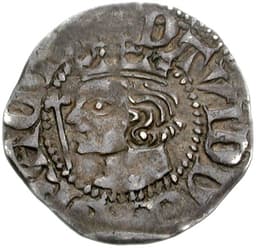
David II of Scotland
Emperor · Medieval
38.6Total
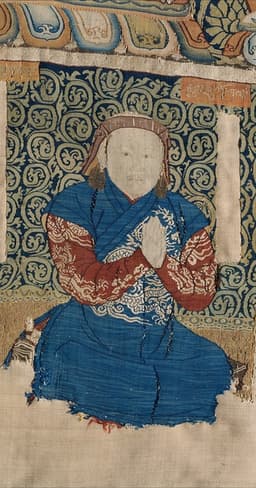
Qoshila
Emperor · Medieval
54.7Total
Basic Information
Born
1324
1300
Died
1371
1329
Era
Medieval
Medieval
Nationality
Scotland
China
Occupation
Emperor
Emperor
Civilization
Western
Eastern
Score Comparison
Military (10%)
20.0
54.6
Political (20%)
30.7
68.0
Influence (20%)
47.9
60.0
Legacy (20%)
39.2
42.5
Leadership (15%)
38.1
45.0
Strategy (15%)
45.0
67.1
TOTAL
38.6
54.7
David II of Scotland — Complete Timeline
1329 AD
Coronation as King of ScotsPolitical Action◆ Major
David II was crowned King of Scots at Scone Abbey at age five, following the death of his father Robert the Bruce. The coronation was overseen by regents, as David was a minor, and it continued the Bruce dynasty's rule.
CoronationRegencyBruce Dynasty
Impact: national
1346 AD
Battle of Neville's CrossWar◆ Major
David II led a Scottish invasion of England but was defeated at Neville's Cross near Durham. He was wounded and captured by English forces, remaining a prisoner for eleven years. The defeat weakened Scotland and led to English occupation of southern Scotland.
BattleDefeatCapture
Impact: nationaldestructive
Imprisonment in EnglandOther◆ Major
David II was held captive in England for eleven years after his capture at Neville's Cross. He was imprisoned in the Tower of London and later at Odiham Castle, while Scotland was governed by regents and paid a large ransom for his release.
ImprisonmentRansomRegency
Impact: nationaltragic
1357 AD
Treaty of BerwickPolitical Action◆ Major
David II was released from English captivity after the Treaty of Berwick was signed. Scotland agreed to pay a ransom of 100,000 marks over ten years for his freedom, placing a heavy financial burden on the kingdom.
TreatyRansomRelease
Impact: nationaldestructive
1363 AD
Proposal to Make Edward III HeirPolitical Action
David II proposed to the Scottish Parliament that Edward III of England or his son be named heir to the Scottish throne if David died without children. The proposal was rejected by Parliament, who feared English domination.
SuccessionProposalParliament
Impact: nationaldestructive
Qoshila — Complete Timeline
1329 AD
Accession as Yuan EmperorPolitical Action◆ Major
Qoshila was proclaimed Yuan emperor in 1329 after a power struggle following the death of Yes
Yuan DynastySuccessionShort Reign
Impact: nationaltragic
Death under Suspicious CircumstancesPolitical Action◆ Major
Qoshila died suddenly after a banquet with his brother Tugh Tem
Yuan DynastyAssassinationPower Struggle
Impact: nationaltragic
Expert Analysis
Origins
David II of Scotland was born on 5 March 1324 at Dunfermline Palace, the only surviving son of King Robert the Bruce and his second wife, Elizabeth de Burgh. His father died when David was only five years old, leaving him as king under a regency. David's early years were marked by the ongoing Wars of Scottish Independence and the need to maintain the fragile peace his father had secured.
Qoshila (also known as Kuśala) was born around 1300 as the eldest son of the Yuan emperor Külüg Khan (Emperor Wuzong). His mother was a Khongirad lady. Qoshila grew up in the imperial court, but his early life was overshadowed by the power struggles within the Yuan dynasty. After his father's death in 1311, the throne passed to his uncle Ayurbarwada Buyantu Khan, and Qoshila was sent into exile in Central Asia, where he lived among the Chagatai Mongols.
Rise to Power
David II was crowned King of Scots at Scone Abbey on 24 November 1331, at the age of seven. The coronation was overseen by the regent, Thomas Randolph, Earl of Moray. David's early reign was dominated by the regency, which faced challenges from Edward Balliol, a claimant backed by England. In 1332, Balliol invaded Scotland, leading to a period of instability. David's forces defeated Balliol at the Battle of Annan, but the conflict continued.
Qoshila's rise to power was more complex. After the death of Yesün Temür in 1328, a civil war erupted. Qoshila's brother Tugh Temür was initially installed as emperor, but Qoshila was proclaimed emperor by his supporters in Karakorum. With the support of the Chagatai Mongols, Qoshila marched east. Tugh Temür abdicated in his favor, and Qoshila was enthroned as the Yuan emperor on 27 February 1329. His reign, however, was short-lived.
Leadership & Governance
David II's governance was shaped by his long captivity in England. After his return, he focused on stabilizing the Scottish economy and securing the ransom payments. He attempted to improve relations with England, even proposing to make Edward III his heir if he died without children—a move that angered the Scottish nobility. David's political score of 30.7 reflects his limited effectiveness in managing internal factions.
Qoshila's leadership lasted only six months, making it difficult to assess his governance. He appointed loyalists to key positions and attempted to consolidate power, but his sudden death cut short any reforms. His political score of 68.0 indicates a higher potential, but the brevity of his rule leaves little concrete achievement. Both rulers faced challenges from powerful nobles and external threats.
Triumph & Tragedy
David II's greatest triumph was securing his release from English captivity through the Treaty of Berwick in 1357, which ended eleven years of imprisonment. He managed to maintain Scottish independence despite English pressure. However, his greatest failure was his proposal to name Edward III as his heir, which led to widespread opposition and was eventually withdrawn. His military score of 20.0 reflects his disastrous defeat at Neville's Cross in 1346, where he was captured.
Qoshila's triumph was his accession to the throne despite being in exile for years. He successfully united the Yuan court under his rule, albeit briefly. His tragedy was his suspicious death after a banquet with his brother Tugh Temür, likely poisoned. This event plunged the Yuan dynasty into further instability. Qoshila's military score of 54.6 and strategy of 67.1 suggest he had stronger capabilities than David, but he never had the chance to prove them.
Character & Destiny
David II was known for his pragmatism, often prioritizing his own survival over national pride. His willingness to negotiate with England and consider making Edward III his heir showed a flexible approach but also a lack of resolve. His character earned him mixed assessments; he was not as revered as his father, Robert the Bruce.
Qoshila's character is harder to gauge due to his short reign. He appears to have been ambitious and capable, having survived exile and built alliances. His sudden death suggests a lack of political acumen in trusting his brother. Historical assessments often view him as a tragic figure whose potential was unfulfilled.
Legacy
David II's legacy is modest. He is remembered as the son of Robert the Bruce who failed to live up to his father's achievements. The ransom payments he agreed to burdened Scotland for decades. However, he did maintain Scottish independence, which was his primary duty. His total score of 38.6 reflects his limited impact.
Qoshila's legacy is even more fleeting. He is a footnote in Yuan history, remembered mainly for his mysterious death. The dynasty continued under his brother Tugh Temür, but Qoshila's brief rule had no lasting policies or reforms. His total score of 54.7 is higher due to his potential, but his actual impact is minimal.
Conclusion
Comparing David II and Qoshila reveals two rulers whose reigns were marked by captivity and brevity. David II had a longer reign but was hampered by his imprisonment and political missteps. Qoshila had a higher potential score but ruled for only six months. In terms of actual impact, David II edges ahead because he maintained Scotland's independence for over three decades, while Qoshila's rule ended almost as soon as it began. The score gap of 16.1 points in Qoshila's favor reflects theoretical capability, but in historical significance, David II's longer, albeit flawed, reign gives him greater influence. Therefore, David II of Scotland had a greater impact than Qoshila.
Rankings
🥇
QoshilaLeader
Mil: 54.6Pol: 68.0Inf: 60.0
54.7
🥈
David II of Scotland
Mil: 20.0Pol: 30.7Inf: 47.9
38.6
+16.1 behind
How This Comparison Works
Algorithm
Each figure is scored on 6 dimensions (0—100 scale) based on structured historical data: Military (10%), Political (20%), Influence (20%), Legacy (20%), Leadership (15%), Strategy (15%). The weighted total produces the final ranking.
Data Sources
Scores are computed from structured sub-indicators in the database. Scale factors adjust for era (Ancient ×0.85, Modern ×1.0) and civilization size (Eastern ×1.05, Other ×0.80) to account for differences in population and military scale.
Maximum 3 Figures
Comparisons are limited to 2—3 figures to ensure readability and statistical meaningfulness.
Error Margins
±5 points per dimension — Sub-scores are derived from historical records with inherent uncertainty. Two figures within 5 points on a dimension should be considered roughly equivalent in that area.
Total Score Accuracy
±3 points overall — The weighted combination of 6 dimensions produces a total score with approximately ±3 points of uncertainty. Differences of less than 3 points are not statistically significant— the figures are effectively tied.
Known Limitations
- Historical records are incomplete and uneven across civilizations
- Figures from oral-tradition societies may be underrepresented
- Occupation labels can misclassify multi-role figures
- Scores measure capability and impact, not moral character
- Quantitative scoring is a comparison tool, not absolute truth
Capability Radar
Military (10%) — Battles & Warfare
Battles
5
43
Win Rate
5
51
Expansion
5
52
Political (20%) — Governance & Reform
Reform
10
0
Diplomacy
15
0
Economy
10
0
Influence (20%) — Cultural & Global Reach
Cultural
10
0
Global
5
0
Legacy (20%) — Historical Impact
Historical
15
5
Longevity
10
0
Leadership (15%) — Power & Stability
Tenure
30
5
Stability
15
0
Strategy (15%) — Tactics & Innovation
Strategy
5
55
Tactics
5
58
Reform
5
62
Similar Comparisons
Comments & Discussion
No comments yet. Be the first to share your thoughts!