Loading...
David II of Scotland vs Napoleon Bonaparte
Napoleon Bonaparte leads by 32.3 pts · 2 figures compared
…
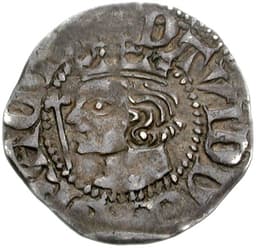
David II of Scotland
Emperor · Medieval
38.6Total

Napoleon Bonaparte
General · Modern
70.9Total
Basic Information
Born
1324
1769
Died
1371
1821
Era
Medieval
Modern
Nationality
Scotland
France
Occupation
Emperor
General
Civilization
Western
Western
Score Comparison
Military (10%)
20.0
94.0
Political (20%)
30.7
72.0
Influence (20%)
47.9
40.0
Legacy (20%)
39.2
80.0
Leadership (15%)
38.1
78.0
Strategy (15%)
45.0
90.0
TOTAL
38.6
70.9
David II of Scotland — Complete Timeline
1329 AD
Coronation as King of ScotsPolitical Action◆ Major
David II was crowned King of Scots at Scone Abbey at age five, following the death of his father Robert the Bruce. The coronation was overseen by regents, as David was a minor, and it continued the Bruce dynasty's rule.
CoronationRegencyBruce Dynasty
Impact: national
1346 AD
Battle of Neville's CrossWar◆ Major
David II led a Scottish invasion of England but was defeated at Neville's Cross near Durham. He was wounded and captured by English forces, remaining a prisoner for eleven years. The defeat weakened Scotland and led to English occupation of southern Scotland.
BattleDefeatCapture
Impact: nationaldestructive
Imprisonment in EnglandOther◆ Major
David II was held captive in England for eleven years after his capture at Neville's Cross. He was imprisoned in the Tower of London and later at Odiham Castle, while Scotland was governed by regents and paid a large ransom for his release.
ImprisonmentRansomRegency
Impact: nationaltragic
1357 AD
Treaty of BerwickPolitical Action◆ Major
David II was released from English captivity after the Treaty of Berwick was signed. Scotland agreed to pay a ransom of 100,000 marks over ten years for his freedom, placing a heavy financial burden on the kingdom.
TreatyRansomRelease
Impact: nationaldestructive
1363 AD
Proposal to Make Edward III HeirPolitical Action
David II proposed to the Scottish Parliament that Edward III of England or his son be named heir to the Scottish throne if David died without children. The proposal was rejected by Parliament, who feared English domination.
SuccessionProposalParliament
Impact: nationaldestructive
Napoleon Bonaparte — Complete Timeline
1799 AD
Coup of 18 BrumaireOther◆ Major
Napoleon Bonaparte, with support from his brother Lucien and key political figures, overthrew the Directory in a bloodless coup. He established the Consulate with himself as First Consul, effectively becoming the ruler of France. This event ended the French Revolution's most unstable period.
French RevolutionCoupRise to Power
Impact: regional
1804 AD
Promulgation of the Napoleonic CodeOther◆ Major
Napoleon enacted the Civil Code of the French, known as the Napoleonic Code, a comprehensive set of laws that replaced the fragmented feudal legal systems. The code established legal equality, protected property rights, and secularized law. It became the basis for legal systems in many European and world countries.
Legal ReformNapoleonic CodeCivil Law
Impact: globalconstructive
1805 AD
Battle of AusterlitzWar◆ Major
Napoleon's Grande Arm
Napoleonic WarsBattleDecisive Victory
Impact: global
1812 AD
Invasion of RussiaWar◆ Major
Napoleon led the Grande Arm
Napoleonic WarsInvasionDisaster
Impact: globaldestructive
1815 AD
Battle of WaterlooWar◆ Major
Napoleon's French army was defeated by the combined forces of the Duke of Wellington's Anglo-Allied army and Gebhard Leberecht von Bl
Napoleonic WarsBattleFinal Defeat
Impact: globaldestructive
Expert Analysis
david-ii-of-scotland-vs-napoleon-bonaparte
# The Conqueror and the Captive
In the winter of 1346, a wounded Scottish king was dragged from the muddy field at Neville's Cross, his reign effectively over before it had truly begun. Nearly five centuries later, in the spring of 1815, another man returned from exile on a tiny Mediterranean island to reclaim an empire. One spent eleven years in a tower; the other reshaped the legal foundations of Europe. David II of Scotland and Napoleon Bonaparte both wore crowns, both led armies, and both faced defeat. But the chasm between them—in ambition, achievement, and historical weight—is not merely a matter of luck. It is a story of how personal character, historical timing, and the sheer scale of vision determine whether a leader becomes a footnote or a force of nature.
Origins
David II was born in 1324 into a Scotland still bleeding from the Wars of Independence. His father, Robert the Bruce, had fought for decades to secure the throne, and little David inherited not a stable kingdom but a fragile one, perpetually threatened by England's larger armies. He was crowned at Scone Abbey at age five, a child king whose realm required a regent to survive. The medieval world offered him few choices: defend, negotiate, or submit.
Napoleon Bonaparte, born in 1769 on the island of Corsica, entered a world in upheaval. The French Revolution had shattered the old order, and a young artillery officer of modest noble lineage found himself in a society where talent—not birth—could propel a man to the top. Where David inherited a throne, Napoleon seized opportunity. The difference in their starting points was not just a matter of centuries; it was a difference in the very structure of power.
Rise to Power
David’s path was predetermined. He became king at five, and for most of his youth, others ruled in his name. His first major independent action—the invasion of England in 1346—was a disaster. At Neville's Cross, his army was crushed, and David himself was captured, wounded in the face by an arrow. He would spend the next eleven years in the Tower of London, a prisoner who had never truly been free to lead.
Napoleon’s rise was the opposite: a meteoric ascent built on battlefield brilliance. At the siege of Toulon in 1793, he was a 24-year-old captain who devised the plan that drove the British from the port. By 1796, he commanded the Army of Italy, winning a series of stunning victories that forced Austria to sue for peace. His 1798 campaign in Egypt, though ultimately a strategic failure, burnished his legend. By 1799, he had seized power in a coup. Where David stumbled into captivity, Napoleon vaulted into command. The difference in their rise reflects not just ability but the nature of their eras: David’s medieval world rewarded bloodlines; Napoleon’s revolutionary age rewarded audacity.
Leadership & Governance
David II’s reign, even after his release in 1357 under the Treaty of Berwick, was defined by weakness. Scotland owed a massive ransom of 100,000 marks for his freedom, and David spent his remaining years struggling to raise the funds. His most controversial act—proposing in 1363 that Edward III of England or his son be named heir to the Scottish throne—revealed a king willing to sacrifice national independence for personal security. His military score of 54.2 and political score of 40.8 reflect a leader who never truly governed, but merely survived.
Napoleon governed with a vision that outlasted his empire. The Napoleonic Code, enacted in 1804, standardized French law, abolished feudal privileges, and enshrined principles of meritocracy and property rights that influenced legal systems across Europe and beyond. His military reforms created the modern corps system, and his political acumen—though marred by authoritarian tendencies—allowed him to consolidate power while appearing to uphold revolutionary ideals. His leadership score of 80.0 and political score of 75.0 reflect a man who understood that conquest alone could not sustain power. He built institutions.
Triumph & Tragedy
David II’s greatest moment was simply surviving—returning to Scotland after eleven years in captivity, a king who had lost his war but kept his throne. His greatest tragedy was that his survival came at the cost of his kingdom’s dignity. The ransom crippled Scotland, and his heirless death in 1371 left the throne to his nephew, ending the direct Bruce line.
Napoleon’s triumphs were continental. At Austerlitz in 1805, he destroyed a combined Russian and Austrian army, cementing French dominance in Europe. His empire stretched from Spain to Poland. Yet his tragedy was equally vast: the disastrous 1812 invasion of Russia, where 400,000 men marched east and fewer than 40,000 returned. His final defeat at Waterloo in 1815 ended not just his reign but the Napoleonic era. Napoleon died in exile on Saint Helena in 1821, a prisoner of the British—a fate not unlike David’s, but on a vastly different scale.
Character & Destiny
David II was a survivor, not a shaper. His character was defined by caution and a willingness to compromise, even to the point of betraying his father’s legacy. He lacked the fire that drove Robert the Bruce, and his decisions—the failed invasion, the ransom, the proposal to name an English heir—suggest a man who saw history as something that happened to him, not something he could change.
Napoleon was the opposite: a force of will so immense that he bent history to his desires. His ambition was boundless, his energy inexhaustible, and his belief in his own destiny absolute. “Impossible is a word to be found only in the dictionary of fools,” he once said. That same hubris, however, led to his downfall. He could not stop, could not consolidate, could not accept limits. David’s tragedy was that he did too little; Napoleon’s was that he tried too much.
Legacy
David II is remembered, if at all, as a footnote—the son of a great father who could not live up to his legacy. His total score of 47.0 places him among the least effective monarchs of his era. Scotland survived him, but not because of him. His name appears in history books primarily as a cautionary tale: a king who traded his kingdom’s future for his own freedom.
Napoleon’s legacy is monumental. His military strategies are still studied at war colleges. The Napoleonic Code remains the foundation of civil law in much of Europe and the world. His influence score of 82.0 and legacy score of 78.0 reflect a man who changed the course of history, for better and for worse. He is remembered as both a liberator who spread revolutionary ideals and a tyrant who drowned Europe in blood. He is, in short, unforgettable.
Conclusion
Standing at the end of their stories, one cannot help but feel the weight of what separates them. David II of Scotland was a king who never truly ruled, a warrior who lost his only battle, a man whose name survives only because of his father’s greatness. Napoleon Bonaparte was a man who made his own name, who rose from obscurity to dominate a continent, and whose shadow still falls across our laws, our wars, and our imaginations.
Yet perhaps the most haunting difference is not in their achievements but in their choices. David chose submission; Napoleon chose defiance. One sought safety; the other sought glory. History rewards the bold, but it also punishes them. David died in his bed, a king of a diminished kingdom. Napoleon died on a remote island, a prisoner of his own ambition. In the end, both were captives—one of his enemies, the other of himself. The question their lives pose is not which path is better, but which one you would dare to walk.
Rankings
🥇
Napoleon BonaparteLeader
Mil: 94.0Pol: 72.0Inf: 40.0
70.9
🥈
David II of Scotland
Mil: 20.0Pol: 30.7Inf: 47.9
38.6
+32.3 behind
How This Comparison Works
Algorithm
Each figure is scored on 6 dimensions (0—100 scale) based on structured historical data: Military (10%), Political (20%), Influence (20%), Legacy (20%), Leadership (15%), Strategy (15%). The weighted total produces the final ranking.
Data Sources
Scores are computed from structured sub-indicators in the database. Scale factors adjust for era (Ancient ×0.85, Modern ×1.0) and civilization size (Eastern ×1.05, Other ×0.80) to account for differences in population and military scale.
Maximum 3 Figures
Comparisons are limited to 2—3 figures to ensure readability and statistical meaningfulness.
Error Margins
±5 points per dimension — Sub-scores are derived from historical records with inherent uncertainty. Two figures within 5 points on a dimension should be considered roughly equivalent in that area.
Total Score Accuracy
±3 points overall — The weighted combination of 6 dimensions produces a total score with approximately ±3 points of uncertainty. Differences of less than 3 points are not statistically significant— the figures are effectively tied.
Known Limitations
- Historical records are incomplete and uneven across civilizations
- Figures from oral-tradition societies may be underrepresented
- Occupation labels can misclassify multi-role figures
- Scores measure capability and impact, not moral character
- Quantitative scoring is a comparison tool, not absolute truth
Capability Radar
Military (10%) — Battles & Warfare
Battles
5
95
Win Rate
5
90
Expansion
5
95
Political (20%) — Governance & Reform
Reform
10
95
Diplomacy
15
80
Economy
10
85
Influence (20%) — Cultural & Global Reach
Cultural
10
85
Global
5
90
Legacy (20%) — Historical Impact
Historical
15
95
Longevity
10
90
Leadership (15%) — Power & Stability
Tenure
30
85
Stability
15
70
Strategy (15%) — Tactics & Innovation
Strategy
5
95
Tactics
5
98
Reform
5
92
Similar Comparisons
Comments & Discussion
CrownedCaptive6/17/2026
Comparing David II to Napoleon is like comparing a chess pawn to a queen. David spent 11 years as a prisoner in the Tower of London after Neville’s Cross, begging Edward III for scraps of his own kingdom. Napoleon returned from Elba in 1815 and raised an army in weeks. One man negotiated for survival; the other gambled for an empire. Character isn’t everything, but here it’s the only thing that matters.
HistoricaSceptic6/17/2026
Let’s be real: Napoleon’s “genius” is overblown. He won thanks to revolutionary mass mobilization, not brilliance—David II faced English feudal armies with Scottish levies and a treasury in shambles. The real contrast? Napoleon had a continent to exploit; David had a bankrupt, war-torn kingdom. Give David the resources of 1810 France, and he’d still be outmatched. Timing and scale make the comparison absurd.
LegacyLens6/17/2026
David II is a tragic footnote—his reign achieved little beyond the Treaty of Berwick, which bought peace but lost Scottish independence in spirit. Napoleon rewrote Europe’s legal codes, established the metric system, and sparked nationalism from Spain to Poland. The gap isn’t just about wins; it’s about impact. One man’s captivity defined his story; the other’s captivity (St. Helena) became a legend. Historical weight is earned, not inherited.
碎甲之狮6/17/2026
大卫二世像个被铠甲压垮的孩子——五岁登基,十四岁流亡,三十岁才从伦敦塔里爬出来。他父亲布鲁斯用班诺克本的血换来的独立,在他手里几乎输光。拿破仑?那是个在雾月政变里自己推翻自己的狠人。说句难听的,大卫二世连失败都失败得窝囊,他的“王冠”更像是锁链。
帝国铸剑师6/17/2026
别拿封建王权跟革命战争机器比,这不是同一个物种。拿破仑用《法典》和中央集权碾碎了旧欧洲,大卫二世连自己的王位都靠英格兰施舍才能稳坐。后者在1363年甚至想认爱德华三世当继承人,只为换回自由——这叫帝王?拿破仑哪怕在莱比锡战败后,也没跪着求敌人当爹。差距不在军力,在脊梁骨。
逆流孤舟6/17/2026
你们都在赞美拿破仑,但别忘了:大卫二世面对的英格兰是当时欧洲最恐怖的战争机器——长弓手、克雷西战术、爱德华三世的野心。他在十六岁就带兵对抗这种巨兽,输是正常的。拿破仑呢?他的对手是一盘散沙的旧欧洲联军,普鲁士和奥地利还在用排队枪毙的过时战术。说穿了,大卫二世是逆水的孤舟,拿破仑是顺风的战舰