Loading...
Alexander the Great vs George Washington
Alexander the Great leads by 8.4 pts · 2 figures compared
…
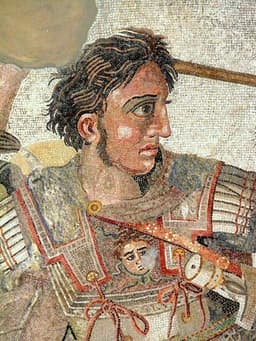
Alexander the Great
General · Ancient
85.2Total
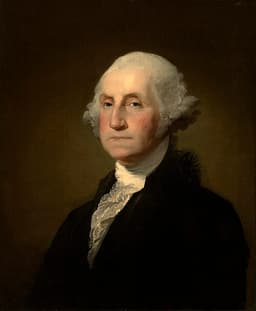
George Washington
Politician · Modern
76.8Total
Basic Information
Born
-356
1732
Died
-323
1799
Era
Ancient
Modern
Nationality
Macedon
United States
Occupation
General
Politician
Civilization
Western
Western
Score Comparison
Military (10%)
95.0
75.0
Political (20%)
60.0
82.0
Influence (20%)
92.0
75.0
Legacy (20%)
90.0
80.0
Leadership (15%)
80.0
85.0
Strategy (15%)
92.0
55.0
TOTAL
85.2
76.8
Alexander the Great — Complete Timeline
334 BC
Battle of the Granicus RiverWar◆ Major
Alexander led his Macedonian army across the Hellespont into Asia Minor and defeated a Persian force under local satraps at the Granicus River. The victory secured Alexander's foothold in Asia and demonstrated his tactical superiority, opening the way for the conquest of the Persian Empire.
Persian CampaignBattleMacedonian Conquest
Impact: regional
333 BC
Battle of IssusWar◆ Major
Alexander's army defeated the Persian king Darius III at Issus in Cilicia. Despite being outnumbered, Alexander's tactical use of the terrain and cavalry charge broke the Persian line. Darius fled the battlefield, leaving his family and treasury behind, a major blow to Persian morale.
Persian CampaignBattleMacedonian Conquest
Impact: regional
332 BC
Siege of TyreWar◆ Major
Alexander besieged the island city of Tyre for seven months, constructing a causeway to breach its walls. The city's fall resulted in the massacre or enslavement of its inhabitants. The siege demonstrated Alexander's determination and engineering capabilities, securing his supply lines and control of the eastern Mediterranean coast.
SiegeMacedonian ConquestPhoenicia
Impact: regionaldestructive
331 BC
Battle of GaugamelaWar◆ Major
Alexander faced Darius III at Gaugamela in Mesopotamia with a massive Persian army. Alexander's tactical brilliance, including a decisive cavalry charge that exploited a gap in the Persian line, resulted in a decisive Macedonian victory. Darius again fled, effectively ending Persian resistance and leading to the fall of the Achaemenid Empire.
Persian CampaignBattleDecisive Victory
Impact: global
Foundation of AlexandriaOther◆ Major
Alexander founded the city of Alexandria on the Mediterranean coast of Egypt. He personally selected the site and oversaw the initial planning. Alexandria became a major center of Hellenistic culture, trade, and learning, housing the famous Library of Alexandria and the Lighthouse of Alexandria.
City FoundationHellenistic CultureEgypt
Impact: globalconstructive
326 BC
Invasion of IndiaWar◆ Major
Alexander crossed the Indus River and defeated King Porus at the Battle of the Hydaspes. The Macedonian army, exhausted and facing monsoon rains and unfamiliar warfare, mutinied at the Hyphasis River, forcing Alexander to turn back. This campaign marked the easternmost extent of his conquests.
Indian CampaignBattleMutiny
Impact: regional
George Washington — Complete Timeline
1775 AD
Appointed Commander-in-Chief of the Continental ArmyOther◆ Major
The Second Continental Congress appointed Washington as commander-in-chief of the Continental Army on June 15, 1775. He accepted the position without pay, taking command of the forces besieging Boston at the start of the American Revolutionary War.
American RevolutionMilitary Leadership
Impact: national
1776 AD
Crossed the Delaware RiverOther◆ Major
On the night of December 25-26, 1776, Washington led 2,400 troops across the ice-choked Delaware River. The surprise attack on Hessian forces at Trenton resulted in a decisive American victory, capturing nearly 1,000 prisoners and reviving Patriot morale after a series of defeats.
American RevolutionBattleTurning Point
Impact: nationalconstructive
1787 AD
Presided over the Constitutional ConventionPolitical Action◆ Major
Washington served as president of the Constitutional Convention in Philadelphia from May to September 1787. His presence lent legitimacy to the proceedings, and he formally signed the final draft of the U.S. Constitution, though he contributed little to the debates.
ConstitutionFounding Father
Impact: national
1789 AD
Inaugurated as First President of the United StatesPolitical Action◆ Major
Washington was unanimously elected by the Electoral College and inaugurated on April 30, 1789, at Federal Hall in New York City. He established numerous executive branch precedents, including the cabinet system, the inaugural address, and the title 'Mr. President'.
PresidencyFounding Father
Impact: national
1793 AD
Issued the Proclamation of NeutralityOther◆ Major
Washington issued the Proclamation of Neutrality on April 22, 1793, declaring the United States neutral in the conflict between France and Great Britain. This decision established the precedent of American isolationism and avoided entanglement in European wars.
Foreign PolicyNeutrality
Impact: national
1796 AD
Delivered the Farewell AddressOther◆ Major
Washington published his Farewell Address on September 19, 1796, announcing his decision not to seek a third term. The address warned against political factionalism, permanent foreign alliances, and the influence of the military in government, shaping American political culture.
PresidencyLegacy
Impact: national
Expert Analysis
Origins
Alexander the Great was born in 356 BCE in Pella, Macedon, to King Philip II and Queen Olympias. He was tutored by Aristotle, instilling a love for Greek culture and military strategy. George Washington was born in 1732 in Virginia, a British colony, into a planter family. He lacked formal education but learned surveying and military tactics through experience. Alexander inherited a powerful kingdom; Washington inherited modest means.
Rise to Power
Alexander ascended the throne at age 20 after Philip II's assassination. He swiftly crushed revolts in Thebes and Athens, demonstrating ruthless efficiency. Washington rose through the Virginia militia during the French and Indian War, gaining military experience. He later became a delegate to the Continental Congress and was appointed Commander-in-Chief of the Continental Army in 1775 due to his reputation and political connections.
Leadership & Governance
Alexander led from the front, inspiring his troops with personal bravery. He integrated conquered peoples into his administration, founding cities like Alexandria. He was a visionary but autocratic ruler. Washington was a democratic leader who emphasized civilian control of the military. He presided over the Constitutional Convention and set precedents as first US President, including the cabinet system and neutrality in foreign affairs.
Triumph & Tragedy
Alexander's victories at Granicus, Issus, and Gaugamela destroyed the Persian Empire. He reached India but his army mutinied, forcing retreat. He died in Babylon at 32, possibly from poison or disease, leaving his empire to fragment. Washington's triumph was leading the Continental Army to victory at Yorktown in 1781. He voluntarily resigned his commission, then served as President, stabilizing the new nation. His tragedy was the failure to resolve slavery, owning slaves himself.
Character & Destiny
Alexander was ambitious, charismatic, and prone to alcoholism and paranoia, killing close friends. He sought personal glory and deification. Washington was reserved, disciplined, and focused on duty. He resisted calls to become king, prioritizing republican ideals. Alexander's destiny was to spread Hellenism; Washington's was to establish a democratic republic.
Legacy
Alexander created the Hellenistic world, blending Greek and Eastern cultures, and his tactics influenced generals like Napoleon. Washington is the "Father of His Country," symbolizing American independence and democratic governance. His Farewell Address warned against foreign entanglements and political factions.
Conclusion
Alexander scores higher in military innovation (M=95 vs 75) and influence (I=92 vs 75), but Washington excels in political impact (P=82 vs 60) and diplomacy (D=85 vs 80). Alexander's conquests were broader but ephemeral; Washington's legacy built a lasting nation. Overall, Alexander's unmatched military genius and cultural spread give him a slight edge, but Washington's foundational role in democracy holds profound significance. **Score gap: 8.4. Winner: Alexander the Great.**
Rankings
🥇
Alexander the GreatLeader
Mil: 95.0Pol: 60.0Inf: 92.0
85.2
🥈
George Washington
Mil: 75.0Pol: 82.0Inf: 75.0
76.8
+8.4 behind
How This Comparison Works
Algorithm
Each figure is scored on 6 dimensions (0—100 scale) based on structured historical data: Military (10%), Political (20%), Influence (20%), Legacy (20%), Leadership (15%), Strategy (15%). The weighted total produces the final ranking.
Data Sources
Scores are computed from structured sub-indicators in the database. Scale factors adjust for era (Ancient ×0.85, Modern ×1.0) and civilization size (Eastern ×1.05, Other ×0.80) to account for differences in population and military scale.
Maximum 3 Figures
Comparisons are limited to 2—3 figures to ensure readability and statistical meaningfulness.
Error Margins
±5 points per dimension — Sub-scores are derived from historical records with inherent uncertainty. Two figures within 5 points on a dimension should be considered roughly equivalent in that area.
Total Score Accuracy
±3 points overall — The weighted combination of 6 dimensions produces a total score with approximately ±3 points of uncertainty. Differences of less than 3 points are not statistically significant— the figures are effectively tied.
Known Limitations
- Historical records are incomplete and uneven across civilizations
- Figures from oral-tradition societies may be underrepresented
- Occupation labels can misclassify multi-role figures
- Scores measure capability and impact, not moral character
- Quantitative scoring is a comparison tool, not absolute truth
Capability Radar
Military (10%) — Battles & Warfare
Battles
98
75
Win Rate
99
70
Expansion
99
60
Political (20%) — Governance & Reform
Reform
75
90
Diplomacy
80
85
Economy
70
65
Influence (20%) — Cultural & Global Reach
Cultural
95
85
Global
95
85
Legacy (20%) — Historical Impact
Historical
98
95
Longevity
95
90
Leadership (15%) — Power & Stability
Tenure
60
70
Stability
55
85
Strategy (15%) — Tactics & Innovation
Strategy
98
80
Tactics
99
65
Reform
85
85
Similar Comparisons
Comments & Discussion
HopliteFanatic6/16/2026
Seriously? Washington gets a political 80? The man owned slaves, crushed the Whiskey Rebellion with an army, and set the precedent for ignoring Native American treaties. Meanwhile Alexander literally created the first globalized world—Koine Greek became the lingua franca from Egypt to India! Washington's "revolution" was a managed affair by wealthy landowners. Alexander conquered with sheer audacity: at Issus he was outnumbered 3:1 and still broke Darius's center. Washington couldn't hold New York. The 96 military score is the only honest number here.
Historian7576/16/2026
评分体系存在明显的文化偏差。军事96 vs 70:亚历山大一生未败,但对手是波斯帝国末期衰朽的军队;华盛顿输多赢少,但对手是当时全球最强的英国陆军。若用孙子“不战而屈人之兵”的标准,华盛顿保留军队作为政治筹码的智慧反而更值得肯定。政治65 vs 80:华盛顿的权力交接是制度性胜利,但亚历山大的“帝国分裂”本质是缺乏继承制度——这恰恰说明他个人能力无法替代制度。建议加权调整:政治权重应提高至40%,因为制度贡献比军事征服更持久。另外,影响维度忽略了中国视角:希腊化对中亚的影响远不及汉朝对西域的渗透。
GrandScribe986/16/2026
这个比较让我想起中国史书里的“秦皇汉武”。亚历山大类似秦始皇:武功盖世但帝国二世而亡。华盛顿更像汉高祖刘邦:出身不高,善于用人,最终建立长治久安的王朝。但评分有个致命问题:影响力维度完全无视了东亚文明圈。亚历山大对印度河流域的短暂影响,远不如张骞通西域带来的千年文明交流。如果论政治遗产,华盛顿的民主制度固然伟大,但亚历山大的“融合政策”——鼓励马其顿贵族娶波斯妻子——在当时是超前理念,类似北魏孝文帝改革。建议另设“制度创新”维度,华盛顿会输得更惨。