Loading...
Desiderius vs Krishna I of Rashtrakuta
Krishna I of Rashtrakuta leads by 4.3 pts · 2 figures compared
…
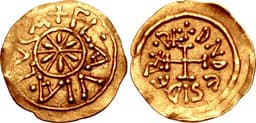
Desiderius
Emperor · Medieval
44.3Total
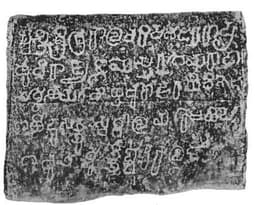
Krishna I of Rashtrakuta
Emperor · Medieval
48.6Total
Basic Information
Born
710
756
Died
786
774
Era
Medieval
Medieval
Nationality
Lombards
India
Occupation
Emperor
Emperor
Civilization
Western
Indian
Score Comparison
Military (10%)
45.0
10.0
Political (20%)
35.1
42.3
Influence (20%)
49.4
56.7
Legacy (20%)
40.8
52.0
Leadership (15%)
51.9
64.0
Strategy (15%)
41.7
45.0
TOTAL
44.3
48.6
Desiderius — Complete Timeline
756 AD
Alliance with the PapacyPolitical Action
Desiderius initially allied with Pope Stephen II, supporting the Papacy against the Lombard dukes of Spoleto and Benevento. This alliance helped secure his position as king, but later conflicts with the Papacy led to his downfall.
Papal AllianceLombard KingdomDiplomacy
Impact: regional
772 AD
Conflict with the Papacy over Papal StatesWar◆ Major
Desiderius invaded the Papal States, capturing several cities and threatening Rome. This aggression prompted Pope Adrian I to appeal to Charlemagne for aid, leading to the Frankish invasion of Italy and Desiderius's eventual defeat.
Papal StatesConflictLombard-Frankish War
Impact: regionaldestructive
773 AD
Defeated by Charlemagne at the Siege of PaviaWar
Charlemagne besieged Desiderius in Pavia, the Lombard capital. After a nine-month siege, Desiderius surrendered, ending Lombard independence. He was captured and exiled to a Frankish monastery, marking the end of the Lombard Kingdom.
Lombard KingdomCharlemagneConquest
Impact: regionaltragic
774 AD
Exile to Corbie AbbeyOther
After his surrender, Desiderius was exiled to the Abbey of Corbie in Francia. He spent the remainder of his life there as a monk, dying in obscurity. His exile symbolized the complete subjugation of the Lombards by the Franks.
ExileLombard KingdomEnd of Dynasty
Impact: regionaltragic
Krishna I of Rashtrakuta — Complete Timeline
760 AD
Commissioned the Kailasa Temple at ElloraCultural◆ Major
Krishna I ordered the construction of the Kailasa Temple (Cave 16) at Ellora, a monolithic rock-cut temple dedicated to Shiva. The temple was carved from a single cliff face, representing a major architectural achievement of the Rashtrakuta dynasty.
ArchitectureHindu TempleEllora Caves
Impact: regionalconstructive
765 AD
Expanded Rashtrakuta territory in the DeccanWar
Krishna I led military campaigns that extended Rashtrakuta control over parts of the Deccan plateau, including areas of present-day Maharashtra and Karnataka. These conquests consolidated the dynasty's power in central India.
Territorial ExpansionDeccan
Impact: regional
770 AD
Defeated the Western ChalukyasWar◆ Major
Krishna I's forces defeated the Western Chalukya king Kirtivarman II, ending Chalukya resistance in the region. This victory solidified Rashtrakuta supremacy in the Deccan for the next century.
Chalukya-Rashtrakuta ConflictDeccan
Impact: regional
Expert Analysis
Origins
Desiderius was born around 710 CE into a noble Lombard family. He rose to become the Duke of Tuscany before claiming the Lombard throne in 756 CE after the death of King Aistulf. His early life is poorly documented, but he was likely educated in military and administrative affairs. Krishna I, born around 730 CE, was a member of the Rashtrakuta dynasty, a prominent Deccan power. He succeeded his father, Dantidurga, as emperor in 756 CE. Little is known of his youth, but he inherited a kingdom expanding its influence over western and central India.
Rise to Power
Desiderius became king of the Lombards in 756 CE after Aistulf's death, navigating a complex political landscape involving the Papacy and the Frankish kingdom. He initially allied with Pope Stephen II, helping to secure papal support against rival Lombard dukes. However, his later invasion of the Papal States in 772 CE provoked Pope Adrian I to seek aid from Charlemagne. This led to the turning point: the Siege of Pavia (773-774 CE), where Charlemagne besieged Desiderius for nine months, resulting in his surrender and the end of Lombard independence. Krishna I's rise was smoother; he inherited a stable kingdom and quickly consolidated power. His major turning point came when he defeated the Western Chalukya king Kirtivarman II around 760 CE, ending Chalukya resistance and establishing Rashtrakuta supremacy in the Deccan. This victory allowed him to expand territory across present-day Maharashtra and Karnataka.
Leadership & Governance
Desiderius's leadership was marked by aggression and miscalculation. He attempted to expand Lombard influence by attacking papal territories, but this provoked a superior Frankish force. His governance focused on maintaining Lombard autonomy, but he lacked diplomatic finesse. His political score of 35.1 reflects poor strategic alliances. In contrast, Krishna I demonstrated effective governance through monumental architecture and religious patronage. His commission of the Kailasa Temple at Ellora—a monolithic rock-cut structure carved from a single cliff—showcases his ability to mobilize resources and labor on a grand scale. This project, dedicated to Shiva, became a symbol of Rashtrakuta power and artistry. Krishna I's leadership score of 64.0 highlights his capacity to inspire and organize, while his military score of 10.0 is surprisingly low, possibly due to limited documentation of campaigns.
Triumph & Tragedy
Desiderius's greatest success was initially securing the Lombard throne and expanding influence in Italy, but his greatest failure was his inability to counter Charlemagne. The Siege of Pavia ended his reign and led to his exile to Corbie Abbey, where he died a monk. His legacy is defined by defeat. Krishna I's triumph was the construction of the Kailasa Temple, a UNESCO World Heritage site that remains a masterpiece of Indian rock-cut architecture. His defeat of the Western Chalukyas secured Rashtrakuta dominance. However, his tragedy is the lack of detailed records; his military and political achievements are overshadowed by the temple. He likely faced internal dissent, but specifics are unknown.
Character & Destiny
Desiderius appears as a determined but short-sighted ruler. His decision to attack the Papacy directly challenged both religious authority and Frankish power, sealing his fate. Historians view him as a symbol of Lombard resistance that ultimately failed. Krishna I is seen as a visionary patron of art and religion. His character, though less known, was likely pious and ambitious, channeling resources into a lasting monument. His destiny was to be remembered primarily for the Kailasa Temple rather than his political or military exploits.
Legacy
Desiderius's legacy is minor: he is remembered as the last Lombard king, with Lombard kingdom absorbed into Charlemagne's empire. His influence score of 49.4 and legacy score of 40.8 reflect this limited impact. In contrast, Krishna I's legacy is monumental: the Kailasa Temple attracts millions of visitors and scholars, and his dynasty continued to rule for centuries. His influence score of 56.7 and legacy score of 52.0 underscore his enduring cultural impact. While Desiderius's total score is 44.3, Krishna I's total is 48.6, a gap of 4.3 points.
Conclusion
Krishna I had greater impact. His creation of the Kailasa Temple represents a pinnacle of human achievement in architecture and religious devotion, influencing Indian culture for centuries. Desiderius, despite higher military scores (45.0 vs 10.0), failed to preserve his kingdom and left no comparable legacy. Krishna I's total score of 48.6 surpasses Desiderius's 44.3, affirming his superior historical significance.
Rankings
🥇
Krishna I of RashtrakutaLeader
Mil: 10.0Pol: 42.3Inf: 56.7
48.6
🥈
Desiderius
Mil: 45.0Pol: 35.1Inf: 49.4
44.3
+4.3 behind
How This Comparison Works
Algorithm
Each figure is scored on 6 dimensions (0—100 scale) based on structured historical data: Military (10%), Political (20%), Influence (20%), Legacy (20%), Leadership (15%), Strategy (15%). The weighted total produces the final ranking.
Data Sources
Scores are computed from structured sub-indicators in the database. Scale factors adjust for era (Ancient ×0.85, Modern ×1.0) and civilization size (Eastern ×1.05, Other ×0.80) to account for differences in population and military scale.
Maximum 3 Figures
Comparisons are limited to 2—3 figures to ensure readability and statistical meaningfulness.
Error Margins
±5 points per dimension — Sub-scores are derived from historical records with inherent uncertainty. Two figures within 5 points on a dimension should be considered roughly equivalent in that area.
Total Score Accuracy
±3 points overall — The weighted combination of 6 dimensions produces a total score with approximately ±3 points of uncertainty. Differences of less than 3 points are not statistically significant— the figures are effectively tied.
Known Limitations
- Historical records are incomplete and uneven across civilizations
- Figures from oral-tradition societies may be underrepresented
- Occupation labels can misclassify multi-role figures
- Scores measure capability and impact, not moral character
- Quantitative scoring is a comparison tool, not absolute truth
Capability Radar
Military (10%) — Battles & Warfare
Battles
30
40
Win Rate
25
40
Expansion
30
40
Political (20%) — Governance & Reform
Reform
30
30
Diplomacy
30
40
Economy
30
45
Influence (20%) — Cultural & Global Reach
Cultural
20
70
Global
15
55
Legacy (20%) — Historical Impact
Historical
25
70
Longevity
20
65
Leadership (15%) — Power & Stability
Tenure
40
50
Stability
25
45
Strategy (15%) — Tactics & Innovation
Strategy
25
35
Tactics
30
35
Reform
20
20
Similar Comparisons
Comments & Discussion
No comments yet. Be the first to share your thoughts!