Loading...
Desiderius vs Napoleon Bonaparte
Napoleon Bonaparte leads by 26.6 pts · 2 figures compared
…
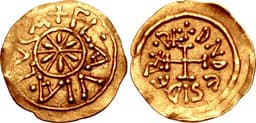
Desiderius
Emperor · Medieval
44.3Total

Napoleon Bonaparte
General · Modern
70.9Total
Basic Information
Born
710
1769
Died
786
1821
Era
Medieval
Modern
Nationality
Lombards
France
Occupation
Emperor
General
Civilization
Western
Western
Score Comparison
Military (10%)
45.0
94.0
Political (20%)
35.1
72.0
Influence (20%)
49.4
40.0
Legacy (20%)
40.8
80.0
Leadership (15%)
51.9
78.0
Strategy (15%)
41.7
90.0
TOTAL
44.3
70.9
Desiderius — Complete Timeline
756 AD
Alliance with the PapacyPolitical Action
Desiderius initially allied with Pope Stephen II, supporting the Papacy against the Lombard dukes of Spoleto and Benevento. This alliance helped secure his position as king, but later conflicts with the Papacy led to his downfall.
Papal AllianceLombard KingdomDiplomacy
Impact: regional
772 AD
Conflict with the Papacy over Papal StatesWar◆ Major
Desiderius invaded the Papal States, capturing several cities and threatening Rome. This aggression prompted Pope Adrian I to appeal to Charlemagne for aid, leading to the Frankish invasion of Italy and Desiderius's eventual defeat.
Papal StatesConflictLombard-Frankish War
Impact: regionaldestructive
773 AD
Defeated by Charlemagne at the Siege of PaviaWar
Charlemagne besieged Desiderius in Pavia, the Lombard capital. After a nine-month siege, Desiderius surrendered, ending Lombard independence. He was captured and exiled to a Frankish monastery, marking the end of the Lombard Kingdom.
Lombard KingdomCharlemagneConquest
Impact: regionaltragic
774 AD
Exile to Corbie AbbeyOther
After his surrender, Desiderius was exiled to the Abbey of Corbie in Francia. He spent the remainder of his life there as a monk, dying in obscurity. His exile symbolized the complete subjugation of the Lombards by the Franks.
ExileLombard KingdomEnd of Dynasty
Impact: regionaltragic
Napoleon Bonaparte — Complete Timeline
1799 AD
Coup of 18 BrumaireOther◆ Major
Napoleon Bonaparte, with support from his brother Lucien and key political figures, overthrew the Directory in a bloodless coup. He established the Consulate with himself as First Consul, effectively becoming the ruler of France. This event ended the French Revolution's most unstable period.
French RevolutionCoupRise to Power
Impact: regional
1804 AD
Promulgation of the Napoleonic CodeOther◆ Major
Napoleon enacted the Civil Code of the French, known as the Napoleonic Code, a comprehensive set of laws that replaced the fragmented feudal legal systems. The code established legal equality, protected property rights, and secularized law. It became the basis for legal systems in many European and world countries.
Legal ReformNapoleonic CodeCivil Law
Impact: globalconstructive
1805 AD
Battle of AusterlitzWar◆ Major
Napoleon's Grande Arm
Napoleonic WarsBattleDecisive Victory
Impact: global
1812 AD
Invasion of RussiaWar◆ Major
Napoleon led the Grande Arm
Napoleonic WarsInvasionDisaster
Impact: globaldestructive
1815 AD
Battle of WaterlooWar◆ Major
Napoleon's French army was defeated by the combined forces of the Duke of Wellington's Anglo-Allied army and Gebhard Leberecht von Bl
Napoleonic WarsBattleFinal Defeat
Impact: globaldestructive
Expert Analysis
desiderius-vs-napoleon-bonaparte
# The Conqueror and the Captive
On a June morning in 1815, Napoleon Bonaparte watched his Imperial Guard march up the muddy slopes of Mont-Saint-Jean, their bearskin hats and blue coats a final flash of glory before the British cannonade tore them apart. Nearly a thousand years earlier, in the spring of 774, another king—Desiderius of the Lombards—peered from the walls of Pavia as Frankish siege engines assembled below, knowing his world was ending. Both men ruled kingdoms, both faced invasions from rising powers, and both met defeat. But while Napoleon’s name echoes through every European capital, Desiderius survives only as a footnote in Charlemagne’s story. What separates a figure who reshapes history from one who is merely erased by it?
Origins
Napoleon was born in 1769 on Corsica, an island that had just passed from Genoese to French control. His family were minor nobles, speaking Italian at home, resentful of French rule. This outsider’s perspective—Corsican, not French; soldier, not aristocrat—shaped a man who saw the old order as something to be climbed, not revered. The French Revolution broke when he was twenty, shattering every barrier that might have held him back. He absorbed Enlightenment ideas about merit, law, and rational government, but also the brutal pragmatism of revolutionary warfare.
Desiderius was born around 710, a Lombard noble in a kingdom that had ruled much of Italy for two centuries. The Lombards were Germanic invaders who had settled into Italian soil, adopting Latin Christianity and Roman administrative habits. Desiderius rose through the ducal ranks, eventually seizing the throne in 756. His world was one of oaths, relics, and shifting alliances between popes, Byzantine emperors, and Frankish kings. He understood power as personal loyalty and territorial control—not as a system to reform, but as a game to play.
Rise to Power
Napoleon’s ascent was a masterpiece of opportunism. At twenty-four, he cleared the streets of Paris with a “whiff of grapeshot” during the Royalist uprising of 1795, earning command of the Army of Italy. In 1796, at twenty-six, he led ragged soldiers across the Alps and shattered the Austrian Empire’s hold on northern Italy in a campaign of stunning speed and daring. He wrote his own dispatches, cultivated his own image, and returned to France a hero. By 1799, he overthrew the Directory in a coup, naming himself First Consul. Five years later, he crowned himself Emperor.
Desiderius took power more conventionally: he was elected king by the Lombard nobility after his predecessor’s death. His early years were cautious. In 756, he allied with Pope Stephen II, helping the Papacy secure its territories against rebellious Lombard dukes. This alliance gave him legitimacy and papal support—but it also made him dependent on a relationship that could sour. He consolidated control over Lombard Italy, but never expanded beyond the peninsula. His rise was a step, not a leap.
Leadership & Governance
Napoleon governed as he conquered: with relentless energy and a mind for systems. He centralized the French state, created the Bank of France, established lycées for education, and—most enduringly—codified French law into the Napoleonic Code. This code abolished feudal privileges, protected property rights, and established secular legal principles that spread across Europe. His military genius was equally systemic: he organized armies into corps that could march separately and fight together, used artillery as a mobile hammer, and exploited speed and deception to divide enemies. At Austerlitz in 1805, he crushed a larger Russo-Austrian army by luring them into a trap on the Pratzen Heights—a battle still studied in war colleges.
Desiderius ruled a smaller, older world. Lombard governance was personal: kings granted lands to dukes in exchange for military service, and the Church provided administrative support. Desiderius built churches, patronized monasteries, and minted coins bearing his name. He tried to expand Lombard influence by marrying his daughter to Charlemagne, the Frankish king—a political match that briefly secured peace. But his military strategy was defensive and reactive. When he invaded the Papal States in 772, seizing cities and threatening Rome, he provoked Pope Adrian I to call for Frankish intervention. Desiderius had no corps system, no strategic doctrine—only feudal levies and fortified cities.
Triumph & Tragedy
Napoleon’s greatest moment was the zenith of his empire in 1807–1812, when he controlled Europe from Spain to Poland. He dictated terms to Prussia, dissolved the Holy Roman Empire, and placed his brothers on thrones. His tragedy was the 1812 invasion of Russia: 600,000 men marched east; fewer than 100,000 returned. The Russian winter, scorched-earth tactics, and his own refusal to compromise destroyed the Grande Armée. He was exiled to Elba in 1814, returned for a Hundred Days in 1815, and was finally broken at Waterloo.
Desiderius’s triumph was brief: his alliance with the Papacy in 756 gave him a decade of stable rule. His tragedy came in 773, when Charlemagne—answering the pope’s call—descended into Italy with a Frankish army. Desiderius retreated to Pavia, his capital, and held out for nine months. But no relief came; his allies melted away. In 774, he surrendered. Charlemagne spared his life but exiled him to the Abbey of Corbie in Francia, where he died in 786, forgotten.
Character & Destiny
Napoleon was driven by an insatiable ambition married to a cold, calculating intellect. “Impossible is a word to be found only in the dictionary of fools,” he said. He believed he could reshape reality through will and system. This made him a conqueror and reformer, but also a man who could not stop. His refusal to accept limits—to negotiate peace, to consolidate his gains—led to overreach and ruin.
Desiderius was a survivor, not a visionary. He played the old game of Italian politics: alliances, marriages, and limited wars. But he misjudged the new power in the north. Charlemagne was not a Lombard duke to be bribed or married into submission—he was a Frankish king building an empire. Desiderius’s invasion of the Papal States in 772 was a fatal miscalculation, born of the belief that old alliances would hold. They did not.
Legacy
Napoleon’s legacy is immense. The Napoleonic Code shaped civil law across Europe and the Americas. He reorganized Germany, inspired nationalism, and sold Louisiana to the United States. His military tactics influenced warfare into the twentieth century. He is remembered as both liberator and tyrant, genius and megalomaniac—a figure who cannot be ignored.
Desiderius left almost nothing. His kingdom was absorbed into Charlemagne’s empire. His name survives in a few chronicles and the word “desideratum”—that which is longed for but lost. He is the last king of the Lombards, a placeholder in a transition to Frankish rule. His failure was not incompetence but irrelevance: he opposed a force that was reshaping Europe, and history simply moved past him.
Conclusion
Napoleon and Desiderius both fell to greater powers—Napoleon to the combined might of Europe, Desiderius to Charlemagne. But Napoleon’s fall was a tragedy; Desiderius’s was an ending. One man’s ambition created a system that outlasted him; the other’s caution left only silence. The difference lies not in their defeats, but in what they built before the walls came down. Napoleon built a world; Desiderius only defended one. In the end, history remembers not who surrendered, but what they left standing.
Rankings
🥇
Napoleon BonaparteLeader
Mil: 94.0Pol: 72.0Inf: 40.0
70.9
🥈
Desiderius
Mil: 45.0Pol: 35.1Inf: 49.4
44.3
+26.6 behind
How This Comparison Works
Algorithm
Each figure is scored on 6 dimensions (0—100 scale) based on structured historical data: Military (10%), Political (20%), Influence (20%), Legacy (20%), Leadership (15%), Strategy (15%). The weighted total produces the final ranking.
Data Sources
Scores are computed from structured sub-indicators in the database. Scale factors adjust for era (Ancient ×0.85, Modern ×1.0) and civilization size (Eastern ×1.05, Other ×0.80) to account for differences in population and military scale.
Maximum 3 Figures
Comparisons are limited to 2—3 figures to ensure readability and statistical meaningfulness.
Error Margins
±5 points per dimension — Sub-scores are derived from historical records with inherent uncertainty. Two figures within 5 points on a dimension should be considered roughly equivalent in that area.
Total Score Accuracy
±3 points overall — The weighted combination of 6 dimensions produces a total score with approximately ±3 points of uncertainty. Differences of less than 3 points are not statistically significant— the figures are effectively tied.
Known Limitations
- Historical records are incomplete and uneven across civilizations
- Figures from oral-tradition societies may be underrepresented
- Occupation labels can misclassify multi-role figures
- Scores measure capability and impact, not moral character
- Quantitative scoring is a comparison tool, not absolute truth
Capability Radar
Military (10%) — Battles & Warfare
Battles
30
95
Win Rate
25
90
Expansion
30
95
Political (20%) — Governance & Reform
Reform
30
95
Diplomacy
30
80
Economy
30
85
Influence (20%) — Cultural & Global Reach
Cultural
20
85
Global
15
90
Legacy (20%) — Historical Impact
Historical
25
95
Longevity
20
90
Leadership (15%) — Power & Stability
Tenure
40
85
Stability
25
70
Strategy (15%) — Tactics & Innovation
Strategy
25
95
Tactics
30
98
Reform
20
92
Similar Comparisons
Comments & Discussion
DESIDERIUS_THE_DISMISSED6/17/2026
Let’s be real: comparing Desiderius to Napoleon is like comparing a sandcastle to a fortress. Napoleon remapped Europe in a decade—the Napoleonic Code, the Continental System, the campaigns from Egypt to Moscow. Desiderius? He lost his crown because the Pope asked Charlemagne for help. That’s it. No grand strategy, no lasting reforms. He’s a footnote because he never aimed for more than survival. Napoleon aimed for everything and nearly got it. That’s the difference between a footnote and a revo
凯旋门下的败犬6/17/2026
说拿破仑是征服者,倒不如说他是暴发户。他在滑铁卢的指挥简直灾难,格鲁希迷路、内伊蛮干,而他只会怪天气。戴西德里乌斯至少守了帕维亚十个月,直到援军断绝才投降。拿破仑呢?百日王朝时就丢掉了法兰西的民心——他在厄尔巴岛时就该明白,靠虚荣撑起的帝国,终会像纸牌屋一样坍塌。历史偏爱赢家,但这不等于拿破仑就比伦巴第王高明。
CLASSICS_COUNTERPUNCH6/17/2026
The real story here isn’t about glory—it’s about survival through adaptation. Napoleon mastered modern statecraft: propaganda, meritocracy, legal reform. Desiderius clung to Lombard tradition and lost everything when Charlemagne’s Franks adapted siege warfare from the Byzantines. Napoleon’s defeat came when he overreached into Russia, but his systems outlasted him. Desiderius left only an erased coin and a monastery exile. Winners reshape institutions; losers just vanish. That’s why we remember
铁蹄下的石板6/17/2026
别忘了,戴西德里乌斯输给的可是查理曼——一个建立起中世纪欧洲根基的巨人。拿破仑的对手呢?老朽的奥地利、迟疑的普鲁士、还有一群被我方宣传夸大的“反法同盟”。伦巴第人面对的是军事、宗教、文化的全面碾压,而拿破仑面对的是自家革命后的烂摊子,他却靠着运气和恐怖统治勉强维持。如果戴西德里乌斯有拿破仑的资源和机遇,他未必会输得更惨。但历史不写“如果”。