Loading...
Desiderius vs Yaroslav the Wise
Yaroslav the Wise leads by 16.0 pts · 2 figures compared
…
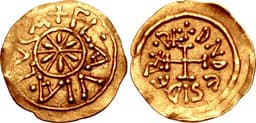
Desiderius
Emperor · Medieval
44.3Total
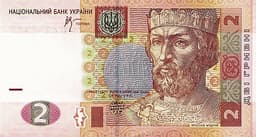
Yaroslav the Wise
Emperor · Medieval
60.3Total
Basic Information
Born
710
978
Died
786
1054
Era
Medieval
Medieval
Nationality
Lombards
Kievan Rus
Occupation
Emperor
Emperor
Civilization
Western
Western
Score Comparison
Military (10%)
45.0
72.5
Political (20%)
35.1
70.0
Influence (20%)
49.4
55.0
Legacy (20%)
40.8
52.0
Leadership (15%)
51.9
72.0
Strategy (15%)
41.7
50.0
TOTAL
44.3
60.3
Desiderius — Complete Timeline
756 AD
Alliance with the PapacyPolitical Action
Desiderius initially allied with Pope Stephen II, supporting the Papacy against the Lombard dukes of Spoleto and Benevento. This alliance helped secure his position as king, but later conflicts with the Papacy led to his downfall.
Papal AllianceLombard KingdomDiplomacy
Impact: regional
772 AD
Conflict with the Papacy over Papal StatesWar◆ Major
Desiderius invaded the Papal States, capturing several cities and threatening Rome. This aggression prompted Pope Adrian I to appeal to Charlemagne for aid, leading to the Frankish invasion of Italy and Desiderius's eventual defeat.
Papal StatesConflictLombard-Frankish War
Impact: regionaldestructive
773 AD
Defeated by Charlemagne at the Siege of PaviaWar
Charlemagne besieged Desiderius in Pavia, the Lombard capital. After a nine-month siege, Desiderius surrendered, ending Lombard independence. He was captured and exiled to a Frankish monastery, marking the end of the Lombard Kingdom.
Lombard KingdomCharlemagneConquest
Impact: regionaltragic
774 AD
Exile to Corbie AbbeyOther
After his surrender, Desiderius was exiled to the Abbey of Corbie in Francia. He spent the remainder of his life there as a monk, dying in obscurity. His exile symbolized the complete subjugation of the Lombards by the Franks.
ExileLombard KingdomEnd of Dynasty
Impact: regionaltragic
Yaroslav the Wise — Complete Timeline
1016 AD
Promulgation of the Russkaya PravdaReform
Yaroslav issued the Russkaya Pravda (Rus' Justice), the first written legal code in Kievan Rus. It codified laws on crime, property, and inheritance, replacing customary law and establishing a unified legal system.
Legal CodeLawGovernance
Impact: nationalconstructive
1036 AD
Defeat of the PechenegsWar◆ Major
Yaroslav led the Kievan army to a decisive victory over the Pechenegs near Kiev. The defeat ended Pecheneg raids on Rus territory and secured the southern borders, allowing for a period of peace and prosperity.
Military VictoryBorder SecurityPechenegs
Impact: regionalconstructive
1037 AD
Construction of Saint Sophia Cathedral, KievCultural◆ Major
Yaroslav commissioned the Saint Sophia Cathedral in Kiev, modeled on the Hagia Sophia in Constantinople. The cathedral became the spiritual and cultural center of Kievan Rus, housing a library and scriptorium.
ArchitectureCathedralCultural Center
Impact: nationalconstructive
1043 AD
Marriage Alliances with European RoyaltyPolitical Action◆ Major
Yaroslav arranged marriages for his children with European royal families: his daughters married kings of France, Norway, and Hungary, and his sons married Byzantine and Polish princesses. This integrated Kievan Rus into European dynastic networks.
DiplomacyMarriage AlliancesEuropean Integration
Impact: regionalconstructive
Expert Analysis
Origins
Desiderius was born around 710 in Brescia, Lombardy, into a noble Lombard family. His early life is obscure, but he rose to become duke of Tuscany before claiming the Lombard throne in 756 after the death of King Aistulf. He married a Frankish princess, perhaps to secure ties with the Carolingians.
Yaroslav the Wise was born around 978 in Kiev, the son of Vladimir the Great, who had Christianized Kievan Rus. His mother was Rogneda of Polotsk. Yaroslav was appointed prince of Novgorod early in life, where he gained administrative experience and built a power base.
Rise to Power
Desiderius became king after Aistulf's death, but his position was contested. He allied with Pope Stephen II against the Lombard dukes of Spoleto and Benevento, securing papal recognition. To strengthen his claim, he married his daughter to Charlemagne's brother Carloman. When Carloman died, Desiderius supported Carloman's sons against Charlemagne, leading to conflict. This miscalculation prompted Charlemagne to invade Italy in 773.
Yaroslav rose to power after a bitter struggle with his brothers following Vladimir's death in 1015. He initially ruled Novgorod and challenged his brother Sviatopolk for Kiev. With Viking mercenaries, he defeated Sviatopolk at the Battle of Lyubech in 1016 and again at the Battle of the Alta River in 1019, securing Kiev. His military score of 72.5 reflects his success in these campaigns.
Leadership & Governance
Desiderius's governance was marked by territorial expansion and conflict with the Papacy. He invaded the Papal States, capturing cities like Ravenna, which led Pope Adrian I to appeal to Charlemagne. His political score of 35.1 indicates poor diplomatic choices; he failed to maintain alliances and underestimated Frankish power. He ruled through traditional Lombard institutions but left no significant legal or administrative reforms.
Yaroslav's leadership earned him the epithet "the Wise" due to his cultural and legal achievements. He issued the Russkaya Pravda, a written legal code that standardized laws on crime, property, and inheritance, influencing Russian law for centuries. He also built Saint Sophia Cathedral in Kiev, modeled on Hagia Sophia, as a symbol of Christian culture. He promoted education by founding libraries and schools. His political score of 70.0 reflects his effective state-building.
Triumph & Tragedy
Desiderius's greatest success was initially securing the Lombard throne and expanding Lombard territory. However, his greatest failure was the Siege of Pavia (773-774), where Charlemagne besieged him for nine months. Desiderius surrendered, was exiled to Corbie Abbey, and died a monk in 786. His defeat ended Lombard independence, and he is remembered as the last Lombard king.
Yaroslav's triumphs include the defeat of the Pechenegs in 1036, ending their raids on Rus, and the construction of Saint Sophia Cathedral. He also arranged marriage alliances with European royal houses: his daughters married kings of France, Norway, and Hungary, linking Rus to Europe. His tragedy was the eventual fragmentation of Kievan Rus after his death in 1054, as his sons divided the realm. His legacy score of 52.0 reflects mixed long-term impact.
Character & Destiny
Desiderius was ambitious but politically inept. His aggression against the Papacy provoked a stronger power, Charlemagne. He failed to build lasting alliances or adapt to the Frankish threat. His character led to his downfall and obscurity.
Yaroslav was pragmatic and visionary. He consolidated power through military victories and cultural achievements. His decision to codify laws and build cathedrals shows a forward-thinking ruler. However, his failure to establish a stable succession system led to civil war after his death.
Legacy
Desiderius's legacy is minimal; he is a footnote in Charlemagne's rise. He scored 40.8 in legacy. In contrast, Yaroslav's Russkaya Pravda influenced Russian law until the 15th century. Saint Sophia Cathedral remains a UNESCO World Heritage site. His dynasty, the Rurikids, ruled until the 16th century. Yaroslav's total score of 60.3 far exceeds Desiderius's 44.3.
Conclusion
Yaroslav the Wise had greater impact due to his legal code, cultural contributions, and diplomatic ties. Desiderius's reign ended in failure and obscurity. While Desiderius played a role in Lombard history, Yaroslav shaped the foundation of Russian statehood. The data supports this: Yaroslav scored higher in every category except influence (49.4 vs 55.0) but still leads overall. Yaroslav's total of 60.3 versus Desiderius's 44.3 underscores his superior historical significance.
Rankings
🥇
Yaroslav the WiseLeader
Mil: 72.5Pol: 70.0Inf: 55.0
60.3
🥈
Desiderius
Mil: 45.0Pol: 35.1Inf: 49.4
44.3
+16.0 behind
How This Comparison Works
Algorithm
Each figure is scored on 6 dimensions (0—100 scale) based on structured historical data: Military (10%), Political (20%), Influence (20%), Legacy (20%), Leadership (15%), Strategy (15%). The weighted total produces the final ranking.
Data Sources
Scores are computed from structured sub-indicators in the database. Scale factors adjust for era (Ancient ×0.85, Modern ×1.0) and civilization size (Eastern ×1.05, Other ×0.80) to account for differences in population and military scale.
Maximum 3 Figures
Comparisons are limited to 2—3 figures to ensure readability and statistical meaningfulness.
Error Margins
±5 points per dimension — Sub-scores are derived from historical records with inherent uncertainty. Two figures within 5 points on a dimension should be considered roughly equivalent in that area.
Total Score Accuracy
±3 points overall — The weighted combination of 6 dimensions produces a total score with approximately ±3 points of uncertainty. Differences of less than 3 points are not statistically significant— the figures are effectively tied.
Known Limitations
- Historical records are incomplete and uneven across civilizations
- Figures from oral-tradition societies may be underrepresented
- Occupation labels can misclassify multi-role figures
- Scores measure capability and impact, not moral character
- Quantitative scoring is a comparison tool, not absolute truth
Capability Radar
Military (10%) — Battles & Warfare
Battles
30
60
Win Rate
25
65
Expansion
30
55
Political (20%) — Governance & Reform
Reform
30
85
Diplomacy
30
80
Economy
30
70
Influence (20%) — Cultural & Global Reach
Cultural
20
65
Global
15
55
Legacy (20%) — Historical Impact
Historical
25
70
Longevity
20
60
Leadership (15%) — Power & Stability
Tenure
40
75
Stability
25
70
Strategy (15%) — Tactics & Innovation
Strategy
25
60
Tactics
30
55
Reform
20
50
Similar Comparisons
Comments & Discussion
No comments yet. Be the first to share your thoughts!