Loading...
Deva Raya I vs Napoleon Bonaparte
Napoleon Bonaparte leads by 17.7 pts · 2 figures compared
…
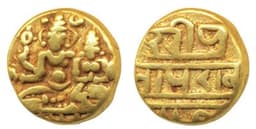
Deva Raya I
Emperor · Medieval
53.2Total

Napoleon Bonaparte
General · Modern
70.9Total
Basic Information
Born
1406
1769
Died
1422
1821
Era
Medieval
Modern
Nationality
India
France
Occupation
Emperor
General
Civilization
Indian
Western
Score Comparison
Military (10%)
52.5
94.0
Political (20%)
53.8
72.0
Influence (20%)
56.4
40.0
Legacy (20%)
48.3
80.0
Leadership (15%)
53.2
78.0
Strategy (15%)
57.5
90.0
TOTAL
53.2
70.9
Deva Raya I — Complete Timeline
1410 AD
Construction of the Tungabhadra DamReform◆ Major
Deva Raya I ordered the construction of a large dam across the Tungabhadra River near Vijayanagara. The dam created a reservoir and fed irrigation canals, significantly increasing agricultural productivity in the surrounding region and supporting the empire's population.
InfrastructureIrrigationAgriculture
Impact: regionalconstructive
1415 AD
Reform of the Revenue SystemReform◆ Major
Deva Raya I implemented a new land revenue assessment system, standardizing tax collection based on land quality and crop yields. This reform increased state income and reduced corruption among local officials.
AdministrationTaxationEconomy
Impact: nationalconstructive
1417 AD
Invasion of the Bahmani SultanateWar
Deva Raya I launched a military campaign against the Bahmani Sultanate, seeking to expand Vijayanagara territory. The campaign resulted in initial successes but ultimately ended in a negotiated peace, with no major territorial changes.
WarBahmaniExpansion
Impact: regional
Napoleon Bonaparte — Complete Timeline
1799 AD
Coup of 18 BrumaireOther◆ Major
Napoleon Bonaparte, with support from his brother Lucien and key political figures, overthrew the Directory in a bloodless coup. He established the Consulate with himself as First Consul, effectively becoming the ruler of France. This event ended the French Revolution's most unstable period.
French RevolutionCoupRise to Power
Impact: regional
1804 AD
Promulgation of the Napoleonic CodeOther◆ Major
Napoleon enacted the Civil Code of the French, known as the Napoleonic Code, a comprehensive set of laws that replaced the fragmented feudal legal systems. The code established legal equality, protected property rights, and secularized law. It became the basis for legal systems in many European and world countries.
Legal ReformNapoleonic CodeCivil Law
Impact: globalconstructive
1805 AD
Battle of AusterlitzWar◆ Major
Napoleon's Grande Arm
Napoleonic WarsBattleDecisive Victory
Impact: global
1812 AD
Invasion of RussiaWar◆ Major
Napoleon led the Grande Arm
Napoleonic WarsInvasionDisaster
Impact: globaldestructive
1815 AD
Battle of WaterlooWar◆ Major
Napoleon's French army was defeated by the combined forces of the Duke of Wellington's Anglo-Allied army and Gebhard Leberecht von Bl
Napoleonic WarsBattleFinal Defeat
Impact: globaldestructive
Expert Analysis
deva-raya-i-vs-napoleon-bonaparte
# The Emperor and the Engineer
The contrast could hardly be sharper. On one side stands Napoleon Bonaparte, his hand thrust into his waistcoat, gazing across a blood-soaked field at Austerlitz as the sun rises on his greatest victory. On the other, Deva Raya I watches water surge through a newly completed dam on the Tungabhadra River, turning arid plains into green abundance. One man conquered nations; the other nourished them. Yet both were rulers of sprawling empires, both faced enemies at their borders, and both left marks that outlasted their dynasties. Why did their paths diverge so dramatically?
Origins
Napoleon was born in 1769 on the Mediterranean island of Corsica, a place that had only recently become French. His family was minor nobility, impoverished and resentful of French rule. He spoke Italian before French, and his early letters seethed with Corsican nationalism. This outsider's hunger would drive him for the rest of his life. He entered a military academy at nine, graduated at sixteen, and devoured books on artillery tactics and military history. The France he grew up in was a powder keg—the Revolution had shattered the old order, creating opportunities unknown under the Bourbon monarchy.
Deva Raya I, born in 1406, inherited a different world. The Vijayanagara Empire was already a major power in southern India, ruling from its magnificent capital city. As a prince of the Sangama dynasty, he was raised in the traditions of Hindu kingship, trained in statecraft, administration, and the arts of war. But the empire faced a persistent threat: the Bahmani Sultanate to the north, a rival Muslim kingdom that had been bleeding Vijayanagara through raids and wars for decades. Deva Raya's world was one of ancient certainties—caste hierarchy, temple patronage, and the sacred duties of a king.
Rise to Power
Napoleon's ascent was a product of chaos. In 1793, at just twenty-four, he distinguished himself at the Siege of Toulon, where his artillery forced the British fleet to withdraw. By 1796 he commanded the Army of Italy, and his lightning campaign against the Austrians made him a national hero. The Directory, France's corrupt post-revolutionary government, gave him command out of desperation—and fear of his popularity. In 1799, he staged a coup and made himself First Consul. By 1804, he crowned himself Emperor.
Deva Raya I came to power through the normal mechanisms of dynastic succession. He inherited the throne around 1406, following his father Harihara II. There was no revolution, no coup, no dramatic seizure of power. His challenge was not to create a new order but to strengthen an existing one. The enemies were known: the Bahmani Sultans, who had humiliated his predecessors. The tools were familiar: armies, fortifications, and the ancient wisdom of Hindu statecraft.
Leadership & Governance
Here the two rulers reveal their deepest differences. Napoleon was a military genius—his score of 94 in military strategy reflects a mind that transformed warfare. He reorganized armies into corps, used speed and concentration to defeat larger forces, and won battles from Austerlitz in 1805 to Wagram in 1809. But his political score of 75 tells a more complicated story. The Napoleonic Code standardized French law, abolished feudalism, and spread revolutionary ideals across Europe. Yet Napoleon also reinstated slavery in French colonies, suppressed women's rights, and created a new aristocracy. He was a reformer who ultimately betrayed the Revolution's principles.
Deva Raya I's military score of 38 suggests he was no Napoleon on the battlefield. His 1417 campaign against the Bahmani Sultanate achieved limited gains. But his political score of 62 reflects a different kind of genius. In 1410, he ordered construction of a massive dam across the Tungabhadra River. This wasn't mere infrastructure—it was statecraft. The dam irrigated thousands of acres, boosted agricultural output, and consolidated the loyalty of farmers and nobles alike. In 1415, he reformed the revenue system, standardizing taxes based on land quality. These were the acts of a ruler who understood that an empire's strength lies not in conquest but in the prosperity of its people.
Triumph & Tragedy
Napoleon's triumph was Austerlitz in 1805, where he destroyed a combined Russian-Austrian army and forced the Holy Roman Empire to dissolve. His tragedy was the invasion of Russia in 1812, where 600,000 men marched east and fewer than 100,000 returned. The disaster broke his aura of invincibility. Exiled to Elba in 1814, he escaped and ruled for a Hundred Days before Waterloo ended everything in 1815. He died in 1821 on the remote island of Saint Helena, a prisoner of the British.
Deva Raya I's triumphs were quieter. The Tungabhadra Dam turned Vijayanagara into one of the most fertile regions in India. The revenue reforms stabilized the empire's finances. His tragedy was that he died young in 1422, at just thirty-six, before his work could be fully consolidated. The Bahmani threat remained, and his successors would face the same wars he had fought. But unlike Napoleon, Deva Raya did not die in disgrace. He died a king, in his own realm, surrounded by the prosperity he had built.
Character & Destiny
Napoleon was driven by an insatiable ambition. "I am not a man," he once said, "but a thing." He saw himself as an instrument of history, destined to reshape Europe. This belief gave him extraordinary energy but also blind spots. He could not stop, could not compromise, could not admit limits. His personality demanded total victory, and total victory demanded total war. In the end, his character destroyed him.
Deva Raya I possessed a different temperament. The dam and the tax reforms suggest a ruler who thought in decades, not battles. He understood that an empire's true foundation is not glory but grain. His military campaigns were defensive or limited in scope—he fought to preserve, not to conquer. This moderation was not weakness but wisdom. He knew that the Bahmani Sultanate would not disappear, and that lasting security required internal strength, not external expansion.
Legacy
Napoleon's legacy is immense and contradictory. He spread revolutionary ideals of nationalism and legal equality across Europe, but he also inspired a century of warfare. His Napoleonic Code influences legal systems from France to Louisiana to Japan. He is remembered as both a liberator and a tyrant, a military genius and a cautionary tale about overreach. His total score of 82.4 reflects this complexity.
Deva Raya I's legacy is quieter but more enduring. The Tungabhadra Dam continued to irrigate fields for centuries. His revenue reforms became a model for later Vijayanagara rulers. He is remembered not for battles won but for a kingdom nourished. His total score of 63.3 might seem modest, but it measures a different kind of greatness—not the flash of conquest but the slow work of building.
Conclusion
Napoleon and Deva Raya I represent two visions of leadership. One sought to dominate the world through force; the other sought to sustain his world through wisdom. One died in exile, remembered for his fall; the other died in his kingdom, remembered for his works. Perhaps the deepest difference lies in what they valued. Napoleon valued glory; Deva Raya valued stability. One changed the map of Europe; the other changed the soil of India. Both were great in their own ways, but their stories remind us that greatness takes many forms—and that sometimes the quietest rulers leave the deepest marks.
Rankings
🥇
Napoleon BonaparteLeader
Mil: 94.0Pol: 72.0Inf: 40.0
70.9
🥈
Deva Raya I
Mil: 52.5Pol: 53.8Inf: 56.4
53.2
+17.7 behind
How This Comparison Works
Algorithm
Each figure is scored on 6 dimensions (0—100 scale) based on structured historical data: Military (10%), Political (20%), Influence (20%), Legacy (20%), Leadership (15%), Strategy (15%). The weighted total produces the final ranking.
Data Sources
Scores are computed from structured sub-indicators in the database. Scale factors adjust for era (Ancient ×0.85, Modern ×1.0) and civilization size (Eastern ×1.05, Other ×0.80) to account for differences in population and military scale.
Maximum 3 Figures
Comparisons are limited to 2—3 figures to ensure readability and statistical meaningfulness.
Error Margins
±5 points per dimension — Sub-scores are derived from historical records with inherent uncertainty. Two figures within 5 points on a dimension should be considered roughly equivalent in that area.
Total Score Accuracy
±3 points overall — The weighted combination of 6 dimensions produces a total score with approximately ±3 points of uncertainty. Differences of less than 3 points are not statistically significant— the figures are effectively tied.
Known Limitations
- Historical records are incomplete and uneven across civilizations
- Figures from oral-tradition societies may be underrepresented
- Occupation labels can misclassify multi-role figures
- Scores measure capability and impact, not moral character
- Quantitative scoring is a comparison tool, not absolute truth
Capability Radar
Military (10%) — Battles & Warfare
Battles
55
95
Win Rate
60
90
Expansion
50
95
Political (20%) — Governance & Reform
Reform
65
95
Diplomacy
55
80
Economy
70
85
Influence (20%) — Cultural & Global Reach
Cultural
45
85
Global
35
90
Legacy (20%) — Historical Impact
Historical
50
95
Longevity
40
90
Leadership (15%) — Power & Stability
Tenure
60
85
Stability
60
70
Strategy (15%) — Tactics & Innovation
Strategy
55
95
Tactics
50
98
Reform
40
92
Similar Comparisons
Comments & Discussion
CANNONFODDER CRITIC6/17/2026
Napoleon's victories were tactical mirages, not strategic genius. Austerlitz? A masterpiece against an overconfident coalition that handed him victory. Real test was 1812's Russian winter - he failed logistics 101 while Deva Raya built dams that fed millions for centuries. Give me an engineer emperor over this overrated Corsican any day. His military record is just lucky breaks, not sustainable power.
水利史观6/17/2026
拿战史就是欧洲中心论的自我陶醉。Deva Raya I在坦加布德拉河修的水利网络,灌溉了40万亩农田,养活了几代人。拿破仑呢?滑铁卢后马上被流放。一个靠破坏聚财,一个靠建设留名。史书总夸大军事家的作用,但真正改变普通人命运的,是那些会修水库的皇帝。东方的工程智慧比西方的战争狂热务实得多。