Loading...
This comparison has not been analyzed yet.
One-time AI generation (~1 minute). Scores and timeline are already available below.
Deva Raya I vs Parantaka I
Parantaka I leads by 4.0 pts · 2 figures compared
…
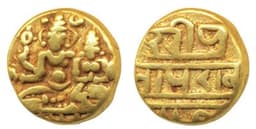
Deva Raya I
Emperor · Medieval
53.2Total

Parantaka I
Emperor · Medieval
57.2Total
Basic Information
Born
1406
907
Died
1422
955
Era
Medieval
Medieval
Nationality
India
India
Occupation
Emperor
Emperor
Civilization
Indian
Indian
Score Comparison
Military (10%)
52.5
52.5
Political (20%)
53.8
68.0
Influence (20%)
56.4
53.3
Legacy (20%)
48.3
46.7
Leadership (15%)
53.2
72.0
Strategy (15%)
57.5
60.0
TOTAL
53.2
57.2
Deva Raya I — Complete Timeline
1410 AD
Construction of the Tungabhadra DamReform◆ Major
Deva Raya I ordered the construction of a large dam across the Tungabhadra River near Vijayanagara. The dam created a reservoir and fed irrigation canals, significantly increasing agricultural productivity in the surrounding region and supporting the empire's population.
InfrastructureIrrigationAgriculture
Impact: regionalconstructive
1415 AD
Reform of the Revenue SystemReform◆ Major
Deva Raya I implemented a new land revenue assessment system, standardizing tax collection based on land quality and crop yields. This reform increased state income and reduced corruption among local officials.
AdministrationTaxationEconomy
Impact: nationalconstructive
1417 AD
Invasion of the Bahmani SultanateWar
Deva Raya I launched a military campaign against the Bahmani Sultanate, seeking to expand Vijayanagara territory. The campaign resulted in initial successes but ultimately ended in a negotiated peace, with no major territorial changes.
WarBahmaniExpansion
Impact: regional
Parantaka I — Complete Timeline
920 AD
Conquest of Madurai and the Pandya KingdomWar◆ Major
Parantaka I invaded the Pandya kingdom and captured its capital Madurai, taking the title 'Maduraikonda' (conqueror of Madurai). He also seized the Pandya crown and other regalia, establishing Chola supremacy over the southern Tamil region.
Pandya ConquestMaduraiChola Expansion
Impact: regionalconstructive
930 AD
Construction of the Golden Hall at ChidambaramCultural
Parantaka I is credited with building the golden roof (vimanam) over the sanctum of the Nataraja Temple at Chidambaram. This act of patronage to the Shaiva tradition enhanced the temple's prestige and became a symbol of Chola devotion.
Temple PatronageChidambaramShaivism
Impact: regionalconstructive
940 AD
Invasion of Sri LankaWar◆ Major
Parantaka I launched a naval invasion of Sri Lanka, capturing the northern part of the island. This campaign extended Chola influence across the Palk Strait and demonstrated the Chola navy's capability, though the conquest was not permanent.
Naval CampaignSri LankaChola Expansion
Impact: regional
949 AD
Defeat at the Battle of TakkolamWar◆ Major
Parantaka I suffered a major defeat at the Battle of Takkolam against the Rashtrakuta king Krishna III and his Ganga allies. The Chola army was routed, and the Rashtrakutas occupied the northern Chola territories, including the capital Thanjavur temporarily.
Rashtrakuta WarMilitary DefeatTerritorial Loss
Impact: regionaltragic
This comparison has not been analyzed yet.
One-time AI generation (~1 minute). Scores and timeline are already available below.
Rankings
🥇
Parantaka ILeader
Mil: 52.5Pol: 68.0Inf: 53.3
57.2
🥈
Deva Raya I
Mil: 52.5Pol: 53.8Inf: 56.4
53.2
+4.0 behind
How This Comparison Works
Algorithm
Each figure is scored on 6 dimensions (0—100 scale) based on structured historical data: Military (10%), Political (20%), Influence (20%), Legacy (20%), Leadership (15%), Strategy (15%). The weighted total produces the final ranking.
Data Sources
Scores are computed from structured sub-indicators in the database. Scale factors adjust for era (Ancient ×0.85, Modern ×1.0) and civilization size (Eastern ×1.05, Other ×0.80) to account for differences in population and military scale.
Maximum 3 Figures
Comparisons are limited to 2—3 figures to ensure readability and statistical meaningfulness.
Error Margins
±5 points per dimension — Sub-scores are derived from historical records with inherent uncertainty. Two figures within 5 points on a dimension should be considered roughly equivalent in that area.
Total Score Accuracy
±3 points overall — The weighted combination of 6 dimensions produces a total score with approximately ±3 points of uncertainty. Differences of less than 3 points are not statistically significant— the figures are effectively tied.
Known Limitations
- Historical records are incomplete and uneven across civilizations
- Figures from oral-tradition societies may be underrepresented
- Occupation labels can misclassify multi-role figures
- Scores measure capability and impact, not moral character
- Quantitative scoring is a comparison tool, not absolute truth
Capability Radar
Military (10%) — Battles & Warfare
Battles
55
60
Win Rate
60
40
Expansion
50
65
Political (20%) — Governance & Reform
Reform
65
45
Diplomacy
55
50
Economy
70
55
Influence (20%) — Cultural & Global Reach
Cultural
45
40
Global
35
20
Legacy (20%) — Historical Impact
Historical
50
45
Longevity
40
35
Leadership (15%) — Power & Stability
Tenure
60
70
Stability
60
60
Strategy (15%) — Tactics & Innovation
Strategy
55
50
Tactics
50
55
Reform
40
30
Similar Comparisons
Comments & Discussion
No comments yet. Be the first to share your thoughts!