Loading...
This comparison has not been analyzed yet.
One-time AI generation (~1 minute). Scores and timeline are already available below.
Edward I vs Parantaka I
Edward I leads by 5.0 pts · 2 figures compared
…
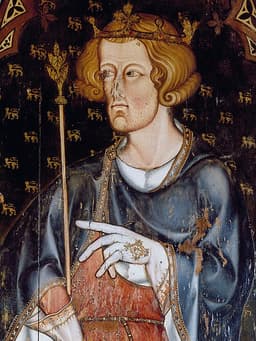
Edward I
Emperor · Medieval
62.2Total

Parantaka I
Emperor · Medieval
57.2Total
Basic Information
Born
1239
907
Died
1307
955
Era
Medieval
Medieval
Nationality
England
India
Occupation
Emperor
Emperor
Civilization
Western
Indian
Score Comparison
Military (10%)
74.7
52.5
Political (20%)
60.0
68.0
Influence (20%)
56.7
53.3
Legacy (20%)
55.0
46.7
Leadership (15%)
72.0
72.0
Strategy (15%)
70.0
60.0
TOTAL
62.2
57.2
Edward I — Complete Timeline
1282 AD
Conquest of WalesWar◆ Major
Edward I led a military campaign that resulted in the conquest of Wales. After the death of Llywelyn ap Gruffudd, Edward built a ring of castles (including Caernarfon and Conwy) to control the region. The Statute of Rhuddlan in 1284 annexed Wales to England.
ConquestWalesCastles
Impact: regional
1290 AD
Expulsion of the Jews from EnglandPolitical Action◆ Major
Edward I issued the Edict of Expulsion, ordering all Jews to leave England. The expulsion was motivated by financial and religious pressures. Jews were given until November 1 to depart, and their property was confiscated by the crown. The ban lasted until 1656.
ExpulsionJewsReligious Persecution
Impact: nationaldestructive
1295 AD
Model ParliamentPolitical Action◆ Major
Edward I summoned the Model Parliament, which included representatives of the commons (knights and burgesses) alongside nobles and clergy. This assembly set a precedent for the composition of the English Parliament. It was called to approve taxes for wars in Scotland and France.
ParliamentRepresentationTaxation
Impact: nationalconstructive
1296 AD
First War of Scottish IndependenceWar◆ Major
Edward I invaded Scotland after the Scots refused to support his war in France. He captured Berwick and defeated the Scots at the Battle of Dunbar. Edward forced the submission of Scottish nobles and removed the Stone of Scone to Westminster Abbey.
ScotlandInvasionStone of Scone
Impact: regional
Parantaka I — Complete Timeline
920 AD
Conquest of Madurai and the Pandya KingdomWar◆ Major
Parantaka I invaded the Pandya kingdom and captured its capital Madurai, taking the title 'Maduraikonda' (conqueror of Madurai). He also seized the Pandya crown and other regalia, establishing Chola supremacy over the southern Tamil region.
Pandya ConquestMaduraiChola Expansion
Impact: regionalconstructive
930 AD
Construction of the Golden Hall at ChidambaramCultural
Parantaka I is credited with building the golden roof (vimanam) over the sanctum of the Nataraja Temple at Chidambaram. This act of patronage to the Shaiva tradition enhanced the temple's prestige and became a symbol of Chola devotion.
Temple PatronageChidambaramShaivism
Impact: regionalconstructive
940 AD
Invasion of Sri LankaWar◆ Major
Parantaka I launched a naval invasion of Sri Lanka, capturing the northern part of the island. This campaign extended Chola influence across the Palk Strait and demonstrated the Chola navy's capability, though the conquest was not permanent.
Naval CampaignSri LankaChola Expansion
Impact: regional
949 AD
Defeat at the Battle of TakkolamWar◆ Major
Parantaka I suffered a major defeat at the Battle of Takkolam against the Rashtrakuta king Krishna III and his Ganga allies. The Chola army was routed, and the Rashtrakutas occupied the northern Chola territories, including the capital Thanjavur temporarily.
Rashtrakuta WarMilitary DefeatTerritorial Loss
Impact: regionaltragic
This comparison has not been analyzed yet.
One-time AI generation (~1 minute). Scores and timeline are already available below.
Rankings
🥇
Edward ILeader
Mil: 74.7Pol: 60.0Inf: 56.7
62.2
🥈
Parantaka I
Mil: 52.5Pol: 68.0Inf: 53.3
57.2
+5.0 behind
How This Comparison Works
Algorithm
Each figure is scored on 6 dimensions (0—100 scale) based on structured historical data: Military (10%), Political (20%), Influence (20%), Legacy (20%), Leadership (15%), Strategy (15%). The weighted total produces the final ranking.
Data Sources
Scores are computed from structured sub-indicators in the database. Scale factors adjust for era (Ancient ×0.85, Modern ×1.0) and civilization size (Eastern ×1.05, Other ×0.80) to account for differences in population and military scale.
Maximum 3 Figures
Comparisons are limited to 2—3 figures to ensure readability and statistical meaningfulness.
Error Margins
±5 points per dimension — Sub-scores are derived from historical records with inherent uncertainty. Two figures within 5 points on a dimension should be considered roughly equivalent in that area.
Total Score Accuracy
±3 points overall — The weighted combination of 6 dimensions produces a total score with approximately ±3 points of uncertainty. Differences of less than 3 points are not statistically significant— the figures are effectively tied.
Known Limitations
- Historical records are incomplete and uneven across civilizations
- Figures from oral-tradition societies may be underrepresented
- Occupation labels can misclassify multi-role figures
- Scores measure capability and impact, not moral character
- Quantitative scoring is a comparison tool, not absolute truth
Capability Radar
Military (10%) — Battles & Warfare
Battles
75
60
Win Rate
70
40
Expansion
75
65
Political (20%) — Governance & Reform
Reform
75
45
Diplomacy
65
50
Economy
70
55
Influence (20%) — Cultural & Global Reach
Cultural
65
40
Global
60
20
Legacy (20%) — Historical Impact
Historical
75
45
Longevity
70
35
Leadership (15%) — Power & Stability
Tenure
80
70
Stability
60
60
Strategy (15%) — Tactics & Innovation
Strategy
85
50
Tactics
80
55
Reform
70
30
Similar Comparisons
Comments & Discussion
No comments yet. Be the first to share your thoughts!