Loading...
Deva Raya II vs Li Heng
Deva Raya II leads by 17.0 pts · 2 figures compared
…
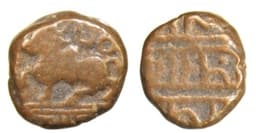
Deva Raya II
Emperor · Medieval
70.7Total
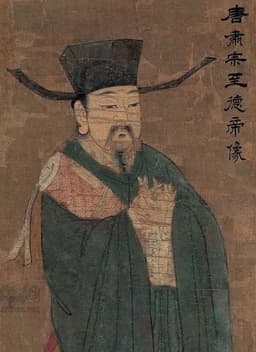
Li Heng
Emperor · Medieval
53.7Total
Basic Information
Born
1422
711
Died
1446
762
Era
Medieval
Medieval
Nationality
India
China
Occupation
Emperor
Emperor
Civilization
Indian
Eastern
Score Comparison
Military (10%)
82.0
55.0
Political (20%)
72.0
43.7
Influence (20%)
82.0
56.4
Legacy (20%)
52.0
50.0
Leadership (15%)
78.0
62.2
Strategy (15%)
65.4
57.5
TOTAL
70.7
53.7
Deva Raya II — Complete Timeline
1425 AD
Campaigns against the Bahmani SultanateWar◆ Major
Deva Raya II led multiple military expeditions against the Bahmani Sultanate, capturing key fortresses such as Mudgal and Raichur. These victories expanded Vijayanagara's northern frontier and secured control over the Raichur Doab region.
WarExpansionBahmani
Impact: regional
1430 AD
Patronage of Literature and ArtsCultural◆ Major
Deva Raya II became a noted patron of Telugu and Sanskrit literature. Poets such as Srinatha and Chamarasa flourished at his court, producing works like 'Haravilasa' and 'Prabodhachandrodaya'. This period is considered a golden age of Telugu literature.
PatronageLiteratureCulture
Impact: nationalconstructive
1433 AD
Embassy to the Ming DynastyPolitical Action
Deva Raya II sent an embassy to the court of the Ming Emperor Xuande in China. The mission established diplomatic and trade relations, leading to the exchange of gifts and the import of Chinese goods such as porcelain and silk.
DiplomacyTradeChina
Impact: globalconstructive
1435 AD
Construction of the Hazara Rama TempleCultural
Deva Raya II commissioned the Hazara Rama Temple in Vijayanagara, dedicated to Lord Rama. The temple features intricate bas-reliefs depicting scenes from the Ramayana and served as a private shrine for the royal family.
ArchitectureTempleHinduism
constructive
Li Heng — Complete Timeline
756 AD
Accession during the An Lushan RebellionPolitical Action
Li Heng ascended the throne at Lingwu after his father, Emperor Xuanzong, fled the capital during the An Lushan Rebellion. He assumed command of the loyalist forces and began organizing resistance against the rebel state of Yan.
An Lushan RebellionAccessionCrisis
Impact: national
757 AD
Recruitment of Uyghur MercenariesWar◆ Major
Li Heng secured a military alliance with the Uyghur Khaganate, who provided cavalry to fight the rebels. The Uyghur forces played a crucial role in recapturing Chang'an and Luoyang, but their looting of the capitals caused resentment.
Uyghur AllianceMercenariesCivil War
Impact: regional
Recapture of Chang'an and LuoyangWar◆ Major
Tang forces, aided by Uyghur cavalry, recaptured the western capital Chang'an and then the eastern capital Luoyang from the Yan rebels. These victories marked the turning point of the rebellion, though the war continued for years.
An Lushan RebellionCapital RecaptureTurning Point
Impact: nationalconstructive
762 AD
Death of Li HengOther
Li Heng died in 762, shortly before the final suppression of the An Lushan Rebellion. His reign was entirely consumed by the civil war, and he did not live to see the full restoration of Tang authority.
DeathUnfinished War
Impact: nationaltragic
Expert Analysis
Origins
Deva Raya II (r. 1424–1446) was born into the Sangama dynasty, the ruling house of the Vijayanagara Empire in southern India. His father, Veera Vijaya Bukka Raya, preceded him. Little is known of his early life, but he was groomed for leadership in a court that valued military prowess and cultural patronage. In contrast, Li Heng (r. 756–762) was born Li Jun in 711, the third son of Emperor Xuanzong of Tang China. His early years were spent in the imperial palace, receiving a Confucian education. He was appointed Prince of Zhong in 738 and later Crown Prince in 754, a position that placed him at the center of Tang politics during a period of growing instability.
Rise to Power
Deva Raya II ascended the throne in 1424 after the death of his father. He quickly consolidated power and turned his attention to the ongoing conflict with the Bahmani Sultanate to the north. His rise was marked by military campaigns: in 1426, he captured the fortress of Mudgal, and in 1436, he seized Raichur after a prolonged siege. These victories expanded Vijayanagara's territory and secured its northern frontier. Li Heng's path to power was more dramatic. In 755, the An Lushan Rebellion erupted, and Emperor Xuanzong fled the capital Chang'an. Li Heng, then Crown Prince, broke away from his father's retinue and traveled to Lingwu, where he was proclaimed emperor by loyalist forces in July 756. This act of usurpation, though necessary for coordinating resistance, created a rift with his father, who later abdicated.
Leadership & Governance
Deva Raya II governed as an absolute monarch, but he fostered a decentralized administration that empowered regional governors. He invested heavily in irrigation and trade, and his court became a hub for Telugu and Sanskrit literature. He patronized poets like Srinatha, who composed the *Haravilasa* and *Kashi Khandam*, and Chamarasa, who wrote the *Prabhulinga Lila*. The Hazara Rama Temple, built during his reign, stands as a testament to his devotion and artistic patronage. Li Heng, by contrast, ruled during a civil war. His leadership was reactive and focused on military necessity. He relied heavily on eunuchs and military governors, notably the Uyghur mercenaries who provided cavalry. While Deva Raya II's governance scores 72.0 in political acumen, Li Heng's political score is 43.7, reflecting his inability to stabilize the Tang state.
Triumph & Tragedy
Deva Raya II's greatest triumph was his successful military campaigns against the Bahmani Sultanate, which secured key territories and brought prestige. He also sent an embassy to the Ming dynasty in 1433, establishing diplomatic and trade relations that opened Vijayanagara to Chinese influence. His patronage of arts led to a flourishing of Telugu literature, with works like *Sringara Naishadham* and *Kridabhiramamu* produced under his reign. However, his failure to fully subdue the Bahmani Sultanate meant that conflict continued after his death. Li Heng's triumph was the recapture of Chang'an in 757 and Luoyang in 758, which saved the Tang dynasty from collapse. Yet his reliance on Uyghur mercenaries led to looting and resentment. He died in 762 before the rebellion was fully suppressed, leaving his son Daizong to finish the task. His reign was consumed by war, and he failed to address the underlying causes of the rebellion.
Character & Destiny
Deva Raya II was characterized by strategic ambition and cultural refinement. His military strategy score of 65.4 reflects his ability to plan and execute campaigns, while his leadership score of 78.0 indicates his skill in managing a vast empire. He was a patron of learning, which enhanced his legitimacy. Li Heng, with a leadership score of 62.2, was more passive; his destiny was shaped by the rebellion he inherited. He made pragmatic decisions, like allying with the Uyghurs, but these had long-term costs. His character was that of a caretaker emperor, struggling to hold the dynasty together. Historical assessments often see him as well-intentioned but weak, unable to restore the Tang's former glory.
Legacy
Deva Raya II's legacy is one of cultural and military achievement. He is remembered as the greatest ruler of the Sangama dynasty, and his patronage of Telugu literature laid the foundation for a golden age of language and arts. The Hazara Rama Temple remains a UNESCO World Heritage site. His influence score of 82.0 reflects his lasting impact on South Indian culture. Li Heng's legacy is more mixed. He preserved the Tang dynasty during its greatest crisis, ensuring its survival for another century. However, his reign also saw the rise of eunuch power and military governors, which weakened the central government. His legacy score of 50.0 indicates a limited long-term impact beyond the immediate restoration.
Conclusion
Deva Raya II had a greater impact than Li Heng. With a total score of 70.7 versus 53.7, Deva Raya II excelled in military (82.0 vs 55.0), political (72.0 vs 43.7), and influence (82.0 vs 56.4) categories. He expanded his empire, fostered a cultural renaissance, and built monuments that endure. Li Heng, while crucial for Tang survival, was reactive and left a weakened state. Deva Raya II's proactive leadership and cultural patronage created a legacy that shaped South Indian history for centuries, whereas Li Heng's reign was a desperate holding action. The data supports Deva Raya II as the more effective and influential ruler.
Rankings
🥇
Deva Raya IILeader
Mil: 82.0Pol: 72.0Inf: 82.0
70.7
🥈
Li Heng
Mil: 55.0Pol: 43.7Inf: 56.4
53.7
+17.0 behind
How This Comparison Works
Algorithm
Each figure is scored on 6 dimensions (0—100 scale) based on structured historical data: Military (10%), Political (20%), Influence (20%), Legacy (20%), Leadership (15%), Strategy (15%). The weighted total produces the final ranking.
Data Sources
Scores are computed from structured sub-indicators in the database. Scale factors adjust for era (Ancient ×0.85, Modern ×1.0) and civilization size (Eastern ×1.05, Other ×0.80) to account for differences in population and military scale.
Maximum 3 Figures
Comparisons are limited to 2—3 figures to ensure readability and statistical meaningfulness.
Error Margins
±5 points per dimension — Sub-scores are derived from historical records with inherent uncertainty. Two figures within 5 points on a dimension should be considered roughly equivalent in that area.
Total Score Accuracy
±3 points overall — The weighted combination of 6 dimensions produces a total score with approximately ±3 points of uncertainty. Differences of less than 3 points are not statistically significant— the figures are effectively tied.
Known Limitations
- Historical records are incomplete and uneven across civilizations
- Figures from oral-tradition societies may be underrepresented
- Occupation labels can misclassify multi-role figures
- Scores measure capability and impact, not moral character
- Quantitative scoring is a comparison tool, not absolute truth
Capability Radar
Military (10%) — Battles & Warfare
Battles
75
60
Win Rate
80
55
Expansion
70
30
Political (20%) — Governance & Reform
Reform
80
40
Diplomacy
75
45
Economy
85
35
Influence (20%) — Cultural & Global Reach
Cultural
75
40
Global
55
40
Legacy (20%) — Historical Impact
Historical
70
55
Longevity
65
45
Leadership (15%) — Power & Stability
Tenure
85
50
Stability
80
30
Strategy (15%) — Tactics & Innovation
Strategy
75
55
Tactics
70
50
Reform
65
40
Similar Comparisons
Comments & Discussion
No comments yet. Be the first to share your thoughts!