Loading...
Emperor Ichijo vs Li Heng
Li Heng leads by 0.3 pts · 2 figures compared
…
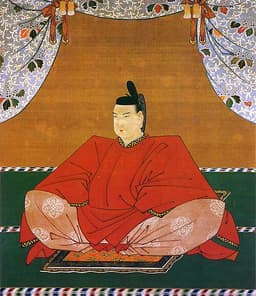
Emperor Ichijo
Emperor · Medieval
53.4Total
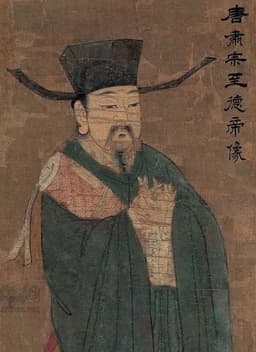
Li Heng
Emperor · Medieval
53.7Total
Basic Information
Born
980
711
Died
1011
762
Era
Medieval
Medieval
Nationality
Japan
China
Occupation
Emperor
Emperor
Civilization
Eastern
Eastern
Score Comparison
Military (10%)
54.9
55.0
Political (20%)
30.8
43.7
Influence (20%)
60.0
56.4
Legacy (20%)
52.0
50.0
Leadership (15%)
56.0
62.2
Strategy (15%)
69.3
57.5
TOTAL
53.4
53.7
Emperor Ichijo — Complete Timeline
986 AD
Reign during the height of Fujiwara regencyPolitical Action◆ Major
Ichijo ascended the throne at age six under the regency of Fujiwara no Michinaga. His reign marked the peak of Fujiwara power, with Michinaga effectively ruling Japan through the emperor as a figurehead, limiting Ichijo's direct political influence.
Fujiwara RegencyHeian PeriodPolitical Structure
Impact: national
1000 AD
Patronage of Lady Murasaki ShikibuCultural◆ Major
Emperor Ichijo served as patron to Lady Murasaki Shikibu, a lady-in-waiting at his court. Under his reign, she wrote The Tale of Genji, widely considered the world's first novel, which profoundly influenced Japanese literature and court culture.
LiteratureHeian PeriodCourt Culture
Impact: globalconstructive
Promotion of Heian court cultureCultural
Ichijo's court became a center for literary and artistic flourishing, including poetry contests, calligraphy, and the composition of The Pillow Book by Sei Shonagon. This cultural efflorescence defined the Heian period's aesthetic legacy.
Heian CultureLiteratureArts
Impact: nationalconstructive
Li Heng — Complete Timeline
756 AD
Accession during the An Lushan RebellionPolitical Action
Li Heng ascended the throne at Lingwu after his father, Emperor Xuanzong, fled the capital during the An Lushan Rebellion. He assumed command of the loyalist forces and began organizing resistance against the rebel state of Yan.
An Lushan RebellionAccessionCrisis
Impact: national
757 AD
Recruitment of Uyghur MercenariesWar◆ Major
Li Heng secured a military alliance with the Uyghur Khaganate, who provided cavalry to fight the rebels. The Uyghur forces played a crucial role in recapturing Chang'an and Luoyang, but their looting of the capitals caused resentment.
Uyghur AllianceMercenariesCivil War
Impact: regional
Recapture of Chang'an and LuoyangWar◆ Major
Tang forces, aided by Uyghur cavalry, recaptured the western capital Chang'an and then the eastern capital Luoyang from the Yan rebels. These victories marked the turning point of the rebellion, though the war continued for years.
An Lushan RebellionCapital RecaptureTurning Point
Impact: nationalconstructive
762 AD
Death of Li HengOther
Li Heng died in 762, shortly before the final suppression of the An Lushan Rebellion. His reign was entirely consumed by the civil war, and he did not live to see the full restoration of Tang authority.
DeathUnfinished War
Impact: nationaltragic
Expert Analysis
Origins
Emperor Ichijo was born in 980 CE into the imperial family of Japan, the son of Emperor En'yū. He ascended the throne at age six in 986, but from the start, real power lay with the Fujiwara regents, particularly Fujiwara no Michinaga. Ichijo grew up in the refined Heian court, surrounded by poetry, calligraphy, and ritual. His education emphasized classical Chinese literature and Japanese waka, shaping him into a cultured ruler who valued art and learning.
Li Heng, born in 711 CE as the third son of Emperor Xuanzong of Tang China, grew up in the cosmopolitan Tang court. He was initially not the heir apparent, but after the death of his elder brother, he was made crown prince in 738. His early life was marked by the flourishing of Tang culture under his father's long reign, but also by growing corruption and military overreach. Li Heng received a traditional Confucian education and military training, preparing him for a role that would soon demand decisive action.
Rise to Power
Ichijo's rise was passive: he became emperor at age six due to his father's abdication. The key turning point was his marriage to Fujiwara no Shoshi, daughter of Michinaga, which solidified Fujiwara control. Ichijo never ruled independently; his reign is defined by the regency of Michinaga, who used the emperor as a figurehead. Ichijo's influence was cultural rather than political, as he patronized ladies-in-waiting like Murasaki Shikibu and Sei Shōnagon.
Li Heng's rise was forced by crisis. In 755, the An Lushan Rebellion erupted, and Emperor Xuanzong fled the capital. At Lingwu in 756, Li Heng was proclaimed emperor by loyalist forces, effectively usurping his father's authority. He immediately took command of the loyalist cause, rallying troops and seeking foreign aid. His accession was a turning point, as he provided a legitimate figurehead for resistance against the rebel Yan dynasty.
Leadership & Governance
Ichijo's leadership was ceremonial. He presided over court rituals and poetry contests, but governance was handled by Michinaga. Ichijo's main achievement was fostering Heian culture: he supported Murasaki Shikibu, who wrote The Tale of Genji, and Sei Shōnagon, who wrote The Pillow Book. Under his reign, the court became a hub of literary innovation, with waka poetry and calligraphy flourishing. However, he had no control over tax policy, military, or appointments.
Li Heng's leadership was wartime command. He centralized authority, appointed generals like Guo Ziyi, and secured a crucial alliance with the Uyghur Khaganate, providing 4,000 cavalry. He recaptured Chang'an in 757 and Luoyang in 758, but his reliance on Uyghur mercenaries led to looting and resentment. His political skills were moderate (score 43.7), as he struggled to balance military needs with civilian governance. He also faced challenges from eunuchs and regional warlords.
Triumph & Tragedy
Ichijo's triumph was cultural: his patronage led to the creation of The Tale of Genji, a masterpiece of world literature. The Heian court's aesthetic ideals, such as mono no aware, were crystallized during his reign. His tragedy was political irrelevance: he was a puppet emperor, and after his death in 1011, the Fujiwara regency continued unabated. His personal life was also constrained—his wife Shoshi was chosen for political reasons, not love.
Li Heng's triumph was military: he recaptured both capitals and preserved the Tang dynasty. His leadership score of 62.2 reflects his ability to rally forces during a desperate civil war. His tragedy was that he died in 762 before the rebellion was fully crushed, leaving his son to claim victory. He also made a fatal error: he relied too heavily on foreign troops, leading to the Uyghurs sacking Luoyang. His reign was entirely consumed by war, with no time for reconstruction.
Character & Destiny
Ichijo was introspective and cultured, preferring poetry to politics. His character shaped a court that valued refinement over power, but it also ensured his subordination to the Fujiwara. He scored 56.0 in leadership, reflecting his passive style. His destiny was to be a figurehead, remembered for his court's brilliance rather than his own actions.
Li Heng was pragmatic and decisive, but also cautious. He scored 62.2 in leadership, showing he could command loyalty and make tough calls. His character was shaped by crisis: he had to seize power and fight a war. His destiny was to be a transitional figure, saving the dynasty but dying before peace.
Legacy
Ichijo's legacy is cultural: the Heian literary tradition he patronized influenced Japanese aesthetics for centuries. The Tale of Genji remains a classic, and Ichijo is remembered as a cultured emperor. His influence score of 60.0 reflects this enduring impact. However, his political legacy is nil—the Fujiwara regency continued.
Li Heng's legacy is political: he preserved the Tang dynasty, which lasted another 150 years. He is remembered as a wartime emperor who restored order. His military score of 55.0 and strategy of 57.5 show competence. However, his reliance on regional warlords weakened central authority, contributing to later fragmentation.
Conclusion
Li Heng had greater impact because he saved a dynasty from collapse, while Ichijo's influence was cultural but limited to his court. Li Heng's total score (53.7) edges Ichijo's (53.4), but the gap is small. However, the stakes were higher: Li Heng's decisions determined the survival of the Tang empire, affecting millions. Ichijo's patronage enriched world literature, but it did not alter the course of Japanese governance. In terms of historical consequence, Li Heng's recapture of Chang'an and Luoyang was more significant than Ichijo's poetry contests. Thus, Li Heng emerges as the more impactful figure.
Rankings
🥇
Li HengLeader
Mil: 55.0Pol: 43.7Inf: 56.4
53.7
🥈
Emperor Ichijo
Mil: 54.9Pol: 30.8Inf: 60.0
53.4
+0.3 behind
How This Comparison Works
Algorithm
Each figure is scored on 6 dimensions (0—100 scale) based on structured historical data: Military (10%), Political (20%), Influence (20%), Legacy (20%), Leadership (15%), Strategy (15%). The weighted total produces the final ranking.
Data Sources
Scores are computed from structured sub-indicators in the database. Scale factors adjust for era (Ancient ×0.85, Modern ×1.0) and civilization size (Eastern ×1.05, Other ×0.80) to account for differences in population and military scale.
Maximum 3 Figures
Comparisons are limited to 2—3 figures to ensure readability and statistical meaningfulness.
Error Margins
±5 points per dimension — Sub-scores are derived from historical records with inherent uncertainty. Two figures within 5 points on a dimension should be considered roughly equivalent in that area.
Total Score Accuracy
±3 points overall — The weighted combination of 6 dimensions produces a total score with approximately ±3 points of uncertainty. Differences of less than 3 points are not statistically significant— the figures are effectively tied.
Known Limitations
- Historical records are incomplete and uneven across civilizations
- Figures from oral-tradition societies may be underrepresented
- Occupation labels can misclassify multi-role figures
- Scores measure capability and impact, not moral character
- Quantitative scoring is a comparison tool, not absolute truth
Capability Radar
Military (10%) — Battles & Warfare
Battles
48
60
Win Rate
45
55
Expansion
52
30
Political (20%) — Governance & Reform
Reform
20
40
Diplomacy
30
45
Economy
25
35
Influence (20%) — Cultural & Global Reach
Cultural
60
40
Global
40
40
Legacy (20%) — Historical Impact
Historical
55
55
Longevity
55
45
Leadership (15%) — Power & Stability
Tenure
31
50
Stability
40
30
Strategy (15%) — Tactics & Innovation
Strategy
56
55
Tactics
59
50
Reform
58
40
Similar Comparisons
Comments & Discussion
No comments yet. Be the first to share your thoughts!