Loading...
Deva Raya II vs Philip IV the Fair
Deva Raya II leads by 11.4 pts · 2 figures compared
…
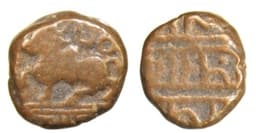
Deva Raya II
Emperor · Medieval
70.7Total
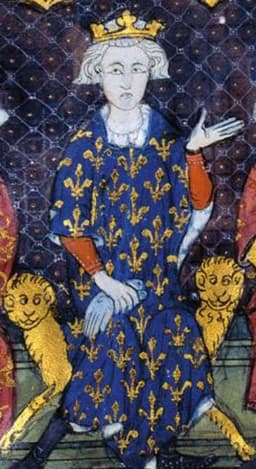
Philip IV the Fair
Emperor · Medieval
59.3Total
Basic Information
Born
1422
1268
Died
1446
1314
Era
Medieval
Medieval
Nationality
India
France
Occupation
Emperor
Emperor
Civilization
Indian
Western
Score Comparison
Military (10%)
82.0
50.0
Political (20%)
72.0
72.0
Influence (20%)
82.0
60.0
Legacy (20%)
52.0
56.0
Leadership (15%)
78.0
68.0
Strategy (15%)
65.4
43.3
TOTAL
70.7
59.3
Deva Raya II — Complete Timeline
1425 AD
Campaigns against the Bahmani SultanateWar◆ Major
Deva Raya II led multiple military expeditions against the Bahmani Sultanate, capturing key fortresses such as Mudgal and Raichur. These victories expanded Vijayanagara's northern frontier and secured control over the Raichur Doab region.
WarExpansionBahmani
Impact: regional
1430 AD
Patronage of Literature and ArtsCultural◆ Major
Deva Raya II became a noted patron of Telugu and Sanskrit literature. Poets such as Srinatha and Chamarasa flourished at his court, producing works like 'Haravilasa' and 'Prabodhachandrodaya'. This period is considered a golden age of Telugu literature.
PatronageLiteratureCulture
Impact: nationalconstructive
1433 AD
Embassy to the Ming DynastyPolitical Action
Deva Raya II sent an embassy to the court of the Ming Emperor Xuande in China. The mission established diplomatic and trade relations, leading to the exchange of gifts and the import of Chinese goods such as porcelain and silk.
DiplomacyTradeChina
Impact: globalconstructive
1435 AD
Construction of the Hazara Rama TempleCultural
Deva Raya II commissioned the Hazara Rama Temple in Vijayanagara, dedicated to Lord Rama. The temple features intricate bas-reliefs depicting scenes from the Ramayana and served as a private shrine for the royal family.
ArchitectureTempleHinduism
constructive
Philip IV the Fair — Complete Timeline
1302 AD
Conflict with Pope Boniface VIIIPolitical Action◆ Major
Philip IV clashed with Pope Boniface VIII over taxation of clergy and royal authority. He sent troops to arrest the pope at Anagni, leading to Boniface's death. This conflict asserted French royal supremacy over papal power.
Papal ConflictPower StruggleCapetian
Impact: globaldestructive
Convocation of the Estates GeneralPolitical Action◆ Major
Philip IV convened the first Estates General of France, bringing together clergy, nobility, and commoners to gain support for his conflict with the papacy. This established a precedent for representative assemblies in France.
Estates GeneralGovernanceCapetian
Impact: nationalconstructive
1306 AD
Expulsion of the Jews from FrancePolitical Action◆ Major
Philip IV ordered the expulsion of Jews from France and confiscated their property. This action was motivated by financial need and religious intolerance, and it deprived the kingdom of a significant economic community.
ExpulsionAnti-SemitismCapetian
Impact: nationaldestructive
1307 AD
Suppression of the Knights TemplarPolitical Action
Philip IV ordered the mass arrest of Knights Templar in France on charges of heresy, blasphemy, and corruption. He pressured Pope Clement V to disband the order, seizing their wealth and lands, which enriched the French crown.
Knights TemplarPersecutionPower
Impact: globaldestructive
Expert Analysis
Origins
Deva Raya II (r. 1424–1446) was born into the Sangama dynasty, the ruling house of the Vijayanagara Empire in southern India. He was the grandson of Deva Raya I and inherited a kingdom that had already consolidated power in the Deccan. Little is known of his early life, but he received training in statecraft and military command. His family background placed him at the center of a thriving empire that controlled trade routes and temple networks.
Philip IV the Fair (1268–1314) was born at Fontainebleau, the second son of Philip III of France. He inherited the throne in 1285 after his father's death. His upbringing was steeped in Capetian traditions of sacred kingship and legal centralization. He studied under the scholastic theologian Giles of Rome, who shaped his views on royal authority. Philip's early exposure to conflicts with the Church and nobility defined his reign.
Rise to Power
Deva Raya II ascended the throne peacefully in 1424 after his father's death. His rise was unremarkable, but he immediately faced challenges from the Bahmani Sultanate to the north. In 1426, he launched a campaign that recaptured the fortresses of Mudgal and Raichur, lost in previous conflicts. These victories solidified his reputation as a military leader. He also expanded southward, bringing the Tamil region under firmer control. His ability to mobilize large armies and use artillery (possibly acquired from Chinese contacts) gave him an edge.
Philip IV became king at age 17 and quickly asserted his authority. He married Joan I of Navarre, which brought him the kingdom of Navarre and strengthened his hand. His early reign focused on expanding royal domain and challenging the power of the Church. In 1294, he went to war with England over Gascony, a conflict that dragged on for years. His decisive move came in 1302 when he convoked the first Estates General, a gathering of clergy, nobles, and commoners, to legitimize his conflict with Pope Boniface VIII. This assembly marked a turning point in French governance.
Leadership & Governance
Deva Raya II ruled as a traditional Hindu monarch, emphasizing dharma (righteous duty) and patronage. He maintained a large bureaucracy and a standing army, with a focus on revenue collection from agriculture and trade. He appointed talented ministers, such as his chief minister Lakkana Dandesa, who oversaw administrative reforms. Deva Raya II also encouraged temple construction and land grants to Brahmins, reinforcing social order. His governance was decentralized, with local chieftains retaining autonomy as long as they paid tribute.
Philip IV the Fair centralized power in unprecedented ways. He relied on legists (lawyers) like Guillaume de Nogaret to justify royal supremacy over the Church and feudal lords. He expanded the use of Roman law, creating a more uniform legal system. Philip's administration included the Chamber of Accounts and the Parlement of Paris, which became instruments of control. He debased the coinage and levied heavy taxes, causing popular unrest. His confrontation with Pope Boniface VIII culminated in the 1303 attack at Anagni, where French troops briefly captured the pope. This event demonstrated Philip's willingness to use force against spiritual authority.
Triumph & Tragedy
Deva Raya II's greatest triumph was his military success against the Bahmani Sultanate, securing the Raichur doab and expanding Vijayanagara's influence. He also fostered a golden age of literature, with poets like Srinatha (who wrote the Telugu classic 'Kashi Khandam') and Chamarasa flourishing at his court. He sent an embassy to the Ming court in 1427, establishing trade relations that brought Chinese goods and technology. However, his later years saw a decline: the Bahmani Sultanate recovered and raided his territory, and internal rebellions weakened the empire. His death in 1446 led to a succession crisis that eroded Sangama power.
Philip IV's triumph was the destruction of the Knights Templar. On October 13, 1307, he ordered the arrest of all Templars in France, seizing their wealth and lands. He pressured Pope Clement V to disband the order in 1312. This action filled royal coffers and eliminated a rival power. He also successfully asserted royal authority over the French Church, laying foundations for Gallicanism. However, his financial policies caused hardship. He expelled the Jews in 1306 and confiscated their property, but this was a short-term solution. His wars with England and Flanders drained resources, and his legacy included a weakened economy and social unrest.
Character & Destiny
Deva Raya II was described as a pious and learned ruler, devoted to Hindu traditions. He was known for his generosity to poets and scholars, earning the title 'Proud Lord of the Poets.' His military campaigns showed strategic acumen, but he sometimes overextended his forces. His character combined religious devotion with pragmatic diplomacy, as seen in his embassy to China. His destiny was to preside over a high point of Vijayanagara culture, but his empire's fragility became apparent after his death.
Philip IV was cold, calculating, and ruthless. His nickname 'the Fair' referred to his appearance, not his temperament. He was deeply religious yet willing to subjugate the Church for political ends. His decision to arrest the Templars and expel the Jews demonstrated a willingness to sacrifice groups for financial gain. His character shaped his fate: he achieved centralization but at the cost of alienating many subjects. The Estates General he created later became a tool for rebellion during the Hundred Years' War.
Legacy
Deva Raya II's legacy is tied to Vijayanagara's cultural and military achievements. The Hazara Rama Temple he built remains a masterpiece of Hindu architecture. His patronage of Telugu literature helped elevate the language. His military campaigns set the stage for later conflicts with the Bahmani Sultanate. However, his empire declined after his reign, and his direct impact on world history is limited. He scored 52.0 in legacy, reflecting his regional importance.
Philip IV's legacy is more widespread. He destroyed the Knights Templar, ending one of the most powerful medieval orders. He created the Estates General, a precursor to modern representative government. His conflict with the papacy weakened the Church's political power and strengthened national monarchies. The expulsion of the Jews set a precedent for later persecutions. His centralization policies influenced French absolutism. He scored 56.0 in legacy, higher than Deva Raya II.
Conclusion
In comparing Deva Raya II and Philip IV the Fair, the question is not who was more successful but who had greater impact on the course of history. Deva Raya II (total score 70.7) was a capable ruler who expanded his empire and fostered culture, but his achievements were largely regional and temporary. Philip IV (total score 59.3) had a lower overall score but his actions—the destruction of the Templars, the convocation of the Estates General, and the assertion of royal supremacy over the Church—reshaped European politics and statecraft. Philip's legacy endures in the structures of modern governance, while Deva Raya II's influence is confined to South Asian history. Therefore, Philip IV the Fair had greater impact, despite his lower numerical score. The score gap of 11.4 points reflects Deva Raya II's superior military and leadership, but Philip's political innovations proved more durable.
Rankings
🥇
Deva Raya IILeader
Mil: 82.0Pol: 72.0Inf: 82.0
70.7
🥈
Philip IV the Fair
Mil: 50.0Pol: 72.0Inf: 60.0
59.3
+11.4 behind
How This Comparison Works
Algorithm
Each figure is scored on 6 dimensions (0—100 scale) based on structured historical data: Military (10%), Political (20%), Influence (20%), Legacy (20%), Leadership (15%), Strategy (15%). The weighted total produces the final ranking.
Data Sources
Scores are computed from structured sub-indicators in the database. Scale factors adjust for era (Ancient ×0.85, Modern ×1.0) and civilization size (Eastern ×1.05, Other ×0.80) to account for differences in population and military scale.
Maximum 3 Figures
Comparisons are limited to 2—3 figures to ensure readability and statistical meaningfulness.
Error Margins
±5 points per dimension — Sub-scores are derived from historical records with inherent uncertainty. Two figures within 5 points on a dimension should be considered roughly equivalent in that area.
Total Score Accuracy
±3 points overall — The weighted combination of 6 dimensions produces a total score with approximately ±3 points of uncertainty. Differences of less than 3 points are not statistically significant— the figures are effectively tied.
Known Limitations
- Historical records are incomplete and uneven across civilizations
- Figures from oral-tradition societies may be underrepresented
- Occupation labels can misclassify multi-role figures
- Scores measure capability and impact, not moral character
- Quantitative scoring is a comparison tool, not absolute truth
Capability Radar
Military (10%) — Battles & Warfare
Battles
75
20
Win Rate
80
25
Expansion
70
15
Political (20%) — Governance & Reform
Reform
80
75
Diplomacy
75
65
Economy
85
60
Influence (20%) — Cultural & Global Reach
Cultural
75
50
Global
55
50
Legacy (20%) — Historical Impact
Historical
70
65
Longevity
65
55
Leadership (15%) — Power & Stability
Tenure
85
70
Stability
80
55
Strategy (15%) — Tactics & Innovation
Strategy
75
35
Tactics
70
30
Reform
65
40
Similar Comparisons
Comments & Discussion
No comments yet. Be the first to share your thoughts!