Loading...
Philip IV the Fair vs Rudolf I of Germany
Philip IV the Fair leads by 3.3 pts · 2 figures compared
…
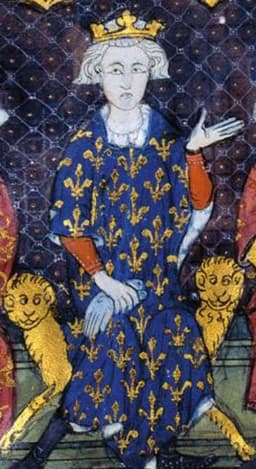
Philip IV the Fair
Emperor · Medieval
59.3Total
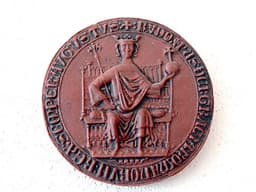
Rudolf I of Germany
Emperor · Medieval
56.0Total
Basic Information
Born
1268
1218
Died
1314
1291
Era
Medieval
Medieval
Nationality
France
Holy Roman Empire
Occupation
Emperor
Emperor
Civilization
Western
Western
Score Comparison
Military (10%)
50.0
55.0
Political (20%)
72.0
68.0
Influence (20%)
60.0
61.0
Legacy (20%)
56.0
52.0
Leadership (15%)
68.0
40.0
Strategy (15%)
43.3
60.0
TOTAL
59.3
56.0
Philip IV the Fair — Complete Timeline
1302 AD
Conflict with Pope Boniface VIIIPolitical Action◆ Major
Philip IV clashed with Pope Boniface VIII over taxation of clergy and royal authority. He sent troops to arrest the pope at Anagni, leading to Boniface's death. This conflict asserted French royal supremacy over papal power.
Papal ConflictPower StruggleCapetian
Impact: globaldestructive
Convocation of the Estates GeneralPolitical Action◆ Major
Philip IV convened the first Estates General of France, bringing together clergy, nobility, and commoners to gain support for his conflict with the papacy. This established a precedent for representative assemblies in France.
Estates GeneralGovernanceCapetian
Impact: nationalconstructive
1306 AD
Expulsion of the Jews from FrancePolitical Action◆ Major
Philip IV ordered the expulsion of Jews from France and confiscated their property. This action was motivated by financial need and religious intolerance, and it deprived the kingdom of a significant economic community.
ExpulsionAnti-SemitismCapetian
Impact: nationaldestructive
1307 AD
Suppression of the Knights TemplarPolitical Action
Philip IV ordered the mass arrest of Knights Templar in France on charges of heresy, blasphemy, and corruption. He pressured Pope Clement V to disband the order, seizing their wealth and lands, which enriched the French crown.
Knights TemplarPersecutionPower
Impact: globaldestructive
Rudolf I of Germany — Complete Timeline
1273 AD
Election as King of GermanyPolitical Action
Rudolf I was elected King of Germany by the prince-electors, ending the Great Interregnum. He was the first Habsburg to hold the German throne. His election restored stability to the Holy Roman Empire after a period of civil war and weak central authority.
ElectionHabsburgInterregnum
Impact: regionalconstructive
1274 AD
Recognition of Papal AuthorityPolitical Action
Rudolf I formally renounced all imperial claims to the Papal States and recognized the temporal authority of the Pope. He also agreed to lead a crusade (which never materialized). This improved relations with the papacy and secured papal support for his rule.
PapacyImperial-Papal RelationsCrusade
Impact: regionalconstructive
1278 AD
Battle on the MarchfeldWar◆ Major
Rudolf I defeated King Ottokar II of Bohemia at the Battle on the Marchfeld in Austria. Ottokar was killed in the battle. Rudolf then secured the duchies of Austria, Styria, and Carniola for the Habsburg dynasty, laying the foundation for their future power.
BattleHabsburgAustria
Impact: regional
1282 AD
Grant of Austria to His SonsPolitical Action◆ Major
Rudolf I formally enfeoffed his sons Albert and Rudolf with the duchies of Austria and Styria at the Diet of Augsburg. This established the Habsburgs as a major territorial power in Central Europe. The grant was later confirmed by the imperial princes.
Territorial GrantHabsburgAustria
Impact: regionalconstructive
Expert Analysis
Origins
Philip IV of France (born 1268) was the son of Philip III and Isabella of Aragon. He was raised in the Capetian court, receiving education in governance and law. His nickname 'the Fair' referred to his appearance, not his character. Rudolf I of Germany (born 1218) was born into the Habsburg family, counts in modern-day Switzerland. His father was Albrecht IV, and Rudolf inherited the family lands in 1239. Unlike Philip, Rudolf had a martial upbringing, participating in local feuds.
Rise to Power
Philip IV became king in 1285 at age 17, following his father's death from dysentery during the Aragonese Crusade. He quickly asserted authority, surrounding himself with 'legists' who expanded royal power. His reign was marked by conflicts with the papacy and the Flemish. Rudolf I was elected King of Germany in 1273, ending the Great Interregnum. His election was a compromise candidate to avoid a strong king. He lacked a dynastic power base but used his position to consolidate Habsburg lands.
Leadership & Governance
Philip IV centralized French administration, creating a bureaucracy that bypassed feudal lords. He convoked the Estates General in 1302 to gain support against Pope Boniface VIII. He also debased the currency to fund wars. Rudolf I focused on territorial expansion. He defeated Ottokar II of Bohemia at the Battle on the Marchfeld in 1278, securing Austria and Styria for his sons. Rudolf recognized papal authority, renouncing claims to the Papal States. His leadership score of 40.0 reflects his limited effectiveness as a king, while Philip's 68.0 shows stronger governance.
Triumph & Tragedy
Philip's greatest triumph was the destruction of the Knights Templar (1307-1312). He arrested them, seized their wealth, and pressured the pope to disband the order. His tragedy was the Flemish defeat at Courtrai (1302) and the financial instability from his wars. Rudolf's triumph was securing the Habsburg duchies of Austria, laying the foundation for future power. His tragedy was failing to establish a strong monarchy; his sons lost the German throne. Rudolf scored 55.0 in military compared to Philip's 50.0, reflecting his battlefield success.
Character & Destiny
Philip was cold, calculating, and ruthless. He used legal manipulation to achieve goals, as with the Templars. His character led to a powerful but unpopular reign. Rudolf was pragmatic and diplomatic, but lacked the vision to centralize power. His destiny was to be a transitional figure, remembered as the first Habsburg emperor but not a great one. Philip's political score of 72.0 contrasts with Rudolf's 68.0, showing his superior maneuvering.
Legacy
Philip's legacy is the establishment of absolutism in France. He expanded royal authority, set precedents for taxing clergy, and weakened the papacy. However, his reign also saw the expulsion of Jews (1306) and financial troubles. Rudolf's legacy is the Habsburg dynasty's rise. He granted Austria to his sons, which became the core of Habsburg power. His influence score of 61.0 slightly edges Philip's 60.0, but Philip's total score of 59.3 surpasses Rudolf's 56.0.
Conclusion
Philip IV had a greater impact on history than Rudolf I. His actions reshaped French monarchy and challenged papal supremacy, setting the stage for early modern state-building. Rudolf, while important for the Habsburgs, did not fundamentally alter the structure of the Holy Roman Empire. Philip's political score of 72.0 and leadership of 68.0 demonstrate his effectiveness. The 3.3-point gap in total scores reflects this: Philip's centralized power against Rudolf's dynastic foundation. Ultimately, Philip's legacy of absolutism had broader consequences.
Rankings
🥇
Philip IV the FairLeader
Mil: 50.0Pol: 72.0Inf: 60.0
59.3
🥈
Rudolf I of Germany
Mil: 55.0Pol: 68.0Inf: 61.0
56.0
+3.3 behind
How This Comparison Works
Algorithm
Each figure is scored on 6 dimensions (0—100 scale) based on structured historical data: Military (10%), Political (20%), Influence (20%), Legacy (20%), Leadership (15%), Strategy (15%). The weighted total produces the final ranking.
Data Sources
Scores are computed from structured sub-indicators in the database. Scale factors adjust for era (Ancient ×0.85, Modern ×1.0) and civilization size (Eastern ×1.05, Other ×0.80) to account for differences in population and military scale.
Maximum 3 Figures
Comparisons are limited to 2—3 figures to ensure readability and statistical meaningfulness.
Error Margins
±5 points per dimension — Sub-scores are derived from historical records with inherent uncertainty. Two figures within 5 points on a dimension should be considered roughly equivalent in that area.
Total Score Accuracy
±3 points overall — The weighted combination of 6 dimensions produces a total score with approximately ±3 points of uncertainty. Differences of less than 3 points are not statistically significant— the figures are effectively tied.
Known Limitations
- Historical records are incomplete and uneven across civilizations
- Figures from oral-tradition societies may be underrepresented
- Occupation labels can misclassify multi-role figures
- Scores measure capability and impact, not moral character
- Quantitative scoring is a comparison tool, not absolute truth
Capability Radar
Military (10%) — Battles & Warfare
Battles
20
45
Win Rate
25
50
Expansion
15
50
Political (20%) — Governance & Reform
Reform
75
55
Diplomacy
65
65
Economy
60
50
Influence (20%) — Cultural & Global Reach
Cultural
50
40
Global
50
55
Legacy (20%) — Historical Impact
Historical
65
65
Longevity
55
70
Leadership (15%) — Power & Stability
Tenure
70
60
Stability
55
55
Strategy (15%) — Tactics & Innovation
Strategy
35
55
Tactics
30
40
Reform
40
30
Similar Comparisons
Comments & Discussion
No comments yet. Be the first to share your thoughts!