Loading...
This comparison has not been analyzed yet.
One-time AI generation (~1 minute). Scores and timeline are already available below.
Diego Portales vs Masayoshi Ohira
Diego Portales leads by 5.3 pts · 2 figures compared
…

Diego Portales
Politician · Modern
55.1Total
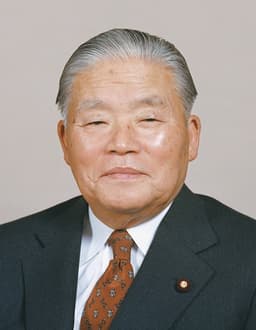
Masayoshi Ohira
Politician · Modern
49.8Total
Basic Information
Born
1793
1910
Died
1837
1980
Era
Modern
Modern
Nationality
Chile
Japan
Occupation
Politician
Politician
Civilization
Western
Eastern
Score Comparison
Military (10%)
38.3
14.6
Political (20%)
55.0
59.3
Influence (20%)
58.0
56.4
Legacy (20%)
52.0
45.0
Leadership (15%)
67.0
72.0
Strategy (15%)
54.8
33.1
TOTAL
55.1
49.8
Diego Portales — Complete Timeline
1830 AD
Created the Portalian StatePolitical Action◆ Major
Portales established a political system based on authoritarian rule, centralization, and the dominance of the executive branch. This system, known as the 'Portalian State', provided stability but suppressed dissent.
Political SystemChileAuthoritarianism
Impact: national
1833 AD
Drafted the 1833 Chilean ConstitutionReform
Portales, as minister, oversaw the drafting of a new constitution that established a centralized, authoritarian state with strong presidential powers. The constitution remained in effect until 1925 and shaped Chile's political structure.
ConstitutionChileState Building
Impact: nationalconstructive
1837 AD
Assassinated in QuillotaPolitical Action◆ Major
Portales was captured and executed by mutineers during a military uprising led by Colonel Jos
AssassinationChilePolitical Crisis
Impact: nationaltragic
Masayoshi Ohira — Complete Timeline
1978 AD
Appointed Prime Minister of JapanPolitical Action◆ Major
Masayoshi Ohira became Prime Minister of Japan on December 7, 1978, succeeding Takeo Fukuda. His election followed a close LDP presidential race. Ohira's government focused on economic management and foreign policy, including strengthening ties with the United States.
Prime MinisterLDPJapan
Impact: national
1979 AD
Hosted the 5th G7 Summit in TokyoPolitical Action◆ Major
Ohira hosted the 5th G7 Summit in Tokyo from June 28-29, 1979. The summit addressed the global oil crisis, inflation, and energy policy. Ohira played a key role in coordinating Western responses to the second oil shock following the Iranian Revolution.
G7 SummitDiplomacyOil Crisis
Impact: global
1980 AD
Died in OfficeOther◆ Major
Ohira died of a heart attack on June 12, 1980, while in office as Prime Minister. His death occurred during a general election campaign, triggering a sympathy vote that led to a landslide victory for the LDP. He was the first Japanese prime minister to die in office since 1945.
Death in OfficeLDPJapan
Impact: nationaltragic
This comparison has not been analyzed yet.
One-time AI generation (~1 minute). Scores and timeline are already available below.
Rankings
🥇
Diego PortalesLeader
Mil: 38.3Pol: 55.0Inf: 58.0
55.1
🥈
Masayoshi Ohira
Mil: 14.6Pol: 59.3Inf: 56.4
49.8
+5.3 behind
How This Comparison Works
Algorithm
Each figure is scored on 6 dimensions (0—100 scale) based on structured historical data: Military (10%), Political (20%), Influence (20%), Legacy (20%), Leadership (15%), Strategy (15%). The weighted total produces the final ranking.
Data Sources
Scores are computed from structured sub-indicators in the database. Scale factors adjust for era (Ancient ×0.85, Modern ×1.0) and civilization size (Eastern ×1.05, Other ×0.80) to account for differences in population and military scale.
Maximum 3 Figures
Comparisons are limited to 2—3 figures to ensure readability and statistical meaningfulness.
Error Margins
±5 points per dimension — Sub-scores are derived from historical records with inherent uncertainty. Two figures within 5 points on a dimension should be considered roughly equivalent in that area.
Total Score Accuracy
±3 points overall — The weighted combination of 6 dimensions produces a total score with approximately ±3 points of uncertainty. Differences of less than 3 points are not statistically significant— the figures are effectively tied.
Known Limitations
- Historical records are incomplete and uneven across civilizations
- Figures from oral-tradition societies may be underrepresented
- Occupation labels can misclassify multi-role figures
- Scores measure capability and impact, not moral character
- Quantitative scoring is a comparison tool, not absolute truth
Capability Radar
Military (10%) — Battles & Warfare
Battles
5
13
Win Rate
5
19
Expansion
10
18
Political (20%) — Governance & Reform
Reform
85
65
Diplomacy
60
70
Economy
55
75
Influence (20%) — Cultural & Global Reach
Cultural
50
30
Global
40
40
Legacy (20%) — Historical Impact
Historical
70
40
Longevity
60
30
Leadership (15%) — Power & Stability
Tenure
40
60
Stability
30
60
Strategy (15%) — Tactics & Innovation
Strategy
10
24
Tactics
5
27
Reform
40
28
Similar Comparisons
Comments & Discussion
No comments yet. Be the first to share your thoughts!