Loading...
Masayoshi Ohira vs Uhuru Kenyatta
Uhuru Kenyatta leads by 4.9 pts · 2 figures compared
…
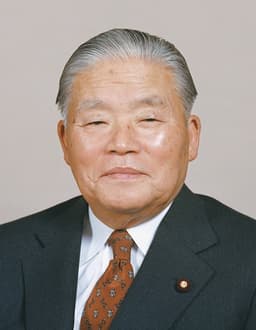
Masayoshi Ohira
Politician · Modern
49.8Total
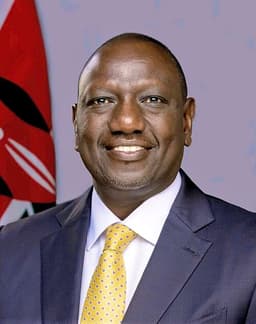
Uhuru Kenyatta
Politician · Modern
54.7Total
Basic Information
Born
1910
1961
Died
1980
—
Era
Modern
Modern
Nationality
Japan
Kenya
Occupation
Politician
Politician
Civilization
Eastern
Other
Score Comparison
Military (10%)
14.6
50.0
Political (20%)
59.3
62.7
Influence (20%)
56.4
57.2
Legacy (20%)
45.0
46.7
Leadership (15%)
72.0
66.0
Strategy (15%)
33.1
44.2
TOTAL
49.8
54.7
Masayoshi Ohira — Complete Timeline
1978 AD
Appointed Prime Minister of JapanPolitical Action◆ Major
Masayoshi Ohira became Prime Minister of Japan on December 7, 1978, succeeding Takeo Fukuda. His election followed a close LDP presidential race. Ohira's government focused on economic management and foreign policy, including strengthening ties with the United States.
Prime MinisterLDPJapan
Impact: national
1979 AD
Hosted the 5th G7 Summit in TokyoPolitical Action◆ Major
Ohira hosted the 5th G7 Summit in Tokyo from June 28-29, 1979. The summit addressed the global oil crisis, inflation, and energy policy. Ohira played a key role in coordinating Western responses to the second oil shock following the Iranian Revolution.
G7 SummitDiplomacyOil Crisis
Impact: global
1980 AD
Died in OfficeOther◆ Major
Ohira died of a heart attack on June 12, 1980, while in office as Prime Minister. His death occurred during a general election campaign, triggering a sympathy vote that led to a landslide victory for the LDP. He was the first Japanese prime minister to die in office since 1945.
Death in OfficeLDPJapan
Impact: nationaltragic
Uhuru Kenyatta — Complete Timeline
2013 AD
2013 Kenyan general electionPolitical Action◆ Major
Uhuru Kenyatta won the presidential election as candidate of the Jubilee Alliance, defeating Raila Odinga. The election was largely peaceful, though Odinga challenged the result at the Supreme Court, which upheld Kenyatta's victory. Kenyatta became Kenya's fourth president.
ElectionPeaceful TransitionJubilee
Impact: national
2014 AD
ICC trial for post-election violencePolitical Action◆ Major
Kenyatta faced charges at the International Criminal Court (ICC) for crimes against humanity related to the 2007-2008 post-election violence. The case was withdrawn in 2014 due to insufficient evidence and witness interference, but it marked a significant international legal challenge to a sitting head of state.
ICCInternational JusticeElection Violence
Impact: global
Standard Gauge Railway projectOther◆ Major
Kenyatta launched the construction of the Standard Gauge Railway (SGR) from Mombasa to Nairobi, funded by Chinese loans. The project, completed in 2017, aimed to modernize Kenya's transport infrastructure and boost trade, but also raised concerns about debt sustainability.
InfrastructureChinaRailway
Impact: nationalconstructive
2018 AD
Handshake with Raila OdingaPolitical Action◆ Major
Kenyatta and opposition leader Raila Odinga publicly reconciled in a 'handshake' event, ending months of political tension following the disputed 2017 election. This led to the Building Bridges Initiative (BBI), which proposed constitutional changes aimed at reducing political conflict.
ReconciliationPolitical DialogueBBI
Impact: nationalconstructive
2020 AD
COVID-19 pandemic responsePolitical Action◆ Major
Kenyatta's government implemented measures to combat the COVID-19 pandemic, including curfews, lockdowns, and economic stimulus packages. The response was praised for its early action but criticized for economic impact and enforcement issues. Kenya recorded over 300,000 cases by 2022.
PandemicPublic HealthEconomic Response
Impact: national
Expert Analysis
Origins
Masayoshi Ohira was born on March 12, 1910, in Kagawa Prefecture, Japan, into a farming family. He studied economics at Hitotsubashi University, graduating in 1936, and worked at the Ministry of Finance before entering politics. His early career was marked by bureaucratic efficiency and a focus on economic policy.
Uhuru Kenyatta was born on October 26, 1961, in Nairobi, Kenya, the son of Jomo Kenyatta, Kenya's first president. He studied political science and economics at Amherst College in the United States, graduating in 1985. His background as the son of a founding father provided him with political connections and a sense of destiny.
Rise to Power
Ohira entered the Diet in 1952 as a member of the Liberal Party, later joining the Liberal Democratic Party (LDP). He held key posts including Minister of Foreign Affairs and Minister of International Trade and Industry. He became Prime Minister on December 7, 1978, after winning the LDP presidential race against Takeo Fukuda. His rise was a result of factional politics and his reputation as a skilled bureaucrat.
Kenyatta first ran for president in 2002 but lost to Mwai Kibaki. He served as Minister of Local Government and later as Deputy Prime Minister. He won the presidency in the 2013 general election as the Jubilee Alliance candidate, defeating Raila Odinga with 50.07% of the vote. His rise was aided by his family name and coalition building.
Leadership & Governance
Ohira's leadership focused on fiscal restraint and international diplomacy. He hosted the 5th G7 Summit in Tokyo in 1979, addressing the oil crisis and inflation. His governance style was consensus-oriented within the LDP, but he faced challenges from party factions. He proposed a tax increase to reduce deficits, which proved unpopular.
Kenyatta's leadership emphasized infrastructure development, notably the Standard Gauge Railway (SGR) funded by Chinese loans, completed in 2017. He also pursued economic reforms and faced criticism for high debt levels. His political score of 62.7 reflects his ability to maintain power, but his leadership score of 66.0 is lower than Ohira's 72.0, indicating Ohira's more effective governance style.
Triumph & Tragedy
Ohira's greatest success was hosting the G7 summit and maintaining Japan's economic stability during global turmoil. His tragedy was his death in office on June 12, 1980, from a heart attack during an election campaign, which plunged Japan into political uncertainty. His legacy score of 45.0 reflects limited long-term impact.
Kenyatta's triumphs include overseeing peaceful elections (2013) and the SGR project. His tragedy is the shadow of the ICC trial for crimes against humanity related to the 2007-2008 post-election violence; the case was withdrawn in 2014 due to lack of evidence. His influence score of 57.2 is slightly higher than Ohira's 56.4, but his military score of 50.0 contrasts with Ohira's 14.6, reflecting Kenya's security challenges.
Character & Destiny
Ohira was known as a quiet, intellectual leader who favored behind-the-scenes negotiation. His cautious nature led to struggles with party factions, and his death cut short his tenure. Historians view him as a competent but uncharismatic leader.
Kenyatta is seen as pragmatic and resilient, surviving political crises including the ICC trial. His character of reconciliation was shown in the 2018 'handshake' with Raila Odinga, ending political tension. However, his leadership score of 66.0 is lower than Ohira's 72.0, suggesting less decisive governance.
Legacy
Ohira's legacy is tied to Japan's economic diplomacy and the G7 summit. He is remembered as a caretaker PM rather than a transformative leader. His total score of 49.8 reflects moderate impact.
Kenyatta's legacy includes infrastructure projects and economic growth, but also debt and corruption concerns. His total score of 54.7 is higher, indicating greater overall impact. The SGR and the handshake are key markers of his tenure.
Conclusion
While both leaders had moderate scores, Uhuru Kenyatta edges out Masayoshi Ohira with a total score of 54.7 versus 49.8. Kenyatta's longer tenure, infrastructure legacy, and higher influence give him greater impact. However, Ohira's higher leadership score (72.0) suggests he was a more effective administrator. In the broader historical context, Kenyatta's actions shaped Kenya's development more than Ohira's did for Japan.
Rankings
🥇
Uhuru KenyattaLeader
Mil: 50.0Pol: 62.7Inf: 57.2
54.7
🥈
Masayoshi Ohira
Mil: 14.6Pol: 59.3Inf: 56.4
49.8
+4.9 behind
How This Comparison Works
Algorithm
Each figure is scored on 6 dimensions (0—100 scale) based on structured historical data: Military (10%), Political (20%), Influence (20%), Legacy (20%), Leadership (15%), Strategy (15%). The weighted total produces the final ranking.
Data Sources
Scores are computed from structured sub-indicators in the database. Scale factors adjust for era (Ancient ×0.85, Modern ×1.0) and civilization size (Eastern ×1.05, Other ×0.80) to account for differences in population and military scale.
Maximum 3 Figures
Comparisons are limited to 2—3 figures to ensure readability and statistical meaningfulness.
Error Margins
±5 points per dimension — Sub-scores are derived from historical records with inherent uncertainty. Two figures within 5 points on a dimension should be considered roughly equivalent in that area.
Total Score Accuracy
±3 points overall — The weighted combination of 6 dimensions produces a total score with approximately ±3 points of uncertainty. Differences of less than 3 points are not statistically significant— the figures are effectively tied.
Known Limitations
- Historical records are incomplete and uneven across civilizations
- Figures from oral-tradition societies may be underrepresented
- Occupation labels can misclassify multi-role figures
- Scores measure capability and impact, not moral character
- Quantitative scoring is a comparison tool, not absolute truth
Capability Radar
Military (10%) — Battles & Warfare
Battles
13
23
Win Rate
19
22
Expansion
18
30
Political (20%) — Governance & Reform
Reform
65
55
Diplomacy
70
60
Economy
75
55
Influence (20%) — Cultural & Global Reach
Cultural
30
40
Global
40
45
Legacy (20%) — Historical Impact
Historical
40
45
Longevity
30
35
Leadership (15%) — Power & Stability
Tenure
60
65
Stability
60
50
Strategy (15%) — Tactics & Innovation
Strategy
24
30
Tactics
27
33
Reform
28
36
Similar Comparisons
Comments & Discussion
No comments yet. Be the first to share your thoughts!