Loading...
Masayoshi Ohira vs Tawfik Abu al-Huda
Tawfik Abu al-Huda leads by 4.3 pts · 2 figures compared
…
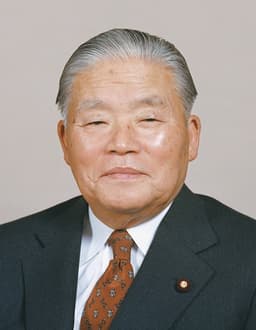
Masayoshi Ohira
Politician · Modern
49.8Total

Tawfik Abu al-Huda
Politician · Modern
54.1Total
Basic Information
Born
1910
1895
Died
1980
1956
Era
Modern
Modern
Nationality
Japan
Jordan
Occupation
Politician
Politician
Civilization
Eastern
Middle Eastern
Score Comparison
Military (10%)
14.6
50.0
Political (20%)
59.3
68.0
Influence (20%)
56.4
50.2
Legacy (20%)
45.0
45.0
Leadership (15%)
72.0
72.0
Strategy (15%)
33.1
43.2
TOTAL
49.8
54.1
Masayoshi Ohira — Complete Timeline
1978 AD
Appointed Prime Minister of JapanPolitical Action◆ Major
Masayoshi Ohira became Prime Minister of Japan on December 7, 1978, succeeding Takeo Fukuda. His election followed a close LDP presidential race. Ohira's government focused on economic management and foreign policy, including strengthening ties with the United States.
Prime MinisterLDPJapan
Impact: national
1979 AD
Hosted the 5th G7 Summit in TokyoPolitical Action◆ Major
Ohira hosted the 5th G7 Summit in Tokyo from June 28-29, 1979. The summit addressed the global oil crisis, inflation, and energy policy. Ohira played a key role in coordinating Western responses to the second oil shock following the Iranian Revolution.
G7 SummitDiplomacyOil Crisis
Impact: global
1980 AD
Died in OfficeOther◆ Major
Ohira died of a heart attack on June 12, 1980, while in office as Prime Minister. His death occurred during a general election campaign, triggering a sympathy vote that led to a landslide victory for the LDP. He was the first Japanese prime minister to die in office since 1945.
Death in OfficeLDPJapan
Impact: nationaltragic
Tawfik Abu al-Huda — Complete Timeline
1938 AD
First Term as Prime MinisterPolitical Action
Tawfik Abu al-Huda became Prime Minister of Transjordan for the first time. He served under Emir Abdullah and helped consolidate the state.
Prime MinisterTransjordanState Building
Impact: national
1948 AD
1948 Arab-Israeli WarWar◆ Major
Abu al-Huda was Prime Minister during the 1948 war. He coordinated Jordan's military involvement and the annexation of the West Bank.
Arab-Israeli WarJordanWest Bank
Impact: regional
1951 AD
Assassination of King Abdullah IPolitical Action◆ Major
Abu al-Huda was present when King Abdullah I was assassinated in Jerusalem. He helped manage the succession crisis and maintain stability.
AssassinationRoyal FamilyJordan
Impact: nationaltragic
1955 AD
Longest-Serving Prime MinisterPolitical Action
Abu al-Huda served his sixth term, becoming Jordan's longest-serving prime minister. He held office for a total of over 10 years.
Prime MinisterLongevityJordan
Impact: national
Expert Analysis
Origins
Masayoshi Ohira was born on March 12, 1910, in Kagawa Prefecture, Japan, into a farming family. He studied at Tokyo University of Commerce (now Hitotsubashi University) and entered the Ministry of Finance in 1936. His early career focused on economic policy, shaping his technocratic approach.
Tawfik Abu al-Huda was born in 1894 in Acre, Ottoman Empire (now Israel). He studied at the Maktab Sultani in Istanbul and served in the Ottoman bureaucracy. After World War I, he joined the Arab government in Damascus and later the Emirate of Transjordan, where he became a key administrator.
Rise to Power
Ohira entered politics in 1952 as a member of the Liberal Party. He rose through the ranks under Prime Minister Hayato Ikeda, serving as Chief Cabinet Secretary (1960-1962) and Minister of Foreign Affairs (1962-1964). He was a key architect of the Income Doubling Plan. After a stint as Minister of International Trade and Industry (1968-1970), he became LDP Secretary-General. In 1978, he won the LDP presidential election and became Prime Minister on December 7, 1978.
Abu al-Huda first became Prime Minister of Transjordan in 1938 under Emir Abdullah. He served six non-consecutive terms, totaling over 10 years. His rise was tied to his administrative competence and loyalty to the Hashemite monarchy. He was a key figure in Jordan's state-building, serving during critical periods including the 1948 Arab-Israeli War and the assassination of King Abdullah I in 1951.
Leadership & Governance
Ohira's leadership style was consensus-oriented and cautious. He focused on fiscal restraint and administrative reform, proposing a "New Social Welfare" policy. He hosted the 5th G7 Summit in Tokyo in 1979, addressing the oil crisis and inflation. His governance scores 72.0 in Leadership, reflecting his ability to navigate factional politics. However, his Political score of 59.3 indicates limited transformative impact.
Abu al-Huda was a pragmatic administrator who prioritized stability and loyalty to the monarchy. He oversaw Jordan's involvement in the 1948 war and the annexation of the West Bank. His Leadership score is also 72.0, but his Political score of 68.0 is higher, reflecting his longer tenure and influence in Jordanian politics. He managed the succession crisis after King Abdullah's assassination, ensuring a smooth transition to King Hussein.
Triumph & Tragedy
Ohira's greatest success was his role in Japan's economic growth as a minister and his diplomatic efforts at the G7. His tragedy was his sudden death on June 12, 1980, during an election campaign, which led to a sympathy vote for the LDP. His legacy is tied to the "Ohira boom" period of economic stability, but his short tenure limited his impact.
Abu al-Huda's triumph was his longevity and role in Jordan's state consolidation. He successfully navigated the 1948 war and the assassination crisis. His tragedy was his association with controversial policies, including the annexation of the West Bank, which later led to conflict. He died in 1956, but his influence endured.
Character & Destiny
Ohira was known as a reserved, intellectual figure, often called "the philosopher" for his thoughtful approach. His cautious nature led to indecisiveness at times. His destiny was cut short by a heart attack at 70, leaving many plans unfulfilled.
Abu al-Huda was a shrewd, loyalist administrator. His political survival skills allowed him to serve under multiple monarchs. His destiny was to be a stabilizing force in Jordan, but his legacy is mixed due to his role in the West Bank annexation.
Legacy
Ohira's legacy is modest: he is remembered for his economic policies and the G7 summit. His death in office created a precedent for sympathy votes. His overall score is 49.8, with Influence at 56.4 and Legacy at 45.0.
Abu al-Huda's legacy is more substantial: he is Jordan's longest-serving prime minister and a key state-builder. His Influence score is 50.2, but his Legacy is also 45.0. However, his Political score of 68.0 reflects his enduring impact on Jordanian governance.
Conclusion
Tawfik Abu al-Huda had greater impact than Masayoshi Ohira. His longer tenure, handling of existential crises, and role in Jordan's formation outweigh Ohira's brief premiership. While Ohira scored higher in Influence (56.4 vs 50.2), Abu al-Huda's Political (68.0 vs 59.3) and total score (54.1 vs 49.8) indicate deeper long-term influence. Ohira's death cut short his potential, while Abu al-Huda's sustained leadership shaped a nation.
Rankings
🥇
Tawfik Abu al-HudaLeader
Mil: 50.0Pol: 68.0Inf: 50.2
54.1
🥈
Masayoshi Ohira
Mil: 14.6Pol: 59.3Inf: 56.4
49.8
+4.3 behind
How This Comparison Works
Algorithm
Each figure is scored on 6 dimensions (0—100 scale) based on structured historical data: Military (10%), Political (20%), Influence (20%), Legacy (20%), Leadership (15%), Strategy (15%). The weighted total produces the final ranking.
Data Sources
Scores are computed from structured sub-indicators in the database. Scale factors adjust for era (Ancient ×0.85, Modern ×1.0) and civilization size (Eastern ×1.05, Other ×0.80) to account for differences in population and military scale.
Maximum 3 Figures
Comparisons are limited to 2—3 figures to ensure readability and statistical meaningfulness.
Error Margins
±5 points per dimension — Sub-scores are derived from historical records with inherent uncertainty. Two figures within 5 points on a dimension should be considered roughly equivalent in that area.
Total Score Accuracy
±3 points overall — The weighted combination of 6 dimensions produces a total score with approximately ±3 points of uncertainty. Differences of less than 3 points are not statistically significant— the figures are effectively tied.
Known Limitations
- Historical records are incomplete and uneven across civilizations
- Figures from oral-tradition societies may be underrepresented
- Occupation labels can misclassify multi-role figures
- Scores measure capability and impact, not moral character
- Quantitative scoring is a comparison tool, not absolute truth
Capability Radar
Military (10%) — Battles & Warfare
Battles
13
24
Win Rate
19
27
Expansion
18
27
Political (20%) — Governance & Reform
Reform
65
40
Diplomacy
70
65
Economy
75
30
Influence (20%) — Cultural & Global Reach
Cultural
30
20
Global
40
20
Legacy (20%) — Historical Impact
Historical
40
40
Longevity
30
30
Leadership (15%) — Power & Stability
Tenure
60
70
Stability
60
50
Strategy (15%) — Tactics & Innovation
Strategy
24
28
Tactics
27
35
Reform
28
34
Similar Comparisons
Comments & Discussion
No comments yet. Be the first to share your thoughts!