Loading...
Dingane kaSenzangakhona vs King Abdullah II of Jordan
King Abdullah II of Jordan leads by 6.8 pts · 2 figures compared
…

Dingane kaSenzangakhona
Emperor · Modern
47.2Total
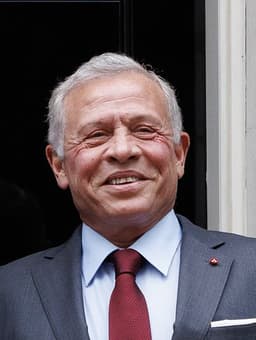
King Abdullah II of Jordan
Emperor · Modern
54.0Total
Basic Information
Born
1795
1962
Died
1840
—
Era
Modern
Modern
Nationality
Zulu Kingdom
Jordan
Occupation
Emperor
Emperor
Civilization
Other
Middle Eastern
Score Comparison
Military (10%)
25.0
20.0
Political (20%)
35.1
72.0
Influence (20%)
53.3
58.0
Legacy (20%)
43.3
42.5
Leadership (15%)
62.2
80.0
Strategy (15%)
60.0
41.0
TOTAL
47.2
54.0
Dingane kaSenzangakhona — Complete Timeline
1828 AD
Became Zulu King After Shaka's AssassinationPolitical Action
Dingane kaSenzangakhona became Zulu king in September 1828 after orchestrating the assassination of his half-brother Shaka. He consolidated power by eliminating Shaka's loyalists and reversing some of Shaka's harsh policies, but maintained the Zulu military system.
AssassinationSuccessionZulu Kingdom
Impact: regionaldestructive
1838 AD
Killed Piet Retief and VoortrekkersWar◆ Major
Dingane ordered the killing of Voortrekker leader Piet Retief and 70 of his followers on February 6, 1838, after they signed a land treaty. This act triggered a war between the Zulu Kingdom and the Boers, leading to the Battle of Blood River.
VoortrekkersWarBetrayal
Impact: regionaldestructive
Defeated at Battle of Blood RiverWar
Dingane's Zulu army was decisively defeated by Boer forces under Andries Pretorius at the Battle of Blood River on December 16, 1838. The Boers used a laager formation and superior firearms, killing over 3,000 Zulu warriors while suffering few casualties, weakening Dingane's rule.
BattleBoer-Zulu WarDefeat
Impact: regionaltragic
1840 AD
Fled and AssassinatedPolitical Action◆ Major
Dingane was overthrown by his half-brother Mpande, who allied with the Boers, in January 1840. Dingane fled to the Hlubi people but was assassinated by them in February 1840. His death ended his reign and marked the rise of Mpande as a Boer-aligned king.
OverthrowAssassinationSuccession
Impact: regionaltragic
King Abdullah II of Jordan — Complete Timeline
1999 AD
Assumed the throne of JordanPolitical Action◆ Major
Abdullah II became King of Jordan on February 7, 1999, upon the death of his father King Hussein. His accession was unexpected as he was not the original heir, but Hussein changed the succession line shortly before his death.
SuccessionMonarchy
Impact: national
2000 AD
Launch of economic reforms and privatizationReform◆ Major
King Abdullah II initiated a series of economic reforms including privatization of state-owned enterprises, trade liberalization, and creation of special economic zones. These policies aimed to attract foreign investment and modernize Jordan's economy.
Economic ReformPrivatizationDevelopment
Impact: nationalconstructive
2011 AD
Jordanian role in the Arab Spring protestsPolitical Action◆ Major
King Abdullah II responded to widespread protests in Jordan during the Arab Spring by dismissing governments, enacting constitutional reforms, and promising political liberalization. He avoided the regime collapse seen in other Arab countries.
Arab SpringReformProtests
Impact: national
Syrian refugee crisis responseOther◆ Major
Under King Abdullah II's leadership, Jordan hosted over 1.3 million Syrian refugees fleeing the Syrian civil war. The influx strained Jordan's resources and infrastructure, leading to international aid agreements and humanitarian challenges.
RefugeesSyrian Civil WarHumanitarian
Impact: regional
2021 AD
Failed coup attempt and Prince Hamzah affairPolitical Action◆ Major
King Abdullah II placed his half-brother Prince Hamzah under house arrest, accusing him of involvement in a foreign-backed plot to destabilize Jordan. The incident exposed internal royal family tensions and was resolved through mediation.
Coup AttemptRoyal FamilySecurity
Impact: nationaldestructive
Expert Analysis
Origins
Dingane kaSenzangakhona was born around 1795 in the Zulu Kingdom, a son of Senzangakhona kaJama. His half-brother Shaka Zulu built a powerful militaristic state. Dingane grew up in the shadow of Shaka's conquests, learning the arts of war and politics in a brutal environment. He was part of the royal family but not the designated heir, which shaped his ambition and insecurity.
King Abdullah II of Jordan was born on January 30, 1962, in Amman, to King Hussein and Princess Muna. He was educated in Britain at Sandhurst, Oxford, and Georgetown, giving him a Western perspective. As the eldest son, he was not initially crown prince—his uncle Hassan held that role until days before King Hussein's death. This unexpected succession shaped his pragmatic approach.
Rise to Power
Dingane seized power in September 1828 by orchestrating the assassination of Shaka with the help of his brother Mhlangana and a senior induna, Mbopa. After Shaka's death, Dingane killed Mhlangana and took the throne. He eliminated rivals, including other half-brothers, to secure his position. His reign began with a purging of Shaka's loyalists.
King Abdullah II became king on February 7, 1999, upon his father's death. His appointment as crown prince just days before surprised many. He immediately faced challenges of maintaining stability in a volatile region. He quickly consolidated power by appointing loyalists and continuing his father's policies of cautious reform.
Leadership & Governance
Dingane's leadership was autocratic and suspicious. He maintained the Zulu military system but was less expansionist than Shaka. His governance relied on fear and control. He made key errors in diplomacy, particularly with the Boers. For example, he signed a land treaty with Piet Retief on February 6, 1838, then ordered Retief and his party killed, sparking war. His military strategy scored 60.0, but his political acumen was only 35.1.
King Abdullah II's leadership is more modern and consultative. He scores 80.0 in leadership and 72.0 in politics. He has pursued economic reforms, privatization, and foreign investment, creating special economic zones. Politically, he has navigated the Arab Spring by dismissing governments and enacting constitutional reforms, though real power remains with the monarchy. His strategy score of 41.0 reflects cautious but sometimes reactive decision-making.
Triumph & Tragedy
Dingane's triumph was briefly maintaining Zulu independence after Shaka's death. He successfully eliminated internal rivals and initially resisted Boer encroachment. However, his tragedy was the massacre of Retief and the subsequent defeat at the Battle of Blood River on December 16, 1838, where his army of 10,000-20,000 warriors failed to dislodge 470 Boers fortified in a laager. He then lost support and was overthrown by his half-brother Mpande in January 1840, fleeing to the Hlubi people, who assassinated him.
King Abdullah II's triumphs include economic modernization and maintaining stability through the Arab Spring. Jordan has become a hub for IT and services. His response to the Syrian refugee crisis, hosting over 1.3 million refugees, was humanitarian but strained resources. His tragedy includes the failed coup attempt by his half-brother Prince Hamzah in 2021, revealing internal discontent. He placed Hamzah under house arrest, damaging his image as a unifier.
Character & Destiny
Dingane was paranoid and ruthless, shaped by the violent Zulu court. His decision to kill Retief was a miscalculation that sealed his fate. He lacked Shaka's strategic genius and alienated key allies. His character led to his downfall: he scored 62.2 in leadership but only 25.0 in military, indicating poor execution.
King Abdullah II is pragmatic and cautious, a modern monarch in a traditional society. He balances reform with stability, but his destiny is tied to regional turmoil. He has avoided major conflict but faces ongoing challenges from Islamists and economic pressures. His leadership score of 80.0 reflects his ability to navigate crises.
Legacy
Dingane is remembered as the Zulu king who fought the Boers but lost. His legacy is negative in Zulu history, as his actions led to the fracturing of the kingdom. He scored 43.3 in legacy. The Battle of Blood River became a symbol of Afrikaner nationalism. His reign is a cautionary tale of poor diplomacy and military overreach.
King Abdullah II's legacy is still forming. He has modernized Jordan's economy and maintained peace with Israel, but faces criticism for authoritarian tendencies. He scores 42.5 in legacy. His handling of the refugee crisis and Arab Spring will define his historical reputation. He has positioned Jordan as a stable ally in a turbulent region.
Conclusion
King Abdullah II had greater impact than Dingane, with a total score of 54.0 versus 47.2. While Dingane's actions had immediate consequences for the Zulu kingdom, his influence was short-lived and largely negative. Abdullah II has shaped a small but strategically vital nation over two decades, navigating wars, refugees, and reform. His political and leadership scores (72.0 and 80.0) far exceed Dingane's (35.1 and 62.2). Dingane's military score (25.0) was slightly higher than Abdullah's (20.0), but his strategic errors overshadowed that. In the long term, Abdullah II's modernizing influence and regional stability contributions outweigh Dingane's brief, destructive reign.
Rankings
🥇
King Abdullah II of JordanLeader
Mil: 20.0Pol: 72.0Inf: 58.0
54.0
🥈
Dingane kaSenzangakhona
Mil: 25.0Pol: 35.1Inf: 53.3
47.2
+6.8 behind
How This Comparison Works
Algorithm
Each figure is scored on 6 dimensions (0—100 scale) based on structured historical data: Military (10%), Political (20%), Influence (20%), Legacy (20%), Leadership (15%), Strategy (15%). The weighted total produces the final ranking.
Data Sources
Scores are computed from structured sub-indicators in the database. Scale factors adjust for era (Ancient ×0.85, Modern ×1.0) and civilization size (Eastern ×1.05, Other ×0.80) to account for differences in population and military scale.
Maximum 3 Figures
Comparisons are limited to 2—3 figures to ensure readability and statistical meaningfulness.
Error Margins
±5 points per dimension — Sub-scores are derived from historical records with inherent uncertainty. Two figures within 5 points on a dimension should be considered roughly equivalent in that area.
Total Score Accuracy
±3 points overall — The weighted combination of 6 dimensions produces a total score with approximately ±3 points of uncertainty. Differences of less than 3 points are not statistically significant— the figures are effectively tied.
Known Limitations
- Historical records are incomplete and uneven across civilizations
- Figures from oral-tradition societies may be underrepresented
- Occupation labels can misclassify multi-role figures
- Scores measure capability and impact, not moral character
- Quantitative scoring is a comparison tool, not absolute truth
Capability Radar
Military (10%) — Battles & Warfare
Battles
45
10
Win Rate
30
10
Expansion
40
5
Political (20%) — Governance & Reform
Reform
15
60
Diplomacy
20
75
Economy
25
55
Influence (20%) — Cultural & Global Reach
Cultural
35
40
Global
25
50
Legacy (20%) — Historical Impact
Historical
40
35
Longevity
30
30
Leadership (15%) — Power & Stability
Tenure
40
70
Stability
20
65
Strategy (15%) — Tactics & Innovation
Strategy
35
20
Tactics
40
15
Reform
20
30
Similar Comparisons
Comments & Discussion
No comments yet. Be the first to share your thoughts!