Loading...
King Abdullah II of Jordan vs Lady Jane Grey
King Abdullah II of Jordan leads by 3.1 pts · 2 figures compared
…
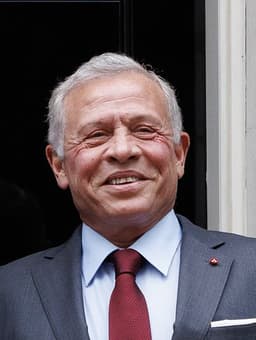
King Abdullah II of Jordan
Emperor · Modern
54.0Total
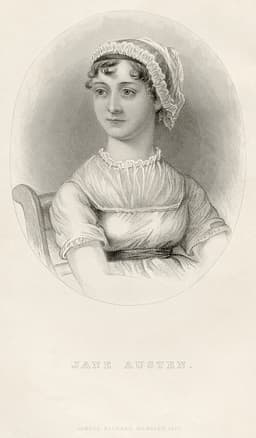
Lady Jane Grey
Emperor · Modern
50.9Total
Basic Information
Born
1962
1537
Died
—
1554
Era
Modern
Modern
Nationality
Jordan
England
Occupation
Emperor
Emperor
Civilization
Middle Eastern
Western
Score Comparison
Military (10%)
20.0
47.2
Political (20%)
72.0
62.8
Influence (20%)
58.0
47.1
Legacy (20%)
42.5
37.5
Leadership (15%)
80.0
74.3
Strategy (15%)
41.0
45.0
TOTAL
54.0
50.9
King Abdullah II of Jordan — Complete Timeline
1999 AD
Assumed the throne of JordanPolitical Action◆ Major
Abdullah II became King of Jordan on February 7, 1999, upon the death of his father King Hussein. His accession was unexpected as he was not the original heir, but Hussein changed the succession line shortly before his death.
SuccessionMonarchy
Impact: national
2000 AD
Launch of economic reforms and privatizationReform◆ Major
King Abdullah II initiated a series of economic reforms including privatization of state-owned enterprises, trade liberalization, and creation of special economic zones. These policies aimed to attract foreign investment and modernize Jordan's economy.
Economic ReformPrivatizationDevelopment
Impact: nationalconstructive
2011 AD
Jordanian role in the Arab Spring protestsPolitical Action◆ Major
King Abdullah II responded to widespread protests in Jordan during the Arab Spring by dismissing governments, enacting constitutional reforms, and promising political liberalization. He avoided the regime collapse seen in other Arab countries.
Arab SpringReformProtests
Impact: national
Syrian refugee crisis responseOther◆ Major
Under King Abdullah II's leadership, Jordan hosted over 1.3 million Syrian refugees fleeing the Syrian civil war. The influx strained Jordan's resources and infrastructure, leading to international aid agreements and humanitarian challenges.
RefugeesSyrian Civil WarHumanitarian
Impact: regional
2021 AD
Failed coup attempt and Prince Hamzah affairPolitical Action◆ Major
King Abdullah II placed his half-brother Prince Hamzah under house arrest, accusing him of involvement in a foreign-backed plot to destabilize Jordan. The incident exposed internal royal family tensions and was resolved through mediation.
Coup AttemptRoyal FamilySecurity
Impact: nationaldestructive
Lady Jane Grey — Complete Timeline
1553 AD
Proclamation as QueenPolitical Action◆ Major
Lady Jane Grey was proclaimed queen of England after the death of Edward VI, based on his will. Her reign lasted only nine days before Mary I's supporters rallied and deposed her.
SuccessionNine Days QueenProtestant
Impact: national
Imprisonment in the Tower of LondonPolitical Action◆ Major
After Mary I's accession, Lady Jane Grey was imprisoned in the Tower of London. She was convicted of high treason for accepting the crown, though initially spared execution.
ImprisonmentTreasonTower of London
Impact: nationaltragic
1554 AD
Execution of Lady Jane GreyPolitical Action◆ Major
Lady Jane Grey was executed by beheading at the Tower of London after Wyatt's Rebellion threatened Mary I's rule. Her death eliminated a Protestant rival and solidified Mary's control over the throne.
ExecutionMartyrProtestant
Impact: nationaltragic
Expert Analysis
Origins
**King Abdullah II of Jordan** was born on January 30, 1962, in Amman, the eldest son of King Hussein and his second wife, Princess Muna al-Hussein (born Toni Avril Gardiner). His education included attending the Royal Military Academy Sandhurst in the UK, followed by service in the Jordanian Armed Forces. He also studied at Oxford University (Pembroke College) and Georgetown University. His upbringing was immersed in military and diplomatic circles, preparing him for a future leadership role, though he was not initially the heir apparent; his uncle Hassan was crown prince until late in Hussein's reign.
**Lady Jane Grey** was born in October 1537 at Bradgate Park, Leicestershire, to Henry Grey, 1st Duke of Suffolk, and Lady Frances Brandon. She was a great-granddaughter of Henry VII through her mother, giving her a distant claim to the English throne. Educated as a humanist scholar, she was proficient in Latin, Greek, Hebrew, and Italian. Her parents pushed her into a political marriage with Guildford Dudley, son of the powerful Duke of Northumberland, who sought to control the succession after Edward VI's death.
Rise to Power
**King Abdullah II** ascended to the throne unexpectedly. King Hussein, in his final days, changed the succession law to name Abdullah as crown prince, bypassing his brother Hassan. Abdullah became king on February 7, 1999, upon his father's death. His rise was smooth, backed by the military and key tribal allies. He quickly consolidated power by appointing loyalists to top positions.
**Lady Jane Grey** was proclaimed queen on July 10, 1553, after Edward VI's death, based on a will that excluded his half-sisters Mary and Elizabeth. The Duke of Northumberland engineered this to maintain Protestant rule. Jane was a reluctant figure, reportedly fainting when told she was queen. Her rise was purely a political maneuver, lasting only nine days until Mary I rallied support and had Jane imprisoned.
Leadership & Governance
**King Abdullah II** has ruled Jordan for over two decades with a style combining authoritarian control with gradual reform. He has dismissed multiple prime ministers in response to protests (e.g., in 2011 during Arab Spring) and introduced limited constitutional changes. His economic reforms included privatization and special economic zones, but Jordan faces high unemployment and debt. His leadership score of 80.0 reflects his ability to maintain stability amid regional turmoil.
**Lady Jane Grey** had no chance to govern. Her reign lasted from July 10 to July 19, 1553. She issued no laws or policies. Her only act was to refuse to name her husband Guildford Dudley as king, showing a degree of independence. Her political score of 62.8 is theoretical, based on her potential as a Protestant figurehead.
Triumph & Tragedy
**King Abdullah II**'s triumphs include maintaining Jordan's stability through the Iraq War, Arab Spring, and Syrian refugee crisis. He has hosted over 1.3 million Syrian refugees, a humanitarian achievement. However, his failures include economic stagnation, corruption allegations, and the 2021 coup attempt involving his half-brother Prince Hamzah, which exposed internal divisions. His legacy score of 42.5 reflects mixed long-term impact.
**Lady Jane Grey**'s triumph was her brief moment as queen, a symbol of Protestant succession. Her tragedy was her execution on February 12, 1554, at age 16, after Wyatt's Rebellion. She was a pawn in others' ambitions. Her legacy score of 37.5 is low due to her short reign, but she remains a poignant figure in English history.
Character & Destiny
**King Abdullah II** is pragmatic and cautious, prioritizing stability over rapid reform. His military background (score 20.0) is low compared to his political acumen (72.0). He has skillfully navigated Jordan's delicate position between Israel, Palestine, and the Gulf. His character is reserved, often described as a 'safe pair of hands.' His destiny was shaped by his father's deathbed decision.
**Lady Jane Grey** was intelligent and devoutly Protestant, but passive in the face of political machinations. Her fate was sealed by her family's ambition. She accepted the crown reluctantly and died with dignity. Her character score (leadership 74.3) reflects her moral fortitude, but her strategy (45.0) was nonexistent.
Legacy
**King Abdullah II**'s legacy is Jordan's continued existence as a stable monarchy in a volatile region. He has modernized the economy partially and maintained peace with Israel. His influence (58.0) is moderate; he is respected internationally but faces domestic challenges. His reign will be judged by how Jordan navigates future crises.
**Lady Jane Grey**'s legacy is symbolic. She is remembered as the 'Nine Days Queen,' a martyr for Protestantism or a victim of Tudor power struggles. Her story has inspired books, films, and art. Her influence (47.1) is cultural rather than political.
Conclusion
King Abdullah II scores 54.0 overall, versus Lady Jane Grey's 50.9, a gap of 3.1 points. While both have leadership scores above 74, Abdullah's sustained governance and political impact outweigh Jane's tragic but brief appearance. His ability to rule for decades and navigate regional crises gives him greater historical weight. Lady Jane Grey remains a fascinating footnote, but King Abdullah II has shaped the modern Middle East. The data supports Abdullah II as having a more significant and lasting impact.
Rankings
🥇
King Abdullah II of JordanLeader
Mil: 20.0Pol: 72.0Inf: 58.0
54.0
🥈
Lady Jane Grey
Mil: 47.2Pol: 62.8Inf: 47.1
50.9
+3.1 behind
How This Comparison Works
Algorithm
Each figure is scored on 6 dimensions (0—100 scale) based on structured historical data: Military (10%), Political (20%), Influence (20%), Legacy (20%), Leadership (15%), Strategy (15%). The weighted total produces the final ranking.
Data Sources
Scores are computed from structured sub-indicators in the database. Scale factors adjust for era (Ancient ×0.85, Modern ×1.0) and civilization size (Eastern ×1.05, Other ×0.80) to account for differences in population and military scale.
Maximum 3 Figures
Comparisons are limited to 2—3 figures to ensure readability and statistical meaningfulness.
Error Margins
±5 points per dimension — Sub-scores are derived from historical records with inherent uncertainty. Two figures within 5 points on a dimension should be considered roughly equivalent in that area.
Total Score Accuracy
±3 points overall — The weighted combination of 6 dimensions produces a total score with approximately ±3 points of uncertainty. Differences of less than 3 points are not statistically significant— the figures are effectively tied.
Known Limitations
- Historical records are incomplete and uneven across civilizations
- Figures from oral-tradition societies may be underrepresented
- Occupation labels can misclassify multi-role figures
- Scores measure capability and impact, not moral character
- Quantitative scoring is a comparison tool, not absolute truth
Capability Radar
Military (10%) — Battles & Warfare
Battles
10
23
Win Rate
10
26
Expansion
5
31
Political (20%) — Governance & Reform
Reform
60
57
Diplomacy
75
60
Economy
55
67
Influence (20%) — Cultural & Global Reach
Cultural
40
10
Global
50
10
Legacy (20%) — Historical Impact
Historical
35
20
Longevity
30
15
Leadership (15%) — Power & Stability
Tenure
70
56
Stability
65
69
Strategy (15%) — Tactics & Innovation
Strategy
20
31
Tactics
15
36
Reform
30
38
Similar Comparisons
Comments & Discussion
No comments yet. Be the first to share your thoughts!