Loading...
Djer vs Napoleon Bonaparte
Napoleon Bonaparte leads by 21.3 pts · 2 figures compared
…
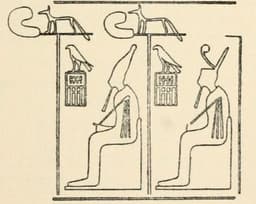
Djer
Emperor · Ancient
49.6Total

Napoleon Bonaparte
General · Modern
70.9Total
Basic Information
Born
-3050
1769
Died
-3000
1821
Era
Ancient
Modern
Nationality
Early Egypt
France
Occupation
Emperor
General
Civilization
Middle Eastern
Western
Score Comparison
Military (10%)
45.0
94.0
Political (20%)
39.4
72.0
Influence (20%)
49.4
40.0
Legacy (20%)
46.7
80.0
Leadership (15%)
72.0
78.0
Strategy (15%)
43.7
90.0
TOTAL
49.6
70.9
Djer — Complete Timeline
3050 BC
Conducted Military Campaigns in the SinaiWar◆ Major
Djer led military expeditions into the Sinai Peninsula to secure turquoise and copper mines. These campaigns expanded Egyptian control over valuable mineral resources and established trade routes.
SinaiMiningMilitary
Impact: regional
Reigned for Over 50 YearsPolitical Action◆ Major
Djer ruled for approximately 50-54 years, the longest reign of the First Dynasty. His lengthy rule allowed for consolidation of the early state, expansion of trade networks, and development of administrative systems.
Long ReignConsolidationAdministration
Impact: regionalconstructive
Built the Royal Tomb at AbydosCultural◆ Major
Djer constructed a large tomb at Abydos, surrounded by subsidiary burials of servants and officials. The tomb contained rich grave goods, including ivory and stone vessels, indicating the wealth of the early dynasty.
TombAbydosBurial
Established Trade with ByblosCultural◆ Major
Djer initiated or expanded trade relations with Byblos (in modern Lebanon), importing cedar wood, resins, and other goods. This trade connection became a hallmark of Egyptian foreign relations for centuries.
TradeByblosCedar
Impact: regionalconstructive
Napoleon Bonaparte — Complete Timeline
1799 AD
Coup of 18 BrumaireOther◆ Major
Napoleon Bonaparte, with support from his brother Lucien and key political figures, overthrew the Directory in a bloodless coup. He established the Consulate with himself as First Consul, effectively becoming the ruler of France. This event ended the French Revolution's most unstable period.
French RevolutionCoupRise to Power
Impact: regional
1804 AD
Promulgation of the Napoleonic CodeOther◆ Major
Napoleon enacted the Civil Code of the French, known as the Napoleonic Code, a comprehensive set of laws that replaced the fragmented feudal legal systems. The code established legal equality, protected property rights, and secularized law. It became the basis for legal systems in many European and world countries.
Legal ReformNapoleonic CodeCivil Law
Impact: globalconstructive
1805 AD
Battle of AusterlitzWar◆ Major
Napoleon's Grande Arm
Napoleonic WarsBattleDecisive Victory
Impact: global
1812 AD
Invasion of RussiaWar◆ Major
Napoleon led the Grande Arm
Napoleonic WarsInvasionDisaster
Impact: globaldestructive
1815 AD
Battle of WaterlooWar◆ Major
Napoleon's French army was defeated by the combined forces of the Duke of Wellington's Anglo-Allied army and Gebhard Leberecht von Bl
Napoleonic WarsBattleFinal Defeat
Impact: globaldestructive
Expert Analysis
djer-vs-napoleon-bonaparte
# The Emperor and the Pharaoh: Two Visions of Power Across Five Millennia
On a June morning in 1815, Napoleon Bonaparte stood on a muddy field near Waterloo, watching his Imperial Guard march into cannon fire for the last time. Twenty-three miles away, his carriage waited, packed with diamonds and state papers—but the road to Paris was closing. Nearly five thousand years earlier, another ruler, Djer, the third pharaoh of Egypt’s First Dynasty, oversaw a very different kind of finality. His tomb at Abydos, surrounded by the bodies of servants buried alive to accompany him into eternity, spoke of a power so absolute it could command death itself. Between these two men lies not just a gulf of centuries, but a fundamental difference in what it meant to rule—and what it meant to fail.
Origins
Napoleon was born in 1769 on the island of Corsica, a place recently annexed by France. His family were minor nobles, but they were not wealthy. He spoke Italian before French, and his early letters seethed with resentment toward the French who now ruled his homeland. This outsider’s hunger—the drive of a provincial boy who believed he had something to prove—shaped everything that followed. He attended military school on scholarship, where his classmates mocked his accent and his poverty. He responded by burying himself in books: military history, engineering, the works of Rousseau and Voltaire.
Djer, by contrast, was born into the divine. As the third pharaoh of Dynasty I, reigning around 3050 BCE, he inherited not just a throne but a cosmos. In early Egyptian belief, the pharaoh was Horus incarnate, the living god who ensured the Nile flooded, the sun rose, and chaos was held at bay. Djer’s world was one of ritual, monument, and absolute hierarchy. He did not need to prove himself; he needed only to hold the world together.
Rise to Power
Napoleon’s ascent was a masterpiece of opportunism. The French Revolution had shattered the old order, creating a vacuum that talent could fill. In 1793, at age twenty-four, he drove the British out of Toulon with a brilliant artillery plan. By 1796, he commanded the Army of Italy, where he transformed starving, mutinous soldiers into a conquering force. His victories in Italy made him a national hero. Then came Egypt in 1798—a failed military campaign but a propaganda triumph, complete with the discovery of the Rosetta Stone. When he returned to France in 1799, he found a Directory government paralyzed by corruption and crisis. In November, he seized power in a coup d’état. He was thirty years old.
Djer’s rise was quieter. He was born to rule, likely the son of Hor-Aha, the founder of the dynasty. His path was predetermined. But that does not mean it was easy. The early dynastic period was one of consolidation: Upper and Lower Egypt had only recently been unified, and the pharaoh’s authority rested on control over the Nile’s resources, trade routes, and local chieftains. Djer’s long reign—fifty to fifty-four years, the longest of the First Dynasty—allowed him to slowly, methodically strengthen the crown.
Leadership & Governance
Here the contrast is stark. Napoleon governed through speed, brilliance, and constant motion. He redrew the map of Europe, installed his brothers on thrones, and reformed French law with the Napoleonic Code—a system that enshrined equality before the law, property rights, and secular administration. He was a military genius who personally led his armies into battle, often sleeping on the ground with his men. His political score of 75 reflects a ruler who understood power but not limits: he centralized everything, crushed dissent, and believed his own legend.
Djer governed through time and tradition. He conducted military campaigns in the Sinai Peninsula to secure turquoise and copper mines—not for conquest, but for resources that sustained Egyptian civilization. He established trade with Byblos, in modern Lebanon, importing cedar wood for shipbuilding and temple construction. His royal tomb at Abydos, surrounded by subsidiary burials of servants and officials, was not just a monument but a statement: the pharaoh’s power extended beyond death. His military score of 37.5 is low by modern standards, but in his context, he did not need to conquer—he needed to endure.
Triumph & Tragedy
Napoleon’s greatest triumphs were dazzling: Austerlitz in 1805, where he destroyed a combined Russian and Austrian army; the creation of the Confederation of the Rhine; the Napoleonic Code itself. But his tragedies were equally monumental. The invasion of Russia in 1812 cost half a million men. The Peninsular War bled France dry. And Waterloo—that final, desperate gamble—ended everything. He died in exile on Saint Helena in 1821, a prisoner of the British, his empire dissolved.
Djer’s triumphs were quieter. He secured Egypt’s borders, expanded trade, and built for eternity. His tragedy is that we know so little of it. His tomb was robbed in antiquity. His name survives only in fragments. But perhaps that is not tragedy: in the Egyptian worldview, the pharaoh’s job was to maintain order, not to conquer the world. By that measure, Djer succeeded.
Character & Destiny
Napoleon was driven by an insatiable will. “Impossible is a word to be found only in the dictionary of fools,” he said. He could work eighteen hours a day, dictate four letters simultaneously, and remember the face of every officer he had ever met. But this same energy made him unable to stop. He could not share power, could not accept defeat, could not sit still. His personality was his engine and his anchor.
Djer remains opaque. We have no personal writings, no recorded words. What we see is what he built: a tomb, a trade route, a long reign. His character was patience. In a world where the pharaoh was a god, the personality of the man mattered less than his performance of the role.
Legacy
Napoleon’s legacy is everywhere. Modern law codes across Europe and the Americas bear his stamp. His military tactics are still studied. His name is synonymous with ambition, genius, and overreach. His total score of 82.4 places him among history’s greats.
Djer’s legacy is more modest but more mysterious. He helped consolidate one of the world’s first nation-states. His tomb at Abydos remains an archaeological treasure. His total score of 57.5 reflects a different kind of achievement: not brilliance, but stability.
Conclusion
Standing at the edge of Djer’s tomb, surrounded by the silent dead, one feels the weight of eternity. Standing on the field at Waterloo, one feels the weight of a single moment. Napoleon tried to conquer time through speed; Djer tried to conquer it through stone. Both failed, in the end. But perhaps the pharaoh understood something the emperor never did: that the greatest power is not the will to change the world, but the patience to hold it together.
Rankings
🥇
Napoleon BonaparteLeader
Mil: 94.0Pol: 72.0Inf: 40.0
70.9
🥈
Djer
Mil: 45.0Pol: 39.4Inf: 49.4
49.6
+21.3 behind
How This Comparison Works
Algorithm
Each figure is scored on 6 dimensions (0—100 scale) based on structured historical data: Military (10%), Political (20%), Influence (20%), Legacy (20%), Leadership (15%), Strategy (15%). The weighted total produces the final ranking.
Data Sources
Scores are computed from structured sub-indicators in the database. Scale factors adjust for era (Ancient ×0.85, Modern ×1.0) and civilization size (Eastern ×1.05, Other ×0.80) to account for differences in population and military scale.
Maximum 3 Figures
Comparisons are limited to 2—3 figures to ensure readability and statistical meaningfulness.
Error Margins
±5 points per dimension — Sub-scores are derived from historical records with inherent uncertainty. Two figures within 5 points on a dimension should be considered roughly equivalent in that area.
Total Score Accuracy
±3 points overall — The weighted combination of 6 dimensions produces a total score with approximately ±3 points of uncertainty. Differences of less than 3 points are not statistically significant— the figures are effectively tied.
Known Limitations
- Historical records are incomplete and uneven across civilizations
- Figures from oral-tradition societies may be underrepresented
- Occupation labels can misclassify multi-role figures
- Scores measure capability and impact, not moral character
- Quantitative scoring is a comparison tool, not absolute truth
Capability Radar
Military (10%) — Battles & Warfare
Battles
20
95
Win Rate
25
90
Expansion
30
95
Political (20%) — Governance & Reform
Reform
40
95
Diplomacy
30
80
Economy
35
85
Influence (20%) — Cultural & Global Reach
Cultural
35
85
Global
20
90
Legacy (20%) — Historical Impact
Historical
40
95
Longevity
50
90
Leadership (15%) — Power & Stability
Tenure
70
85
Stability
60
70
Strategy (15%) — Tactics & Innovation
Strategy
20
95
Tactics
20
98
Reform
15
92
Similar Comparisons
Comments & Discussion
No comments yet. Be the first to share your thoughts!