Loading...
Droupadi Murmu vs Jacinda Ardern
Jacinda Ardern leads by 11.7 pts · 2 figures compared
…
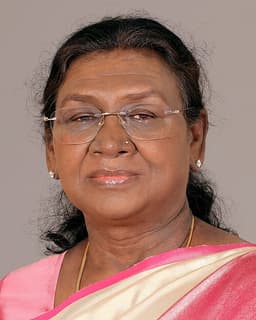
Droupadi Murmu
Politician · Modern
45.8Total
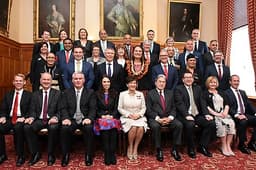
Jacinda Ardern
Politician · Modern
57.5Total
Basic Information
Born
1958
1980
Died
—
—
Era
Modern
Modern
Nationality
India
New Zealand
Occupation
Politician
Politician
Civilization
Indian
Western
Score Comparison
Military (10%)
21.4
50.0
Political (20%)
36.5
65.0
Influence (20%)
56.4
56.7
Legacy (20%)
42.5
49.2
Leadership (15%)
62.2
80.0
Strategy (15%)
41.1
42.9
TOTAL
45.8
57.5
Droupadi Murmu — Complete Timeline
2000 AD
Served as a minister in the Odisha governmentPolitical Action
Murmu served as a minister in the Odisha state government, holding portfolios including Fisheries and Animal Resources. She was one of the few tribal women in the state cabinet.
State MinisterOdishaTribal Politics
Impact: regionalconstructive
Elected to the Odisha Legislative AssemblyPolitical Action
Murmu was elected to the Odisha Legislative Assembly from the Rairangpur constituency. She served two terms, focusing on development issues in her tribal-dominated constituency.
MLAOdisha AssemblyTribal Constituency
constructive
2015 AD
Served as Governor of JharkhandPolitical Action
Murmu was appointed Governor of Jharkhand, the first woman to hold the office in the state. She served until her election as President, focusing on tribal welfare and education.
GovernorJharkhandTribal Welfare
Impact: regionalconstructive
2022 AD
Elected President of IndiaPolitical Action◆ Major
Murmu was elected as the 15th President of India, becoming the first tribal person and the second woman to hold the office. Her election was hailed as a milestone for tribal representation and gender equality.
PresidencyTribal RepresentationGender Equality
Impact: nationalconstructive
Jacinda Ardern — Complete Timeline
2017 AD
Became Prime Minister of New ZealandPolitical Action◆ Major
Jacinda Ardern became Prime Minister after the Labour Party formed a coalition government with New Zealand First, supported by the Green Party. At 37, she was the youngest female head of government in the world at the time.
ElectionGender MilestoneGovernment Formation
Impact: nationalconstructive
2019 AD
Response to the Christchurch Mosque ShootingsPolitical Action
Following the terrorist attack on two mosques in Christchurch that killed 51 people, Ardern's government swiftly enacted gun law reforms, banning military-style semi-automatic weapons. Her empathetic leadership and wearing of a headscarf gained international praise.
TerrorismGun ControlCrisis Management
Impact: globalconstructive
2020 AD
COVID-19 Pandemic ResponsePolitical Action
Ardern's government implemented a strict nationwide lockdown and border closure in response to the COVID-19 pandemic. New Zealand successfully eliminated community transmission for several months, with low case numbers and deaths compared to many countries.
Public HealthPandemicLockdown
Impact: globalconstructive
2023 AD
Resigned as Prime MinisterPolitical Action◆ Major
Jacinda Ardern announced her resignation as Prime Minister, stating she no longer had 'enough in the tank' to lead. Her departure marked the end of a transformative but increasingly challenging tenure.
ResignationPolitical Career
Impact: national
Expert Analysis
Origins
Droupadi Murmu was born on June 20, 1958, in the Santhali tribal community in Odisha, India. Her father, a farmer, struggled to provide for the family. She graduated from Rama Devi Women's College in Bhubaneswar and worked as a junior assistant in the Odisha government before entering politics. Her humble beginnings shaped her focus on tribal rights and rural development.
Jacinda Ardern was born on July 26, 1980, in Hamilton, New Zealand, to a Mormon family. Her father was a police officer, and her mother worked as a school canteen assistant. She earned a Bachelor of Arts in Politics and Public Relations from the University of Waikato. Ardern's early interest in politics led her to work as a researcher for Prime Minister Helen Clark, gaining exposure to policy-making.
Rise to Power
Murmu's political career began in 1997 when she was elected as a councilor in Rairangpur. She rose through the ranks of the Bharatiya Janata Party (BJP), winning a seat in the Odisha Legislative Assembly in 2000 and 2004. She served as a minister in the Odisha government, handling Fisheries and Animal Resources. In 2015, she became the first woman governor of Jharkhand, a role she held until 2021. Her tenure as governor was marked by efforts to bridge gaps between tribal communities and the state. In 2022, she was elected President of India, defeating opposition candidate Yashwant Sinha.
Ardern entered Parliament in 2008 as a list MP. She became the Labour Party leader in 2017, just seven weeks before the general election. After the election, Labour formed a coalition government with New Zealand First and the Green Party, making Ardern Prime Minister at age 37. Her rise was fueled by her empathetic communication style and progressive policies, appealing to younger voters.
Leadership & Governance
Murmu's leadership is largely ceremonial as President of India, but she used her platform to advocate for tribal communities, education, and women's empowerment. She scored 62.2 in leadership, reflecting her ability to inspire as a symbolic figure. Her governance approach emphasized inclusivity, as seen in her focus on tribal welfare during her governorship.
Ardern scored 80.0 in leadership, the highest among the two. She governed with a consensus-building style, notably forming a coalition government. Her response to crises—such as the Christchurch shootings and COVID-19—showcased decisive action. She banned military-style semi-automatic weapons within weeks of the attack and implemented a strict elimination strategy for COVID-19, resulting in low infection rates. However, her leadership faced criticism for housing and inequality issues.
Triumph & Tragedy
Murmu's greatest triumph is becoming the first tribal President of India, a historic achievement that inspired marginalized communities. She also successfully served as Governor of Jharkhand, promoting tribal rights. Her failures are limited due to her mostly symbolic role, but she faced challenges in navigating political pressures as a president from a tribal background.
Ardern's triumphs include her compassionate response to the Christchurch shootings, which earned global praise, and her effective COVID-19 management. New Zealand eliminated community transmission in 2020. However, her resignation in 2023 due to burnout highlighted the toll of leadership. Critics point to rising cost of living and housing crisis as failures of her government.
Character & Destiny
Murmu is characterized by resilience and humility. Born into poverty, she overcame personal tragedies, including the death of her husband and son. Her destiny was shaped by her identity as a tribal woman, breaking barriers in a patriarchal society. Historical assessments praise her as a symbol of representation.
Ardern is known for empathy and decisiveness. Her character led her to prioritize kindness in politics, but also contributed to burnout. Her destiny was shaped by timing—she led during crises that defined her tenure. Assessments note her ability to connect with people but question her long-term policy achievements.
Legacy
Murmu's legacy lies in her representation. She inspired millions of tribal people and women in India. Her presidency may encourage greater tribal political participation. She scored 42.5 in legacy, reflecting her symbolic impact.
Ardern's legacy includes gun reform in New Zealand, a model for crisis management, and a shift towards empathetic leadership. Her COVID-19 response is studied globally. She scored 49.2 in legacy, slightly higher due to tangible policy changes.
Conclusion
Jacinda Ardern had greater impact than Droupadi Murmu based on concrete policy changes and crisis management. Ardern's total score of 57.5 surpasses Murmu's 45.8. While Murmu's symbolic role is important, Ardern's tangible reforms—such as gun control and pandemic response—demonstrate measurable influence. Ardern's leadership in crises and ability to enact change position her as the more impactful leader.
Rankings
🥇
Jacinda ArdernLeader
Mil: 50.0Pol: 65.0Inf: 56.7
57.5
🥈
Droupadi Murmu
Mil: 21.4Pol: 36.5Inf: 56.4
45.8
+11.7 behind
How This Comparison Works
Algorithm
Each figure is scored on 6 dimensions (0—100 scale) based on structured historical data: Military (10%), Political (20%), Influence (20%), Legacy (20%), Leadership (15%), Strategy (15%). The weighted total produces the final ranking.
Data Sources
Scores are computed from structured sub-indicators in the database. Scale factors adjust for era (Ancient ×0.85, Modern ×1.0) and civilization size (Eastern ×1.05, Other ×0.80) to account for differences in population and military scale.
Maximum 3 Figures
Comparisons are limited to 2—3 figures to ensure readability and statistical meaningfulness.
Error Margins
±5 points per dimension — Sub-scores are derived from historical records with inherent uncertainty. Two figures within 5 points on a dimension should be considered roughly equivalent in that area.
Total Score Accuracy
±3 points overall — The weighted combination of 6 dimensions produces a total score with approximately ±3 points of uncertainty. Differences of less than 3 points are not statistically significant— the figures are effectively tied.
Known Limitations
- Historical records are incomplete and uneven across civilizations
- Figures from oral-tradition societies may be underrepresented
- Occupation labels can misclassify multi-role figures
- Scores measure capability and impact, not moral character
- Quantitative scoring is a comparison tool, not absolute truth
Capability Radar
Military (10%) — Battles & Warfare
Battles
25
27
Win Rate
27
30
Expansion
28
37
Political (20%) — Governance & Reform
Reform
30
70
Diplomacy
30
75
Economy
20
60
Influence (20%) — Cultural & Global Reach
Cultural
40
60
Global
30
65
Legacy (20%) — Historical Impact
Historical
35
55
Longevity
20
40
Leadership (15%) — Power & Stability
Tenure
25
65
Stability
35
70
Strategy (15%) — Tactics & Innovation
Strategy
34
41
Tactics
38
42
Reform
39
41
Similar Comparisons
Comments & Discussion
No comments yet. Be the first to share your thoughts!