Loading...
This comparison has not been analyzed yet.
One-time AI generation (~1 minute). Scores and timeline are already available below.
Droupadi Murmu vs Sonexay Siphandone
Droupadi Murmu leads by 11.5 pts · 2 figures compared
…
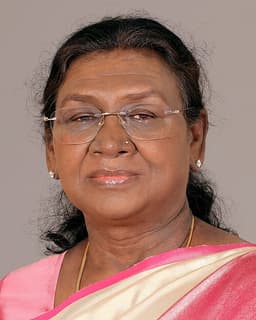
Droupadi Murmu
Politician · Modern
45.8Total

Sonexay Siphandone
Politician · Modern
34.3Total
Basic Information
Born
1958
1966
Died
—
—
Era
Modern
Modern
Nationality
India
Laos
Occupation
Politician
Politician
Civilization
Indian
Eastern
Score Comparison
Military (10%)
21.4
12.4
Political (20%)
36.5
27.9
Influence (20%)
56.4
45.5
Legacy (20%)
42.5
35.0
Leadership (15%)
62.2
34.6
Strategy (15%)
41.1
35.9
TOTAL
45.8
34.3
Droupadi Murmu — Complete Timeline
2000 AD
Served as a minister in the Odisha governmentPolitical Action
Murmu served as a minister in the Odisha state government, holding portfolios including Fisheries and Animal Resources. She was one of the few tribal women in the state cabinet.
State MinisterOdishaTribal Politics
Impact: regionalconstructive
Elected to the Odisha Legislative AssemblyPolitical Action
Murmu was elected to the Odisha Legislative Assembly from the Rairangpur constituency. She served two terms, focusing on development issues in her tribal-dominated constituency.
MLAOdisha AssemblyTribal Constituency
constructive
2015 AD
Served as Governor of JharkhandPolitical Action
Murmu was appointed Governor of Jharkhand, the first woman to hold the office in the state. She served until her election as President, focusing on tribal welfare and education.
GovernorJharkhandTribal Welfare
Impact: regionalconstructive
2022 AD
Elected President of IndiaPolitical Action◆ Major
Murmu was elected as the 15th President of India, becoming the first tribal person and the second woman to hold the office. Her election was hailed as a milestone for tribal representation and gender equality.
PresidencyTribal RepresentationGender Equality
Impact: nationalconstructive
Sonexay Siphandone — Complete Timeline
2022 AD
Appointment as Prime Minister of LaosPolitical Action◆ Major
Sonexay Siphandone was appointed Prime Minister of Laos by the National Assembly, succeeding Phankham Viphavanh. He is the son of former party chief Khamtai Siphandone, making him part of a political dynasty. His appointment signaled continuity in Lao leadership.
Prime MinisterPolitical DynastyLeadership
Impact: national
2023 AD
Management of Economic CrisisPolitical Action◆ Major
Sonexay Siphandone faced a severe economic crisis marked by high inflation, currency depreciation, and mounting foreign debt. His government implemented austerity measures and sought debt restructuring with China, while struggling to maintain public services and living standards.
Economic CrisisInflationDebt
Impact: nationaldestructive
Continuation of the Lao-China Railway ProjectPolitical Action
Sonexay Siphandone continued the expansion of the Lao-China Railway, including plans for a high-speed link to Thailand. The project remained a central part of Laos's development strategy, despite criticism over its financial burden and environmental impact.
Belt and RoadInfrastructureDevelopment
Impact: regional
This comparison has not been analyzed yet.
One-time AI generation (~1 minute). Scores and timeline are already available below.
Rankings
🥇
Droupadi MurmuLeader
Mil: 21.4Pol: 36.5Inf: 56.4
45.8
🥈
Sonexay Siphandone
Mil: 12.4Pol: 27.9Inf: 45.5
34.3
+11.5 behind
How This Comparison Works
Algorithm
Each figure is scored on 6 dimensions (0—100 scale) based on structured historical data: Military (10%), Political (20%), Influence (20%), Legacy (20%), Leadership (15%), Strategy (15%). The weighted total produces the final ranking.
Data Sources
Scores are computed from structured sub-indicators in the database. Scale factors adjust for era (Ancient ×0.85, Modern ×1.0) and civilization size (Eastern ×1.05, Other ×0.80) to account for differences in population and military scale.
Maximum 3 Figures
Comparisons are limited to 2—3 figures to ensure readability and statistical meaningfulness.
Error Margins
±5 points per dimension — Sub-scores are derived from historical records with inherent uncertainty. Two figures within 5 points on a dimension should be considered roughly equivalent in that area.
Total Score Accuracy
±3 points overall — The weighted combination of 6 dimensions produces a total score with approximately ±3 points of uncertainty. Differences of less than 3 points are not statistically significant— the figures are effectively tied.
Known Limitations
- Historical records are incomplete and uneven across civilizations
- Figures from oral-tradition societies may be underrepresented
- Occupation labels can misclassify multi-role figures
- Scores measure capability and impact, not moral character
- Quantitative scoring is a comparison tool, not absolute truth
Capability Radar
Military (10%) — Battles & Warfare
Battles
25
12
Win Rate
27
19
Expansion
28
22
Political (20%) — Governance & Reform
Reform
30
10
Diplomacy
30
10
Economy
20
10
Influence (20%) — Cultural & Global Reach
Cultural
40
5
Global
30
5
Legacy (20%) — Historical Impact
Historical
35
5
Longevity
20
5
Leadership (15%) — Power & Stability
Tenure
25
10
Stability
35
10
Strategy (15%) — Tactics & Innovation
Strategy
34
22
Tactics
38
27
Reform
39
29
Similar Comparisons
Comments & Discussion
No comments yet. Be the first to share your thoughts!