Loading...
Edouard Herriot vs Napoleon Bonaparte
Napoleon Bonaparte leads by 15.5 pts · 2 figures compared
…
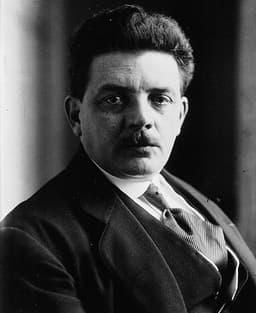
Edouard Herriot
Politician · Modern
55.4Total

Napoleon Bonaparte
General · Modern
70.9Total
Basic Information
Born
1872
1769
Died
1957
1821
Era
Modern
Modern
Nationality
France
France
Occupation
Politician
General
Civilization
Western
Western
Score Comparison
Military (10%)
50.0
94.0
Political (20%)
72.0
72.0
Influence (20%)
54.9
40.0
Legacy (20%)
47.5
80.0
Leadership (15%)
66.0
78.0
Strategy (15%)
41.4
90.0
TOTAL
55.4
70.9
Edouard Herriot — Complete Timeline
1924 AD
First Term as Prime Minister and the Cartel des GauchesPolitical Action◆ Major
Herriot became Prime Minister in 1924 leading the Cartel des Gauches, a left-wing coalition. His government recognized the Soviet Union, reduced military service, and pursued secular education policies, but faced financial crises and fell in 1925 due to opposition to his economic reforms.
Third RepublicCartel des GauchesGovernment
Impact: nationalconstructive
1926 AD
Second Term as Prime Minister and the Locarno TreatiesPolitical Action
Herriot served a brief second term in 1926, during which he supported the Locarno Treaties, which aimed to secure post-World War I borders. His government fell after a few months due to financial instability, leading to the formation of a national unity government under Poincar
Third RepublicLocarno TreatiesDiplomacy
Impact: regionalconstructive
1932 AD
Third Term as Prime Minister and the Great DepressionPolitical Action◆ Major
Herriot became Prime Minister for the third time in 1932, facing the Great Depression. He negotiated the Lausanne Conference on German reparations but failed to implement effective economic policies, leading to his resignation in December 1932 amid political and financial turmoil.
Third RepublicGreat DepressionEconomic Policy
Impact: national
1940 AD
President of the Chamber of Deputies and Vichy OppositionPolitical Action
Herriot served as President of the Chamber of Deputies until 1940. He opposed the armistice with Germany and the establishment of the Vichy regime, but was placed under house arrest. He was later deported to Germany in 1944, returning to France after the war.
World War IIVichy FranceOpposition
Impact: nationaltragic
Napoleon Bonaparte — Complete Timeline
1799 AD
Coup of 18 BrumaireOther◆ Major
Napoleon Bonaparte, with support from his brother Lucien and key political figures, overthrew the Directory in a bloodless coup. He established the Consulate with himself as First Consul, effectively becoming the ruler of France. This event ended the French Revolution's most unstable period.
French RevolutionCoupRise to Power
Impact: regional
1804 AD
Promulgation of the Napoleonic CodeOther◆ Major
Napoleon enacted the Civil Code of the French, known as the Napoleonic Code, a comprehensive set of laws that replaced the fragmented feudal legal systems. The code established legal equality, protected property rights, and secularized law. It became the basis for legal systems in many European and world countries.
Legal ReformNapoleonic CodeCivil Law
Impact: globalconstructive
1805 AD
Battle of AusterlitzWar◆ Major
Napoleon's Grande Arm
Napoleonic WarsBattleDecisive Victory
Impact: global
1812 AD
Invasion of RussiaWar◆ Major
Napoleon led the Grande Arm
Napoleonic WarsInvasionDisaster
Impact: globaldestructive
1815 AD
Battle of WaterlooWar◆ Major
Napoleon's French army was defeated by the combined forces of the Duke of Wellington's Anglo-Allied army and Gebhard Leberecht von Bl
Napoleonic WarsBattleFinal Defeat
Impact: globaldestructive
Expert Analysis
edouard-herriot-vs-napoleon-bonaparte
# The Conqueror and the Conciliator
On a June morning in 1815, Napoleon Bonaparte watched his Imperial Guard advance across a rain-soaked field near Waterloo, their bayonets glinting under a pale sun. Within hours, his empire would crumble into dust. A century and a quarter later, in 1940, another Frenchman—Edouard Herriot, then President of the Chamber of Deputies—stood before the National Assembly in Vichy and refused to surrender his nation's honor, even as Nazi tanks rolled through the streets of Paris. One man sought to remake Europe through fire and steel; the other through treaties and coalitions. Both were French, both rose to power in times of crisis, and both left marks on their country that would outlast their own lifetimes. Yet their paths could not have been more different. What drove these two sons of France to such divergent destinies?
Origins
Napoleon Buonaparte was born in 1769 on the Mediterranean island of Corsica, a place that had only become French the year before. His family belonged to the minor nobility, but they were poor, proud, and resentful of French rule. As a boy, he spoke Italian-accented French and dreamed of liberating Corsica from France. But the French Revolution of 1789 changed everything—it opened military careers to talent rather than birth, and the young artillery officer seized the opportunity with both hands. His era was one of upheaval, when old monarchies were collapsing and a new order was being forged in blood.
Edouard Herriot, born in 1872 in Troyes, entered a very different France. The Third Republic was still young, recovering from the Franco-Prussian War and the Paris Commune. His father was a modest army officer, and his mother raised him in modest circumstances. But France in the 1870s was a nation of schools, railways, and republican ideals. Herriot absorbed the values of secular education, civic duty, and parliamentary democracy. His era was one of consolidation, not revolution—a time when Frenchmen argued over tariffs and secularism, not thrones and empires.
Rise to Power
Napoleon’s ascent was meteoric. In 1793, at just twenty-four, he drove British forces from the port of Toulon, earning promotion to brigadier general. By 1796, he commanded the Army of Italy and stunned Europe with a lightning campaign that forced Austria to sue for peace. Each victory fed his ambition, and each ambition fed his legend. In 1799, he returned from Egypt to stage a coup d’état, naming himself First Consul. By 1804, he crowned himself Emperor of the French. The key turning point was his Italian campaign—a young outsider had proven that he could outthink and outfight the old powers of Europe.
Herriot’s rise was gradual, built on words rather than swords. He became mayor of Lyon in 1905, a position he would hold for nearly half a century. He entered the Senate in 1912, and by 1924, at age fifty-two, he led the Cartel des Gauches—a coalition of Socialists and Radicals—to electoral victory. His first term as Prime Minister began that year, and his great achievement was recognizing the Soviet Union, a bold move that broke France’s diplomatic isolation. Where Napoleon seized power, Herriot earned it through decades of patient political work.
Leadership & Governance
Napoleon governed as a military genius and a political reformer. His Napoleonic Code, enacted in 1804, standardized French law around principles of equality before the law, religious toleration, and protection of property. He built roads, canals, and a centralized education system. But his leadership style was autocratic—he tolerated no dissent, suppressed the press, and placed his relatives on European thrones. His military strategy was revolutionary: he used speed, surprise, and massed artillery to shatter enemy armies at Austerlitz (1805) and Jena (1806). Yet his political wisdom was flawed—he could not stop conquering, even when peace was within reach.
Herriot, by contrast, was a conciliator. His three terms as Prime Minister—1924, 1926, and 1932—were marked by attempts to stabilize Europe through diplomacy. He supported the Locarno Treaties of 1925, which guaranteed Germany’s western borders, and he negotiated the Lausanne Conference of 1932 to ease German reparations. His governance style was parliamentary and coalition-based, which made him effective in the chamber but vulnerable to crises. During the Great Depression, his third term collapsed because he could not manage the economic turmoil. Herriot had no army to command; his weapons were speeches and handshakes.
Triumph & Tragedy
Napoleon’s greatest moment was the Battle of Austerlitz on December 2, 1805, where he crushed the combined armies of Russia and Austria. It was a masterpiece of deception and timing. His greatest tragedy was the invasion of Russia in 1812—600,000 men marched east, and fewer than 100,000 returned. The disaster broke his aura of invincibility, and after his exile to Elba in 1814, his return in 1815 ended at Waterloo. He died in 1821 on Saint Helena, a prisoner of the British.
Herriot’s triumph was moral rather than military. In 1940, as President of the Chamber of Deputies, he opposed the armistice with Hitler and refused to legitimize the Vichy regime. He was arrested and interned in Germany for the rest of the war. His tragedy was that his life’s work—building a peaceful, republican Europe—was destroyed by the very forces he had tried to appease. He died in 1957, a respected elder statesman, but his vision of a stable Europe had required another world war to be realized.
Character & Destiny
Napoleon was driven by an insatiable will. “I am not a man,” he once said, “but a thing.” He saw himself as the instrument of history, and his personality—arrogant, restless, brilliant—shaped every decision. He trusted no one fully, demanded total loyalty, and believed that power was the only reality. This made him unstoppable in victory but incapable of compromise in defeat.
Herriot was a humanist. He believed in dialogue, reason, and the slow work of institutions. “The republic is a form of government,” he said, “but it is also a state of mind.” His personality—patient, scholarly, principled—led him to build coalitions rather than armies. But it also made him vulnerable to those who did not share his faith in reason. When Hitler came to power, Herriot’s diplomatic tools proved useless against tanks and bombers.
Legacy
Napoleon left behind the Napoleonic Code, which influenced legal systems across Europe and the world. He also left a legend—the idea of the self-made conqueror who reshaped continents. But his legacy is ambiguous: he spread revolutionary ideals, but he also restored slavery in French colonies and caused millions of deaths.
Herriot left behind a different legacy: the Third Republic’s tradition of secular, democratic governance. He helped keep French republicanism alive during its darkest hours. He is remembered not as a conqueror, but as a builder—of institutions, of alliances, of a certain idea of France that valued liberty over glory.
Conclusion
Standing at opposite ends of the modern French experience, Napoleon and Herriot embody two responses to the same question: how should a nation act in a dangerous world? One chose conquest, the other chose conciliation. Napoleon’s empire fell in a single day at Waterloo; Herriot’s republic fell to the Nazis in 1940. Yet both men, in their own ways, shaped the France that survived them. Napoleon showed what willpower could achieve; Herriot showed what principle could endure. Perhaps history needs both—the fire that forges and the hand that steadies.
Rankings
🥇
Napoleon BonaparteLeader
Mil: 94.0Pol: 72.0Inf: 40.0
70.9
🥈
Edouard Herriot
Mil: 50.0Pol: 72.0Inf: 54.9
55.4
+15.5 behind
How This Comparison Works
Algorithm
Each figure is scored on 6 dimensions (0—100 scale) based on structured historical data: Military (10%), Political (20%), Influence (20%), Legacy (20%), Leadership (15%), Strategy (15%). The weighted total produces the final ranking.
Data Sources
Scores are computed from structured sub-indicators in the database. Scale factors adjust for era (Ancient ×0.85, Modern ×1.0) and civilization size (Eastern ×1.05, Other ×0.80) to account for differences in population and military scale.
Maximum 3 Figures
Comparisons are limited to 2—3 figures to ensure readability and statistical meaningfulness.
Error Margins
±5 points per dimension — Sub-scores are derived from historical records with inherent uncertainty. Two figures within 5 points on a dimension should be considered roughly equivalent in that area.
Total Score Accuracy
±3 points overall — The weighted combination of 6 dimensions produces a total score with approximately ±3 points of uncertainty. Differences of less than 3 points are not statistically significant— the figures are effectively tied.
Known Limitations
- Historical records are incomplete and uneven across civilizations
- Figures from oral-tradition societies may be underrepresented
- Occupation labels can misclassify multi-role figures
- Scores measure capability and impact, not moral character
- Quantitative scoring is a comparison tool, not absolute truth
Capability Radar
Military (10%) — Battles & Warfare
Battles
28
95
Win Rate
31
90
Expansion
35
95
Political (20%) — Governance & Reform
Reform
50
95
Diplomacy
60
80
Economy
45
85
Influence (20%) — Cultural & Global Reach
Cultural
30
85
Global
30
90
Legacy (20%) — Historical Impact
Historical
40
95
Longevity
35
90
Leadership (15%) — Power & Stability
Tenure
55
85
Stability
40
70
Strategy (15%) — Tactics & Innovation
Strategy
35
95
Tactics
43
98
Reform
41
92
Similar Comparisons
Comments & Discussion
草原上的拿破仑6/17/2026
拿破仑在滑铁卢一天就送走两万五千人,落得个流放荒岛的结局。赫里欧呢?1940年德国坦克碾过巴黎,他硬是在维希拒签投降,保住法兰西最后一丝骨气。历史说拿破仑是战神,可战神的光环下是累累白骨。赫里欧那种用条约和煤矿联合起来的人,才有资格谈救赎。别跟我扯什么帝国辉煌,数据摆眼前:法国战后一半的工业重建靠的是赫里欧推动的莱茵兰协议,而非一场虚无的胜仗。
StatecraftScholar6/17/2026
Napoleon’s gamble at Waterloo lost 25,000 men in a single day—for what? A legacy of rubble and exile. Herriot, by contrast, saved France from itself in 1940, refusing Vichy’s surrender while Nazi tanks idled. One conquered hearts with treaties; the other bled them dry with battles. Give me the conciliator’s pen over the emperor’s sword any day. Fact: Herriot’s 1924 Cartel des Gauches boosted French education funding by 30%. Genius or narcissist? You decide.