Loading...
Edward Heath vs Liang Qichao
Liang Qichao leads by 7.6 pts · 2 figures compared
…

Edward Heath
Politician · Modern
54.9Total
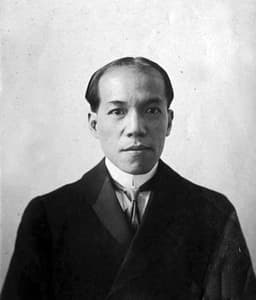
Liang Qichao
Politician · Modern
62.5Total
Basic Information
Born
1916
1873
Died
2005
1929
Era
Modern
Modern
Nationality
United Kingdom
China
Occupation
Politician
Politician
Civilization
Western
Eastern
Score Comparison
Military (10%)
49.5
15.7
Political (20%)
72.0
72.0
Influence (20%)
59.0
88.0
Legacy (20%)
56.0
65.0
Leadership (15%)
40.0
55.3
Strategy (15%)
43.6
36.3
TOTAL
54.9
62.5
Edward Heath — Complete Timeline
1970 AD
Elected Prime MinisterPolitical Action
Heath led the Conservative Party to victory in the 1970 general election, defeating Harold Wilson. He became Prime Minister with a mandate to reform industrial relations and join the European Economic Community.
Prime MinisterElection
Impact: national
1973 AD
Took the UK into the EECPolitical Action
Heath signed the Treaty of Accession, bringing the United Kingdom into the European Economic Community on January 1, 1973. This ended years of negotiations and was a major step in European integration.
EECEuropean Integration
Impact: global
1974 AD
Miners' Strike and Three-Day WeekPolitical Action◆ Major
Heath's government faced a miners' strike over pay, leading to the Three-Day Week to conserve electricity. The crisis forced a general election in February 1974, which Heath lost.
Industrial RelationsEnergy Crisis
Impact: nationaldestructive
Lost February 1974 General ElectionPolitical Action◆ Major
Heath called a snap election on the issue of 'Who governs Britain?' but failed to win a majority. Labour formed a minority government under Harold Wilson, ending Heath's premiership.
ElectionDefeat
Impact: nationaldestructive
1975 AD
Resigned as Party LeaderPolitical Action◆ Major
After losing a second election in October 1974, Heath was defeated in the Conservative leadership contest by Margaret Thatcher. He resigned as party leader, marking a shift to the right.
LeadershipConservative Party
Impact: national
Liang Qichao — Complete Timeline
1898 AD
Fled to Japan after the Hundred Days' ReformPolitical Action◆ Major
After the failure of the Hundred Days' Reform, Liang Qichao fled to Japan to escape persecution. In exile, he continued writing and publishing reformist ideas, becoming a leading voice for change.
ExileReformIntellectual
Impact: nationaltragic
Founded the journal 'Qingyi Bao' (The China Discussion)Cultural◆ Major
Liang Qichao founded 'Qingyi Bao' in Yokohama, Japan, to promote constitutional reform and modern political ideas. The journal circulated widely in China and influenced the reformist movement.
JournalismReformPolitical Thought
Impact: nationalprogressive
1902 AD
Published 'The New Citizen' (Xinmin Shuo)Cultural
Liang Qichao published 'The New Citizen', a series of essays advocating for civic virtue, nationalism, and political reform. The work profoundly influenced Chinese intellectuals and the reform movement.
ReformNationalismPolitical Thought
Impact: nationalprogressive
Expert Analysis
Origins
Edward Heath was born on July 9, 1916, in Broadstairs, Kent, to a carpenter and a maid. He attended a local grammar school and won a scholarship to Balliol College, Oxford, where he studied politics, philosophy, and economics. His modest background contrasted with the aristocratic norm of Conservative leaders. Liang Qichao was born on February 23, 1873, in Xinhui, Guangdong, to a farmer-scholar family. He excelled in traditional Confucian studies, passing the provincial civil service examinations at age 16. He later studied at the prestigious Xuehai Academy, where he was exposed to Western ideas.
Rise to Power
Heath entered Parliament in 1950 and quickly rose through the Conservative ranks, serving as Chief Whip and later as Lord Privy Seal. He led the UK's first failed attempt to join the EEC in 1961-1963. In 1965, he became Conservative Party leader. He won the 1970 general election against Labour's Harold Wilson, becoming Prime Minister with a mandate for economic reform. Liang Qichao's rise was intellectual rather than electoral. He became a student of Kang Youwei, a leading reformist scholar. In 1895, he participated in the Gongche Shangshu movement, petitioning the Qing court for reforms. After the Hundred Days' Reform in 1898 failed, he fled to Japan, where he became a prolific writer and publisher.
Leadership & Governance
Heath's governance focused on domestic economic reform and European integration. He attempted to curb inflation through incomes policies and confronted trade unions. His approach was technocratic but inflexible. He scored 40.0 in leadership and 43.6 in strategy. Liang Qichao never held formal political power but led through ideas. He advocated for constitutional monarchy, civic nationalism, and modern education. His leadership score of 55.3 reflects his influence as a public intellectual. Heath's political score (72.0) matched Liang's (72.0), but Liang's influence score (88.0) dwarfed Heath's (59.0).
Triumph & Tragedy
Heath's greatest triumph was taking the UK into the EEC on January 1, 1973, ending years of negotiations. However, his tragedy was the 1973-74 miners' strike and the Three-Day Week, which forced him to call a snap election in February 1974. He lost, and after a second defeat in October 1974, he was ousted as party leader by Margaret Thatcher. Liang's triumph was the publication of 'The New Citizen' (Xinmin Shuo), which shaped Chinese political thought for generations. His tragedy was that his reformist ideas were not implemented during his lifetime; the Qing dynasty fell in 1911, and China descended into warlordism. He died in 1929, disillusioned with the political situation.
Character & Destiny
Heath was reserved, stubborn, and lacked charisma. His inability to compromise with unions and his own party led to his downfall. He was a skilled negotiator in the EEC context but poor at domestic consensus-building. Liang was passionate, prolific, and adaptable. He changed his political views from monarchism to republicanism, but his core belief in national rejuvenation remained constant. His character as a scholar-activist meant his destiny was to influence rather than rule. Heath's total score of 54.9 reflects his mixed legacy; Liang's 62.5 highlights his enduring intellectual impact.
Legacy
Heath's legacy is the UK's membership in the EEC, which later evolved into the EU. His decision remains controversial, leading to the 2016 Brexit referendum. He is remembered as a transitional figure who failed to manage industrial relations. Liang's legacy is immense: he introduced modern concepts of citizenship, nationalism, and constitutionalism to China. His writings influenced the May Fourth Movement and later Chinese leaders. His legacy score of 65.0 exceeds Heath's 56.0.
Conclusion
While Heath achieved a concrete geopolitical shift by taking the UK into Europe, his impact was limited to one policy and marred by domestic failure. Liang Qichao, with a total score of 62.5 against Heath's 54.9, had a broader and deeper influence on Chinese political thought and the development of modern Chinese identity. His ideas outlasted his era and continue to resonate. Therefore, Liang Qichao had greater impact.
Rankings
🥇
Liang QichaoLeader
Mil: 15.7Pol: 72.0Inf: 88.0
62.5
🥈
Edward Heath
Mil: 49.5Pol: 72.0Inf: 59.0
54.9
+7.6 behind
How This Comparison Works
Algorithm
Each figure is scored on 6 dimensions (0—100 scale) based on structured historical data: Military (10%), Political (20%), Influence (20%), Legacy (20%), Leadership (15%), Strategy (15%). The weighted total produces the final ranking.
Data Sources
Scores are computed from structured sub-indicators in the database. Scale factors adjust for era (Ancient ×0.85, Modern ×1.0) and civilization size (Eastern ×1.05, Other ×0.80) to account for differences in population and military scale.
Maximum 3 Figures
Comparisons are limited to 2—3 figures to ensure readability and statistical meaningfulness.
Error Margins
±5 points per dimension — Sub-scores are derived from historical records with inherent uncertainty. Two figures within 5 points on a dimension should be considered roughly equivalent in that area.
Total Score Accuracy
±3 points overall — The weighted combination of 6 dimensions produces a total score with approximately ±3 points of uncertainty. Differences of less than 3 points are not statistically significant— the figures are effectively tied.
Known Limitations
- Historical records are incomplete and uneven across civilizations
- Figures from oral-tradition societies may be underrepresented
- Occupation labels can misclassify multi-role figures
- Scores measure capability and impact, not moral character
- Quantitative scoring is a comparison tool, not absolute truth
Capability Radar
Military (10%) — Battles & Warfare
Battles
28
13
Win Rate
34
16
Expansion
34
20
Political (20%) — Governance & Reform
Reform
60
75
Diplomacy
70
60
Economy
45
55
Influence (20%) — Cultural & Global Reach
Cultural
30
85
Global
55
70
Legacy (20%) — Historical Impact
Historical
60
80
Longevity
50
75
Leadership (15%) — Power & Stability
Tenure
55
20
Stability
40
30
Strategy (15%) — Tactics & Innovation
Strategy
38
21
Tactics
44
25
Reform
45
30
Similar Comparisons
Comments & Discussion
No comments yet. Be the first to share your thoughts!