Loading...
Liang Qichao vs Subhas Chandra Nembang
Liang Qichao leads by 14.3 pts · 2 figures compared
…
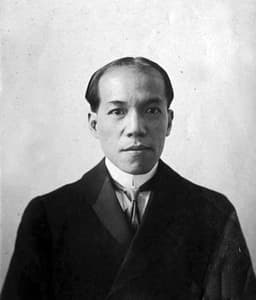
Liang Qichao
Politician · Modern
62.5Total

Subhas Chandra Nembang
Politician · Modern
48.2Total
Basic Information
Born
1873
1953
Died
1929
—
Era
Modern
Modern
Nationality
China
Nepal
Occupation
Politician
Politician
Civilization
Eastern
Indian
Score Comparison
Military (10%)
15.7
36.1
Political (20%)
72.0
42.3
Influence (20%)
88.0
49.4
Legacy (20%)
65.0
39.2
Leadership (15%)
55.3
67.0
Strategy (15%)
36.3
60.0
TOTAL
62.5
48.2
Liang Qichao — Complete Timeline
1898 AD
Fled to Japan after the Hundred Days' ReformPolitical Action◆ Major
After the failure of the Hundred Days' Reform, Liang Qichao fled to Japan to escape persecution. In exile, he continued writing and publishing reformist ideas, becoming a leading voice for change.
ExileReformIntellectual
Impact: nationaltragic
Founded the journal 'Qingyi Bao' (The China Discussion)Cultural◆ Major
Liang Qichao founded 'Qingyi Bao' in Yokohama, Japan, to promote constitutional reform and modern political ideas. The journal circulated widely in China and influenced the reformist movement.
JournalismReformPolitical Thought
Impact: nationalprogressive
1902 AD
Published 'The New Citizen' (Xinmin Shuo)Cultural
Liang Qichao published 'The New Citizen', a series of essays advocating for civic virtue, nationalism, and political reform. The work profoundly influenced Chinese intellectuals and the reform movement.
ReformNationalismPolitical Thought
Impact: nationalprogressive
Subhas Chandra Nembang — Complete Timeline
2008 AD
Elected Chairman of the Constituent AssemblyPolitical Action◆ Major
Subhas Chandra Nembang was elected Chairman of the first Constituent Assembly of Nepal. He presided over the assembly tasked with drafting a new constitution, a process that faced multiple delays and political crises.
Constituent AssemblyConstitution drafting
Impact: national
2014 AD
Re-elected Chairman of the second Constituent AssemblyPolitical Action◆ Major
After the failure of the first Constituent Assembly, Nembang was re-elected Chairman of the second Constituent Assembly. He played a crucial role in guiding the assembly to finally promulgate the constitution in 2015.
Constituent AssemblyConstitution drafting
Impact: nationalconstructive
2015 AD
Promulgated the Constitution of Nepal as Assembly ChairmanPolitical Action
As Chairman of the Constituent Assembly, Nembang formally promulgated the Constitution of Nepal on September 20, 2015. This marked the culmination of a decade-long peace process and established Nepal as a federal republic.
ConstitutionFederalismRepublic
Impact: nationalconstructive
Died suddenlyOther◆ Major
Subhas Chandra Nembang died suddenly of a heart attack in September 2015, shortly after the promulgation of the constitution. His death was a shock to the political establishment and was seen as a great loss to the peace process.
DeathLossPeace process
Impact: nationaltragic
Expert Analysis
Origins
Liang Qichao was born in 1873 in Xinhui, Guangdong, China, into a scholarly family. He passed the imperial examinations at a young age and studied under Kang Youwei, absorbing Confucian classics and Western reformist ideas. His early exposure to both traditions made him a bridge between old and new.
Subhas Chandra Nembang was born in 1953 in Ilam, Nepal, to a political family. He studied law at Tribhuvan University and became a lawyer. His early career involved human rights advocacy, which led him into politics after the 1990 People's Movement restored multiparty democracy.
Rise to Power
Liang Qichao rose to prominence as a leading intellectual in the Hundred Days' Reform of 1898, advising Emperor Guangxu. When the reform failed, he fled to Japan, where he founded the journal 'Qingyi Bao' (The China Discussion) in 1898, spreading constitutional ideas. His essays, especially 'The New Citizen' (Xinmin Shuo) published in 1902, turned him into a household name among Chinese youth.
Nembang's rise came through the Constituent Assembly. He was elected Chairman of the first Constituent Assembly in 2008, tasked with drafting Nepal's constitution after the abolition of the monarchy. When the first assembly failed, he was re-elected Chairman of the second Constituent Assembly in 2013, guiding it through political crises.
Leadership & Governance
Liang Qichao never held high office but led through ideas. He scored 55.3 in Leadership and 36.3 in Strategy, reflecting his role as a thinker rather than an executive. He advocated for 'new citizen' values—civic virtue, nationalism, and constitutional monarchy—but his impractical proposals, like a gradualist approach, were often ignored by revolutionaries.
Nembang, with Leadership 67.0 and Strategy 60.0, was a practical politician. As Assembly Chairman, he managed factions, set agendas, and pushed for consensus. His governance style was procedural: he kept debates moving and avoided deadlock. His political score of 42.3 reflects his limited executive power, but his leadership in the constitution-making process was decisive.
Triumph & Tragedy
Liang Qichao's greatest triumph was his influence: his writings inspired generations of reformers and revolutionaries, from Mao Zedong to Hu Shi. He scored 88.0 in Influence and 65.0 in Legacy. However, his tragedy was that his reformist vision was never realized in his lifetime—China turned to revolution under Sun Yat-sen and later Mao, not the gradual constitutionalism Liang championed.
Nembang's triumph was the promulgation of the Constitution of Nepal on September 20, 2015, ending a seven-year drafting process. He scored 39.2 in Legacy, which may rise as Nepal's democracy stabilizes. His tragedy was his sudden death from a heart attack shortly after the constitution was adopted, leaving him unable to see its implementation.
Character & Destiny
Liang Qichao was an optimist and prolific writer, always seeking synthesis between East and West. His character—intellectually curious but politically cautious—shaped his destiny as a permanent exile and advisor, never a ruler. Historians note his ability to adapt ideas to Chinese contexts, but his lack of direct political power limited his direct impact.
Nembang was a calm, patient consensus-builder. His character—methodical and persistent—helped him navigate Nepal's fractious politics. His destiny was to be the 'midwife' of Nepal's constitution, dying just after its birth. His sudden death underscored the fragility of political transitions.
Legacy
Liang Qichao's legacy is immense in Chinese intellectual history. He introduced concepts like 'nation', 'citizen', and 'democracy' to China, shaping modern Chinese discourse. His scores: Influence 88.0, Legacy 65.0. His ideas endure in Chinese education and historiography, though his political model failed.
Nembang's legacy is the Constitution of Nepal itself, a federal democratic framework that replaced the 1990 constitution. His scores: Influence 49.4, Legacy 39.2. He is remembered as a key figure in Nepal's transition from monarchy to republic, but his untimely death limits his personal legacy.
Conclusion
Liang Qichao had greater impact overall, as shown by his total score of 62.5 against Nembang's 48.2. Liang's ideas shaped the political vocabulary of a billion people, while Nembang's achievement was confined to a single document for a small nation. While Nembang's practical leadership was essential, Liang's intellectual influence transcends time and borders. In the contest between thinker and doer, the thinker's reach proved longer. Yet, Nembang's role as a constitutional steward was crucial for Nepal's democracy, and his legacy will grow if Nepal's constitution endures. Still, on the global stage, Liang Qichao's influence is far greater.
Rankings
🥇
Liang QichaoLeader
Mil: 15.7Pol: 72.0Inf: 88.0
62.5
🥈
Subhas Chandra Nembang
Mil: 36.1Pol: 42.3Inf: 49.4
48.2
+14.3 behind
How This Comparison Works
Algorithm
Each figure is scored on 6 dimensions (0—100 scale) based on structured historical data: Military (10%), Political (20%), Influence (20%), Legacy (20%), Leadership (15%), Strategy (15%). The weighted total produces the final ranking.
Data Sources
Scores are computed from structured sub-indicators in the database. Scale factors adjust for era (Ancient ×0.85, Modern ×1.0) and civilization size (Eastern ×1.05, Other ×0.80) to account for differences in population and military scale.
Maximum 3 Figures
Comparisons are limited to 2—3 figures to ensure readability and statistical meaningfulness.
Error Margins
±5 points per dimension — Sub-scores are derived from historical records with inherent uncertainty. Two figures within 5 points on a dimension should be considered roughly equivalent in that area.
Total Score Accuracy
±3 points overall — The weighted combination of 6 dimensions produces a total score with approximately ±3 points of uncertainty. Differences of less than 3 points are not statistically significant— the figures are effectively tied.
Known Limitations
- Historical records are incomplete and uneven across civilizations
- Figures from oral-tradition societies may be underrepresented
- Occupation labels can misclassify multi-role figures
- Scores measure capability and impact, not moral character
- Quantitative scoring is a comparison tool, not absolute truth
Capability Radar
Military (10%) — Battles & Warfare
Battles
13
45
Win Rate
16
48
Expansion
20
49
Political (20%) — Governance & Reform
Reform
75
45
Diplomacy
60
35
Economy
55
20
Influence (20%) — Cultural & Global Reach
Cultural
85
15
Global
70
10
Legacy (20%) — Historical Impact
Historical
80
25
Longevity
75
10
Leadership (15%) — Power & Stability
Tenure
20
40
Stability
30
30
Strategy (15%) — Tactics & Innovation
Strategy
21
51
Tactics
25
56
Reform
30
57
Similar Comparisons
Comments & Discussion
No comments yet. Be the first to share your thoughts!