Loading...
Hassan Ali Khaire vs Liang Qichao
Liang Qichao leads by 18.9 pts · 2 figures compared
…

Hassan Ali Khaire
Politician · Modern
43.6Total
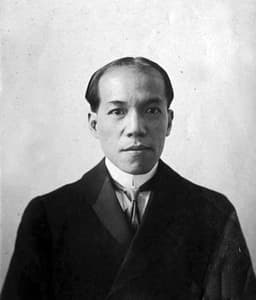
Liang Qichao
Politician · Modern
62.5Total
Basic Information
Born
1968
1873
Died
—
1929
Era
Modern
Modern
Nationality
Somalia
China
Occupation
Politician
Politician
Civilization
Other
Eastern
Score Comparison
Military (10%)
47.6
15.7
Political (20%)
36.5
72.0
Influence (20%)
47.1
88.0
Legacy (20%)
37.5
65.0
Leadership (15%)
51.9
55.3
Strategy (15%)
44.3
36.3
TOTAL
43.6
62.5
Hassan Ali Khaire — Complete Timeline
2017 AD
Appointed Prime Minister of SomaliaPolitical Action◆ Major
Hassan Ali Khaire was appointed prime minister of Somalia by President Mohamed Abdullahi Farmajo in February 2017. He was tasked with leading the government during a period of political and security challenges.
SomaliaGovernmentTransition
Impact: nationalconstructive
2020 AD
Removed by ParliamentPolitical Action◆ Major
Hassan Ali Khaire was removed from office by a vote of no confidence in the Somali parliament in July 2020. The motion cited corruption and failure to hold elections, leading to political instability.
SomaliaPolitical CrisisNo Confidence
Impact: national
Liang Qichao — Complete Timeline
1898 AD
Fled to Japan after the Hundred Days' ReformPolitical Action◆ Major
After the failure of the Hundred Days' Reform, Liang Qichao fled to Japan to escape persecution. In exile, he continued writing and publishing reformist ideas, becoming a leading voice for change.
ExileReformIntellectual
Impact: nationaltragic
Founded the journal 'Qingyi Bao' (The China Discussion)Cultural◆ Major
Liang Qichao founded 'Qingyi Bao' in Yokohama, Japan, to promote constitutional reform and modern political ideas. The journal circulated widely in China and influenced the reformist movement.
JournalismReformPolitical Thought
Impact: nationalprogressive
1902 AD
Published 'The New Citizen' (Xinmin Shuo)Cultural
Liang Qichao published 'The New Citizen', a series of essays advocating for civic virtue, nationalism, and political reform. The work profoundly influenced Chinese intellectuals and the reform movement.
ReformNationalismPolitical Thought
Impact: nationalprogressive
Expert Analysis
Origins
Hassan Ali Khaire was born in 1967 in Mogadishu, Somalia, into a politically active family. He fled the civil war in 1991, spending years in Norway as a refugee. He studied political science and later worked for international aid organizations, gaining experience in governance and conflict resolution. His background as a technocrat shaped his pragmatic approach.
Liang Qichao was born in 1873 in Xinhui, Guangdong, China, into a scholarly family. He passed the imperial examinations at a young age and became a student of Kang Youwei, a leading reformist. His early exposure to Western ideas through translations and study trips to Japan deeply influenced his vision for China's modernization.
Rise to Power
Khaire's rise began with his appointment as Prime Minister of Somalia in February 2017 by President Mohamed Abdullahi Farmajo. He had previously served as the head of the country's petroleum authority and worked with the UN. His appointment was seen as a compromise between federal states and the central government. Key turning points included his efforts to secure international aid and his role in organizing the 2020 elections, though these were ultimately delayed.
Liang Qichao rose to prominence through his writing and activism. In 1895, he participated in the Gongche Shangshu movement, petitioning for reforms. After the Hundred Days' Reform in 1898, he fled to Japan, where he founded the journal 'Qingyi Bao' (The China Discussion) in Yokohama. His essays advocating constitutional monarchy and civic nationalism made him a leading voice among Chinese intellectuals. In 1902, he published 'The New Citizen' (Xinmin Shuo), which profoundly influenced the generation that later led the 1911 Revolution.
Leadership & Governance
Khaire's leadership focused on stabilization and institution-building. He prioritized security sector reform, anti-corruption measures, and federalism. His governance approach was technocratic, relying on international partners for support. For example, he negotiated debt relief and secured loans from the IMF. However, his tenure was marked by political infighting and a failure to hold timely elections, leading to a vote of no confidence in July 2020.
Liang Qichao was not a head of state but a thought leader. His influence on governance came through his writings, which advocated for political reform, modern education, and a new national identity. He supported constitutional monarchy but later embraced republicanism. His ideas on 'renovating the people' (xinmin) emphasized civic virtue and national consciousness, which later shaped Sun Yat-sen's Three Principles of the People. Liang's leadership was intellectual rather than administrative.
Triumph & Tragedy
Khaire's greatest success was overseeing a period of relative stability in Mogadishu, with reduced al-Shabaab attacks and improved security. He also advanced federal-state relations and secured international recognition. His greatest failure was the delayed electoral process, which eroded public trust and led to his removal by parliament in a no-confidence vote citing corruption and inefficiency.
Liang Qichao's triumphs include his profound impact on Chinese political thought. His works like 'The New Citizen' and 'The History of Chinese Political Thought' (1922) are considered foundational. He also successfully mentored many future leaders. His tragedy was the failure of the Hundred Days' Reform, which led to his exile and the execution of his mentor Kang Youwei's brother. Later, his moderate views were overshadowed by more radical revolutionaries.
Character & Destiny
Khaire was pragmatic and diplomatic, but his indecisiveness and reliance on external actors limited his effectiveness. His character reflected a technocrat's patience, but he lacked the political ruthlessness to navigate Somalia's clan-based politics. His destiny was tied to President Farmajo's administration, and his removal marked the end of a fragile political bargain.
Liang Qichao was passionate and intellectually curious, constantly adapting his views. He was a prolific writer and charismatic speaker, but his idealism sometimes clashed with political realities. His destiny was to be a catalyst for change rather than a ruler. Historians note his score of 88.0 in influence, reflecting his enduring impact on Chinese nationalism.
Legacy
Khaire's legacy is mixed. He is remembered as a competent administrator who failed to solve Somalia's fundamental problems. His tenure saw improvements in security but also entrenched corruption. He scored 37.5 in legacy, reflecting limited long-term impact. His removal highlighted the fragility of Somalia's political institutions.
Liang Qichao's legacy is immense. He is considered one of the most influential Chinese thinkers of the 20th century. His writings on citizenship and nationalism shaped modern China. His score of 65.0 in legacy reflects his continued relevance. Many of his ideas were adopted by the Kuomintang and the Communist Party, though in different forms.
Conclusion
Liang Qichao had a greater impact than Hassan Ali Khaire, as evidenced by his total score of 62.5 compared to Khaire's 43.6. While Khaire operated in a more immediate and tangible arena, his achievements were limited by context and time. Liang's intellectual legacy influenced millions across China and East Asia, shaping political thought for decades. His scores in influence (88.0) and legacy (65.0) far exceed Khaire's, supporting the conclusion that Liang Qichao is the more significant historical figure.
Rankings
🥇
Liang QichaoLeader
Mil: 15.7Pol: 72.0Inf: 88.0
62.5
🥈
Hassan Ali Khaire
Mil: 47.6Pol: 36.5Inf: 47.1
43.6
+18.9 behind
How This Comparison Works
Algorithm
Each figure is scored on 6 dimensions (0—100 scale) based on structured historical data: Military (10%), Political (20%), Influence (20%), Legacy (20%), Leadership (15%), Strategy (15%). The weighted total produces the final ranking.
Data Sources
Scores are computed from structured sub-indicators in the database. Scale factors adjust for era (Ancient ×0.85, Modern ×1.0) and civilization size (Eastern ×1.05, Other ×0.80) to account for differences in population and military scale.
Maximum 3 Figures
Comparisons are limited to 2—3 figures to ensure readability and statistical meaningfulness.
Error Margins
±5 points per dimension — Sub-scores are derived from historical records with inherent uncertainty. Two figures within 5 points on a dimension should be considered roughly equivalent in that area.
Total Score Accuracy
±3 points overall — The weighted combination of 6 dimensions produces a total score with approximately ±3 points of uncertainty. Differences of less than 3 points are not statistically significant— the figures are effectively tied.
Known Limitations
- Historical records are incomplete and uneven across civilizations
- Figures from oral-tradition societies may be underrepresented
- Occupation labels can misclassify multi-role figures
- Scores measure capability and impact, not moral character
- Quantitative scoring is a comparison tool, not absolute truth
Capability Radar
Military (10%) — Battles & Warfare
Battles
23
13
Win Rate
23
16
Expansion
28
20
Political (20%) — Governance & Reform
Reform
25
75
Diplomacy
35
60
Economy
20
55
Influence (20%) — Cultural & Global Reach
Cultural
10
85
Global
10
70
Legacy (20%) — Historical Impact
Historical
15
80
Longevity
10
75
Leadership (15%) — Power & Stability
Tenure
30
20
Stability
15
30
Strategy (15%) — Tactics & Innovation
Strategy
30
21
Tactics
35
25
Reform
35
30
Similar Comparisons
Comments & Discussion
No comments yet. Be the first to share your thoughts!