Loading...
Harun al-Rashid vs Rupert of the Palatinate
Harun al-Rashid leads by 31.5 pts · 2 figures compared
…
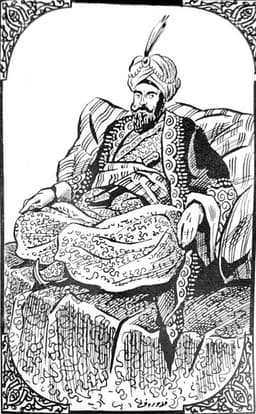
Harun al-Rashid
Emperor · Medieval
71.3Total
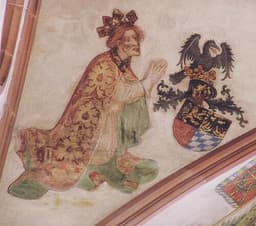
Rupert of the Palatinate
Emperor · Medieval
39.8Total
Basic Information
Born
763
1352
Died
809
1410
Era
Medieval
Medieval
Nationality
Abbasid Caliphate
Holy Roman Empire
Occupation
Emperor
Emperor
Civilization
Middle Eastern
Western
Score Comparison
Military (10%)
72.5
50.0
Political (20%)
70.0
26.4
Influence (20%)
71.0
47.9
Legacy (20%)
80.0
38.3
Leadership (15%)
72.0
38.1
Strategy (15%)
50.0
35.7
TOTAL
71.3
39.8
Harun al-Rashid — Complete Timeline
786 AD
Accession to the CaliphatePolitical Action◆ Major
Harun al-Rashid became the fifth Abbasid caliph after the death of his brother Al-Hadi. His reign marked the beginning of a period of cultural and economic flourishing, often considered the zenith of Abbasid power.
SuccessionCaliphateGolden Age
Impact: regionalconstructive
Patronage of the Arts and SciencesCultural◆ Major
Harun al-Rashid's court in Baghdad became a center of learning and culture, attracting poets, scholars, and musicians. His patronage fostered the development of Arabic literature, including the tales later compiled as One Thousand and One Nights.
CulturePatronageLiterature
Impact: globalconstructive
790 AD
Military Campaigns Against ByzantiumWar
Harun al-Rashid led several campaigns into Byzantine Anatolia, capturing fortresses and extracting tribute. These raids, though not resulting in permanent conquest, demonstrated Abbasid military strength and secured the frontier.
Byzantine WarsMilitary CampaignFrontier
Impact: regional
797 AD
Diplomatic Exchange with CharlemagnePolitical Action◆ Major
Harun al-Rashid sent an embassy to the Frankish emperor Charlemagne, including gifts such as an elephant named Abul-Abbas. This exchange established diplomatic relations between the Abbasid Caliphate and the Carolingian Empire, facilitating trade and cultural contact.
DiplomacyCharlemagneInternational Relations
Impact: globalconstructive
803 AD
Suppression of the BarmakidsPolitical Action◆ Major
Harun al-Rashid ordered the execution of the powerful Barmakid family, who had served as viziers for decades. This purge removed a major political faction and consolidated Harun's personal authority, but also disrupted the administration.
PurgeBarmakidsPower Struggle
Impact: regionaldestructive
Rupert of the Palatinate — Complete Timeline
1400 AD
Election as King of the RomansPolitical Action◆ Major
The four Rhenish electors deposed Wenceslaus IV and elected Rupert of the Palatinate as King of the Romans. Rupert's election was contested by Wenceslaus and his supporters, leading to a divided empire. Rupert was never crowned Holy Roman Emperor by the Pope.
ElectionImperial PoliticsSchism
Impact: regional
1401 AD
Italian CampaignWar◆ Major
Rupert led an expedition to Italy to secure his coronation as Holy Roman Emperor and to support Pope Boniface IX against his rivals. The campaign was a failure; Rupert's army was defeated by the forces of Gian Galeazzo Visconti of Milan near Brescia. Rupert retreated to Germany without achieving his goals.
Italian CampaignMilitary DefeatCoronation
Impact: regionaltragic
1405 AD
Conflict with the Archbishop of MainzPolitical Action
Rupert became embroiled in a conflict with Archbishop Johann II of Mainz over the election of a new bishop in the diocese of Paderborn. The dispute escalated into a military confrontation, with Rupert besieging the archbishop's castle. The conflict was eventually resolved through mediation, but it weakened Rupert's authority.
Ecclesiastical ConflictSiegeImperial Authority
destructive
Expert Analysis
Origins
**Harun al-Rashid** was born in 766 in Ray, Iran, the third son of Caliph al-Mahdi. His mother, al-Khayzuran, was a Yemeni slave who became a powerful political figure. Harun received a princely education in law, literature, and military arts. At 16, he was appointed governor of Armenia and Azerbaijan, and later led campaigns against the Byzantine Empire. His early military successes, including reaching the Bosporus, earned him the title "al-Rashid" (the Rightly Guided).
**Rupert of the Palatinate** was born in 1352 in Amberg, the son of Elector Palatine Rupert II. As a member of the Wittelsbach dynasty, he inherited the Electoral Palatinate in 1398. His early life was spent consolidating his territorial holdings in the Rhineland, gaining experience in local governance and diplomacy within the Holy Roman Empire.
Rise to Power
Harun al-Rashid became caliph in 786 after the sudden death of his brother al-Hadi, amid rumors of his mother's involvement. His accession was smooth, backed by the powerful Barmakid family who served as viziers. Harun's early reign saw stability and prosperity, allowing him to focus on cultural patronage and military campaigns.
Rupert's rise came in 1400 when four electors deposed King Wenceslaus IV due to incompetence and elected Rupert as King of the Romans. However, his election was contested by Wenceslaus and other factions, leading to a divided kingdom. Rupert's support was limited mainly to the Palatinate, and he struggled to gain recognition.
Leadership & Governance
Harun al-Rashid ruled a vast empire from Baghdad, fostering a golden age of culture. He established the Bayt al-Hikma (House of Wisdom) and patronized scholars like al-Kindi. His governance relied on the Barmakids until their fall in 803, after which he centralized power. He maintained diplomatic relations with Charlemagne, sending an elephant named Abul-Abbas. His military strategy scored 50.0, reflecting limited territorial expansion but effective raids against Byzantium.
Rupert's governance was hampered by weak authority. His political score of 26.4 reflects his inability to unite the empire. He attempted to reform the imperial administration but faced constant opposition from the electors. His Italian campaign in 1401-1402 to secure coronation as emperor failed due to lack of funds and military support, leading to a humiliating retreat.
Triumph & Tragedy
Harun's greatest triumph was the cultural flourishing of Baghdad, symbolized by the stories of One Thousand and One Nights. His military campaigns extracted tribute from Byzantium, securing the eastern frontier. His tragedy was the execution of the Barmakids, which removed a competent administrative family and destabilized the caliphate. His later years saw internal strife and succession disputes.
Rupert's greatest success was his election as king, albeit contested. He managed to maintain his position for ten years. His tragedy was the failed Italian expedition, which drained resources and revealed his military score of 50.0 was insufficient. He died in 1410 without ever being crowned emperor, leaving a fragmented kingdom.
Character & Destiny
Harun was known for his piety, justice, and patronage, but also for ruthlessness. His character score of 72.0 reflects effective leadership tempered by political necessity. His destiny was to be remembered as a legendary caliph, though his reign ended with internal decline.
Rupert was determined but lacked the resources and charisma to overcome his obstacles. His leadership score of 38.1 indicates a ruler out of his depth. His destiny was obscurity; he is a footnote in Holy Roman Empire history.
Legacy
Harun al-Rashid's legacy is immense, scoring 80.0. He is immortalized in literature as a symbol of Islamic golden age. The House of Wisdom influenced later European Renaissance. His diplomatic exchange with Charlemagne set precedents for East-West relations.
Rupert's legacy is minor, scoring 38.3. He is remembered as a failed king who could not unite Germany or become emperor. His reign had little lasting impact on the Holy Roman Empire.
Conclusion
Harun al-Rashid had a far greater impact, scoring 71.3 total vs. Rupert's 39.8. Harun's cultural patronage, political stability, and diplomatic reach created a golden age that shaped Islamic civilization. Rupert's failures in governance and military left no enduring mark. The data clearly supports Harun as the more significant historical figure.
Rankings
🥇
Harun al-RashidLeader
Mil: 72.5Pol: 70.0Inf: 71.0
71.3
🥈
Rupert of the Palatinate
Mil: 50.0Pol: 26.4Inf: 47.9
39.8
+31.5 behind
How This Comparison Works
Algorithm
Each figure is scored on 6 dimensions (0—100 scale) based on structured historical data: Military (10%), Political (20%), Influence (20%), Legacy (20%), Leadership (15%), Strategy (15%). The weighted total produces the final ranking.
Data Sources
Scores are computed from structured sub-indicators in the database. Scale factors adjust for era (Ancient ×0.85, Modern ×1.0) and civilization size (Eastern ×1.05, Other ×0.80) to account for differences in population and military scale.
Maximum 3 Figures
Comparisons are limited to 2—3 figures to ensure readability and statistical meaningfulness.
Error Margins
±5 points per dimension — Sub-scores are derived from historical records with inherent uncertainty. Two figures within 5 points on a dimension should be considered roughly equivalent in that area.
Total Score Accuracy
±3 points overall — The weighted combination of 6 dimensions produces a total score with approximately ±3 points of uncertainty. Differences of less than 3 points are not statistically significant— the figures are effectively tied.
Known Limitations
- Historical records are incomplete and uneven across civilizations
- Figures from oral-tradition societies may be underrepresented
- Occupation labels can misclassify multi-role figures
- Scores measure capability and impact, not moral character
- Quantitative scoring is a comparison tool, not absolute truth
Capability Radar
Military (10%) — Battles & Warfare
Battles
60
20
Win Rate
65
25
Expansion
55
10
Political (20%) — Governance & Reform
Reform
70
15
Diplomacy
80
25
Economy
85
20
Influence (20%) — Cultural & Global Reach
Cultural
90
15
Global
85
10
Legacy (20%) — Historical Impact
Historical
85
20
Longevity
90
10
Leadership (15%) — Power & Stability
Tenure
75
30
Stability
70
15
Strategy (15%) — Tactics & Innovation
Strategy
60
15
Tactics
55
20
Reform
50
10
Similar Comparisons
Comments & Discussion
No comments yet. Be the first to share your thoughts!