Loading...
Edward Seaga vs Naoto Kan
Edward Seaga leads by 5.2 pts · 2 figures compared
…
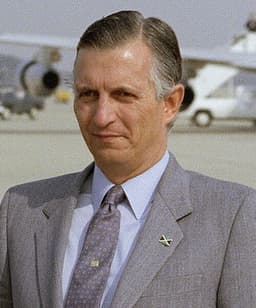
Edward Seaga
Politician · Modern
54.1Total

Naoto Kan
Politician · Modern
48.9Total
Basic Information
Born
1930
1946
Died
—
—
Era
Modern
Modern
Nationality
Jamaica
Japan
Occupation
Politician
Politician
Civilization
Western
Eastern
Score Comparison
Military (10%)
38.5
12.1
Political (20%)
53.8
54.7
Influence (20%)
55.7
55.7
Legacy (20%)
45.8
48.3
Leadership (15%)
72.0
65.7
Strategy (15%)
60.0
36.0
TOTAL
54.1
48.9
Edward Seaga — Complete Timeline
1980 AD
Elected Prime Minister of JamaicaPolitical Action◆ Major
Seaga led the Jamaica Labour Party (JLP) to a landslide victory in the 1980 general election, defeating Michael Manley's PNP. His election marked a shift toward pro-US, free-market policies.
Election VictoryJLPFree Market
Impact: nationalconstructive
1981 AD
Implemented Structural Adjustment ProgramsReform◆ Major
Seaga's government implemented IMF-backed structural adjustment programs, cutting public spending, devaluing the currency, and privatizing state enterprises. These policies aimed to stabilize the economy but led to high unemployment and social hardship.
IMFStructural AdjustmentEconomic ReformAusterity
Impact: nationaldestructive
Strengthened Ties with the United StatesPolitical Action◆ Major
Seaga aligned Jamaica closely with the United States, supporting US foreign policy in the Caribbean and Central America. He was a key ally of President Ronald Reagan and received increased US aid.
Foreign PolicyUS AllianceCold WarReagan
Impact: regionalconstructive
1989 AD
Lost the 1989 General ElectionPolitical Action◆ Major
Seaga's JLP was defeated by Michael Manley's PNP in the 1989 general election. The loss was attributed to economic hardship and public dissatisfaction with austerity measures.
Election DefeatEconomic Hardship
Impact: nationaltragic
Naoto Kan — Complete Timeline
2010 AD
Elected Prime Minister of JapanPolitical Action◆ Major
Kan was elected as Prime Minister of Japan after Yukio Hatoyama resigned. He succeeded Hatoyama as leader of the Democratic Party of Japan and formed a cabinet focused on fiscal reform and reducing the national debt.
JapanPrime MinisterDPJ
Impact: national
2011 AD
Announced phase-out of nuclear powerReform◆ Major
Kan announced a policy to phase out nuclear power in Japan by the 2030s. This decision followed the Fukushima disaster and marked a major shift in Japan's energy policy, though it was later reversed by subsequent governments.
JapanNuclear PowerEnergy Policy
Impact: nationalconstructive
Managed response to Fukushima Daiichi nuclear disasterPolitical Action◆ Major
Kan led Japan's response to the Fukushima nuclear disaster triggered by the T
JapanFukushimaNuclear Disaster
Impact: globaltragic
Resigned as Prime MinisterPolitical Action◆ Major
Kan resigned as Prime Minister after facing criticism over his handling of the Fukushima disaster and declining approval ratings. He was succeeded by Yoshihiko Noda.
JapanResignationFukushima
Impact: nationaltragic
Expert Analysis
Origins
**Edward Seaga** was born on May 28, 1930, in Boston, Massachusetts, to a Jamaican father of Lebanese descent and a mother of mixed heritage. He was raised in Jamaica and attended Harvard University, where he studied social relations. His early career involved music production and anthropology, but he soon entered politics, joining the Jamaica Labour Party (JLP) in 1959. His background in social sciences shaped his interest in economic development.
**Naoto Kan** was born on October 10, 1946, in Ube, Yamaguchi Prefecture, Japan. He studied physics at the Tokyo Institute of Technology and later became a lawyer. Kan entered politics in 1980 as a member of the Japan Socialist Party, later joining the Democratic Party of Japan (DPJ). His early activism focused on human rights and consumer protection, notably exposing the HIV-tainted blood scandal in the 1990s.
Rise to Power
Seaga rose through the JLP ranks, becoming party leader in 1974. He led the opposition against Michael Manley's socialist government. In the 1980 general election, Seaga's JLP won a landslide victory, securing 51 of 60 seats in the House of Representatives. His campaign focused on economic liberalization and anti-communism, capitalizing on public discontent with Manley's policies.
Kan's rise was gradual. He gained national prominence for his role in the HIV-tainted blood scandal, which forced the government to apologize and compensate victims. He served as Minister of Health and Welfare (1996) and later as Minister of State for Economic and Fiscal Policy (2009). After Yukio Hatoyama resigned in June 2010, Kan was elected Prime Minister by the DPJ, inheriting a struggling economy and diplomatic tensions.
Leadership & Governance
Seaga's governance was defined by neoliberal policies: he implemented IMF structural adjustment programs, cutting public spending, devaluing the Jamaican dollar, and privatizing state enterprises. He aligned Jamaica closely with the United States, supporting the US invasion of Grenada in 1983. His leadership score of 72.0 reflects his decisive, albeit controversial, style. However, his economic policies led to high unemployment and social unrest.
Kan's leadership was tested by the March 11, 2011 Tōhoku earthquake and tsunami, which triggered the Fukushima Daiichi nuclear disaster. He took an active role in the crisis, personally intervening to prevent the release of contaminated water and ordering evacuations. His leadership score of 65.7 indicates his hands-on approach but also his struggles with coordination. He later announced a phase-out of nuclear power by the 2030s, a dramatic shift in Japan's energy policy.
Triumph & Tragedy
Seaga's triumph was his landslide 1980 victory and his role in stabilizing Jamaica's economy temporarily. He also strengthened ties with the US, securing aid and investment. However, his austerity measures caused severe hardship: poverty rose, and the economy contracted. He lost the 1989 election to Manley, his political score of 53.8 reflecting his mixed legacy.
Kan's triumph was his handling of the Fukushima crisis, which prevented a worse catastrophe. His decision to phase out nuclear power was praised by environmentalists. Yet, his crisis management was criticized for confusion and lack of delegation. Approval ratings plummeted, and he resigned in September 2011 after just 15 months in office. His political score is 54.7, slightly above Seaga's.
Character & Destiny
Seaga was known for his intellect and authoritarian style. He was a technocrat who believed in top-down reform, often clashing with unions and opposition. His alignment with the US and IMF made him a polarizing figure. His strategy score of 60.0 reflects his ability to execute plans but also his lack of flexibility.
Kan was a populist and activist, driven by a sense of justice. He was decisive in crisis but struggled with coalition politics and communication. His strategy score of 36.0 is the lowest among the two, indicating poor long-term planning. His character—principled but impulsive—shaped his short tenure.
Legacy
Seaga's legacy is mixed: he is credited with modernizing Jamaica's economy but criticized for deepening inequality. His influence score of 55.7 reflects his impact on Caribbean politics. The JLP's subsequent governments continued some of his policies.
Kan's legacy is defined by Fukushima: he is remembered as the prime minister who faced the disaster and began Japan's nuclear phase-out. His influence score is also 55.7, but his legacy score of 48.3 is lower due to his brief tenure. Japan's energy policy remains contentious.
Conclusion
While Seaga scored higher overall (54.1 vs 48.9), Kan's impact during a national crisis was more profound. Seaga's economic policies had long-term consequences, but Kan's decisions affected Japan's energy future and global nuclear safety. However, Seaga's leadership score (72.0) and strategy (60.0) overshadow Kan's (65.7 and 36.0). Seaga had greater political longevity and a clearer vision, making him the more effective leader in terms of achieving his goals. Therefore, Edward Seaga had a greater overall impact.
Rankings
🥇
Edward SeagaLeader
Mil: 38.5Pol: 53.8Inf: 55.7
54.1
🥈
Naoto Kan
Mil: 12.1Pol: 54.7Inf: 55.7
48.9
+5.2 behind
How This Comparison Works
Algorithm
Each figure is scored on 6 dimensions (0—100 scale) based on structured historical data: Military (10%), Political (20%), Influence (20%), Legacy (20%), Leadership (15%), Strategy (15%). The weighted total produces the final ranking.
Data Sources
Scores are computed from structured sub-indicators in the database. Scale factors adjust for era (Ancient ×0.85, Modern ×1.0) and civilization size (Eastern ×1.05, Other ×0.80) to account for differences in population and military scale.
Maximum 3 Figures
Comparisons are limited to 2—3 figures to ensure readability and statistical meaningfulness.
Error Margins
±5 points per dimension — Sub-scores are derived from historical records with inherent uncertainty. Two figures within 5 points on a dimension should be considered roughly equivalent in that area.
Total Score Accuracy
±3 points overall — The weighted combination of 6 dimensions produces a total score with approximately ±3 points of uncertainty. Differences of less than 3 points are not statistically significant— the figures are effectively tied.
Known Limitations
- Historical records are incomplete and uneven across civilizations
- Figures from oral-tradition societies may be underrepresented
- Occupation labels can misclassify multi-role figures
- Scores measure capability and impact, not moral character
- Quantitative scoring is a comparison tool, not absolute truth
Capability Radar
Military (10%) — Battles & Warfare
Battles
50
14
Win Rate
48
19
Expansion
53
19
Political (20%) — Governance & Reform
Reform
60
45
Diplomacy
55
35
Economy
60
30
Influence (20%) — Cultural & Global Reach
Cultural
40
20
Global
35
45
Legacy (20%) — Historical Impact
Historical
45
50
Longevity
30
30
Leadership (15%) — Power & Stability
Tenure
65
40
Stability
45
25
Strategy (15%) — Tactics & Innovation
Strategy
59
22
Tactics
61
23
Reform
60
31
Similar Comparisons
Comments & Discussion
No comments yet. Be the first to share your thoughts!