Loading...
Eknath Shinde vs Park Chung-hee
Park Chung-hee leads by 30.5 pts · 2 figures compared
…
Eknath Shinde
Politician · Modern
37.9Total
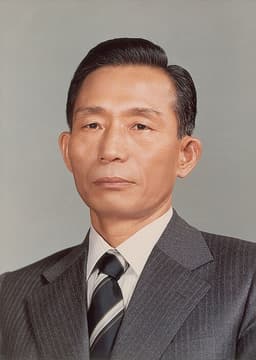
Park Chung-hee
Politician · Modern
68.4Total
Basic Information
Born
1964
1917
Died
—
1979
Era
Modern
Modern
Nationality
India
Korea
Occupation
Politician
Politician
Civilization
Indian
Eastern
Score Comparison
Military (10%)
21.1
21.2
Political (20%)
25.0
82.0
Influence (20%)
45.5
72.0
Legacy (20%)
35.8
72.0
Leadership (15%)
38.1
80.0
Strategy (15%)
60.0
60.0
TOTAL
37.9
68.4
Eknath Shinde — Complete Timeline
2022 AD
Led the Rebellion Against Uddhav ThackerayPolitical Action◆ Major
Shinde led a rebellion of Shiv Sena MLAs against party chief Uddhav Thackeray in June 2022, claiming the party had abandoned its Hindutva ideology. This split caused the collapse of the Maha Vikas Aghadi government and led to Shinde becoming Chief Minister.
RebellionParty SplitMaharashtra
Impact: regionaldestructive
Became Chief Minister of MaharashtraPolitical Action◆ Major
Shinde was sworn in as Chief Minister of Maharashtra in June 2022, leading a BJP-Shiv Sena (Shinde faction) coalition government. His ascension marked a major realignment in Maharashtra politics, with the BJP as the dominant partner.
Chief MinisterCoalition GovernmentMaharashtra
Impact: regional
2024 AD
Won the 2024 Maharashtra Assembly ElectionPolitical Action◆ Major
Shinde led his faction of the Shiv Sena to victory in the 2024 Maharashtra Legislative Assembly election, securing a majority in alliance with the BJP. He was reappointed as Chief Minister, consolidating his political position.
Election VictoryChief MinisterMaharashtra
Impact: regionalconstructive
Park Chung-hee — Complete Timeline
1961 AD
May 16 Military CoupPolitical Action
Park Chung-hee led a military coup that overthrew the democratically elected government of Prime Minister Chang Myon. Park established the Supreme Council for National Reconstruction, suspended the constitution, and began authoritarian rule that lasted 18 years.
CoupAuthoritarianismSouth Korea
Impact: nationaldestructive
1962 AD
Five-Year Economic Development PlansReform◆ Major
Park Chung-hee launched the First Five-Year Economic Development Plan, focusing on export-oriented industrialization. The government directed investment into heavy industries, built infrastructure, and promoted chaebols, transforming South Korea from an agrarian economy into an industrial powerhouse.
Economic DevelopmentIndustrializationSouth Korea
Impact: nationalconstructive
1965 AD
Normalization of Relations with JapanPolitical Action◆ Major
Park Chung-hee signed the Treaty on Basic Relations with Japan, normalizing diplomatic ties. Japan provided $800 million in grants and loans, which funded South Korea's infrastructure projects and industrial growth, despite widespread public opposition due to colonial grievances.
Japan RelationsEconomic AidDiplomacy
Impact: regionalconstructive
1972 AD
Yushin ConstitutionPolitical Action◆ Major
Park Chung-hee imposed the Yushin Constitution, which gave him near-dictatorial powers. The constitution allowed the president to serve unlimited terms, appoint one-third of the National Assembly, and rule by emergency decree, effectively ending democratic processes.
AuthoritarianismConstitutionSouth Korea
Impact: nationaldestructive
1979 AD
Assassination of Park Chung-heePolitical Action
Park Chung-hee was assassinated by Kim Jae-gyu, the director of the Korean Central Intelligence Agency, during a dinner at a safe house. The assassination ended his 18-year rule and plunged South Korea into a period of political turmoil, leading to another military coup.
AssassinationPolitical CrisisSouth Korea
Impact: nationaltragic
Expert Analysis
Origins
Eknath Shinde was born on February 9, 1964, in Dare, a village in Satara district, Maharashtra, into a Maratha family. His father was a farmer. Shinde completed his education up to the 12th grade before entering politics. He joined the Shiv Sena in the 1980s, drawn to its Hindutva and Marathi regionalist ideology. In contrast, Park Chung-hee was born on November 14, 1917, in Gumi, Korea, under Japanese colonial rule. His father was a low-ranking official. Park graduated from the Manchurian Military Academy and served in the Japanese army during World War II. After Korea's liberation, he joined the South Korean army, rising through the ranks. These disparate backgrounds shaped their distinct approaches: Shinde's grassroots activism and Park's military discipline.
Rise to Power
Shinde's rise was gradual, built on organizational loyalty. He served as a Shiv Sena corporator in Thane and later as a Member of the Legislative Assembly (MLA) from Kopri-Pachpakhadi. In 2022, he led a rebellion against party chief Uddhav Thackeray, taking 40 MLAs with him, citing the party's deviation from Hindutva. This triggered the collapse of the Maha Vikas Aghadi government. Shinde then allied with the BJP, becoming Chief Minister of Maharashtra on June 30, 2022. Park's rise was abrupt and forceful. On May 16, 1961, he led a military coup that overthrew the democratically elected government of Prime Minister Chang Myon. Park established the Supreme Council for National Reconstruction, initially ruling through a junta, and later won elections under a new constitution. By 1963, he became president, consolidating power through authoritarian means.
Leadership & Governance
Shinde's leadership style is populist and reactive. He focuses on regional issues like Maratha reservations and infrastructure projects in Maharashtra. His governance is coalition-dependent, with the BJP as a senior partner. For instance, his government launched the 'MahaVikas' scheme but faced criticism for handling of the 2023 Maratha quota protests. Shinde's political score of 25.0 reflects limited national influence. Park, by contrast, was a visionary authoritarian. He directed South Korea's economy through five-year plans, emphasizing export-oriented industrialization. The First Five-Year Plan (1962-66) achieved 8.5% growth. Park normalized relations with Japan in 1965, securing $800 million in grants and loans. However, his Yushin Constitution (1972) gave him near-dictatorial powers, suppressing dissent. His leadership score of 80.0 underscores his decisive control.
Triumph & Tragedy
Shinde's triumph was leading a successful rebellion and becoming CM, securing a victory in the 2024 Maharashtra election (scored 60.0 in strategy). His tragedy is the fragmentation of Shiv Sena and allegations of corruption, with his son's involvement in a money laundering case. Park's triumphs include transforming South Korea from a poor agrarian state to an industrial powerhouse, with per capita income rising from $100 in 1960 to $1,000 by 1977. His tragedy was his authoritarian excesses, including torture of political opponents, and his assassination on October 26, 1979, by his own intelligence chief. Park's total score of 68.4 far exceeds Shinde's 37.9, reflecting his larger impact.
Character & Destiny
Shinde is pragmatic and opportunistic, willing to break with his party for power. His destiny is tied to Maharashtra's regional politics; his influence score of 45.5 indicates moderate sway. Park was ruthless, disciplined, and focused on national development. His character drove him to prioritize economic growth over democracy, leading to both progress and repression. Historians assess Park as a mixed figure: a modernizer but a dictator. Their contrasting approaches—Shinde's regional maneuvering vs. Park's national vision—determined their scale of impact.
Legacy
Shinde's legacy is contested: he split a major regional party and reshaped Maharashtra's politics, but his long-term impact is uncertain. Park's legacy is monumental: he laid the foundation for South Korea's economic miracle, with institutions like the Korea Development Institute and export-driven conglomerates (chaebols). His military score of 21.2 is low, but his political and legacy scores (82.0 and 72.0) reflect his enduring influence. However, his authoritarian methods remain controversial.
Conclusion
Park Chung-hee had significantly greater impact. His economic policies transformed a poor nation into a global industrial player, with lasting effects on South Korea's trajectory. Shinde's influence is confined to Maharashtra and temporary political alliances. The score gap of 30.5 points underscores this: Park's total of 68.4 dwarfs Shinde's 37.9. While Shinde's rebellion was a tactical success, Park's strategic vision reshaped a country. Park's legacy endures in Korea's economic structures, whereas Shinde's is yet to be fully assessed. In the balance of historical significance, Park stands as a transformative, albeit flawed, figure.
Rankings
🥇
Park Chung-heeLeader
Mil: 21.2Pol: 82.0Inf: 72.0
68.4
🥈
Eknath Shinde
Mil: 21.1Pol: 25.0Inf: 45.5
37.9
+30.5 behind
How This Comparison Works
Algorithm
Each figure is scored on 6 dimensions (0—100 scale) based on structured historical data: Military (10%), Political (20%), Influence (20%), Legacy (20%), Leadership (15%), Strategy (15%). The weighted total produces the final ranking.
Data Sources
Scores are computed from structured sub-indicators in the database. Scale factors adjust for era (Ancient ×0.85, Modern ×1.0) and civilization size (Eastern ×1.05, Other ×0.80) to account for differences in population and military scale.
Maximum 3 Figures
Comparisons are limited to 2—3 figures to ensure readability and statistical meaningfulness.
Error Margins
±5 points per dimension — Sub-scores are derived from historical records with inherent uncertainty. Two figures within 5 points on a dimension should be considered roughly equivalent in that area.
Total Score Accuracy
±3 points overall — The weighted combination of 6 dimensions produces a total score with approximately ±3 points of uncertainty. Differences of less than 3 points are not statistically significant— the figures are effectively tied.
Known Limitations
- Historical records are incomplete and uneven across civilizations
- Figures from oral-tradition societies may be underrepresented
- Occupation labels can misclassify multi-role figures
- Scores measure capability and impact, not moral character
- Quantitative scoring is a comparison tool, not absolute truth
Capability Radar
Military (10%) — Battles & Warfare
Battles
46
20
Win Rate
48
25
Expansion
52
15
Political (20%) — Governance & Reform
Reform
10
85
Diplomacy
20
70
Economy
10
95
Influence (20%) — Cultural & Global Reach
Cultural
5
55
Global
5
70
Legacy (20%) — Historical Impact
Historical
10
75
Longevity
5
65
Leadership (15%) — Power & Stability
Tenure
15
75
Stability
10
60
Strategy (15%) — Tactics & Innovation
Strategy
51
40
Tactics
56
30
Reform
61
70
Similar Comparisons
Comments & Discussion
No comments yet. Be the first to share your thoughts!