Loading...
I. K. Gujral vs Park Chung-hee
Park Chung-hee leads by 13.3 pts · 2 figures compared
…

I. K. Gujral
Politician · Modern
55.1Total
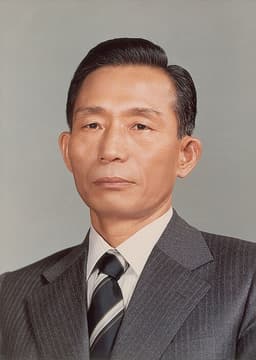
Park Chung-hee
Politician · Modern
68.4Total
Basic Information
Born
1919
1917
Died
2012
1979
Era
Modern
Modern
Nationality
India
Korea
Occupation
Politician
Politician
Civilization
Indian
Eastern
Score Comparison
Military (10%)
40.6
21.2
Political (20%)
61.3
82.0
Influence (20%)
55.7
72.0
Legacy (20%)
43.3
72.0
Leadership (15%)
74.0
80.0
Strategy (15%)
60.0
60.0
TOTAL
55.1
68.4
I. K. Gujral — Complete Timeline
1976 AD
Appointment as Ambassador to the Soviet UnionPolitical Action◆ Major
I. K. Gujral was appointed India's ambassador to the Soviet Union, serving until 1980. This diplomatic role strengthened India-Soviet relations during the Cold War, including during the Soviet invasion of Afghanistan.
DiplomacySoviet UnionCold War
Impact: global
1996 AD
Formulation of the Gujral DoctrinePolitical Action
As External Affairs Minister, I. K. Gujral articulated the Gujral Doctrine, a foreign policy approach emphasizing unilateral goodwill towards India's smaller neighbors. It included non-reciprocal benefits to Bangladesh, Bhutan, Maldives, Nepal, and Sri Lanka.
Foreign PolicyNeighborhoodDiplomacy
Impact: regionalconstructive
Appointment as External Affairs MinisterPolitical Action◆ Major
I. K. Gujral was appointed Union Minister of External Affairs in the United Front government under Prime Minister H. D. Deve Gowda. He served in this role from June 1996 to April 1997, shaping India's foreign policy.
External Affairs MinisterForeign PolicyUnited Front
Impact: nationalconstructive
1997 AD
Appointment as Prime Minister of IndiaPolitical Action◆ Major
I. K. Gujral became the 12th Prime Minister of India, leading the United Front coalition government. His tenure lasted 11 months, from April 1997 to November 1997, succeeding H. D. Deve Gowda.
Prime MinisterUnited FrontCoalition
Impact: national
Resignation as Prime MinisterPolitical Action◆ Major
I. K. Gujral resigned as Prime Minister after the Congress party withdrew its support from the United Front government. The withdrawal was triggered by the Jain Commission report implicating the DMK in Rajiv Gandhi's assassination.
ResignationCoalition CollapseJain Commission
Impact: national
Park Chung-hee — Complete Timeline
1961 AD
May 16 Military CoupPolitical Action
Park Chung-hee led a military coup that overthrew the democratically elected government of Prime Minister Chang Myon. Park established the Supreme Council for National Reconstruction, suspended the constitution, and began authoritarian rule that lasted 18 years.
CoupAuthoritarianismSouth Korea
Impact: nationaldestructive
1962 AD
Five-Year Economic Development PlansReform◆ Major
Park Chung-hee launched the First Five-Year Economic Development Plan, focusing on export-oriented industrialization. The government directed investment into heavy industries, built infrastructure, and promoted chaebols, transforming South Korea from an agrarian economy into an industrial powerhouse.
Economic DevelopmentIndustrializationSouth Korea
Impact: nationalconstructive
1965 AD
Normalization of Relations with JapanPolitical Action◆ Major
Park Chung-hee signed the Treaty on Basic Relations with Japan, normalizing diplomatic ties. Japan provided $800 million in grants and loans, which funded South Korea's infrastructure projects and industrial growth, despite widespread public opposition due to colonial grievances.
Japan RelationsEconomic AidDiplomacy
Impact: regionalconstructive
1972 AD
Yushin ConstitutionPolitical Action◆ Major
Park Chung-hee imposed the Yushin Constitution, which gave him near-dictatorial powers. The constitution allowed the president to serve unlimited terms, appoint one-third of the National Assembly, and rule by emergency decree, effectively ending democratic processes.
AuthoritarianismConstitutionSouth Korea
Impact: nationaldestructive
1979 AD
Assassination of Park Chung-heePolitical Action
Park Chung-hee was assassinated by Kim Jae-gyu, the director of the Korean Central Intelligence Agency, during a dinner at a safe house. The assassination ended his 18-year rule and plunged South Korea into a period of political turmoil, leading to another military coup.
AssassinationPolitical CrisisSouth Korea
Impact: nationaltragic
Expert Analysis
Origins
Inder Kumar Gujral was born on December 4, 1919, in Jhelum, Punjab (now in Pakistan), into a middle-class family. His father, Avtar Narain Gujral, was a freedom fighter. Gujral studied at D.A.V. College in Lahore and later at the University of the Punjab. His early involvement in the Indian independence movement shaped his political ideology. In 1942, he participated in the Quit India Movement and was imprisoned. After partition, his family migrated to India, settling in Delhi.
Park Chung-hee was born on November 14, 1917, in Gumi, North Gyeongsang Province, Korea, into a poor farming family. He attended Taegu Normal School and later taught for a few years. In 1940, he enrolled in the Manchukuo Army Officer Academy, graduating in 1942. He served in the Japanese Kwantung Army but later joined the South Korean army after liberation. Park's early life was marked by poverty and the turmoil of Japanese colonization, which influenced his nationalistic drive.
Rise to Power
Gujral's political rise was gradual and rooted in democratic processes. He joined the Indian National Congress and became a member of the Rajya Sabha in 1964. He served as Minister of Information and Broadcasting under Indira Gandhi during the Emergency (1975-1977). However, his major breakthrough came in 1996 when he became External Affairs Minister in the United Front government. He articulated the Gujral Doctrine in 1996, which advocated unilateral goodwill towards India's smaller neighbors. In April 1997, he became Prime Minister after H.D. Deve Gowda's resignation, leading a coalition government for 11 months until November 1997.
Park Chung-hee's rise was through a military coup. On May 16, 1961, he led a bloodless coup that overthrew the democratically elected government of Prime Minister Chang Myon. Park established the Supreme Council for National Reconstruction, ruling as its chairman. In 1963, after a brief period of military rule, he transitioned to civilian presidency by winning a controversial election. He then consolidated power through successive amendments, culminating in the Yushin Constitution of 1972, which gave him near-dictatorial powers.
Leadership & Governance
Gujral's leadership was characterized by consensus-building and coalition management. As Prime Minister, he headed a fragile United Front coalition dependent on Congress support. His governance style was consultative, but his tenure was marked by political instability. Key reforms included the continuation of economic liberalization started by earlier governments. In foreign policy, the Gujral Doctrine emphasized non-reciprocal generosity towards India's neighbors—Bangladesh, Bhutan, Maldives, Nepal, and Sri Lanka. He scored 74.0 in leadership, reflecting his diplomatic acumen, but his political score of 61.3 indicates the constraints of coalition politics.
Park Chung-hee's leadership was authoritarian and development-focused. He ruled with an iron fist, suppressing dissent through the Korean Central Intelligence Agency (KCIA). His governance model prioritized rapid economic growth through Five-Year Plans (1962-1979). He directed state investment into heavy and chemical industries, promoted exports, and built infrastructure. The normalization of relations with Japan in 1965 brought $800 million in grants and loans, fueling industrialization. Park's leadership score of 80.0 reflects his decisive control, but his political score of 82.0 is tainted by his authoritarian methods. His military score of 21.2 is low because his focus was not military conquest but economic development.
Triumph & Tragedy
Gujral's greatest triumph was the formulation of the Gujral Doctrine, which improved India's relations with its neighbors, particularly Bangladesh and Nepal. It set a precedent for unilateral concessions that enhanced India's soft power. His tenure as External Affairs Minister was more impactful than his prime ministership. However, his tragedy was the collapse of his government due to Congress withdrawing support after the Jain Commission interim report criticized the DMK's role in Rajiv Gandhi's assassination. His brief 11-month term limited his ability to implement long-term policies.
Park Chung-hee's greatest triumph was transforming South Korea from a poor agrarian economy into an industrial powerhouse. Per capita GDP rose from $100 in 1960 to $1,744 in 1979. Exports grew from $30 million to $15 billion. His Five-Year Plans laid the foundation for South Korea's later economic miracle. However, his tragedy was his authoritarian rule, which suppressed human rights and political freedoms. The Yushin Constitution centralized power, leading to widespread protests. Park was assassinated on October 26, 1979, by his own intelligence chief, Kim Jae-gyu, after internal conflicts. His legacy is forever tainted by his dictatorial methods.
Character & Destiny
Gujral was known as a soft-spoken, intellectual politician with a liberal outlook. His background as a poet and writer influenced his diplomatic approach. His character of seeking consensus and avoiding confrontation led to his downfall when he could not manage coalition pressures. His destiny was to be a transitional prime minister, but his doctrine outlasted his tenure.
Park Chung-hee was driven, ruthless, and single-minded. His experience under Japanese colonialism and the Korean War instilled a fierce nationalism. He believed economic development justified authoritarian control. His character of decisive action and intolerance for opposition led to both economic success and political repression. His destiny was to die by assassination, a victim of his own security apparatus.
Legacy
Gujral's legacy is primarily the Gujral Doctrine, which remains a reference point for Indian foreign policy towards its neighbors. However, its impact has been limited as subsequent governments have not consistently applied it. He scored 43.3 in legacy, reflecting the doctrine's declining relevance. His tenure as PM is often overlooked.
Park Chung-hee's legacy is monumental. He is credited as the architect of modern South Korea's economy. His development model influenced other Asian countries. However, his authoritarian legacy is controversial. He scored 72.0 in legacy, indicating a lasting but contested impact. South Korea's democratization after his death was partly a reaction to his rule.
Conclusion
Park Chung-hee had a greater impact on his country and the world than I. K. Gujral. With a total score of 68.4 versus Gujral's 55.1, Park's economic transformation of South Korea is a historic achievement. While Gujral's doctrine was innovative, it did not fundamentally alter India's trajectory. Park's policies lifted millions out of poverty and created an industrial powerhouse. However, his authoritarian methods raise ethical questions. Gujral's democratic approach, though less impactful, offers a contrasting model. In terms of sheer transformative power, Park Chung-hee stands as a more consequential leader.
Rankings
🥇
Park Chung-heeLeader
Mil: 21.2Pol: 82.0Inf: 72.0
68.4
🥈
I. K. Gujral
Mil: 40.6Pol: 61.3Inf: 55.7
55.1
+13.3 behind
How This Comparison Works
Algorithm
Each figure is scored on 6 dimensions (0—100 scale) based on structured historical data: Military (10%), Political (20%), Influence (20%), Legacy (20%), Leadership (15%), Strategy (15%). The weighted total produces the final ranking.
Data Sources
Scores are computed from structured sub-indicators in the database. Scale factors adjust for era (Ancient ×0.85, Modern ×1.0) and civilization size (Eastern ×1.05, Other ×0.80) to account for differences in population and military scale.
Maximum 3 Figures
Comparisons are limited to 2—3 figures to ensure readability and statistical meaningfulness.
Error Margins
±5 points per dimension — Sub-scores are derived from historical records with inherent uncertainty. Two figures within 5 points on a dimension should be considered roughly equivalent in that area.
Total Score Accuracy
±3 points overall — The weighted combination of 6 dimensions produces a total score with approximately ±3 points of uncertainty. Differences of less than 3 points are not statistically significant— the figures are effectively tied.
Known Limitations
- Historical records are incomplete and uneven across civilizations
- Figures from oral-tradition societies may be underrepresented
- Occupation labels can misclassify multi-role figures
- Scores measure capability and impact, not moral character
- Quantitative scoring is a comparison tool, not absolute truth
Capability Radar
Military (10%) — Battles & Warfare
Battles
43
20
Win Rate
45
25
Expansion
52
15
Political (20%) — Governance & Reform
Reform
30
85
Diplomacy
65
70
Economy
35
95
Influence (20%) — Cultural & Global Reach
Cultural
20
55
Global
25
70
Legacy (20%) — Historical Impact
Historical
30
75
Longevity
20
65
Leadership (15%) — Power & Stability
Tenure
40
75
Stability
45
60
Strategy (15%) — Tactics & Innovation
Strategy
53
40
Tactics
57
30
Reform
60
70
Similar Comparisons
Comments & Discussion
No comments yet. Be the first to share your thoughts!