Loading...
Mohammad Daoud Khan vs Park Chung-hee
Park Chung-hee leads by 18.5 pts · 2 figures compared
…

Mohammad Daoud Khan
Politician · Modern
49.9Total
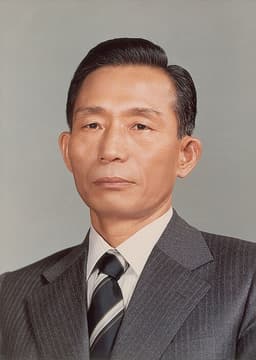
Park Chung-hee
Politician · Modern
68.4Total
Basic Information
Born
1909
1917
Died
1978
1979
Era
Modern
Modern
Nationality
Afghanistan
Korea
Occupation
Politician
Politician
Civilization
Middle Eastern
Eastern
Score Comparison
Military (10%)
41.6
21.2
Political (20%)
45.0
82.0
Influence (20%)
51.8
72.0
Legacy (20%)
43.3
72.0
Leadership (15%)
65.0
80.0
Strategy (15%)
54.6
60.0
TOTAL
49.9
68.4
Mohammad Daoud Khan — Complete Timeline
1973 AD
Coup d'état of 1973Political Action
Mohammad Daoud Khan, with support from military officers, overthrew the monarchy of King Zahir Shah in a bloodless coup. He abolished the monarchy and declared Afghanistan a republic, becoming its first president.
CoupRepublicEnd of Monarchy
Impact: national
Establishment of the Republic of AfghanistanPolitical Action◆ Major
Daoud Khan formally established the Republic of Afghanistan, serving as its first President and Prime Minister. He initiated a series of social and economic reforms, including land reforms and women's rights, while centralizing power.
RepublicReformsCentralization
Impact: nationalconstructive
1978 AD
Saur Revolution Coup and AssassinationPolitical Action
Daoud Khan was killed along with his family during the Saur Revolution, a coup led by the People's Democratic Party of Afghanistan (PDPA). The coup was triggered by the arrest of PDPA leaders and resulted in the establishment of a communist government.
CoupAssassinationCommunist Takeover
Impact: nationaltragic
Park Chung-hee — Complete Timeline
1961 AD
May 16 Military CoupPolitical Action
Park Chung-hee led a military coup that overthrew the democratically elected government of Prime Minister Chang Myon. Park established the Supreme Council for National Reconstruction, suspended the constitution, and began authoritarian rule that lasted 18 years.
CoupAuthoritarianismSouth Korea
Impact: nationaldestructive
1962 AD
Five-Year Economic Development PlansReform◆ Major
Park Chung-hee launched the First Five-Year Economic Development Plan, focusing on export-oriented industrialization. The government directed investment into heavy industries, built infrastructure, and promoted chaebols, transforming South Korea from an agrarian economy into an industrial powerhouse.
Economic DevelopmentIndustrializationSouth Korea
Impact: nationalconstructive
1965 AD
Normalization of Relations with JapanPolitical Action◆ Major
Park Chung-hee signed the Treaty on Basic Relations with Japan, normalizing diplomatic ties. Japan provided $800 million in grants and loans, which funded South Korea's infrastructure projects and industrial growth, despite widespread public opposition due to colonial grievances.
Japan RelationsEconomic AidDiplomacy
Impact: regionalconstructive
1972 AD
Yushin ConstitutionPolitical Action◆ Major
Park Chung-hee imposed the Yushin Constitution, which gave him near-dictatorial powers. The constitution allowed the president to serve unlimited terms, appoint one-third of the National Assembly, and rule by emergency decree, effectively ending democratic processes.
AuthoritarianismConstitutionSouth Korea
Impact: nationaldestructive
1979 AD
Assassination of Park Chung-heePolitical Action
Park Chung-hee was assassinated by Kim Jae-gyu, the director of the Korean Central Intelligence Agency, during a dinner at a safe house. The assassination ended his 18-year rule and plunged South Korea into a period of political turmoil, leading to another military coup.
AssassinationPolitical CrisisSouth Korea
Impact: nationaltragic
Expert Analysis
Origins
**Mohammad Daoud Khan** was born on July 18, 1909, in Kabul, Afghanistan, into the Musahiban royal family. He was the son of Sardar Mohammad Aziz Khan, a half-brother of King Nadir Shah. Daoud received military training at the Kabul Military Academy and later in France. His royal lineage positioned him as a key figure in Afghan politics from an early age.
**Park Chung-hee** was born on November 14, 1917, in Gumi, Korea, into a poor farming family. He attended Taegu Normal School and later the Manchukuo Military Academy, graduating in 1944. Park served in the Japanese Imperial Army and later the South Korean military, where his ambition and discipline shaped his path.
Rise to Power
Daoud Khan rose to prominence as Prime Minister under King Zahir Shah from 1953 to 1963. He pursued modernization and closer ties with the Soviet Union, but his authoritarian style led to his dismissal. In 1973, while the King was abroad, Daoud led a bloodless coup with military support, abolishing the monarchy and declaring the Republic of Afghanistan. He became the first President and Prime Minister, consolidating power.
Park Chung-hee seized power in the May 16, 1961 military coup, overthrowing the democratically elected government of Chang Myon. He established the Supreme Council for National Reconstruction, ruling as its chairman. After two years, he transitioned to civilian rule, winning the 1963 presidential election. Park's rise was marked by decisive action and a commitment to economic development.
Leadership & Governance
Daoud Khan's governance was characterized by centralization and cautious modernization. He pursued land reforms, expanded education, and improved women's rights, but his policies were inconsistent. He sought to reduce dependence on the Soviet Union by fostering ties with Iran and the West, yet his authoritarian rule alienated leftist factions. His political score of 45.0 reflects his inability to build sustainable institutions.
Park Chung-hee's leadership was authoritarian and development-focused. He launched the First Five-Year Economic Development Plan in 1962, emphasizing export-oriented industrialization. The government directed investments in steel, shipbuilding, and electronics, achieving annual GDP growth averaging 9.2% during his tenure. Park's Yushin Constitution of 1972 gave him near-dictatorial powers, suppressing dissent but enabling rapid economic transformation. His political score of 82.0 underscores his effective, if repressive, governance.
Triumph & Tragedy
Daoud Khan's greatest success was establishing the Republic of Afghanistan and initiating social reforms. He expanded girls' education and abolished purdah for women in public. However, his failure to manage political opposition and economic stagnation led to his downfall. The Saur Revolution in April 1978, led by the PDPA, resulted in his assassination along with his family. His military score of 41.6 and strategy of 54.6 indicate poor handling of security and alliances.
Park Chung-hee's triumph was South Korea's economic miracle. Per capita income rose from $100 in 1963 to $1,000 by 1979. He normalized relations with Japan in 1965, securing $800 million in aid. However, his authoritarian rule included torture, censorship, and the imprisonment of dissidents. His assassination in 1979 by his own intelligence chief highlighted the instability of his regime. Park's legacy score of 72.0 reflects both economic success and democratic deficit.
Character & Destiny
Daoud Khan was cautious and indecisive, often wavering between reform and repression. He trusted a small circle of family and military officers, underestimating the growing influence of communist factions. His personality score of 65.0 suggests moderate leadership, but his inability to adapt sealed his fate. He was killed in the very palace he had seized five years earlier.
Park Chung-hee was disciplined, pragmatic, and ruthless. He prioritized national development over political freedoms, viewing economic growth as the foundation of security. His leadership score of 80.0 reflects his determination, but his inflexibility and reliance on coercion led to his assassination. Park's destiny was shaped by his own authoritarian system, which created enemies within his government.
Legacy
Daoud Khan's legacy is mixed. He is remembered as the founder of the Afghan republic, but his rule was a precursor to decades of conflict. His policies failed to create stable institutions, and his overthrow opened the door to communist rule and civil war. His influence score of 51.8 reflects limited long-term impact.
Park Chung-hee's legacy is profound. He transformed South Korea from a poor, agrarian society into an industrial powerhouse. The chaebols (family conglomerates) he nurtured—Hyundai, Samsung, LG—became global giants. However, his authoritarian methods left a contentious political legacy. Park's total score of 68.4 is significantly higher than Daoud's 49.9, underscoring his greater impact.
Conclusion
Comparing these two modernizing autocrats reveals stark differences in outcomes. Park Chung-hee, with a total score of 68.4, achieved sustained economic growth that lifted millions out of poverty, while Daoud Khan, scoring 49.9, failed to stabilize Afghanistan and was overthrown. Park's industrialization strategy created lasting economic structures, whereas Daoud's reforms were superficial and short-lived. Although both ruled through force, Park's impact on South Korea's development is far more significant. The data clearly supports that Park Chung-hee had greater influence and legacy.
Rankings
🥇
Park Chung-heeLeader
Mil: 21.2Pol: 82.0Inf: 72.0
68.4
🥈
Mohammad Daoud Khan
Mil: 41.6Pol: 45.0Inf: 51.8
49.9
+18.5 behind
How This Comparison Works
Algorithm
Each figure is scored on 6 dimensions (0—100 scale) based on structured historical data: Military (10%), Political (20%), Influence (20%), Legacy (20%), Leadership (15%), Strategy (15%). The weighted total produces the final ranking.
Data Sources
Scores are computed from structured sub-indicators in the database. Scale factors adjust for era (Ancient ×0.85, Modern ×1.0) and civilization size (Eastern ×1.05, Other ×0.80) to account for differences in population and military scale.
Maximum 3 Figures
Comparisons are limited to 2—3 figures to ensure readability and statistical meaningfulness.
Error Margins
±5 points per dimension — Sub-scores are derived from historical records with inherent uncertainty. Two figures within 5 points on a dimension should be considered roughly equivalent in that area.
Total Score Accuracy
±3 points overall — The weighted combination of 6 dimensions produces a total score with approximately ±3 points of uncertainty. Differences of less than 3 points are not statistically significant— the figures are effectively tied.
Known Limitations
- Historical records are incomplete and uneven across civilizations
- Figures from oral-tradition societies may be underrepresented
- Occupation labels can misclassify multi-role figures
- Scores measure capability and impact, not moral character
- Quantitative scoring is a comparison tool, not absolute truth
Capability Radar
Military (10%) — Battles & Warfare
Battles
10
20
Win Rate
10
25
Expansion
10
15
Political (20%) — Governance & Reform
Reform
60
85
Diplomacy
50
70
Economy
40
95
Influence (20%) — Cultural & Global Reach
Cultural
30
55
Global
20
70
Legacy (20%) — Historical Impact
Historical
40
75
Longevity
20
65
Leadership (15%) — Power & Stability
Tenure
40
75
Stability
20
60
Strategy (15%) — Tactics & Innovation
Strategy
10
40
Tactics
10
30
Reform
30
70
Similar Comparisons
Comments & Discussion
No comments yet. Be the first to share your thoughts!