Loading...
Alija Izetbegovic vs Park Chung-hee
Park Chung-hee leads by 13.1 pts · 2 figures compared
…
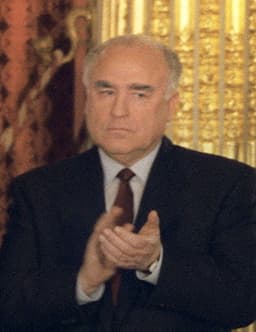
Alija Izetbegovic
Politician · Modern
55.3Total
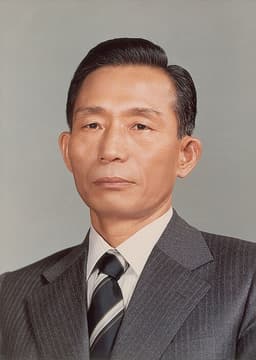
Park Chung-hee
Politician · Modern
68.4Total
Basic Information
Born
1925
1917
Died
—
1979
Era
Modern
Modern
Nationality
Bosnia
Korea
Occupation
Politician
Politician
Civilization
Western
Eastern
Score Comparison
Military (10%)
49.9
21.2
Political (20%)
68.0
82.0
Influence (20%)
58.0
72.0
Legacy (20%)
48.3
72.0
Leadership (15%)
62.2
80.0
Strategy (15%)
42.5
60.0
TOTAL
55.3
68.4
Alija Izetbegovic — Complete Timeline
1984 AD
Publication of 'Islam Between East and West'Cultural
Izetbegović published 'Islam Between East and West', a philosophical work arguing for the compatibility of Islam with modernity. The book, written while he was imprisoned by the Yugoslav regime, influenced Islamic thought in the Balkans and shaped his political ideology.
PublicationIslamic PhilosophyBalkans
Impact: regionalconstructive
1990 AD
Election as First President of Independent BosniaPolitical Action◆ Major
Alija Izetbegovi
ElectionIndependenceBosnia
Impact: nationalconstructive
1992 AD
Siege of SarajevoWar◆ Major
Izetbegović led the Bosnian government during the Siege of Sarajevo by Bosnian Serb forces from April 1992 to February 1996. The siege, the longest of a capital city in modern warfare, resulted in over 11,000 deaths and became a symbol of the war's brutality.
SiegeWarSarajevo
Impact: regionaltragic
Declaration of Bosnian IndependencePolitical Action◆ Major
Izetbegović declared Bosnia and Herzegovina's independence from Yugoslavia on March 3, 1992, following a referendum boycotted by Bosnian Serbs. This triggered the Bosnian War, as Serb forces, backed by the Yugoslav Army, launched a campaign to carve out a Serb republic.
IndependenceWarYugoslav Breakup
Impact: regionalconstructive
1995 AD
Signing of the Dayton AgreementPolitical Action◆ Major
Izetbegović signed the Dayton Peace Agreement on December 14, 1995, ending the Bosnian War. The agreement created a decentralized state with two entities: the Federation of Bosnia and Herzegovina and the Republika Srpska, which Izetbegović accepted as a necessary compromise.
Peace TreatyBosnian WarDiplomacy
Impact: regional
Park Chung-hee — Complete Timeline
1961 AD
May 16 Military CoupPolitical Action
Park Chung-hee led a military coup that overthrew the democratically elected government of Prime Minister Chang Myon. Park established the Supreme Council for National Reconstruction, suspended the constitution, and began authoritarian rule that lasted 18 years.
CoupAuthoritarianismSouth Korea
Impact: nationaldestructive
1962 AD
Five-Year Economic Development PlansReform◆ Major
Park Chung-hee launched the First Five-Year Economic Development Plan, focusing on export-oriented industrialization. The government directed investment into heavy industries, built infrastructure, and promoted chaebols, transforming South Korea from an agrarian economy into an industrial powerhouse.
Economic DevelopmentIndustrializationSouth Korea
Impact: nationalconstructive
1965 AD
Normalization of Relations with JapanPolitical Action◆ Major
Park Chung-hee signed the Treaty on Basic Relations with Japan, normalizing diplomatic ties. Japan provided $800 million in grants and loans, which funded South Korea's infrastructure projects and industrial growth, despite widespread public opposition due to colonial grievances.
Japan RelationsEconomic AidDiplomacy
Impact: regionalconstructive
1972 AD
Yushin ConstitutionPolitical Action◆ Major
Park Chung-hee imposed the Yushin Constitution, which gave him near-dictatorial powers. The constitution allowed the president to serve unlimited terms, appoint one-third of the National Assembly, and rule by emergency decree, effectively ending democratic processes.
AuthoritarianismConstitutionSouth Korea
Impact: nationaldestructive
1979 AD
Assassination of Park Chung-heePolitical Action
Park Chung-hee was assassinated by Kim Jae-gyu, the director of the Korean Central Intelligence Agency, during a dinner at a safe house. The assassination ended his 18-year rule and plunged South Korea into a period of political turmoil, leading to another military coup.
AssassinationPolitical CrisisSouth Korea
Impact: nationaltragic
Expert Analysis
Origins
Alija Izetbegović was born on August 8, 1925, in Bosanski Šamac, Bosnia, into a Muslim family with a tradition of scholarship. His father was a merchant. Izetbegović studied law at the University of Sarajevo, but his education was interrupted by World War II. He was imprisoned in 1946 for his involvement with the "Young Muslims" organization, which sought Islamic revival. After his release, he completed his law degree and worked as a legal advisor. In 1970, he published "Islam Between East and West," a philosophical work arguing for the compatibility of Islam with modernity. This book, along with his political activities, led to a 14-year prison sentence in 1983 for "hostile and counter-revolutionary acts." He served six years.
Park Chung-hee was born on November 14, 1917, in Gumi, Korea, into a poor farming family. He was the seventh child. Park excelled in school and attended Daegu Teachers College, graduating in 1937. He taught for a few years before enrolling in the Manchukuo Imperial Army Academy in 1940, trained by the Japanese. After World War II, he joined the Korean Military Academy and rose through the ranks. He was involved in a leftist military rebellion in 1948, for which he was sentenced to death but later pardoned. Park then became a staunch anti-communist and advanced his military career.
Rise to Power
Izetbegović rose to prominence through his intellectual and political activities. In 1990, as Yugoslavia dissolved, he founded the Party of Democratic Action (SDA), representing Bosnian Muslims. In the first multi-party elections on November 18, 1990, he was elected president of the Presidency of Bosnia and Herzegovina. On March 3, 1992, he declared independence from Yugoslavia, following a referendum boycotted by Bosnian Serbs. This triggered the Bosnian War. Izetbegović led the Bosnian government during the Siege of Sarajevo (April 1992 – February 1996), the longest siege in modern history. His leadership during the war defined his presidency.
Park Chung-hee came to power via a military coup on May 16, 1961, overthrowing the democratically elected government of Prime Minister Chang Myon. Park established the Supreme Council for National Reconstruction and ruled as its chairman. He later transitioned to civilian rule, winning the 1963 presidential election under a new constitution. Park's coup was justified as necessary to combat corruption and communism. He consolidated power through the Korean Central Intelligence Agency (KCIA) and suppressed dissent.
Leadership & Governance
Izetbegović's leadership style was consensus-oriented and intellectual. He chaired the collective presidency of Bosnia, which included representatives from Bosniaks, Croats, and Serbs. During the war, he worked to maintain international support and secured NATO intervention in 1995. He signed the Dayton Peace Agreement on December 14, 1995, ending the war and creating a decentralized state with two entities: the Federation of Bosnia and Herzegovina and Republika Srpska. Izetbegović's governance was constrained by the war and the complex power-sharing system. He prioritized the survival of Bosnia as a sovereign state. His political score is 68.0, reflecting his effectiveness in navigating a difficult transition.
Park Chung-hee ruled as an authoritarian. He imposed the Yushin Constitution in 1972, which gave him near-dictatorial powers, including the ability to appoint one-third of the National Assembly and unlimited terms. He suppressed political opposition, controlled the media, and used the KCIA to monitor citizens. However, Park's governance was also highly developmental. He launched a series of Five-Year Economic Development Plans starting in 1962, focusing on export-oriented industrialization. He directed state investment into heavy industries like steel, shipbuilding, and chemicals. His leadership score is 80.0, reflecting his strong control and economic success.
Triumph & Tragedy
Izetbegović's greatest triumph was leading Bosnia to independence and securing its survival through the war. He successfully gained international recognition and NATO intervention, culminating in the Dayton Agreement. However, his greatest failure was the inability to prevent ethnic cleansing and the massacre at Srebrenica in July 1995, where Bosnian Serb forces killed over 8,000 Bosniak men and boys. Critics argue that Izetbegović's government could have done more to protect civilians. Additionally, the Dayton Agreement created a dysfunctional state with weak central institutions, leading to ongoing political paralysis.
Park Chung-hee's greatest triumph was South Korea's rapid economic transformation. Under his rule, GDP per capita rose from $100 in 1960 to over $1,000 by 1979. He normalized relations with Japan in 1965, securing $800 million in grants and loans, which fueled growth. However, his greatest failure was his authoritarianism and human rights abuses. He imprisoned dissidents, including future president Kim Dae-jung, and suppressed labor movements. His assassination on October 26, 1979, by his own intelligence chief, Kim Jae-gyu, revealed the instability of his regime.
Character & Destiny
Izetbegović was a reflective, principled leader with a philosophical bent. His experience as a political prisoner shaped his commitment to Islamic identity and Bosnian independence. He was cautious but determined, often seeking consensus. His character led him to prioritize diplomacy and international alliances, but also to accept compromises that some saw as betrayals, such as the Dayton framework. His destiny was to be the founder of a fragile state, struggling with internal divisions and external pressures.
Park Chung-hee was ruthless, pragmatic, and single-minded in his pursuit of economic development. He was a workaholic who micromanaged government projects. His authoritarian tendencies alienated many, but his focus on growth delivered results. His destiny was to be both a modernizer and a dictator, whose legacy is deeply contested. His assassination cut short his rule, leaving South Korea to transition to democracy.
Legacy
Izetbegović's legacy is mixed. He is revered by Bosniaks as the father of independence, but criticized for the state's weaknesses. His vision of a multi-ethnic Bosnia has not fully materialized; the country remains divided along ethnic lines. His writings, especially "Islam Between East and West," continue to influence Islamic thought. His legacy score is 48.3, reflecting the incomplete realization of his goals.
Park Chung-hee's legacy is transformative. He laid the foundation for South Korea's economic miracle, creating an industrialized, export-driven economy. However, his authoritarian methods have cast a shadow. He is both celebrated as a modernizer and condemned as a dictator. His legacy score is 72.0, indicating a more enduring impact. South Korea's subsequent democratization has allowed for a critical reassessment.
Conclusion
Park Chung-hee had a greater overall impact than Alija Izetbegović, as reflected by his total score of 68.4 versus Izetbegović's 55.3. Park's economic policies transformed South Korea from a poor, agrarian society into a global industrial powerhouse, with effects that persist today. Izetbegović's achievements were significant but constrained by the circumstances of war and the fragility of Bosnia's post-war settlement. While Izetbegović's leadership was necessary for Bosnia's survival, Park's legacy is more far-reaching in terms of economic development and national transformation. Thus, Park Chung-hee is the more impactful figure.
Rankings
🥇
Park Chung-heeLeader
Mil: 21.2Pol: 82.0Inf: 72.0
68.4
🥈
Alija Izetbegovic
Mil: 49.9Pol: 68.0Inf: 58.0
55.3
+13.1 behind
How This Comparison Works
Algorithm
Each figure is scored on 6 dimensions (0—100 scale) based on structured historical data: Military (10%), Political (20%), Influence (20%), Legacy (20%), Leadership (15%), Strategy (15%). The weighted total produces the final ranking.
Data Sources
Scores are computed from structured sub-indicators in the database. Scale factors adjust for era (Ancient ×0.85, Modern ×1.0) and civilization size (Eastern ×1.05, Other ×0.80) to account for differences in population and military scale.
Maximum 3 Figures
Comparisons are limited to 2—3 figures to ensure readability and statistical meaningfulness.
Error Margins
±5 points per dimension — Sub-scores are derived from historical records with inherent uncertainty. Two figures within 5 points on a dimension should be considered roughly equivalent in that area.
Total Score Accuracy
±3 points overall — The weighted combination of 6 dimensions produces a total score with approximately ±3 points of uncertainty. Differences of less than 3 points are not statistically significant— the figures are effectively tied.
Known Limitations
- Historical records are incomplete and uneven across civilizations
- Figures from oral-tradition societies may be underrepresented
- Occupation labels can misclassify multi-role figures
- Scores measure capability and impact, not moral character
- Quantitative scoring is a comparison tool, not absolute truth
Capability Radar
Military (10%) — Battles & Warfare
Battles
31
20
Win Rate
29
25
Expansion
35
15
Political (20%) — Governance & Reform
Reform
55
85
Diplomacy
60
70
Economy
30
95
Influence (20%) — Cultural & Global Reach
Cultural
45
55
Global
45
70
Legacy (20%) — Historical Impact
Historical
50
75
Longevity
40
65
Leadership (15%) — Power & Stability
Tenure
40
75
Stability
20
60
Strategy (15%) — Tactics & Innovation
Strategy
36
40
Tactics
43
30
Reform
43
70
Similar Comparisons
Comments & Discussion
No comments yet. Be the first to share your thoughts!