Loading...
Emperor Gaozong of Tang vs Napoleon Bonaparte
Napoleon Bonaparte leads by 10.5 pts · 2 figures compared
…
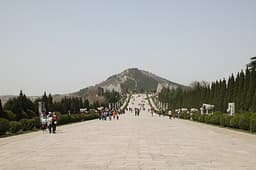
Emperor Gaozong of Tang
Emperor · Medieval
60.4Total

Napoleon Bonaparte
General · Modern
70.9Total
Basic Information
Born
628
1769
Died
683
1821
Era
Medieval
Modern
Nationality
China
France
Occupation
Emperor
General
Civilization
Eastern
Western
Score Comparison
Military (10%)
72.5
94.0
Political (20%)
62.7
72.0
Influence (20%)
61.0
40.0
Legacy (20%)
50.0
80.0
Leadership (15%)
68.0
78.0
Strategy (15%)
57.5
90.0
TOTAL
60.4
70.9
Emperor Gaozong of Tang — Complete Timeline
657 AD
Conquest of the Western TurksWar◆ Major
Emperor Gaozong's general Su Dingfang defeated the Western Turkic Khaganate, bringing Central Asia under Tang control. This established Tang hegemony over the Silk Road and extended the empire's influence to the Caspian Sea.
ConquestExpansion
Impact: globalconstructive
660 AD
Illness and Regency of Wu ZetianPolitical Action
Emperor Gaozong suffered a stroke that left him partially incapacitated. His wife, Empress Wu Zetian, began to take an active role in governance, eventually becoming the de facto ruler. This marked the beginning of Wu Zetian's rise to power.
SuccessionRegency
Impact: regional
663 AD
Battle of BaekgangWar◆ Major
Tang and Silla forces defeated a combined Baekje-Yamato Japanese fleet at the Battle of Baekgang in Korea. This victory secured Tang control over the Korean peninsula and ended Japanese ambitions in Korea for centuries.
Naval BattleConquest
Impact: regionalconstructive
668 AD
Conquest of GoguryeoWar◆ Major
Emperor Gaozong, with the help of the Silla kingdom, conquered the Korean kingdom of Goguryeo. This victory expanded Tang territory into Manchuria and Korea, establishing a Tang protectorate over the region.
ConquestExpansion
Impact: regionalconstructive
Napoleon Bonaparte — Complete Timeline
1799 AD
Coup of 18 BrumaireOther◆ Major
Napoleon Bonaparte, with support from his brother Lucien and key political figures, overthrew the Directory in a bloodless coup. He established the Consulate with himself as First Consul, effectively becoming the ruler of France. This event ended the French Revolution's most unstable period.
French RevolutionCoupRise to Power
Impact: regional
1804 AD
Promulgation of the Napoleonic CodeOther◆ Major
Napoleon enacted the Civil Code of the French, known as the Napoleonic Code, a comprehensive set of laws that replaced the fragmented feudal legal systems. The code established legal equality, protected property rights, and secularized law. It became the basis for legal systems in many European and world countries.
Legal ReformNapoleonic CodeCivil Law
Impact: globalconstructive
1805 AD
Battle of AusterlitzWar◆ Major
Napoleon's Grande Arm
Napoleonic WarsBattleDecisive Victory
Impact: global
1812 AD
Invasion of RussiaWar◆ Major
Napoleon led the Grande Arm
Napoleonic WarsInvasionDisaster
Impact: globaldestructive
1815 AD
Battle of WaterlooWar◆ Major
Napoleon's French army was defeated by the combined forces of the Duke of Wellington's Anglo-Allied army and Gebhard Leberecht von Bl
Napoleonic WarsBattleFinal Defeat
Impact: globaldestructive
Expert Analysis
emperor-gaozong-of-tang-vs-napoleon-bonaparte
# The Emperor and the General: Two Paths to Power
On a June morning in 1815, Napoleon Bonaparte stood on a muddy field in Belgium, watching his dreams of empire dissolve into cannon smoke and cavalry charges. Half a world away and twelve centuries earlier, another ruler—Emperor Gaozong of Tang—lay in his palace in Chang'an, his body ravaged by stroke, while his wife quietly took the reins of the greatest empire on earth. One man died in exile, his conquests undone; the other faded into history's shadow, his achievements overshadowed by the woman who succeeded him. What drove these two leaders to such different fates?
Origins
Napoleon was born in 1769 on the island of Corsica, a place that had only recently become French. His family was minor nobility, but their world was one of Mediterranean poverty and fierce independence. The French Revolution erupted when he was twenty, and it shattered the old order, creating opportunities unimaginable under the monarchy. Napoleon was a child of upheaval—restless, ambitious, and utterly convinced that merit could conquer birth.
Emperor Gaozong, born Li Zhi in 628, entered a world of stability and power. His father was Emperor Taizong, one of China's greatest rulers, who had forged the Tang dynasty into a military and cultural colossus. Gaozong grew up in the Forbidden City, surrounded by courtiers, scholars, and the weight of a thousand years of imperial tradition. Where Napoleon had to fight for everything, Gaozong inherited almost everything—and that difference would shape their entire lives.
Rise to Power
Napoleon's ascent was meteoric and violent. At twenty-four, he drove the British out of Toulon. At twenty-six, he suppressed a royalist uprising in Paris with a "whiff of grapeshot." By thirty, he had conquered Italy and Egypt, and by thirty-five, he crowned himself Emperor of the French. Each step was a gamble, a leap into chaos that he somehow turned into order. He rose not through birth but through sheer force of will and military genius.
Gaozong's path was quieter but no less complex. He was not his father's first choice; Taizong had originally designated an older son as heir, but that prince fell into disgrace. Gaozong, who was known for his filial piety and gentle demeanor, was chosen instead. He ascended the throne in 649 at the age of twenty-one, inheriting an empire already at its peak. There was no revolution, no desperate struggle—just the slow, steady machinery of succession. But that very ease may have been his weakness.
Leadership & Governance
Napoleon ruled like a force of nature. His military scores—94 in military, 93 in strategy—reflect a commander who could read a battlefield like a chessboard. He reorganized France's legal system with the Napoleonic Code, centralized the government, and built an empire that stretched from Spain to Poland. But his political score of 75 reveals the flaw: he could conquer but not consolidate. He appointed his brothers as puppet kings, alienated potential allies, and made enemies of Britain, Russia, and Prussia simultaneously.
Emperor Gaozong's leadership was entirely different. His military score of 73 is respectable but not extraordinary—yet his political score of 85 and leadership score of 86 tell a subtler story. He did not lead armies personally; he chose generals like Su Dingfang, who in 657 crushed the Western Turkic Khaganate and brought Central Asia under Tang control. In 663, his forces defeated a Japanese fleet at the Battle of Baekgang in Korea, and in 668, they conquered the Korean kingdom of Goguryeo. Gaozong expanded the Tang empire to its greatest territorial extent—not through personal heroism, but through strategic delegation.
The deeper contrast lies in how they governed. Napoleon micromanaged everything, from battlefield tactics to the design of Parisian boulevards. Gaozong, by contrast, ruled through a sophisticated bureaucracy, relying on Confucian scholars and capable ministers. But his greatest political decision was also his most fateful: when he suffered a stroke in 660, he allowed his wife, Empress Wu Zetian, to manage state affairs. She would later become China's only female emperor—a legacy that Gaozong enabled but could not control.
Triumph & Tragedy
Napoleon's greatest moment came at Austerlitz in 1805, where he smashed the combined armies of Russia and Austria in a single day. His greatest tragedy was Waterloo in 1815, where he lost everything in a battle he should have won. The pattern was clear: brilliant victories followed by catastrophic overreach. He invaded Russia in 1812 with 600,000 men and returned with fewer than 100,000. He could not stop pushing.
Gaozong's triumphs were quieter but more lasting. The conquest of Goguryeo in 668 was a military achievement that had eluded Chinese dynasties for centuries. Yet his tragedy was personal: his illness left him a spectator in his own court, watching his wife consolidate power while he slowly faded. He died in 683, his name forever linked to Wu Zetian's rise. Where Napoleon's tragedy was a spectacular fall, Gaozong's was a slow eclipse.
Character & Destiny
Napoleon was driven by an insatiable hunger for glory. "I love power as a musician loves his violin," he once said. He could not rest, could not compromise, could not share authority. His personality was his engine and his destruction. He believed he was destiny's chosen instrument, and that belief carried him to Moscow and then to St. Helena.
Gaozong was the opposite. He was gentle, perhaps even passive. Historical records describe him as kind and filial, but also as indecisive and easily influenced. He did not seek to dominate; he sought to preserve. His personality made him a capable administrator but a reluctant warrior. And when illness struck, he did not fight for control—he yielded. That yielding changed Chinese history forever.
Legacy
Napoleon's legacy is written in stone and law. The Napoleonic Code influences legal systems across Europe and the world. His military innovations are studied in every war college. He is remembered as a titan, a genius, a monster—but never as a footnote.
Emperor Gaozong is often a footnote. His military achievements are real—the Tang empire reached its greatest size under his reign—but they are overshadowed by his father Taizong and his wife Wu Zetian. His political score of 85 and leadership score of 86 suggest a ruler of genuine skill, yet he is remembered primarily as the man who let his wife take power. His legacy is a cautionary tale about the dangers of delegation and the cruelty of historical memory.
Conclusion
Standing at the distance of centuries, we see two men who faced the same fundamental question: how to hold power once you have it. Napoleon answered with force, conquest, and control—and lost everything. Gaozong answered with trust, delegation, and restraint—and lost his place in history. Neither answer was perfect. Perhaps the lesson is that power is never fully held, only borrowed. Napoleon borrowed it from chaos and returned it to exile. Gaozong borrowed it from his father and returned it to his wife. In the end, both men were swept away by forces larger than themselves—one by an empire that could not be sustained, the other by a wife who would not be denied.
Rankings
🥇
Napoleon BonaparteLeader
Mil: 94.0Pol: 72.0Inf: 40.0
70.9
🥈
Emperor Gaozong of Tang
Mil: 72.5Pol: 62.7Inf: 61.0
60.4
+10.5 behind
How This Comparison Works
Algorithm
Each figure is scored on 6 dimensions (0—100 scale) based on structured historical data: Military (10%), Political (20%), Influence (20%), Legacy (20%), Leadership (15%), Strategy (15%). The weighted total produces the final ranking.
Data Sources
Scores are computed from structured sub-indicators in the database. Scale factors adjust for era (Ancient ×0.85, Modern ×1.0) and civilization size (Eastern ×1.05, Other ×0.80) to account for differences in population and military scale.
Maximum 3 Figures
Comparisons are limited to 2—3 figures to ensure readability and statistical meaningfulness.
Error Margins
±5 points per dimension — Sub-scores are derived from historical records with inherent uncertainty. Two figures within 5 points on a dimension should be considered roughly equivalent in that area.
Total Score Accuracy
±3 points overall — The weighted combination of 6 dimensions produces a total score with approximately ±3 points of uncertainty. Differences of less than 3 points are not statistically significant— the figures are effectively tied.
Known Limitations
- Historical records are incomplete and uneven across civilizations
- Figures from oral-tradition societies may be underrepresented
- Occupation labels can misclassify multi-role figures
- Scores measure capability and impact, not moral character
- Quantitative scoring is a comparison tool, not absolute truth
Capability Radar
Military (10%) — Battles & Warfare
Battles
55
95
Win Rate
60
90
Expansion
65
95
Political (20%) — Governance & Reform
Reform
60
95
Diplomacy
65
80
Economy
60
85
Influence (20%) — Cultural & Global Reach
Cultural
50
85
Global
45
90
Legacy (20%) — Historical Impact
Historical
55
95
Longevity
50
90
Leadership (15%) — Power & Stability
Tenure
70
85
Stability
55
70
Strategy (15%) — Tactics & Innovation
Strategy
55
95
Tactics
50
98
Reform
40
92
Similar Comparisons
Comments & Discussion
No comments yet. Be the first to share your thoughts!