Loading...
Emperor Ichijo vs Napoleon Bonaparte
Napoleon Bonaparte leads by 17.5 pts · 2 figures compared
…
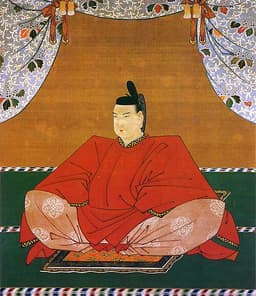
Emperor Ichijo
Emperor · Medieval
53.4Total

Napoleon Bonaparte
General · Modern
70.9Total
Basic Information
Born
980
1769
Died
1011
1821
Era
Medieval
Modern
Nationality
Japan
France
Occupation
Emperor
General
Civilization
Eastern
Western
Score Comparison
Military (10%)
54.9
94.0
Political (20%)
30.8
72.0
Influence (20%)
60.0
40.0
Legacy (20%)
52.0
80.0
Leadership (15%)
56.0
78.0
Strategy (15%)
69.3
90.0
TOTAL
53.4
70.9
Emperor Ichijo — Complete Timeline
986 AD
Reign during the height of Fujiwara regencyPolitical Action◆ Major
Ichijo ascended the throne at age six under the regency of Fujiwara no Michinaga. His reign marked the peak of Fujiwara power, with Michinaga effectively ruling Japan through the emperor as a figurehead, limiting Ichijo's direct political influence.
Fujiwara RegencyHeian PeriodPolitical Structure
Impact: national
1000 AD
Patronage of Lady Murasaki ShikibuCultural◆ Major
Emperor Ichijo served as patron to Lady Murasaki Shikibu, a lady-in-waiting at his court. Under his reign, she wrote The Tale of Genji, widely considered the world's first novel, which profoundly influenced Japanese literature and court culture.
LiteratureHeian PeriodCourt Culture
Impact: globalconstructive
Promotion of Heian court cultureCultural
Ichijo's court became a center for literary and artistic flourishing, including poetry contests, calligraphy, and the composition of The Pillow Book by Sei Shonagon. This cultural efflorescence defined the Heian period's aesthetic legacy.
Heian CultureLiteratureArts
Impact: nationalconstructive
Napoleon Bonaparte — Complete Timeline
1799 AD
Coup of 18 BrumaireOther◆ Major
Napoleon Bonaparte, with support from his brother Lucien and key political figures, overthrew the Directory in a bloodless coup. He established the Consulate with himself as First Consul, effectively becoming the ruler of France. This event ended the French Revolution's most unstable period.
French RevolutionCoupRise to Power
Impact: regional
1804 AD
Promulgation of the Napoleonic CodeOther◆ Major
Napoleon enacted the Civil Code of the French, known as the Napoleonic Code, a comprehensive set of laws that replaced the fragmented feudal legal systems. The code established legal equality, protected property rights, and secularized law. It became the basis for legal systems in many European and world countries.
Legal ReformNapoleonic CodeCivil Law
Impact: globalconstructive
1805 AD
Battle of AusterlitzWar◆ Major
Napoleon's Grande Arm
Napoleonic WarsBattleDecisive Victory
Impact: global
1812 AD
Invasion of RussiaWar◆ Major
Napoleon led the Grande Arm
Napoleonic WarsInvasionDisaster
Impact: globaldestructive
1815 AD
Battle of WaterlooWar◆ Major
Napoleon's French army was defeated by the combined forces of the Duke of Wellington's Anglo-Allied army and Gebhard Leberecht von Bl
Napoleonic WarsBattleFinal Defeat
Impact: globaldestructive
Expert Analysis
Origins
Emperor Ichijo was born in 980 CE into the Japanese imperial family, the son of Emperor En'yū and Fujiwara no Senshi. He ascended the throne at age six in 986, but real power was held by his maternal grandfather, Fujiwara no Kaneie, and later by his uncle Fujiwara no Michinaga. Ichijo's upbringing was steeped in the refined Heian court culture, where aesthetics, poetry, and ritual dominated. His education focused on classical Chinese texts and Japanese waka poetry.
Napoleon Bonaparte was born in 1769 on Corsica, shortly after France acquired the island. His family was minor nobility, and he studied at military schools in Brienne and Paris. He graduated as a second lieutenant in artillery in 1785. Napoleon's early life was shaped by Corsican nationalism and the French Revolution, which opened opportunities for talented officers. He read widely in military history and Enlightenment philosophy.
Rise to Power
Ichijo became emperor as a child, with the Fujiwara regents wielding actual authority. His reign from 986 to 1011 saw the pinnacle of Fujiwara no Michinaga's power, who became regent in 995. Ichijo's role was ceremonial and cultural; he sponsored poets, calligraphers, and ladies-in-waiting like Murasaki Shikibu and Sei Shōnagon. His court became a center of literary output, including The Tale of Genji and The Pillow Book. Ichijo's power was limited, but he used his position to patronize arts, achieving influence through culture.
Napoleon rose through the ranks during the French Revolution. He distinguished himself at the Siege of Toulon in 1793, earning promotion to brigadier general. After a period of political maneuvering, he led the Italian campaign in 1796, defeating Austria and establishing his reputation. The Coup of 18 Brumaire in 1799 overthrew the Directory, making Napoleon First Consul. He consolidated power, becoming Consul for Life in 1802 and Emperor in 1804. His rise was marked by military brilliance and political cunning.
Leadership & Governance
Ichijo's leadership was passive, constrained by the Fujiwara regency. He focused on cultural patronage, presiding over poetry contests and supporting the creation of literature. His governance score of 41.8 reflects limited authority. Under Michinaga, the state functioned through clan networks and ritual. Ichijo's reign saw no major administrative reforms; the Heian system of aristocratic rule continued.
Napoleon scored 78.0 in leadership and 72.0 in political. He centralized the French state, enacted the Napoleonic Code (1804), standardized laws, established the Bank of France, reformed education, and created the Legion of Honor. His governance was efficient but authoritarian. He controlled the press and limited dissent. His military strategy scored 90.0, with campaigns based on speed, decisive battles, and logistics.
Triumph & Tragedy
Ichijo's greatest success was presiding over the cultural zenith of Heian Japan. The patronage of Murasaki Shikibu produced The Tale of Genji, a masterpiece of world literature. His court fostered Sei Shōnagon's The Pillow Book. However, his reign saw the entrenchment of Fujiwara dominance, reducing imperial authority. Ichijo failed to assert independence; his political score of 44.0 reflects his weakness. He died at age 31 in 1011, leaving no lasting political legacy.
Napoleon's triumphs include military victories like Austerlitz (1805), where he defeated the Russian and Austrian armies, and the establishment of the Napoleonic Code, which influenced legal systems worldwide. His influence score of 40.0 is lower due to his ultimate defeat. His tragedies include the disastrous invasion of Russia in 1812, losing over 500,000 men, and the final defeat at Waterloo in 1815. He was exiled to Saint Helena, where he died in 1821.
Character & Destiny
Ichijo was cultured, gentle, and devout, but lacked political ambition. His character suited a ceremonial role. He was known for his poetry and appreciation of beauty. His destiny was to be a figurehead, with his reign marking the peak of Fujiwara power. Historians see him as a passive but benevolent ruler.
Napoleon was ambitious, strategic, and ruthless. His genius for military tactics and organization was paired with overconfidence. He centralized power but alienated allies. His character drove his rise and fall; he could not stop waging war. His destiny was to dominate Europe for a decade then collapse. Historical assessments note his brilliance but also his hubris.
Legacy
Ichijo's legacy is cultural. The Tale of Genji remains a classic, studied worldwide. Heian court aesthetics influenced Japanese arts for centuries. However, his political legacy is minimal. He scored 69.8 in legacy, reflecting his indirect impact through patronage.
Napoleon's legacy is vast: the Napoleonic Code influenced civil law in many countries; his military tactics are studied; he reshaped Europe through conquest and the spread of nationalism. His legacy score of 80.0 is higher. He also inspired modern warfare and administration. However, his impact on human life was often destructive.
Conclusion
Napoleon Bonaparte had a greater impact on world history than Emperor Ichijo. Napoleon's total score of 70.9 surpasses Ichijo's 57.5 by 13.4 points. His military, political, and leadership scores are significantly higher. While Ichijo's cultural patronage is notable, Napoleon's reforms and conquests changed the course of Europe and the world. Napoleon's legacy in law, governance, and military strategy endures, whereas Ichijo's influence is largely confined to literature and art. Thus, Napoleon emerges as the more influential figure.
Rankings
🥇
Napoleon BonaparteLeader
Mil: 94.0Pol: 72.0Inf: 40.0
70.9
🥈
Emperor Ichijo
Mil: 54.9Pol: 30.8Inf: 60.0
53.4
+17.5 behind
How This Comparison Works
Algorithm
Each figure is scored on 6 dimensions (0—100 scale) based on structured historical data: Military (10%), Political (20%), Influence (20%), Legacy (20%), Leadership (15%), Strategy (15%). The weighted total produces the final ranking.
Data Sources
Scores are computed from structured sub-indicators in the database. Scale factors adjust for era (Ancient ×0.85, Modern ×1.0) and civilization size (Eastern ×1.05, Other ×0.80) to account for differences in population and military scale.
Maximum 3 Figures
Comparisons are limited to 2—3 figures to ensure readability and statistical meaningfulness.
Error Margins
±5 points per dimension — Sub-scores are derived from historical records with inherent uncertainty. Two figures within 5 points on a dimension should be considered roughly equivalent in that area.
Total Score Accuracy
±3 points overall — The weighted combination of 6 dimensions produces a total score with approximately ±3 points of uncertainty. Differences of less than 3 points are not statistically significant— the figures are effectively tied.
Known Limitations
- Historical records are incomplete and uneven across civilizations
- Figures from oral-tradition societies may be underrepresented
- Occupation labels can misclassify multi-role figures
- Scores measure capability and impact, not moral character
- Quantitative scoring is a comparison tool, not absolute truth
Capability Radar
Military (10%) — Battles & Warfare
Battles
48
95
Win Rate
45
90
Expansion
52
95
Political (20%) — Governance & Reform
Reform
20
95
Diplomacy
30
80
Economy
25
85
Influence (20%) — Cultural & Global Reach
Cultural
60
85
Global
40
90
Legacy (20%) — Historical Impact
Historical
55
95
Longevity
55
90
Leadership (15%) — Power & Stability
Tenure
31
85
Stability
40
70
Strategy (15%) — Tactics & Innovation
Strategy
56
95
Tactics
59
98
Reform
58
92
Similar Comparisons
Comments & Discussion
No comments yet. Be the first to share your thoughts!