Loading...
Emperor Ichijo vs Sweyn Forkbeard
Emperor Ichijo leads by 7.4 pts · 2 figures compared
…
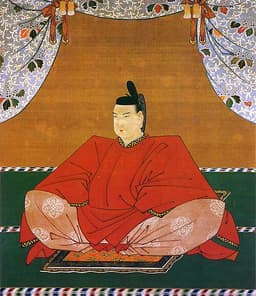
Emperor Ichijo
Emperor · Medieval
53.4Total
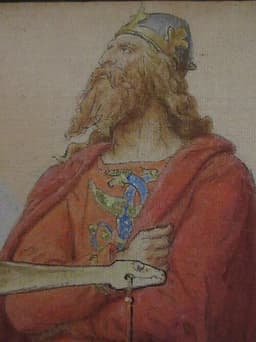
Sweyn Forkbeard
Emperor · Medieval
46.0Total
Basic Information
Born
980
960
Died
1011
1014
Era
Medieval
Medieval
Nationality
Japan
Denmark
Occupation
Emperor
Emperor
Civilization
Eastern
Western
Score Comparison
Military (10%)
54.9
45.0
Political (20%)
30.8
35.1
Influence (20%)
60.0
53.3
Legacy (20%)
52.0
43.3
Leadership (15%)
56.0
51.9
Strategy (15%)
69.3
43.3
TOTAL
53.4
46.0
Emperor Ichijo — Complete Timeline
986 AD
Reign during the height of Fujiwara regencyPolitical Action◆ Major
Ichijo ascended the throne at age six under the regency of Fujiwara no Michinaga. His reign marked the peak of Fujiwara power, with Michinaga effectively ruling Japan through the emperor as a figurehead, limiting Ichijo's direct political influence.
Fujiwara RegencyHeian PeriodPolitical Structure
Impact: national
1000 AD
Patronage of Lady Murasaki ShikibuCultural◆ Major
Emperor Ichijo served as patron to Lady Murasaki Shikibu, a lady-in-waiting at his court. Under his reign, she wrote The Tale of Genji, widely considered the world's first novel, which profoundly influenced Japanese literature and court culture.
LiteratureHeian PeriodCourt Culture
Impact: globalconstructive
Promotion of Heian court cultureCultural
Ichijo's court became a center for literary and artistic flourishing, including poetry contests, calligraphy, and the composition of The Pillow Book by Sei Shonagon. This cultural efflorescence defined the Heian period's aesthetic legacy.
Heian CultureLiteratureArts
Impact: nationalconstructive
Sweyn Forkbeard — Complete Timeline
985 AD
Rebelled against Harald BluetoothPolitical Action◆ Major
Sweyn Forkbeard led a rebellion against his father, King Harald Bluetooth, forcing him into exile. This uprising was driven by opposition to Harald's Christianization policies and centralized rule, and it resulted in Sweyn seizing the Danish throne.
RebellionDynastic ConflictPower Transition
Impact: regionaldestructive
1013 AD
Invaded EnglandWar◆ Major
Sweyn Forkbeard launched a full-scale invasion of England, leading a Danish fleet. He conquered large parts of the country, forcing King
InvasionEnglandViking Conquest
Impact: regional
Crowned King of EnglandPolitical Action◆ Major
After his successful invasion, Sweyn Forkbeard was crowned King of England in late 1013. He ruled England for only a few weeks before his death in February 1014, but his conquest paved the way for his son Cnut the Great's later rule over England.
CoronationEnglandDanish Rule
Impact: regional
1014 AD
Died suddenly in GainsboroughOther◆ Major
Sweyn Forkbeard died suddenly in Gainsborough, Lincolnshire, in February 1014, after ruling England for only about five weeks. His death led to the temporary restoration of
DeathSuccession CrisisEngland
Impact: regionaltragic
Expert Analysis
Origins
Emperor Ichijo was born in 980 CE into the imperial family of Japan, the son of Emperor En'yū. He ascended the throne at age six, but his reign was dominated by the Fujiwara regents. Ichijo was raised in the refined Heian court, steeped in poetry and ritual, with little exposure to military affairs. Sweyn Forkbeard, born around 960 CE, was the son of Harald Bluetooth, king of Denmark. He grew up in a Viking society where raiding and conquest were central. Sweyn led a rebellion against his father, forcing Harald into exile, and seized control of Denmark. His formative years were marked by conflict and ambition.
Rise to Power
Ichijo became emperor in 986 CE at age six, but real power lay with Fujiwara no Michinaga, who served as regent. Ichijo's role was ceremonial, presiding over court functions and poetry contests. His rise was passive, a product of birth. Sweyn's rise was active and violent. Around 986 CE, he rebelled against his father, Harald Bluetooth, and took the Danish throne. He then expanded his influence by raiding and later launching a full-scale invasion of England in 1013 CE, forcing King Æthelred the Unready into exile. Sweyn was crowned King of England in late 1013, achieving his peak through military force.
Leadership & Governance
Ichijo's leadership was indirect; he ruled through the Fujiwara regency, which managed state affairs. His governance focused on cultural patronage, supporting literary works like Murasaki Shikibu's *The Tale of Genji* and Sei Shōnagon's *The Pillow Book*. He scored 56.0 in leadership and 30.8 in political, reflecting his limited executive power. Sweyn, by contrast, was a warrior-king who directly commanded armies and made strategic decisions. His leadership score is 51.9, political 35.1. He governed conquered territories through force and tribute, but his rule in England lasted only weeks. Ichijo's governance promoted cultural flourishing; Sweyn's focused on expansion and control.
Triumph & Tragedy
Ichijo's greatest triumph was his patronage of Heian culture, which produced enduring literary masterpieces. His reign is remembered as a golden age of Japanese literature. His tragedy was his lack of real power; he was a figurehead controlled by the Fujiwara. He died young at age 31 in 1011 CE, likely from illness. Sweyn's triumph was his conquest of England, a feat that demonstrated Viking military prowess. He scored 45.0 in military and 43.3 in strategy. His tragedy was his sudden death in February 1014, only weeks after becoming king, leading to the temporary collapse of Danish rule. His legacy was cut short.
Character & Destiny
Ichijo was cultured, passive, and devout, shaped by the constraints of court life. His destiny was to be a symbol rather than a ruler. Historical assessments view him as a patron of arts but politically insignificant. Sweyn was ambitious, ruthless, and pragmatic, willing to overthrow his father to gain power. His destiny was to achieve a great conquest but die before consolidating it. His character drove him to constant conflict but also led to instability. Ichijo's total score is 53.4, Sweyn's 46.0, indicating Ichijo's greater overall impact, though in different spheres.
Legacy
Ichijo's legacy is literary: *The Tale of Genji* and *The Pillow Book* are classics of world literature, influencing Japanese culture for centuries. His court set standards for aesthetics. Sweyn's legacy is as a Viking conqueror; he paved the way for his son Cnut the Great, who later ruled a North Sea empire. However, Sweyn's direct impact was short-lived. Ichijo's influence score is 60.0, legacy 52.0; Sweyn's influence is 53.3, legacy 43.3. Ichijo's cultural contributions outlast Sweyn's military achievements.
Conclusion
Emperor Ichijo had a greater lasting impact than Sweyn Forkbeard. While Sweyn conquered England, his rule was ephemeral, and his legacy is overshadowed by his son Cnut. Ichijo's patronage produced works that shaped Japanese identity and world literature. With a total score of 53.4 versus Sweyn's 46.0, Ichijo's influence on culture and history is more enduring. Sweyn's military success was impressive but transient; Ichijo's cultural legacy is permanent.
Rankings
🥇
Emperor IchijoLeader
Mil: 54.9Pol: 30.8Inf: 60.0
53.4
🥈
Sweyn Forkbeard
Mil: 45.0Pol: 35.1Inf: 53.3
46.0
+7.4 behind
How This Comparison Works
Algorithm
Each figure is scored on 6 dimensions (0—100 scale) based on structured historical data: Military (10%), Political (20%), Influence (20%), Legacy (20%), Leadership (15%), Strategy (15%). The weighted total produces the final ranking.
Data Sources
Scores are computed from structured sub-indicators in the database. Scale factors adjust for era (Ancient ×0.85, Modern ×1.0) and civilization size (Eastern ×1.05, Other ×0.80) to account for differences in population and military scale.
Maximum 3 Figures
Comparisons are limited to 2—3 figures to ensure readability and statistical meaningfulness.
Error Margins
±5 points per dimension — Sub-scores are derived from historical records with inherent uncertainty. Two figures within 5 points on a dimension should be considered roughly equivalent in that area.
Total Score Accuracy
±3 points overall — The weighted combination of 6 dimensions produces a total score with approximately ±3 points of uncertainty. Differences of less than 3 points are not statistically significant— the figures are effectively tied.
Known Limitations
- Historical records are incomplete and uneven across civilizations
- Figures from oral-tradition societies may be underrepresented
- Occupation labels can misclassify multi-role figures
- Scores measure capability and impact, not moral character
- Quantitative scoring is a comparison tool, not absolute truth
Capability Radar
Military (10%) — Battles & Warfare
Battles
48
45
Win Rate
45
50
Expansion
52
55
Political (20%) — Governance & Reform
Reform
20
25
Diplomacy
30
35
Economy
25
30
Influence (20%) — Cultural & Global Reach
Cultural
60
30
Global
40
20
Legacy (20%) — Historical Impact
Historical
55
35
Longevity
55
25
Leadership (15%) — Power & Stability
Tenure
31
40
Stability
40
25
Strategy (15%) — Tactics & Innovation
Strategy
56
45
Tactics
59
40
Reform
58
20
Similar Comparisons
Comments & Discussion
No comments yet. Be the first to share your thoughts!