Loading...
Emperor Jito vs Napoleon Bonaparte
Napoleon Bonaparte leads by 22.1 pts · 2 figures compared
…
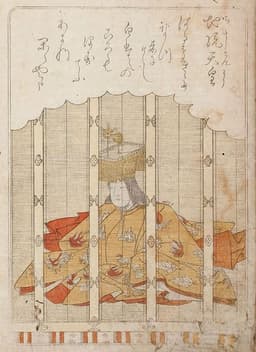
Emperor Jito
Emperor · Medieval
48.8Total

Napoleon Bonaparte
General · Modern
70.9Total
Basic Information
Born
645
1769
Died
703
1821
Era
Medieval
Modern
Nationality
Japan
France
Occupation
Emperor
General
Civilization
Eastern
Western
Score Comparison
Military (10%)
54.3
94.0
Political (20%)
46.6
72.0
Influence (20%)
51.8
40.0
Legacy (20%)
48.3
80.0
Leadership (15%)
42.2
78.0
Strategy (15%)
50.0
90.0
TOTAL
48.8
70.9
Emperor Jito — Complete Timeline
694 AD
Establishment of the Fujiwara CapitalPolitical Action◆ Major
Empress Jito moved the imperial capital to Fujiwara-kyo in Yamato Province. This was Japan's first capital built on a Chinese grid pattern. The move symbolized the centralization of power and the adoption of Chinese-style governance.
CapitalFujiwara-kyoUrban Planning
Impact: nationalconstructive
697 AD
Abdication in Favor of Emperor MonmuPolitical Action
Empress Jito abdicated the throne in favor of her grandson, Emperor Monmu. She continued to wield influence as a retired emperor (daijo tenno). This set a precedent for retired emperors to maintain power behind the scenes.
AbdicationSuccessionMonmu
Impact: national
701 AD
Completion of the Taiho CodeReform◆ Major
Empress Jito oversaw the completion and promulgation of the Taiho Code, a comprehensive legal code that systematized the ritsuryo system. It defined administrative structure, penal laws, and court ranks. The code remained the basis of Japanese law for centuries.
Taiho CodeLegal SystemRitsuryo
Impact: nationalconstructive
Napoleon Bonaparte — Complete Timeline
1799 AD
Coup of 18 BrumaireOther◆ Major
Napoleon Bonaparte, with support from his brother Lucien and key political figures, overthrew the Directory in a bloodless coup. He established the Consulate with himself as First Consul, effectively becoming the ruler of France. This event ended the French Revolution's most unstable period.
French RevolutionCoupRise to Power
Impact: regional
1804 AD
Promulgation of the Napoleonic CodeOther◆ Major
Napoleon enacted the Civil Code of the French, known as the Napoleonic Code, a comprehensive set of laws that replaced the fragmented feudal legal systems. The code established legal equality, protected property rights, and secularized law. It became the basis for legal systems in many European and world countries.
Legal ReformNapoleonic CodeCivil Law
Impact: globalconstructive
1805 AD
Battle of AusterlitzWar◆ Major
Napoleon's Grande Arm
Napoleonic WarsBattleDecisive Victory
Impact: global
1812 AD
Invasion of RussiaWar◆ Major
Napoleon led the Grande Arm
Napoleonic WarsInvasionDisaster
Impact: globaldestructive
1815 AD
Battle of WaterlooWar◆ Major
Napoleon's French army was defeated by the combined forces of the Duke of Wellington's Anglo-Allied army and Gebhard Leberecht von Bl
Napoleonic WarsBattleFinal Defeat
Impact: globaldestructive
Expert Analysis
emperor-jito-vs-napoleon-bonaparte
# The Emperor and the Empress: Two Paths to Power in East and West
On a June morning in 1815, Napoleon Bonaparte watched his dreams of empire shatter in the muddy fields of Waterloo, a defeat so total that it would echo through centuries. A thousand years earlier and half a world away, Empress Jitō of Japan made a different choice: she stepped down from the Chrysanthemum Throne in 697, not in defeat but in triumph, having completed the legal code that would structure her nation for generations. What drove these two rulers—one who conquered everything and lost it all, another who built quietly and left peacefully—to such different destinies?
Origins
Napoleon was born in 1769 on the Mediterranean island of Corsica, a place only recently annexed by France. His family was minor nobility, but they were outsiders, speaking Corsican dialect and nursing resentments against their French overlords. This marginality forged in him a burning ambition to prove himself. He was a child of the Enlightenment, schooled in artillery and military science at French academies, but also of revolution—the old order was collapsing around him, and chaos offered opportunity.
Empress Jitō, born in 645, entered a world that was the opposite of chaos. She was the daughter of Emperor Tenji, raised in the court of Yamato Japan, a society already hierarchical and ritualized. Where Napoleon had to smash his way upward, Jitō inherited a system of carefully calibrated power. Her era was defined not by revolution but by consolidation—Japan was absorbing Chinese models of governance, Buddhism, and writing, and the challenge was to adapt them without losing native identity. She learned statecraft from her father and husband, watching how power flowed not through conquest but through alliances, marriages, and the quiet authority of the throne.
Rise to Power
Napoleon’s ascent was spectacular and violent. He became a general at 24 after the Siege of Toulon in 1793, crushed a royalist uprising in Paris, and then launched the Italian campaign of 1796, where his speed and audacity stunned Europe. By 1799, he seized power in a coup d’état, crowning himself emperor five years later. His path was a ladder of blood and glory, each rung earned by victory.
Jitō’s rise was almost silent by comparison. She became empress consort to Emperor Tenmu, and when he died in 686, she ruled as regent before formally ascending as empress regnant in 690. There was no coup, no battlefield—only the patient accumulation of influence. Her power came from being at the center of a web, not from standing on a pile of enemies.
Leadership & Governance
Napoleon governed through force and brilliance. He reformed France’s legal system with the Napoleonic Code, rationalizing laws across his empire, and built roads, schools, and banks. But his rule was also a military dictatorship—he suppressed dissent, censored the press, and treated conquered lands as resources. His political score of 75 reflects a man who understood power but not legitimacy; he could win battles but not hearts.
Jitō governed through law and ritual. She oversaw the Taihō Code, completed in 701, a comprehensive legal system that structured Japan’s imperial bureaucracy, land ownership, and taxation. It was not a code of conquest but of order—it defined how officials were ranked, how courts functioned, how the state related to Buddhist temples. Her leadership score of 73.1 is modest but deceptive; she led not by commanding armies but by guiding consensus. Where Napoleon’s reforms were imposed by bayonet, Jitō’s were absorbed through tradition.
Militarily, the contrast is stark. Napoleon’s score of 94 is legendary—he revolutionized warfare with mass conscription, rapid movement, and decisive battle. Jitō’s 53.9 reflects a ruler who never led troops; Japan’s military struggles were managed by generals, not emperors. Yet in strategic terms, Jitō’s patience was its own genius. She understood that consolidating power was more important than expanding it.
Triumph & Tragedy
Napoleon’s greatest moment was perhaps Austerlitz in 1805, where he crushed the Austrian and Russian armies. His tragedy was the invasion of Russia in 1812—hubris, overreach, and the freezing winter that destroyed his Grand Army. He died in exile on Saint Helena in 1821, a prisoner of the British.
Jitō’s triumph was the completion of the Taihō Code, which gave Japan a stable government for centuries. Her tragedy was less dramatic—she abdicated in 697 to her grandson Monmu, but continued to rule from retirement, a pattern that created tensions between retired emperors and reigning ones. Yet she died in 703 at age 57, surrounded by the court she had shaped, not alone on a barren island.
Character & Destiny
Napoleon was driven by insatiable ambition. “Impossible is a word to be found only in the dictionary of fools,” he said. His personality was restless, brilliant, and ultimately self-destructive—he could not stop because stopping meant admitting limits. Jitō was driven by duty. She saw herself as a caretaker of the imperial line, not its star. Her personality was reserved, patient, and pragmatic—she could abdicate because her identity was not tied to power but to legacy.
Legacy
Napoleon’s legacy is vast and contradictory. He spread nationalism, legal reform, and modern warfare across Europe. His name is synonymous with genius and disaster. His legacy score of 78 reflects a man who changed the world but left it scarred.
Jitō’s legacy is quieter but perhaps deeper. The Taihō Code shaped Japan’s government for over a millennium. She proved that a woman could rule effectively in a patriarchal society. Her legacy score of 65.6 understates her impact because it measures fame, not influence. Napoleon is remembered because he broke things; Jitō is remembered because she built things that lasted.
Conclusion
Standing at Waterloo, Napoleon saw his world end. Standing at Fujiwara-kyō, Jitō saw her world continue. One conquered and lost; one built and passed on. Their stories remind us that power is not just about strength—it is about knowing what to do with it. Napoleon’s tragedy was that he could only take; Jitō’s triumph was that she could let go. In the end, the empress who stepped aside may have achieved more than the emperor who conquered everything.
Rankings
🥇
Napoleon BonaparteLeader
Mil: 94.0Pol: 72.0Inf: 40.0
70.9
🥈
Emperor Jito
Mil: 54.3Pol: 46.6Inf: 51.8
48.8
+22.1 behind
How This Comparison Works
Algorithm
Each figure is scored on 6 dimensions (0—100 scale) based on structured historical data: Military (10%), Political (20%), Influence (20%), Legacy (20%), Leadership (15%), Strategy (15%). The weighted total produces the final ranking.
Data Sources
Scores are computed from structured sub-indicators in the database. Scale factors adjust for era (Ancient ×0.85, Modern ×1.0) and civilization size (Eastern ×1.05, Other ×0.80) to account for differences in population and military scale.
Maximum 3 Figures
Comparisons are limited to 2—3 figures to ensure readability and statistical meaningfulness.
Error Margins
±5 points per dimension — Sub-scores are derived from historical records with inherent uncertainty. Two figures within 5 points on a dimension should be considered roughly equivalent in that area.
Total Score Accuracy
±3 points overall — The weighted combination of 6 dimensions produces a total score with approximately ±3 points of uncertainty. Differences of less than 3 points are not statistically significant— the figures are effectively tied.
Known Limitations
- Historical records are incomplete and uneven across civilizations
- Figures from oral-tradition societies may be underrepresented
- Occupation labels can misclassify multi-role figures
- Scores measure capability and impact, not moral character
- Quantitative scoring is a comparison tool, not absolute truth
Capability Radar
Military (10%) — Battles & Warfare
Battles
45
95
Win Rate
50
90
Expansion
50
95
Political (20%) — Governance & Reform
Reform
70
95
Diplomacy
30
80
Economy
30
85
Influence (20%) — Cultural & Global Reach
Cultural
30
85
Global
20
90
Legacy (20%) — Historical Impact
Historical
50
95
Longevity
40
90
Leadership (15%) — Power & Stability
Tenure
11
85
Stability
40
70
Strategy (15%) — Tactics & Innovation
Strategy
52
95
Tactics
57
98
Reform
60
92
Similar Comparisons
Comments & Discussion
IronLegion18156/17/2026
Napoleon's end at Waterloo exposes the fatal flaw of the "Great Man" cult—he overreached. Jitō's retirement in 697 shows real power isn't in conquest but in institutional legacy. She crafted the Taihō Code, stabilizing Japan for centuries; Napoleon's legal code was brilliant but drowned in his ego. One built foundations, the other burnt them in glory. History should stop romanticizing the grenadier and start studying the empress. Pro tip: check casualty stats—Jitō's reign had near zero, Napoleon
古卷新评6/17/2026
说拿破仑是“军事天才”的人,多半没读过他1812年入侵俄国的失败。他损失了50万大军,只为几场不持久的胜利;而持统天皇在689年推行飞鸟净御原令,用法律取代刀剑,让日本走出氏族混战的泥潭。一个靠枪炮堆砌帝国,一个用智慧铸造秩序。现代人总被拿破仑的“英雄叙事”迷惑,却忘了持统式的低调建设才更持久。军事征服从来不是文明的答案。
CodexBreaker6/17/2026
The comparison is flawed: Napoleon fought in a Europe erupting with revolution and nationalism, while Jitō ruled in a secluded, feudal Japan with no external threats. Context matters. Waterloo wasn't just ego—it was a coalition of empires ganging up on a man who had already revolutionized warfare. Jitō stepped down because her system was stable; Napoleon couldn't because he had no choice. Let's not moralize—both were products of their time, but only one faced the fury of a world in flux.
铁幕史评6/17/2026
拿拿破仑跟持统比,就像拿飓风跟细雨比暴力。拿破仑的败因在于他试图用个人意志改写地缘格局——他打烂了神圣罗马帝国,却扶植起更大的敌人。持统的高明在于她懂得收手:她699年让位,不是软弱,而是看清了皇权需要稳定而非扩张。现代历史书写总把“征服”当英雄主义,却忽视了持统式的清醒。拿破仑的悲剧,恰恰是他不懂什么时候该停。