Loading...
Emperor Ojin vs Napoleon Bonaparte
Napoleon Bonaparte leads by 24.3 pts · 2 figures compared
…
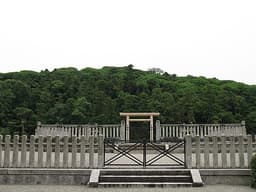
Emperor Ojin
Emperor · Ancient
46.6Total

Napoleon Bonaparte
General · Modern
70.9Total
Basic Information
Born
201
1769
Died
310
1821
Era
Ancient
Modern
Nationality
Japan
France
Occupation
Emperor
General
Civilization
Eastern
Western
Score Comparison
Military (10%)
25.9
94.0
Political (20%)
26.4
72.0
Influence (20%)
56.4
40.0
Legacy (20%)
56.0
80.0
Leadership (15%)
55.3
78.0
Strategy (15%)
36.8
90.0
TOTAL
46.6
70.9
Emperor Ojin — Complete Timeline
270 AD
Reign of Emperor OjinPolitical Action◆ Major
Emperor Ojin is considered by some historians as the first historically verifiable emperor of Japan, with his reign marking the transition from legend to recorded history. He is associated with the introduction of continental culture and technology from Korea and China.
Historical TransitionYamato PeriodCultural Exchange
Impact: nationalconstructive
285 AD
Received Korean Scholars and ArtisansCultural◆ Major
Emperor Ojin is recorded as having welcomed scholars and artisans from the Korean kingdom of Baekje, who brought Chinese writing, Confucian texts, and advanced crafts to Japan. This cultural influx significantly influenced the development of Japanese civilization.
Cultural ExchangeWriting SystemTechnology Transfer
Impact: nationalconstructive
300 AD
Deification as HachimanCultural◆ Major
Emperor Ojin was posthumously deified as Hachiman, the Shinto god of war and archery. This syncretism of imperial ancestor worship with Buddhist and Shinto traditions made Hachiman a central deity in Japanese religion, especially among samurai.
DeificationShintoSamurai Culture
Impact: nationalconstructive
Napoleon Bonaparte — Complete Timeline
1799 AD
Coup of 18 BrumaireOther◆ Major
Napoleon Bonaparte, with support from his brother Lucien and key political figures, overthrew the Directory in a bloodless coup. He established the Consulate with himself as First Consul, effectively becoming the ruler of France. This event ended the French Revolution's most unstable period.
French RevolutionCoupRise to Power
Impact: regional
1804 AD
Promulgation of the Napoleonic CodeOther◆ Major
Napoleon enacted the Civil Code of the French, known as the Napoleonic Code, a comprehensive set of laws that replaced the fragmented feudal legal systems. The code established legal equality, protected property rights, and secularized law. It became the basis for legal systems in many European and world countries.
Legal ReformNapoleonic CodeCivil Law
Impact: globalconstructive
1805 AD
Battle of AusterlitzWar◆ Major
Napoleon's Grande Arm
Napoleonic WarsBattleDecisive Victory
Impact: global
1812 AD
Invasion of RussiaWar◆ Major
Napoleon led the Grande Arm
Napoleonic WarsInvasionDisaster
Impact: globaldestructive
1815 AD
Battle of WaterlooWar◆ Major
Napoleon's French army was defeated by the combined forces of the Duke of Wellington's Anglo-Allied army and Gebhard Leberecht von Bl
Napoleonic WarsBattleFinal Defeat
Impact: globaldestructive
Expert Analysis
emperor-ojin-vs-napoleon-bonaparte
**The God-Emperor and the Corsican: Two Paths to Immortality**
In the winter of 1804, as Napoleon Bonaparte crowned himself Emperor of the French in Notre-Dame, he reached back through history for a model. He wanted to be Charlemagne, Caesar, Alexander—men who had reshaped the world with the sword. Half a world away and fifteen centuries earlier, another ruler had taken a very different path to eternity. Emperor Ojin, a shadowy figure from Japan’s ancient past, never conquered a continent or rewrote a legal code. Yet today, while Napoleon’s bones lie in a gilded tomb at Les Invalides, Ojin is worshipped as a god. How did one man’s ambition end in exile and the other’s in divinity? The answer lies not in their victories, but in the stories their civilizations needed them to tell.
**Origins**
Napoleon was born in 1769 on the island of Corsica, a place that had been French for barely a year. His family were minor nobles, proud and resentful of their new masters. From childhood, he carried the chip of an outsider on his shoulder—a provincial Italian-speaker who would conquer France to prove he belonged. His era was the crucible of revolution, when thrones toppled and a young artillery officer could rise on talent alone.
Emperor Ojin, born perhaps in 201, emerged from an entirely different world. Japan in the third century was a loose confederation of clans, with no written language and little contact beyond the Korean peninsula. Ojin’s historicity is debated—he may be the first verifiable emperor, but his reign is documented only in later chronicles like the *Nihon Shoki*. What we know is that he was not born into a revolutionary age, but a sacred one. In Japan, the emperor was not a conqueror but a priest-king, a living link between the rice fields and the sun goddess Amaterasu.
**Rise to Power**
Napoleon’s ascent was a rocket’s trajectory. By 1793, at age 24, he drove the British from Toulon and became a brigadier general. In 1796, he took command of a starving army in Italy and turned it into a lightning force, winning 14 battles in a year. Each victory was a stepping stone: the Egyptian campaign of 1798 made him a legend, the coup of 1799 made him First Consul, and the Battle of Austerlitz in 1805 made him master of Europe. His path was forged by gunpowder and ambition.
Ojin’s rise is quieter, almost invisible. He inherited the throne around 270, a succession that was likely contested but left little mark on the records. His power came not from conquest but from ritual and alliance. The key event of his reign, in 285, was receiving scholars and artisans from the Korean kingdom of Baekje. They brought Chinese writing, Confucian texts, and advanced metallurgy. Ojin did not conquer knowledge—he welcomed it. His rise was a slow accumulation of cultural authority, not military force.
**Leadership & Governance**
Napoleon governed like a storm. He centralized France, created the Bank of France, and most famously, codified the Napoleonic Code in 1804—a legal system that enshrined merit over birth and influenced law from Chile to Egypt. But his genius was also his flaw: he could not stop conquering. He placed his brothers on thrones, redrew borders, and bled France dry. His political score of 75 reflects a man who was brilliant at seizing power but poor at preserving it.
Ojin governed through presence, not edict. As a semi-mythical emperor, his role was to embody stability. The arrival of Korean scholars was a masterstroke: they introduced the Chinese calendar, Confucian bureaucracy, and the idea that a wise ruler attracts wisdom. Ojin’s military score is a mere 10—he was no general—but his leadership score of 73.5 suggests a different kind of command: the power to be the axis around which culture turns. He did not write laws; he became the law.
**Triumph & Tragedy**
Napoleon’s greatest moment was Austerlitz, where he crushed the Russian and Austrian armies in a single day, December 2, 1805. His tragedy was the invasion of Russia in 1812—600,000 men marched east, fewer than 100,000 returned. He was exiled to Elba, escaped, and met his final defeat at Waterloo in June 1815. The man who had conquered Europe died alone on a rock in the South Atlantic, abandoned by his marshals and his luck.
Ojin’s triumph was subtler: the peaceful transmission of civilization. His tragedy is that we barely know him. He died in 310, leaving a legend that grew beyond history. Within centuries, he was deified as Hachiman, the god of war and archery. His human failures are lost—perhaps he was a weak ruler, perhaps a tyrant. But his people needed a divine ancestor, so he became one.
**Character & Destiny**
Napoleon’s character was a furnace of will. “Impossible is a word to be found only in the dictionary of fools,” he said. He believed he could shape history by force of intellect and courage. Yet his destiny was tragic because his ambition had no limit. He could not stop, and so he fell.
Ojin’s character is opaque, but his destiny reveals a different truth. In a world without writing, a ruler’s legacy is what people remember. Ojin became a god because his civilization needed a divine origin for its imperial line. His destiny was not to conquer, but to be remembered. Napoleon’s memory is factual—we know his birth, his battles, his exile. Ojin’s memory is mythical—and myth outlives fact.
**Legacy**
Napoleon left Europe forever changed. His codes, his administrative reforms, his nationalistic armies—they echo in every modern state. His legacy score of 78 is high, but it is a human legacy. He is studied, debated, admired, and condemned.
Ojin’s legacy is divine. As Hachiman, he is worshipped at thousands of shrines in Japan. Samurai prayed to him before battle; farmers pray to him for harvest. His influence score of 72.2 is comparable to Napoleon’s 82, but it is a different kind of power—not of laws, but of souls. The first historically verifiable emperor became the eternal god of warriors.
**Conclusion**
Standing before Napoleon’s tomb, one feels the weight of a single, extraordinary life—its brilliance, its hubris, its end. Standing before a Hachiman shrine, one feels the weight of centuries of faith. Napoleon tried to be a god and died a man. Ojin was a man and became a god. Their difference is not in their deeds, but in the stories their worlds told about them. One story is history; the other is religion. Both are true, and both are immortal.
Rankings
🥇
Napoleon BonaparteLeader
Mil: 94.0Pol: 72.0Inf: 40.0
70.9
🥈
Emperor Ojin
Mil: 25.9Pol: 26.4Inf: 56.4
46.6
+24.3 behind
How This Comparison Works
Algorithm
Each figure is scored on 6 dimensions (0—100 scale) based on structured historical data: Military (10%), Political (20%), Influence (20%), Legacy (20%), Leadership (15%), Strategy (15%). The weighted total produces the final ranking.
Data Sources
Scores are computed from structured sub-indicators in the database. Scale factors adjust for era (Ancient ×0.85, Modern ×1.0) and civilization size (Eastern ×1.05, Other ×0.80) to account for differences in population and military scale.
Maximum 3 Figures
Comparisons are limited to 2—3 figures to ensure readability and statistical meaningfulness.
Error Margins
±5 points per dimension — Sub-scores are derived from historical records with inherent uncertainty. Two figures within 5 points on a dimension should be considered roughly equivalent in that area.
Total Score Accuracy
±3 points overall — The weighted combination of 6 dimensions produces a total score with approximately ±3 points of uncertainty. Differences of less than 3 points are not statistically significant— the figures are effectively tied.
Known Limitations
- Historical records are incomplete and uneven across civilizations
- Figures from oral-tradition societies may be underrepresented
- Occupation labels can misclassify multi-role figures
- Scores measure capability and impact, not moral character
- Quantitative scoring is a comparison tool, not absolute truth
Capability Radar
Military (10%) — Battles & Warfare
Battles
10
95
Win Rate
10
90
Expansion
10
95
Political (20%) — Governance & Reform
Reform
20
95
Diplomacy
20
80
Economy
20
85
Influence (20%) — Cultural & Global Reach
Cultural
70
85
Global
30
90
Legacy (20%) — Historical Impact
Historical
60
95
Longevity
80
90
Leadership (15%) — Power & Stability
Tenure
40
85
Stability
30
70
Strategy (15%) — Tactics & Innovation
Strategy
10
95
Tactics
10
98
Reform
10
92
Similar Comparisons
Comments & Discussion
**The Divine General**6/17/2026
Ojin didn't need to conquer Europe—he conquered time itself. Napoleon's legacy crumbled at Waterloo and rotted on St. Helena, a failed god-king exiled by his own hubris. Ojin, meanwhile, was deified as Hachiman, the god of war and protector of Japan, worshipped for over a millennium. That's not luck; that's strategic storytelling. His clan wove him into Shinto cosmology, linking his rule to the sun goddess Amaterasu. Napoleon had Versailles; Ojin has shrines that still burn incense today. Power