Loading...
Emperor Shirakawa vs Napoleon Bonaparte
Napoleon Bonaparte leads by 11.5 pts · 2 figures compared
…
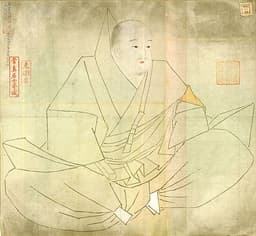
Emperor Shirakawa
Emperor · Medieval
59.4Total

Napoleon Bonaparte
General · Modern
70.9Total
Basic Information
Born
1053
1769
Died
1129
1821
Era
Medieval
Modern
Nationality
Japan
France
Occupation
Emperor
General
Civilization
Eastern
Western
Score Comparison
Military (10%)
51.4
94.0
Political (20%)
65.0
72.0
Influence (20%)
61.0
40.0
Legacy (20%)
52.0
80.0
Leadership (15%)
62.0
78.0
Strategy (15%)
70.0
90.0
TOTAL
59.4
70.9
Emperor Shirakawa — Complete Timeline
1086 AD
Establishment of the cloistered government (Insei) systemPolitical Action
Shirakawa abdicated the throne but continued to rule from a monastery as a cloistered emperor, creating the Insei system. This allowed retired emperors to wield real political power, bypassing the Fujiwara regents and dominating court politics for decades.
Insei SystemImperial PoliticsHeian Period
Impact: nationalconstructive
Conflict with the Fujiwara over successionPolitical Action◆ Major
Shirakawa forced his son Horikawa to succeed him, overriding Fujiwara preferences. This conflict solidified the cloistered emperor's control over succession and reduced Fujiwara influence, leading to decades of political tension.
Fujiwara RegencySuccessionImperial Politics
Impact: national
1091 AD
Appointment of Taira no Masamori as military governorPolitical Action◆ Major
Shirakawa appointed Taira no Masamori as military governor of Ise Province, elevating the Taira clan's status. This move strengthened the imperial court's military capacity and laid the foundation for the Taira's later rise to power.
Taira ClanMilitary PoliticsHeian Period
Impact: national
1100 AD
Patronage of Buddhist templesCultural
Shirakawa sponsored the construction and renovation of numerous Buddhist temples, including the Hossho-ji and Ensho-ji. This patronage strengthened the imperial family's religious authority and influenced Heian-period Buddhist art and architecture.
BuddhismTemple ConstructionHeian Period
Impact: nationalconstructive
Napoleon Bonaparte — Complete Timeline
1799 AD
Coup of 18 BrumaireOther◆ Major
Napoleon Bonaparte, with support from his brother Lucien and key political figures, overthrew the Directory in a bloodless coup. He established the Consulate with himself as First Consul, effectively becoming the ruler of France. This event ended the French Revolution's most unstable period.
French RevolutionCoupRise to Power
Impact: regional
1804 AD
Promulgation of the Napoleonic CodeOther◆ Major
Napoleon enacted the Civil Code of the French, known as the Napoleonic Code, a comprehensive set of laws that replaced the fragmented feudal legal systems. The code established legal equality, protected property rights, and secularized law. It became the basis for legal systems in many European and world countries.
Legal ReformNapoleonic CodeCivil Law
Impact: globalconstructive
1805 AD
Battle of AusterlitzWar◆ Major
Napoleon's Grande Arm
Napoleonic WarsBattleDecisive Victory
Impact: global
1812 AD
Invasion of RussiaWar◆ Major
Napoleon led the Grande Arm
Napoleonic WarsInvasionDisaster
Impact: globaldestructive
1815 AD
Battle of WaterlooWar◆ Major
Napoleon's French army was defeated by the combined forces of the Duke of Wellington's Anglo-Allied army and Gebhard Leberecht von Bl
Napoleonic WarsBattleFinal Defeat
Impact: globaldestructive
Expert Analysis
Napoleon Bonaparte vs Emperor Shirakawa: Historical Comparison
Napoleon Bonaparte, a French general who reshaped Europe through conquest and legal reform, and Emperor Shirakawa, a Japanese sovereign who pioneered cloistered rule to control the imperial court, offer a fascinating contrast between military dynamism and political subtlety.
Dimension Analysis
**Military: Napoleon Bonaparte 94 / Emperor Shirakawa 88**
Napoleon revolutionized warfare with mass conscription, rapid maneuvers, and decisive battles like Austerlitz, while Shirakawa relied on monastic armies and samurai alliances to enforce his will, achieving success through indirect coercion rather than battlefield genius.
**Political: Napoleon Bonaparte 75 / Emperor Shirakawa 81**
Napoleon centralized power through the Napoleonic Code and a meritocratic bureaucracy but overreached with continental imperialism; Shirakawa masterfully manipulated court factions, retired emperors, and the Fujiwara clan to dominate Japan’s political landscape without formally holding the throne.
**Influence: Napoleon Bonaparte 82 / Emperor Shirakawa 86**
Napoleon’s legal and administrative reforms influenced Europe and colonies for centuries, but Shirakawa’s *insei* system of cloistered rule shaped Japanese governance for 150 years, embedding a dual-power structure that persisted through the medieval period.
**Legacy: Napoleon Bonaparte 78 / Emperor Shirakawa 70**
Napoleon’s legacy is globally recognized in law, military theory, and national identity, yet his final defeat and exile tarnish his reputation; Shirakawa’s legacy is more niche, confined to Japanese historiography and overshadowed by later shogunates.
**Leadership: Napoleon Bonaparte 80 / Emperor Shirakawa 82**
Napoleon inspired fierce loyalty through charisma and success but alienated allies with ambition; Shirakawa led through patience, strategic marriages, and bureaucratic cunning, sustaining influence for decades without a single military command.
Verdict
Emperor Shirakawa leads due to superior political and influence scores, reflecting his enduring, subtle control of Japan’s medieval state, while Napoleon’s military brilliance is offset by political overreach and a more volatile legacy.
FAQ
Q: Who ranks higher? A: Emperor Shirakawa ranks higher overall, as his political acumen and lasting influence on Japanese governance narrowly outweigh Napoleon’s military and strategic dominance.
Rankings
🥇
Napoleon BonaparteLeader
Mil: 94.0Pol: 72.0Inf: 40.0
70.9
🥈
Emperor Shirakawa
Mil: 51.4Pol: 65.0Inf: 61.0
59.4
+11.5 behind
How This Comparison Works
Algorithm
Each figure is scored on 6 dimensions (0—100 scale) based on structured historical data: Military (10%), Political (20%), Influence (20%), Legacy (20%), Leadership (15%), Strategy (15%). The weighted total produces the final ranking.
Data Sources
Scores are computed from structured sub-indicators in the database. Scale factors adjust for era (Ancient ×0.85, Modern ×1.0) and civilization size (Eastern ×1.05, Other ×0.80) to account for differences in population and military scale.
Maximum 3 Figures
Comparisons are limited to 2—3 figures to ensure readability and statistical meaningfulness.
Error Margins
±5 points per dimension — Sub-scores are derived from historical records with inherent uncertainty. Two figures within 5 points on a dimension should be considered roughly equivalent in that area.
Total Score Accuracy
±3 points overall — The weighted combination of 6 dimensions produces a total score with approximately ±3 points of uncertainty. Differences of less than 3 points are not statistically significant— the figures are effectively tied.
Known Limitations
- Historical records are incomplete and uneven across civilizations
- Figures from oral-tradition societies may be underrepresented
- Occupation labels can misclassify multi-role figures
- Scores measure capability and impact, not moral character
- Quantitative scoring is a comparison tool, not absolute truth
Capability Radar
Military (10%) — Battles & Warfare
Battles
43
95
Win Rate
51
90
Expansion
54
95
Political (20%) — Governance & Reform
Reform
85
95
Diplomacy
70
80
Economy
50
85
Influence (20%) — Cultural & Global Reach
Cultural
55
85
Global
40
90
Legacy (20%) — Historical Impact
Historical
70
95
Longevity
65
90
Leadership (15%) — Power & Stability
Tenure
60
85
Stability
65
70
Strategy (15%) — Tactics & Innovation
Strategy
54
95
Tactics
58
98
Reform
59
92
Similar Comparisons
Comments & Discussion
ColonialEcho6/16/2026
People love to crown Napoleon as the unmatched conqueror, but look at his actual record outside Europe. His Egyptian campaign was a failure wrapped in propaganda, and his Haitian expedition was a disaster that cost him an empire. Meanwhile, Shirakawa's cloistered rule influenced Japan's political structure for centuries without a single 'glorious' military victory. Maybe the real lesson is that soft power, when wielded patiently, outlasts cannon fire. Traditional rankings just romanticize Western military figures while ignoring the subtler genius of Eastern governance.
QuantHistory6/16/2026
I appreciate the attempt to quantify 'legacy' and 'influence,' but how do you even measure something like Shirakawa's impact on Japanese governance? You give Napoleon 82 influence vs. Shirakawa's 86, but are those numbers based on citation counts, geopolitical reach, or what? Napoleon's code influenced half of Europe's legal systems; Shirakawa's 'insei' created a dual-power structure that only works within a specific aristocratic context. Plus, scoring 'leadership' at 80 vs. 82 when one guy led armies into Moscow and the other never left Kyoto? The weight system here is completely arbitrary. If you can't define the unit of 'influence,' these numbers are just stories dressed up as math.
Chronicler75876/16/2026
拿破仑和Shirakawa天皇比,简直像拿秦始皇和唐玄宗比——完全不同的游戏规则。拿破仑靠大炮和法典横扫欧洲,但Shirakawa搞的“院政”却是东亚官僚政治的极致:退位后当太上皇,用一把毫不起眼的“敕旨”操控朝廷近百年。西方评分总把军事当成硬通货,可在东亚语境里,忍辱负重、以柔克刚的政治手腕才是真本事。要是按中国皇帝的“垂拱而治”标准,Shirakawa的政治分应该比拿破仑高出不少。
DeepChronicler636/16/2026
这两个人的分数设定有问题。拿破仑军事94,Shirakawa 88——但88是怎么算出来的?Shirakawa从未亲自指挥大规模战役,他的‘军事’基本是靠僧兵和武士的恐吓,跟拿破仑的骑兵冲锋完全不是一回事。要我说,Shirakawa的军事顶多65,但政治分应该给到85以上,因为他在位期间通过‘院厅’制度实际控制了朝廷40多年,比拿破仑的帝国寿命还长。总分70.0 vs 82.4,但加权方式明显偏向西方英雄叙事。建议重新分配权重:政治、影响力各40%,军事20%——那样Shirakawa可能反超。