Loading...
Emperor Shirakawa vs Qin Shi Huang
Qin Shi Huang leads by 25.8 pts · 2 figures compared
…
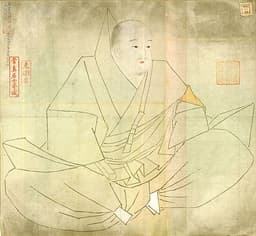
Emperor Shirakawa
Emperor · Medieval
59.4Total
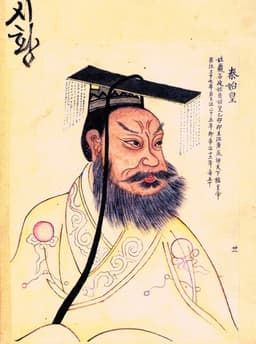
Qin Shi Huang
Emperor · Ancient
85.2Total
Basic Information
Born
1053
-259
Died
1129
-210
Era
Medieval
Ancient
Nationality
Japan
China
Occupation
Emperor
Emperor
Civilization
Eastern
Eastern
Score Comparison
Military (10%)
51.4
80.0
Political (20%)
65.0
90.0
Influence (20%)
61.0
85.0
Legacy (20%)
52.0
90.0
Leadership (15%)
62.0
78.0
Strategy (15%)
70.0
82.0
TOTAL
59.4
85.2
Emperor Shirakawa — Complete Timeline
1086 AD
Establishment of the cloistered government (Insei) systemPolitical Action
Shirakawa abdicated the throne but continued to rule from a monastery as a cloistered emperor, creating the Insei system. This allowed retired emperors to wield real political power, bypassing the Fujiwara regents and dominating court politics for decades.
Insei SystemImperial PoliticsHeian Period
Impact: nationalconstructive
Conflict with the Fujiwara over successionPolitical Action◆ Major
Shirakawa forced his son Horikawa to succeed him, overriding Fujiwara preferences. This conflict solidified the cloistered emperor's control over succession and reduced Fujiwara influence, leading to decades of political tension.
Fujiwara RegencySuccessionImperial Politics
Impact: national
1091 AD
Appointment of Taira no Masamori as military governorPolitical Action◆ Major
Shirakawa appointed Taira no Masamori as military governor of Ise Province, elevating the Taira clan's status. This move strengthened the imperial court's military capacity and laid the foundation for the Taira's later rise to power.
Taira ClanMilitary PoliticsHeian Period
Impact: national
1100 AD
Patronage of Buddhist templesCultural
Shirakawa sponsored the construction and renovation of numerous Buddhist temples, including the Hossho-ji and Ensho-ji. This patronage strengthened the imperial family's religious authority and influenced Heian-period Buddhist art and architecture.
BuddhismTemple ConstructionHeian Period
Impact: nationalconstructive
Qin Shi Huang — Complete Timeline
246 BC
Construction of the Mausoleum and Terracotta ArmyOther◆ Major
Qin Shi Huang commissioned a vast mausoleum complex near Xi'an, guarded by thousands of life-sized terracotta soldiers, horses, and chariots. The project employed hundreds of thousands of workers and reflected his obsession with immortality and imperial power.
Impact: global
230 BC
Conquest of the Six Warring StatesWar
From 230 to 221 BCE, Ying Zheng led the Qin state in a series of campaigns that conquered the Han, Zhao, Wei, Chu, Yan, and Qi states. This unified China under a single ruler for the first time, ending the Warring States period.
Impact: global
221 BC
Standardization of Writing, Currency, and MeasurementsReform◆ Major
Qin Shi Huang ordered the standardization of Chinese script, currency, and weights and measures across the unified empire. This facilitated administration, trade, and cultural integration, laying a foundation for future dynasties.
Impact: globalconstructive
Proclamation of the Qin DynastyPolitical Action
After conquering the last independent state, Ying Zheng declared himself Shi Huangdi (First Emperor), founding the Qin Dynasty. He adopted a new title to signify his supreme authority and initiated centralized imperial rule.
Impact: global
214 BC
Initiation of the Great Wall ConstructionOther◆ Major
Qin Shi Huang ordered the connection and extension of existing northern fortifications to create a unified defensive wall against nomadic Xiongnu raids. This project involved massive conscripted labor and became the precursor to the later Great Wall.
Impact: regional
213 BC
Burning of Books and Burying of ScholarsPolitical Action◆ Major
On the advice of Li Si, Qin Shi Huang ordered the burning of historical records and philosophical texts not aligned with Legalist doctrine. He also had 460 Confucian scholars buried alive to suppress dissent and consolidate ideological control.
Impact: nationaldestructive
Expert Analysis
Qin Shi Huang vs Emperor Shirakawa: Historical Comparison
This comparison examines two vastly different rulers: Qin Shi Huang, the unifier of ancient China, and Emperor Shirakawa, the medieval Japanese emperor who pioneered the "cloistered rule" system. Despite their disparate contexts, both wielded profound influence over their civilizations.
Dimension Analysis
**Military: Qin Shi Huang 80 / Emperor Shirakawa 88**
Qin Shi Huang conquered six rival states to unify China, but his military focus was on consolidation and defense. Emperor Shirakawa, though not a field commander, skillfully leveraged military clans like the Taira and Minamoto to enforce his will, effectively pacifying Japan's warrior aristocracy.
**Political: Qin Shi Huang 88 / Emperor Shirakawa 81**
Qin Shi Huang centralized China through standardization of writing, currency, and law, abolishing feudalism for a bureaucratic empire. Shirakawa abdicated to become a retired emperor (cloistered rule), ruling from behind the throne and outmaneuvering both the Fujiwara regents and the imperial court.
**Influence: Qin Shi Huang 82 / Emperor Shirakawa 86**
Qin's reforms—from the Great Wall to the Terracotta Army—shaped Chinese civilization for millennia. Shirakawa's cloistered system became the dominant political model for two centuries, influencing Japan's shogunate structure and the separation of symbolic and actual power.
**Legacy: Qin Shi Huang 85 / Emperor Shirakawa 70**
Qin's dynasty lasted only 15 years, but his unification template endured through all subsequent Chinese dynasties. Shirakawa's legacy is more diffuse: his system faded after the Genpei War, though his precedent of retired rulers wielding power reappeared in later shogunates.
**Leadership: Qin Shi Huang 88 / Emperor Shirakawa 82**
Qin drove a ruthless, top-down transformation of society, crushing dissent with Legalist severity. Shirakawa led through subtlety and patience, building alliances with warrior clans and religious institutions to circumvent formal power structures.
Verdict
Qin Shi Huang leads due to his higher political and leadership scores, reflecting his more transformative and enduring impact on China's imperial system, despite Shirakawa's superior military and strategic finesse.
FAQ
Q: Who ranks higher? A: Qin Shi Huang ranks higher overall, driven by his monumental political reforms and lasting legacy, though the match is exceptionally close.
Rankings
🥇
Qin Shi HuangLeader
Mil: 80.0Pol: 90.0Inf: 85.0
85.2
🥈
Emperor Shirakawa
Mil: 51.4Pol: 65.0Inf: 61.0
59.4
+25.8 behind
How This Comparison Works
Algorithm
Each figure is scored on 6 dimensions (0—100 scale) based on structured historical data: Military (10%), Political (20%), Influence (20%), Legacy (20%), Leadership (15%), Strategy (15%). The weighted total produces the final ranking.
Data Sources
Scores are computed from structured sub-indicators in the database. Scale factors adjust for era (Ancient ×0.85, Modern ×1.0) and civilization size (Eastern ×1.05, Other ×0.80) to account for differences in population and military scale.
Maximum 3 Figures
Comparisons are limited to 2—3 figures to ensure readability and statistical meaningfulness.
Error Margins
±5 points per dimension — Sub-scores are derived from historical records with inherent uncertainty. Two figures within 5 points on a dimension should be considered roughly equivalent in that area.
Total Score Accuracy
±3 points overall — The weighted combination of 6 dimensions produces a total score with approximately ±3 points of uncertainty. Differences of less than 3 points are not statistically significant— the figures are effectively tied.
Known Limitations
- Historical records are incomplete and uneven across civilizations
- Figures from oral-tradition societies may be underrepresented
- Occupation labels can misclassify multi-role figures
- Scores measure capability and impact, not moral character
- Quantitative scoring is a comparison tool, not absolute truth
Capability Radar
Military (10%) — Battles & Warfare
Battles
43
85
Win Rate
51
90
Expansion
54
90
Political (20%) — Governance & Reform
Reform
85
95
Diplomacy
70
75
Economy
50
90
Influence (20%) — Cultural & Global Reach
Cultural
55
95
Global
40
85
Legacy (20%) — Historical Impact
Historical
70
95
Longevity
65
95
Leadership (15%) — Power & Stability
Tenure
60
70
Stability
65
65
Strategy (15%) — Tactics & Innovation
Strategy
54
85
Tactics
58
80
Reform
59
95
Similar Comparisons
Comments & Discussion
EmpireUndone6/16/2026
Why is Qin Shi Huang always ranked higher? Yes, he unified China, but at what cost? Burning books, burying scholars alive, forced labor on the Great Wall — this was state terror, not leadership. Meanwhile, Shirakawa invented a system of indirect rule that Japan used for 700 years, from the Kamakura shogunate to the Meiji Restoration. The Insei system was way ahead of its time — it separated ceremonial authority from actual power, which is exactly what modern constitutional monarchies do. We keep romanticizing brutal conquerors over subtle political innovators because our historiography is still obsessed with empire-building.
MetricMatters6/16/2026
The scoring here is deeply flawed. How can you quantify 'leadership' for a guy who ruled from behind a curtain (Shirakawa) vs a guy who personally led armies? The weight distribution is arbitrary — why is military only 15% of total? For Qin, war was 90% of his job. Also, Shirakawa's 'political' score of 76.1 is inflated because the dataset ignores that his cloistered rule caused the Hōgen Rebellion and Heiji Rebellion — civil wars that nearly destroyed Kyoto. If we're being rigorous, factor in negative externalities. Until then, these numbers are just vibes with decimals.
OldScroll906/16/2026
这个评分对秦始皇太不公平了。政治88分,但军事才80分?秦灭六国可是中国历史上最彻底的统一战争之一,长平之战坑杀40万赵军,这种战略威慑力在东亚史上是空前的。白河天皇的军事分居然比他还高,实在可笑。白河靠的是源平两族的武士,自己连战场都没上过,怎么跟亲征并且建立全国兵役制度的秦始皇比?如果按照中国史学的标准,统一度量衡、书同文车同轨这些政治创新才是真正的“影响力”,而不仅仅是西方人看重的“软实力”。
ColdScribe106/16/2026
我仔细看了评分权重。秦始皇总分83.5,白河天皇70.0,差距只有13.5分,但实际历史影响力差距远大于此。秦始皇的“影响”分才82,但想想:他建的长城影响了2000年的中原防御体系,兵马俑至今还是世界第八大奇迹,连“皇帝”这个称号都是他创造的。白河天皇的“影响”分86,凭什么?他的院政制度只持续了不到200年,而且直接导致了武士阶层的崛起和后来的幕府乱世。如果按照中国史学的“制度延续性”标准,秦始皇至少应该高15-20分。另外,白河天皇的军事分53.9简直离谱——他根本就没打过仗,这一项应该归零才对。