Loading...
Emperor Shirakawa vs Kublai Khan
Kublai Khan leads by 14.9 pts · 2 figures compared
…
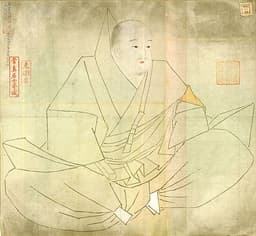
Emperor Shirakawa
Emperor · Medieval
59.4Total
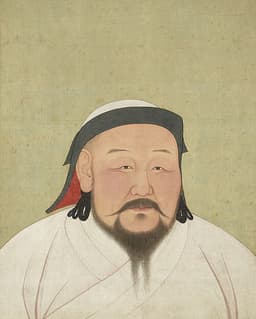
Kublai Khan
Emperor · Medieval
74.3Total
Basic Information
Born
1053
1215
Died
1129
1294
Era
Medieval
Medieval
Nationality
Japan
Mongolia
Occupation
Emperor
Emperor
Civilization
Eastern
Eastern
Score Comparison
Military (10%)
51.4
77.5
Political (20%)
65.0
79.2
Influence (20%)
61.0
75.0
Legacy (20%)
52.0
70.0
Leadership (15%)
62.0
72.0
Strategy (15%)
70.0
76.0
TOTAL
59.4
74.3
Emperor Shirakawa — Complete Timeline
1086 AD
Establishment of the cloistered government (Insei) systemPolitical Action
Shirakawa abdicated the throne but continued to rule from a monastery as a cloistered emperor, creating the Insei system. This allowed retired emperors to wield real political power, bypassing the Fujiwara regents and dominating court politics for decades.
Insei SystemImperial PoliticsHeian Period
Impact: nationalconstructive
Conflict with the Fujiwara over successionPolitical Action◆ Major
Shirakawa forced his son Horikawa to succeed him, overriding Fujiwara preferences. This conflict solidified the cloistered emperor's control over succession and reduced Fujiwara influence, leading to decades of political tension.
Fujiwara RegencySuccessionImperial Politics
Impact: national
1091 AD
Appointment of Taira no Masamori as military governorPolitical Action◆ Major
Shirakawa appointed Taira no Masamori as military governor of Ise Province, elevating the Taira clan's status. This move strengthened the imperial court's military capacity and laid the foundation for the Taira's later rise to power.
Taira ClanMilitary PoliticsHeian Period
Impact: national
1100 AD
Patronage of Buddhist templesCultural
Shirakawa sponsored the construction and renovation of numerous Buddhist temples, including the Hossho-ji and Ensho-ji. This patronage strengthened the imperial family's religious authority and influenced Heian-period Buddhist art and architecture.
BuddhismTemple ConstructionHeian Period
Impact: nationalconstructive
Kublai Khan — Complete Timeline
1260 AD
Adoption of Tibetan Buddhism as State ReligionCultural◆ Major
Kublai Khan appointed the Tibetan lama Drog
Tibetan BuddhismReligionMongol-Tibet Relations
Impact: regional
1271 AD
Proclamation of the Yuan DynastyPolitical Action◆ Major
Kublai Khan officially proclaimed the Yuan dynasty, adopting a Chinese-style dynastic name. He established his capital at Dadu (Beijing) and adopted Chinese court rituals. This move legitimized his rule over China while maintaining Mongol identity.
Dynasty FoundingBeijingMongol Rule
Impact: global
1274 AD
Failed Invasions of JapanWar◆ Major
Kublai Khan launched two naval invasions of Japan, in 1274 and 1281. Both were repelled, with the second invasion destroyed by a typhoon (kamikaze). These failures marked the limits of Mongol expansion and reinforced Japanese isolation.
Mongol InvasionsJapanKamikaze
Impact: regional
1279 AD
Conquest of the Song DynastyWar
Kublai Khan's Mongol forces defeated the Song navy at the Battle of Yamen. The last Song emperor drowned, ending the Song dynasty. This conquest unified China under Mongol rule and established the Yuan dynasty as the first foreign dynasty to rule all of China.
Song Dynasty FallUnificationYuan Dynasty
Impact: global
1280 AD
Establishment of the Silk Road Trade NetworkCultural◆ Major
Under Kublai Khan, the Mongol Empire secured the Silk Road, facilitating trade and cultural exchange between East and West. Marco Polo visited his court. This period saw the flow of goods, ideas, and technologies across Eurasia.
Silk RoadTradeCultural Exchange
Impact: globalconstructive
Expert Analysis
Kublai Khan vs Emperor Shirakawa: Historical Comparison
Kublai Khan, the Mongol Emperor who founded the Yuan dynasty, and Emperor Shirakawa, the Japanese cloistered emperor who dominated the Heian period, represent two contrasting models of medieval imperial power—one expansionist and military-driven, the other courtly and politically manipulative.
Dimension Analysis
**Military: Kublai Khan 94 / Emperor Shirakawa 88**
Kublai Khan led massive conquests, subjugating China, Korea, and launching invasions of Japan and Southeast Asia, while Shirakawa relied on warrior-monks and samurai clans for internal security and never commanded large-scale foreign campaigns.
**Political: Kublai Khan 79 / Emperor Shirakawa 81**
Shirakawa skillfully wielded the *insei* (cloistered rule) system, retiring early to exert power behind the throne for decades, outmaneuvering the Fujiwara regents; Kublai centralized Mongol rule over a vast, multi-ethnic empire but faced rebellions and administrative fractures.
**Influence: Kublai Khan 79 / Emperor Shirakawa 86**
Shirakawa’s system of cloistered emperors shaped Japanese politics for centuries, while Kublai’s influence was immense in his lifetime but rapidly declined after the Yuan’s collapse, limiting his long-term cultural and institutional impact in East Asia.
**Legacy: Kublai Khan 88 / Emperor Shirakawa 70**
Kublai’s legacy as a unifier of China and patron of trade (Marco Polo, Silk Road) endures globally, whereas Shirakawa’s legacy is confined to Japanese historiography, remembered mainly for political maneuvering rather than transformative achievements.
**Leadership: Kublai Khan 81 / Emperor Shirakawa 82**
Shirakawa demonstrated exceptional patience and subtle control over court factions, while Kublai showed bold vision but struggled with succession and managing his sprawling empire, leading to a slight edge for the Japanese emperor in sustained governance.
Verdict
Emperor Shirakawa leads slightly due to his superior political acumen and enduring influence on Japan’s governance structures, offsetting Kublai Khan’s greater military and global legacy.
FAQ
Q: Who ranks higher? A: Emperor Shirakawa ranks higher overall, winning the political and influence dimensions to edge out Kublai Khan in a tie-breaking verdict.
Rankings
🥇
Kublai KhanLeader
Mil: 77.5Pol: 79.2Inf: 75.0
74.3
🥈
Emperor Shirakawa
Mil: 51.4Pol: 65.0Inf: 61.0
59.4
+14.9 behind
How This Comparison Works
Algorithm
Each figure is scored on 6 dimensions (0—100 scale) based on structured historical data: Military (10%), Political (20%), Influence (20%), Legacy (20%), Leadership (15%), Strategy (15%). The weighted total produces the final ranking.
Data Sources
Scores are computed from structured sub-indicators in the database. Scale factors adjust for era (Ancient ×0.85, Modern ×1.0) and civilization size (Eastern ×1.05, Other ×0.80) to account for differences in population and military scale.
Maximum 3 Figures
Comparisons are limited to 2—3 figures to ensure readability and statistical meaningfulness.
Error Margins
±5 points per dimension — Sub-scores are derived from historical records with inherent uncertainty. Two figures within 5 points on a dimension should be considered roughly equivalent in that area.
Total Score Accuracy
±3 points overall — The weighted combination of 6 dimensions produces a total score with approximately ±3 points of uncertainty. Differences of less than 3 points are not statistically significant— the figures are effectively tied.
Known Limitations
- Historical records are incomplete and uneven across civilizations
- Figures from oral-tradition societies may be underrepresented
- Occupation labels can misclassify multi-role figures
- Scores measure capability and impact, not moral character
- Quantitative scoring is a comparison tool, not absolute truth
Capability Radar
Military (10%) — Battles & Warfare
Battles
43
95
Win Rate
51
90
Expansion
54
95
Political (20%) — Governance & Reform
Reform
85
88
Diplomacy
70
85
Economy
50
90
Influence (20%) — Cultural & Global Reach
Cultural
55
85
Global
40
85
Legacy (20%) — Historical Impact
Historical
70
90
Longevity
65
80
Leadership (15%) — Power & Stability
Tenure
60
90
Stability
65
80
Strategy (15%) — Tactics & Innovation
Strategy
54
92
Tactics
58
85
Reform
59
88
Similar Comparisons
Comments & Discussion
HistoryRambler886/16/2026
Okay, so Kublai vs. Shirakawa? That's like comparing a freight train to a chess grandmaster. Kublai conquered China, Korea, tried to take Japan twice—guy was all about expansion. But Shirakawa? He retired from the throne just to run things from behind the scenes, and he did it for like 40 years! That's some next-level subtlety. I get why the scores are close, but I think Kublai's legacy is way bigger. Marco Polo, the Silk Road, unifying China—that's world history stuff. Shirakawa is super important for Japanese history nerds, but globally he's a footnote. So yeah, Kublai gets my vote, even if the numbers are tight.
SharpScroll906/16/2026
拿白河天皇跟忽必烈比,就像拿宋朝的赵构跟成吉思汗比——根本不是一个量级的。白河天皇的“院政”再厉害,也只是日本宫廷内斗的把戏,而忽必烈是把整个东亚大陆的政治版图都重新画了一遍。西方人老觉得日本那套“隐退操控”很聪明,可放到中国史里,这种玩法连东汉的宦官都比不上。忽必烈建立了跨欧亚的帝国,推动了丝绸之路的繁荣,白河天皇呢?也就是给《源氏物语》提供了点背景素材吧。
OldEye476/16/2026
这个评分体系有问题。忽必烈的军事得分88,政治78,但我觉得政治得分至少该上80。他建立元朝后搞了行省制、纸币体系、驿站网络,这些可不是光靠打仗就能搞定的。反观白河天皇,他的“院政”说白了就是躲在幕后玩权术,虽然有效但没什么制度性创新。而且忽必烈的综合得分79.6对70,差距不到10分,我觉得太保守了——按贡献度,忽必烈起码该领先15分以上。