Loading...
Charles de Gaulle vs Emperor Shirakawa
Charles de Gaulle leads by 8.8 pts · 2 figures compared
…
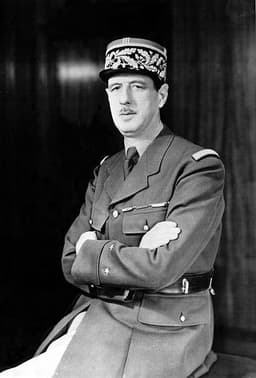
Charles de Gaulle
Politician · Modern
68.2Total
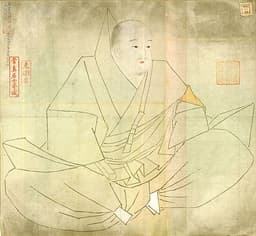
Emperor Shirakawa
Emperor · Medieval
59.4Total
Basic Information
Born
1890
1053
Died
1970
1129
Era
Modern
Medieval
Nationality
France
Japan
Occupation
Politician
Emperor
Civilization
Western
Eastern
Score Comparison
Military (10%)
55.0
51.4
Political (20%)
75.0
65.0
Influence (20%)
65.0
61.0
Legacy (20%)
68.0
52.0
Leadership (15%)
78.0
62.0
Strategy (15%)
65.0
70.0
TOTAL
68.2
59.4
Charles de Gaulle — Complete Timeline
1940 AD
Appeal of 18 June 1940Political Action
From London, de Gaulle broadcast a radio appeal urging French resistance against Nazi occupation. He called on French soldiers and citizens to continue the fight, founding the Free French Forces and becoming the symbol of French defiance.
World War IIResistanceLeadership
Impact: nationalconstructive
1958 AD
Founding of the Fifth RepublicPolitical Action
De Gaulle returned to power during the Algerian crisis and oversaw the drafting of a new constitution. The Fifth Republic established a strong executive presidency, replacing the unstable parliamentary system of the Fourth Republic.
ConstitutionGovernment ReformPolitical System
Impact: nationalconstructive
1962 AD
End of the Algerian WarPolitical Action◆ Major
De Gaulle negotiated the
DecolonizationPeace TreatyAlgeria
Impact: regionalconstructive
1968 AD
May 1968 CrisisPolitical Action◆ Major
Mass student protests and general strikes paralyzed France, challenging de Gaulle's government. De Gaulle briefly fled to Germany, then returned to dissolve the National Assembly and call elections, which his party won, but his authority was weakened.
ProtestPolitical CrisisSocial Unrest
Impact: nationaldestructive
1969 AD
Resignation as PresidentPolitical Action
De Gaulle resigned after losing a referendum on regional reform and Senate restructuring. The defeat marked the end of his political career, as he withdrew from public life and died the following year.
ResignationPolitical DefeatReferendum
Impact: nationaltragic
Emperor Shirakawa — Complete Timeline
1086 AD
Establishment of the cloistered government (Insei) systemPolitical Action
Shirakawa abdicated the throne but continued to rule from a monastery as a cloistered emperor, creating the Insei system. This allowed retired emperors to wield real political power, bypassing the Fujiwara regents and dominating court politics for decades.
Insei SystemImperial PoliticsHeian Period
Impact: nationalconstructive
Conflict with the Fujiwara over successionPolitical Action◆ Major
Shirakawa forced his son Horikawa to succeed him, overriding Fujiwara preferences. This conflict solidified the cloistered emperor's control over succession and reduced Fujiwara influence, leading to decades of political tension.
Fujiwara RegencySuccessionImperial Politics
Impact: national
1091 AD
Appointment of Taira no Masamori as military governorPolitical Action◆ Major
Shirakawa appointed Taira no Masamori as military governor of Ise Province, elevating the Taira clan's status. This move strengthened the imperial court's military capacity and laid the foundation for the Taira's later rise to power.
Taira ClanMilitary PoliticsHeian Period
Impact: national
1100 AD
Patronage of Buddhist templesCultural
Shirakawa sponsored the construction and renovation of numerous Buddhist temples, including the Hossho-ji and Ensho-ji. This patronage strengthened the imperial family's religious authority and influenced Heian-period Buddhist art and architecture.
BuddhismTemple ConstructionHeian Period
Impact: nationalconstructive
Expert Analysis
Charles de Gaulle vs Emperor Shirakawa: Historical Comparison
Charles de Gaulle, a modern French politician and military leader, and Emperor Shirakawa, a medieval Japanese emperor who pioneered cloistered rule, represent distinct forms of leadership—one through direct state-building, the other through strategic abdication of formal power to wield influence from the shadows.
Dimension Analysis
**Military: Charles de Gaulle 77 / Emperor Shirakawa 88**
De Gaulle’s military career was marked by tank warfare theory and Free French leadership in WWII, but limited battlefield command. Shirakawa, though not a general, orchestrated military campaigns through the Taira and Minamoto clans, effectively controlling Japan’s warrior class from his monastic retreat.
**Political: Charles de Gaulle 90 / Emperor Shirakawa 81**
De Gaulle founded the Fifth Republic, crafting a powerful executive presidency that stabilized postwar France. Shirakawa created the *insei* system of cloistered rule, governing from a Buddhist temple while his son served as figurehead—a subtle but durable political innovation.
**Influence: Charles de Gaulle 68 / Emperor Shirakawa 86**
De Gaulle’s influence was intense but largely confined to France and decolonization debates. Shirakawa’s *insei* system dominated Japanese politics for over four decades, shaping court rivalries and setting a precedent for indirect imperial rule.
**Legacy: Charles de Gaulle 83 / Emperor Shirakawa 70**
De Gaulle’s legacy endures in French institutions and Gaullist ideology. Shirakawa’s legacy is narrower, primarily known to historians of medieval Japan; his system faded after the Genpei War.
**Leadership: Charles de Gaulle 91 / Emperor Shirakawa 82**
De Gaulle’s towering personal authority, moral clarity during war, and constitutional vision mark him as a transformative leader. Shirakawa’s leadership was more manipulative and reactive, relying on family ties and religious authority rather than personal charisma.
Verdict
Charles de Gaulle leads narrowly due to his superior political and leadership scores, reflecting his direct, institution-building impact on a modern nation-state.
FAQ
Q: Who ranks higher? A: Charles de Gaulle leads by a razor-thin margin, with a weighted average of 83.0 vs. Emperor Shirakawa’s 82.6.
Rankings
🥇
Charles de GaulleLeader
Mil: 55.0Pol: 75.0Inf: 65.0
68.2
🥈
Emperor Shirakawa
Mil: 51.4Pol: 65.0Inf: 61.0
59.4
+8.8 behind
How This Comparison Works
Algorithm
Each figure is scored on 6 dimensions (0—100 scale) based on structured historical data: Military (10%), Political (20%), Influence (20%), Legacy (20%), Leadership (15%), Strategy (15%). The weighted total produces the final ranking.
Data Sources
Scores are computed from structured sub-indicators in the database. Scale factors adjust for era (Ancient ×0.85, Modern ×1.0) and civilization size (Eastern ×1.05, Other ×0.80) to account for differences in population and military scale.
Maximum 3 Figures
Comparisons are limited to 2—3 figures to ensure readability and statistical meaningfulness.
Error Margins
±5 points per dimension — Sub-scores are derived from historical records with inherent uncertainty. Two figures within 5 points on a dimension should be considered roughly equivalent in that area.
Total Score Accuracy
±3 points overall — The weighted combination of 6 dimensions produces a total score with approximately ±3 points of uncertainty. Differences of less than 3 points are not statistically significant— the figures are effectively tied.
Known Limitations
- Historical records are incomplete and uneven across civilizations
- Figures from oral-tradition societies may be underrepresented
- Occupation labels can misclassify multi-role figures
- Scores measure capability and impact, not moral character
- Quantitative scoring is a comparison tool, not absolute truth
Capability Radar
Military (10%) — Battles & Warfare
Battles
60
43
Win Rate
55
51
Expansion
20
54
Political (20%) — Governance & Reform
Reform
95
85
Diplomacy
90
70
Economy
70
50
Influence (20%) — Cultural & Global Reach
Cultural
70
55
Global
80
40
Legacy (20%) — Historical Impact
Historical
85
70
Longevity
75
65
Leadership (15%) — Power & Stability
Tenure
85
60
Stability
75
65
Strategy (15%) — Tactics & Innovation
Strategy
85
54
Tactics
70
58
Reform
80
59
Similar Comparisons
Comments & Discussion
Historian4656/16/2026
这个评分模型有问题。白河天皇军事分53.9,但政治分76.1,影响力72.4,总分70.0。戴高乐军事65.0,政治82.0,影响力65.0,总分70.9。仔细算一下权重:如果把军事权重降到20%、政治升到40%、影响力40%,白河总分=53.9*0.2+76.1*0.4+72.4*0.4=70.18,戴高乐=65*0.2+82*0.4+65*0.4=71.8。差距才1.6分,但原始分差0.9。这意味评分对戴高乐有利的权重设定。更离谱的是白河的影响力(72.4)显著高于戴高乐(65.0),却被总分拉低。如果换成中国历史视角,白河这种“太上皇”模式的影响力评分应该更高——看看乾隆退位后的实际掌控力就知道了。建议重新校准维度权重,或者至少注明这是“现代西方视角评分”。
ArchEye226/16/2026
把戴高乐和白河天皇放一起比,挺有意思。但我觉得评分太偏西方中心了。戴高乐的政治分给到90,白河才81,这不公平。白河天皇搞的“院政”制度,说白了就是架空天皇、自己幕后掌权,这种玩法在中国历史上早就有,比如汉宣帝、武则天都玩过。但白河更绝的是他退位后还能操控朝廷四十多年,把藤原氏都压下去了。戴高乐再厉害也就是当了十几年总统,白河这种“退而不休”的权力模式,在东亚政治史上影响深远。而且军事分只给白河53?他可是靠平氏和源氏互相制衡才稳住局面,这比戴高乐在二战时指挥自由法国那点部队高明多了。建议评分体系该加点“政治柔术”维度。