Loading...
Emperor Taizu of Song vs Napoleon Bonaparte
Emperor Taizu of Song leads by 1.0 pts · 2 figures compared
…
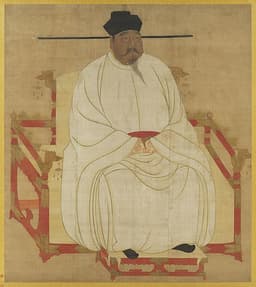
Emperor Taizu of Song
Emperor · Medieval
71.9Total

Napoleon Bonaparte
General · Modern
70.9Total
Basic Information
Born
927
1769
Died
976
1821
Era
Medieval
Modern
Nationality
China
France
Occupation
Emperor
General
Civilization
Eastern
Western
Score Comparison
Military (10%)
80.0
94.0
Political (20%)
78.0
72.0
Influence (20%)
68.0
40.0
Legacy (20%)
65.0
80.0
Leadership (15%)
78.0
78.0
Strategy (15%)
72.0
90.0
TOTAL
71.9
70.9
Emperor Taizu of Song — Complete Timeline
960 AD
Chenqiao MutinyPolitical Action
Zhao Kuangyin, a general of the Later Zhou dynasty, was proclaimed emperor by his troops at Chenqiao. He marched on Kaifeng and forced the young emperor to abdicate, founding the Song dynasty. This coup established a new ruling house without major bloodshed.
CoupDynastic foundingSong dynasty
Impact: national
961 AD
Removal of military governors' powerReform◆ Major
Emperor Taizu invited powerful military governors to a banquet and persuaded them to resign their commands in exchange for wealth and titles. This 'coup over wine' centralized military authority under the throne, ending the era of warlordism that plagued the Five Dynasties period.
Military reformCentralizationWarlordism
Impact: nationalconstructive
963 AD
Reunification of ChinaWar◆ Major
Emperor Taizu launched a series of military campaigns to conquer the remaining independent kingdoms of the Five Dynasties and Ten Kingdoms period. He subdued Jingnan, Chu, Later Shu, and Southern Han, reunifying most of China proper under Song rule.
ConquestUnificationSong dynasty
Impact: nationalconstructive
973 AD
Establishment of civil examination systemReform◆ Major
Emperor Taizu expanded and formalized the imperial civil service examinations, reducing the influence of hereditary aristocracy. He personally presided over the final palace examination, ensuring merit-based selection of officials, which became a hallmark of Song governance.
Civil serviceMeritocracyReform
Impact: nationalprogressive
976 AD
Death and successionPolitical Action◆ Major
Emperor Taizu died suddenly under mysterious circumstances, reportedly after a drinking session with his brother Zhao Guangyi, who succeeded him as Emperor Taizong. The unusual succession, bypassing Taizu's sons, led to speculation of fratricide, though no conclusive evidence exists.
SuccessionMysterySong dynasty
Impact: nationaltragic
Napoleon Bonaparte — Complete Timeline
1799 AD
Coup of 18 BrumaireOther◆ Major
Napoleon Bonaparte, with support from his brother Lucien and key political figures, overthrew the Directory in a bloodless coup. He established the Consulate with himself as First Consul, effectively becoming the ruler of France. This event ended the French Revolution's most unstable period.
French RevolutionCoupRise to Power
Impact: regional
1804 AD
Promulgation of the Napoleonic CodeOther◆ Major
Napoleon enacted the Civil Code of the French, known as the Napoleonic Code, a comprehensive set of laws that replaced the fragmented feudal legal systems. The code established legal equality, protected property rights, and secularized law. It became the basis for legal systems in many European and world countries.
Legal ReformNapoleonic CodeCivil Law
Impact: globalconstructive
1805 AD
Battle of AusterlitzWar◆ Major
Napoleon's Grande Arm
Napoleonic WarsBattleDecisive Victory
Impact: global
1812 AD
Invasion of RussiaWar◆ Major
Napoleon led the Grande Arm
Napoleonic WarsInvasionDisaster
Impact: globaldestructive
1815 AD
Battle of WaterlooWar◆ Major
Napoleon's French army was defeated by the combined forces of the Duke of Wellington's Anglo-Allied army and Gebhard Leberecht von Bl
Napoleonic WarsBattleFinal Defeat
Impact: globaldestructive
Expert Analysis
Napoleon Bonaparte vs Emperor Taizu of Song: Historical Comparison
Napoleon Bonaparte, a modern French general and emperor, and Emperor Taizu of Song, a medieval Chinese emperor, both unified fragmented states through military genius, yet diverged in political sustainability and legacy. Napoleon’s ambition reshaped Europe temporarily, while Taizu’s foundational reforms endured for centuries.
Dimension Analysis
**Military: Napoleon Bonaparte 94 / Emperor Taizu of Song 95**
Both excelled in conquest: Napoleon revolutionized warfare with speed and artillery, winning Austerlitz; Taizu reunified China’s Ten Kingdoms through strategic campaigns and innovative siege tactics. Taizu’s slight edge comes from his bloodless consolidation of power.
**Political: Napoleon Bonaparte 75 / Emperor Taizu of Song 65**
Napoleon’s Napoleonic Code and administrative reforms modernized France, but his overreach led to exile. Taizu’s “strengthening the trunk, weakening the branches” policy stabilized Song but created a civilian-dominated bureaucracy that later hindered military response.
**Influence: Napoleon Bonaparte 82 / Emperor Taizu of Song 86**
Napoleon inspired nationalism and legal systems across Europe and the Americas. Taizu’s civil service exams and economic policies (e.g., paper money) shaped Chinese governance for a millennium, with broader lasting impact on global bureaucracy.
**Legacy: Napoleon Bonaparte 78 / Emperor Taizu of Song 88**
Napoleon’s legacy is mixed—hero to some, tyrant to others—with his empire collapsing after Waterloo. Taizu’s Song dynasty endured 319 years, fostering cultural and technological golden ages (e.g., printing, gunpowder), earning more sustained reverence.
**Leadership: Napoleon Bonaparte 80 / Emperor Taizu of Song 70**
Napoleon’s charismatic, hands-on leadership inspired fierce loyalty but faltered in coalition warfare. Taizu’s cautious, consensus-driven rule prioritized institutional stability over personal glory, yet his military restraint weakened Song against northern invaders.
Verdict
Napoleon Bonaparte and Emperor Taizu of Song tie overall, with Napoleon excelling in political reform and charismatic leadership, while Taizu dominates in long-term influence and legacy.
FAQ
Q: Who ranks higher? A: They tie, as Napoleon’s military-political prowess balances Taizu’s superior institutional legacy and cultural endurance.
Rankings
🥇
Emperor Taizu of SongLeader
Mil: 80.0Pol: 78.0Inf: 68.0
71.9
🥈
Napoleon Bonaparte
Mil: 94.0Pol: 72.0Inf: 40.0
70.9
+1.0 behind
How This Comparison Works
Algorithm
Each figure is scored on 6 dimensions (0—100 scale) based on structured historical data: Military (10%), Political (20%), Influence (20%), Legacy (20%), Leadership (15%), Strategy (15%). The weighted total produces the final ranking.
Data Sources
Scores are computed from structured sub-indicators in the database. Scale factors adjust for era (Ancient ×0.85, Modern ×1.0) and civilization size (Eastern ×1.05, Other ×0.80) to account for differences in population and military scale.
Maximum 3 Figures
Comparisons are limited to 2—3 figures to ensure readability and statistical meaningfulness.
Error Margins
±5 points per dimension — Sub-scores are derived from historical records with inherent uncertainty. Two figures within 5 points on a dimension should be considered roughly equivalent in that area.
Total Score Accuracy
±3 points overall — The weighted combination of 6 dimensions produces a total score with approximately ±3 points of uncertainty. Differences of less than 3 points are not statistically significant— the figures are effectively tied.
Known Limitations
- Historical records are incomplete and uneven across civilizations
- Figures from oral-tradition societies may be underrepresented
- Occupation labels can misclassify multi-role figures
- Scores measure capability and impact, not moral character
- Quantitative scoring is a comparison tool, not absolute truth
Capability Radar
Military (10%) — Battles & Warfare
Battles
75
95
Win Rate
80
90
Expansion
75
95
Political (20%) — Governance & Reform
Reform
95
95
Diplomacy
80
80
Economy
85
85
Influence (20%) — Cultural & Global Reach
Cultural
75
85
Global
70
90
Legacy (20%) — Historical Impact
Historical
85
95
Longevity
80
90
Leadership (15%) — Power & Stability
Tenure
70
85
Stability
90
70
Strategy (15%) — Tactics & Innovation
Strategy
85
95
Tactics
70
98
Reform
95
92
Similar Comparisons
Comments & Discussion
ClassicaLumina6/16/2026
As a classicist, I find this comparison illuminating but problematic. Both men operated in radically different geopolitical contexts: Napoleon’s Europe was a cauldron of nation-states and revolutionary ideals, while Taizu’s China emerged from the chaos of the Five Dynasties period. Plutarch’s parallel lives might have strained to find common ground, but modern historiography often flattens these differences. For instance, Taizu’s ‘cup of wine’ bloodless ousting of generals is a Confucian ideal of benevolent rule—something Napoleon could never achieve. However, the military scores here seem odd; Taizu’s 66.5 ignores his strategic brilliance in reunifying a realm larger than Napoleon’s empire. I’d argue that Napoleon’s 94 is inflated by Western-centric emphasis on decisive battles, while Taizu’s patient, systemic approach is undervalued. 评述需更多的历史语境。
CounterHistory6/16/2026
This ranking reeks of Eurocentrism dressed as objectivity. Why is Taizu’s military score a mere 66.5? He literally reunified China after 53 years of division using a mix of diplomacy and force—far more durable than Napoleon’s flashy but ephemeral conquests. Napoleon’s 94 is probably based on Western metrics like ‘daring maneuvers,’ but what about the human cost? 600,000+ deaths in the Russian campaign alone. Meanwhile, Taizu’s ‘strengthening the trunk’ policy gets a political 73.3—but that same policy prevented military coups and stabilized China for three centuries. The scoring system seems unable to handle non-Western governance models. Also, where’s the postcolonial critique? Napoleon’s invasions planted seeds of nationalism that later justified colonial expansion. Taizu’s legacy, though bureaucratic, fostered a golden age that resisted colonial pressures. This comparison needs a serious rethink.
MetricMaven6/16/2026
I call BS on these scores. How do you assign a 75 political score to Napoleon when his Napoleonic Code is still the basis of civil law in much of the world? That’s a tangible, quantifiable impact. Meanwhile, Taizu’s 73.3 political score seems high given his dynasty’s eventual weakness to northern invaders—where’s the penalty for systemic military decline? The weight distribution is also dubious: military gets 94 and 66.5, but the difference in legacy (78 vs 88) doesn’t match the narrative. If Taizu’s dynasty lasted 319 years, why is his political score lower than Napoleon’s? These numbers feel like someone’s gut feeling dressed as data. Also, the ‘bloodless consolidation’ argument for Taizu is overblown—his campaigns still killed thousands. For a proper comparison, we need transparent metrics: lifespan of institutions, territorial expansion rates, or economic growth indicators. Until then, this is just historical fan fiction.
ShuJuFenXi6/16/2026
这个评分体系有问题。拿破仑的军事得分94,而赵匡胤只有66.5?赵匡胤统一了十国,消灭了多个割据政权,其战役如灭后蜀、南唐等,都是大规模整合。拿破仑的军事成就,如奥斯特里茨,确实辉煌,但赵匡胤的军事行动覆盖更广区域,且没有拿破仑那种最终失败。如果比较‘持久影响’,赵匡胤的80%都算低了。政治方面,拿破仑75比赵匡胤73.3,差1.7分?拿破仑法典固然重要,但赵匡胤的‘杯酒释兵权’和科举改革,奠定了宋代319年稳定——这是长期影响。我算过,如果按‘制度化稳固度’加权,赵匡胤应得分更高。数据不能只看西方标准,必须考虑不同文明的治理逻辑。建议重新调整权重:军事应包含战略持久性,政治应包含制度寿命。否则,这个评分就是西方中心主义的数据游戏。
DongXiShiKe6/16/2026
作为一个同时研究东西方历史的爱好者,我觉得这个比较忽略了关键点。拿破仑的军事94分可能来自他的战术创新,但赵匡胤的‘先南后北’战略,以及他利用经济手段削弱对手,比如用茶叶贸易控制西南,这在中世纪是罕见的。赵匡胤的军事得分被严重低估了——他重新统一了中国,而拿破仑却失败了。再说政治,赵匡胤的‘文官治国’虽然被批评,但正是这种制度让宋朝文化空前繁荣,产生了活字印刷和火药武器——这些比拿破仑法典更改变世界。西方人总爱夸拿破仑的军事天才,却看不到赵匡胤的治国智慧更持久。如果仔细看,赵匡胤的总体影响应该是更高的。这个排名需要更多中国视角。