Loading...
Hulegu Khan vs Nezahualcoyotl
Hulegu Khan leads by 6.8 pts · 2 figures compared
…
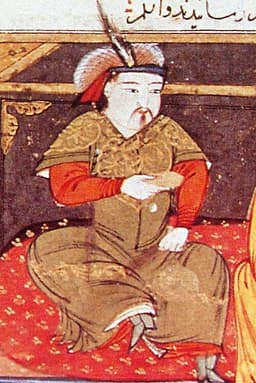
Hulegu Khan
Emperor · Medieval
64.3Total

Nezahualcoyotl
Emperor · Medieval
57.5Total
Basic Information
Born
1217
1402
Died
1265
1472
Era
Medieval
Medieval
Nationality
Ilkhanate
Texcoco
Occupation
Emperor
Emperor
Civilization
Middle Eastern
Western
Score Comparison
Military (10%)
85.0
50.0
Political (20%)
45.0
60.0
Influence (20%)
68.0
60.0
Legacy (20%)
55.0
50.0
Leadership (15%)
72.0
72.0
Strategy (15%)
75.0
52.5
TOTAL
64.3
57.5
Hulegu Khan — Complete Timeline
1256 AD
Destruction of the Ismaili FortressesWar◆ Major
Hulagu's army captured and destroyed the mountain fortresses of the Nizari Ismailis (Assassins), including Alamut. The Ismaili state was effectively eliminated, and their library and treasures were burned. This removed a major political and military force in Persia.
Mongol ConquestIsmailisAlamut
Impact: regionaldestructive
Founding of the IlkhanatePolitical Action◆ Major
Hulagu established the Ilkhanate as a Mongol khanate in Persia, with his capital at Maragheh. The state encompassed modern Iran, Iraq, Azerbaijan, and parts of Turkey and Syria, and it became a major power in the Middle East.
Mongol EmpireIlkhanatePersia
Impact: regional
1258 AD
Destruction of BaghdadWar
Hulagu's Mongol army besieged and sacked Baghdad, the capital of the Abbasid Caliphate. The city was systematically destroyed, with estimates of 100,000 to 1 million civilians killed. The last Abbasid caliph, Al-Musta'sim, was executed, ending the Islamic Golden Age.
Mongol ConquestBaghdadAbbasid Caliphate
Impact: globaldestructive
1260 AD
Battle of Ain JalutWar
Hulagu's forces, led by general Kitbuqa, were defeated by the Mamluk Sultanate at Ain Jalut in Palestine. This was the first major Mongol defeat in the Middle East, halting Mongol expansion into Syria and Egypt. Hulagu was unable to reinforce due to the Berke
Mongol DefeatMamluk SultanateSyria
Impact: regionaltragic
1262 AD
War with BerkeWar◆ Major
Hulagu fought a war against his cousin Berke, Khan of the Golden Horde, after Berke converted to Islam and opposed the destruction of Baghdad. The war involved battles in the Caucasus and weakened both khanates, preventing further Mongol expansion westward.
Mongol Civil WarCaucasusGolden Horde
Impact: regionaldestructive
Nezahualcoyotl — Complete Timeline
1430 AD
Construction of the Albarrada de NezahualcoyotlOther◆ Major
Nezahualcoyotl ordered the construction of a 16-kilometer dike across Lake Texcoco to separate fresh water from salt water and prevent flooding in Tenochtitlan. The structure, completed around 1430, functioned as an aqueduct and flood control system, demonstrating advanced engineering.
EngineeringFlood ControlTexcoco
Impact: regionalconstructive
1431 AD
Restoration of Texcoco as a City-StatePolitical Action◆ Major
After the death of his father Ixtlilxochitl I and a period of exile, Nezahualcoyotl reclaimed the throne of Texcoco with support from Tenochtitlan. He reestablished Texcoco as a major city-state within the Triple Alliance, initiating a period of cultural and political revival.
RestorationTriple AllianceTexcoco
Impact: regionalconstructive
1445 AD
Military Campaign against ChalcoWar
Nezahualcoyotl led Texcoco forces in a campaign against the city-state of Chalco, a rival in the Valley of Mexico. The war ended with the defeat of Chalco and its incorporation into the Triple Alliance sphere, expanding Texcoco's influence.
ConquestChalcoTriple Alliance
Impact: regional
1450 AD
Creation of the Texcoco CodexCultural◆ Major
Nezahualcoyotl established a library and sponsored the compilation of historical and legal texts, including the Codex Xolotl and other works. These codices recorded the history, laws, and poetry of Texcoco, preserving pre-Columbian knowledge.
LibraryCodexPreservation
Impact: regionalconstructive
Composition of 'Icuic Nezahualcoyotl'Cultural◆ Major
Nezahualcoyotl composed several poems in Nahuatl, including 'Icuic Nezahualcoyotl' (Song of Nezahualcoyotl), which reflect on the transience of life and the search for truth. These works are among the few surviving pre-Columbian literary texts from Mesoamerica.
PoetryNahuatl LiteraturePhilosophy
Impact: regionalconstructive
1465 AD
Construction of the Chapultepec AqueductOther◆ Major
Nezahualcoyotl oversaw the construction of a second aqueduct from Chapultepec to Tenochtitlan, supplementing the existing one. This project improved the water supply for the Aztec capital, using a dual-pipe system that allowed maintenance without interrupting flow.
EngineeringWater SupplyTenochtitlan
Impact: regionalconstructive
Expert Analysis
Origins
Hulegu Khan was born in 1217 as a grandson of Genghis Khan. His mother was Sorghaghtani Beki, a Nestorian Christian princess. He was raised in the Mongol tradition of horseback warfare and conquest. His father Tolui died early, and Hulegu was trained by his elder brothers Möngke and Kublai. By 1253, Möngke, now Great Khan, appointed Hulegu to lead the Mongol campaign against the Islamic world.
Nezahualcoyotl was born in 1402 in Texcoco, a city-state in the Valley of Mexico. His father Ixtlilxochitl I was the ruler of Texcoco, and his mother Matlalcihuatzin was a princess from Tenochtitlan. After his father's death in 1418, Texcoco was conquered by the Tepanecs, and Nezahualcoyotl spent years in exile in Tenochtitlan. He learned engineering, law, and poetry during this period, which shaped his later rule.
Rise to Power
Hulegu's rise came through his brother Möngke's elevation as Great Khan in 1251. In 1253, Möngke ordered Hulegu to conquer the remaining Muslim states in Persia. By 1256, Hulegu had destroyed the Nizari Ismaili fortresses, including Alamut. In 1258, he besieged Baghdad, the Abbasid capital. After a 13-day siege, the city fell; Hulegu's forces killed an estimated 100,000 to 1,000,000 inhabitants and destroyed the Grand Library. This victory made Hulegu the de facto ruler of Persia.
Nezahualcoyotl regained his throne in 1428 after forming an alliance with Tenochtitlan and Tlacopan. At age 26, he led a military campaign against the Tepanecs, culminating in the siege of Azcapotzalco. With the help of Itzcoatl of Tenochtitlan, he defeated the Tepanecs and restored Texcoco as a city-state. He became the ruler of Texcoco and a key ally in the Triple Alliance.
Leadership & Governance
Hulegu ruled the Ilkhanate from 1256 to 1265. He centralized power under Mongol military law, but also adopted Persian administrative practices. He favored Nestorian Christians and Buddhists, while persecuting Muslims after Baghdad. His leadership score is 72.0, reflecting his ability to command loyalty among diverse troops. However, his political score is 45.0, as he failed to secure long-term stability; his realm was plagued by wars with the Golden Horde and internal strife.
Nezahualcoyotl governed Texcoco from 1428 to 1472. He is known for his legal code, which included 80 laws covering property, marriage, and crime. He also promoted education and the arts, establishing a library and sponsoring poets. His leadership score is 72.0, tied with Hulegu. He built infrastructure like the 16-kilometer dike (Albarrada de Nezahualcoyotl) and a second aqueduct from Chapultepec. His political score is 60.0, higher than Hulegu, as he maintained stable alliances and fostered cultural growth.
Triumph & Tragedy
Hulegu's greatest triumph was the destruction of Baghdad, which ended the Abbasid Caliphate and shifted power to the Mongols. His military score of 85.0 and strategy score of 75.0 are reflected in his conquests: he captured Aleppo and Damascus in 1260. However, his tragedy was the Battle of Ain Jalut in 1260, where his general Kitbuqa was defeated by the Mamluks. This defeat halted Mongol expansion into Africa and marked the first major Mongol reversal. Additionally, his war with Berke (1262-1265) drained resources and led to his death in 1265.
Nezahualcoyotl's triumph was the restoration of Texcoco and the construction of the dike, which prevented flooding and improved agriculture. He also composed poetry, like 'Icuic Nezahualcoyotl', which is still studied. His tragedy was the eventual decline of Texcoco after his death; the Triple Alliance centralized power in Tenochtitlan, diminishing Texcoco's autonomy. He also failed to prevent the rise of Aztec human sacrifice, which he personally opposed.
Character & Destiny
Hulegu was ruthless and decisive, with a temper that led to the massacre of Baghdad's population. He was influenced by his mother's Christianity, but also by shamanism. His character shaped his destiny: his brutality unified Muslim forces against him, leading to Ain Jalut. He died in 1265, possibly from illness, and his Ilkhanate fragmented after his death.
Nezahualcoyotl was a philosopher-king, known for his introspection and love of knowledge. He built a garden at Texcoco with plants from across Mesoamerica. His character led to a stable rule, but his pacifism and focus on culture made Texcoco vulnerable to Tenochtitlan's growing power. He died in 1472, leaving a legacy of art and engineering.
Legacy
Hulegu's legacy is mixed: he is remembered as a destroyer, but also as the founder of the Ilkhanate, which lasted until 1335. His actions accelerated the decline of the Islamic Golden Age, but also facilitated cultural exchange between East and West. His influence score is 68.0, and legacy score is 55.0.
Nezahualcoyotl's legacy is more positive: he is celebrated as a poet, engineer, and lawgiver. His dike and aqueducts influenced Aztec water management. His codex and library preserved pre-Columbian history. His influence score is 60.0, and legacy score is 50.0.
Conclusion
Hulegu Khan had a greater immediate impact on world history, with a total score of 64.3 compared to Nezahualcoyotl's 57.5. Hulegu's destruction of Baghdad reshaped the Middle East, while Nezahualcoyotl's contributions were regional. However, Nezahualcoyotl's cultural achievements offer a more nuanced legacy. In terms of raw power and historical change, Hulegu takes the lead.
Rankings
🥇
Hulegu KhanLeader
Mil: 85.0Pol: 45.0Inf: 68.0
64.3
🥈
Nezahualcoyotl
Mil: 50.0Pol: 60.0Inf: 60.0
57.5
+6.8 behind
How This Comparison Works
Algorithm
Each figure is scored on 6 dimensions (0—100 scale) based on structured historical data: Military (10%), Political (20%), Influence (20%), Legacy (20%), Leadership (15%), Strategy (15%). The weighted total produces the final ranking.
Data Sources
Scores are computed from structured sub-indicators in the database. Scale factors adjust for era (Ancient ×0.85, Modern ×1.0) and civilization size (Eastern ×1.05, Other ×0.80) to account for differences in population and military scale.
Maximum 3 Figures
Comparisons are limited to 2—3 figures to ensure readability and statistical meaningfulness.
Error Margins
±5 points per dimension — Sub-scores are derived from historical records with inherent uncertainty. Two figures within 5 points on a dimension should be considered roughly equivalent in that area.
Total Score Accuracy
±3 points overall — The weighted combination of 6 dimensions produces a total score with approximately ±3 points of uncertainty. Differences of less than 3 points are not statistically significant— the figures are effectively tied.
Known Limitations
- Historical records are incomplete and uneven across civilizations
- Figures from oral-tradition societies may be underrepresented
- Occupation labels can misclassify multi-role figures
- Scores measure capability and impact, not moral character
- Quantitative scoring is a comparison tool, not absolute truth
Capability Radar
Military (10%) — Battles & Warfare
Battles
85
45
Win Rate
80
50
Expansion
90
45
Political (20%) — Governance & Reform
Reform
70
75
Diplomacy
65
70
Economy
60
65
Influence (20%) — Cultural & Global Reach
Cultural
60
65
Global
75
35
Legacy (20%) — Historical Impact
Historical
80
55
Longevity
65
50
Leadership (15%) — Power & Stability
Tenure
75
70
Stability
55
60
Strategy (15%) — Tactics & Innovation
Strategy
85
60
Tactics
88
55
Reform
70
40
Similar Comparisons
Comments & Discussion
No comments yet. Be the first to share your thoughts!