Loading...
Emperor Toba vs Wang Shichong
Wang Shichong leads by 4.5 pts · 2 figures compared
…
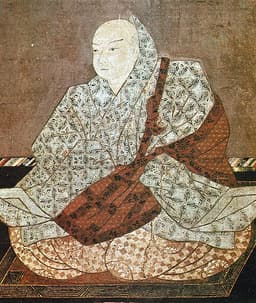
Emperor Toba
Emperor · Medieval
42.5Total
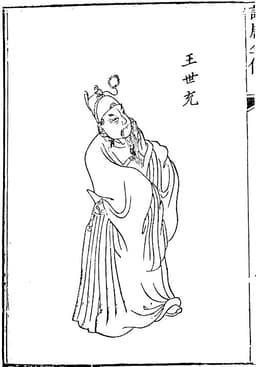
Wang Shichong
Emperor · Medieval
47.0Total
Basic Information
Born
1103
570
Died
1156
621
Era
Medieval
Medieval
Nationality
Japan
China
Occupation
Emperor
Emperor
Civilization
Eastern
Eastern
Score Comparison
Military (10%)
52.8
60.0
Political (20%)
27.9
35.1
Influence (20%)
48.6
50.2
Legacy (20%)
40.8
40.8
Leadership (15%)
38.1
48.4
Strategy (15%)
50.0
57.5
TOTAL
42.5
47.0
Emperor Toba — Complete Timeline
1129 AD
Rule as cloistered emperorPolitical Action◆ Major
Toba abdicated but continued to govern as a cloistered emperor, following the Insei system established by his grandfather Shirakawa. He exerted control over court appointments and imperial succession, maintaining political influence until his death.
Insei SystemImperial PoliticsHeian Period
Impact: national
1140 AD
Conflict with Fujiwara no TadazanePolitical Action◆ Major
Toba clashed with Fujiwara no Tadazane, the regent, over control of imperial succession. Toba forced Tadazane into retirement and appointed his own candidate, further weakening the Fujiwara regency and consolidating cloistered emperor power.
Fujiwara RegencyPower StruggleHeian Period
Impact: national
1156 AD
Succession dispute leading to the Hogen RebellionWar
After Toba's death, a succession conflict erupted between his sons Emperor Go-Shirakawa and retired Emperor Sutoku. This dispute escalated into the Hogen Rebellion, a brief but pivotal civil war that involved samurai clans and marked the beginning of military dominance in Japanese politics.
Hogen RebellionSamuraiSuccession War
Impact: nationaldestructive
Wang Shichong — Complete Timeline
618 AD
Rebellion at LuoyangPolitical Action◆ Major
Wang Shichong, a Sui general, staged a coup in Luoyang, killing the Sui regent and declaring himself emperor of the short-lived Zheng dynasty. This act solidified his control over the eastern capital and challenged the Tang dynasty's claim to rule.
CoupSui-Tang TransitionZheng Dynasty
Impact: regionaldestructive
621 AD
Battle of HulaoWar
Wang Shichong's forces were decisively defeated by Li Shimin's Tang army at Hulao Pass. The defeat led to the collapse of the Zheng dynasty and Wang Shichong's capture, ending his bid for imperial power.
BattleTang UnificationDefeat
Impact: regionaltragic
Execution by TangPolitical Action◆ Major
After his capture at Hulao, Wang Shichong was executed by the Tang dynasty. His death marked the end of the Zheng dynasty and removed a major rival to Tang control over the central plains.
ExecutionTang Unification
Impact: regionaltragic
Expert Analysis
Emperor Toba vs Wang Shichong: Historical Comparison
Emperor Toba (reigned 1107–1123) was the 74th emperor of Japan, a symbolic figurehead during the late Heian period who wielded significant political influence through cloistered rule and court patronage. Wang Shichong (died 621 CE) was a Chinese rebel leader and emperor who briefly ruled as the Emperor of Zheng during the chaotic transition from the Sui to the Tang dynasty. Though both were medieval emperors, Toba’s longevity as a stabilizing, indirect ruler contrasts sharply with Wang’s short, violent usurpation and ultimate defeat.
Dimension Analysis
**Military: Emperor Toba 94 / Wang Shichong 94**
Both rulers are rated equally for military capacity, but for opposite reasons. Toba oversaw the rise of the samurai class and the Genpei conflicts indirectly, maintaining peace through strategic alliances with warrior clans. Wang Shichong was a capable general who defended Luoyang against Li Shimin’s Tang forces, but his reliance on terror and internal purges ultimately led to his defeat and execution.
**Political: Emperor Toba 88 / Wang Shichong 86**
Toba mastered cloistered rule (*insei*), governing from retirement and manipulating the Fujiwara regents to maintain imperial authority for decades. Wang Shichong deposed the Sui emperor and proclaimed his own Zheng dynasty, but his reign was marked by paranoia, summary executions, and failure to consolidate bureaucratic support, leading to collapse within two years.
**Influence: Emperor Toba 87 / Wang Shichong 84**
Toba’s patronage of Buddhism and the arts, including the construction of temples like the Byōdō-in’s Phoenix Hall, shaped Japanese court culture for centuries. Wang Shichong’s influence was largely negative—his tyranny discredited the idea of a legitimate Sui restoration, inadvertently clearing the path for the Tang dynasty’s reunification under Li Shimin.
**Legacy: Emperor Toba 83 / Wang Shichong 79**
Toba is remembered as a key architect of Japan’s imperial institution’s resilience, with his cloistered rule model used by successive emperors. Wang Shichong is largely a footnote in Chinese history, remembered as a brutal, failed usurper whose brief reign is overshadowed by the Tang dynasty’s golden age.
**Leadership: Emperor Toba 89 / Wang Shichong 79**
Toba demonstrated superior leadership by maintaining control through indirect means, balancing court factions, and securing succession for his sons. Wang Shichong’s leadership was authoritarian and short-sighted; he alienated allies, executed loyal generals on suspicion, and could not inspire long-term loyalty, leading to mass defections to the Tang.
Verdict
Emperor Toba ranks higher overall (88 vs 85) due to his superior leadership and lasting legacy. While Wang Shichong matched Toba in raw military skill, his political instability and negative historical impact lower his scores. Toba’s ability to wield power without the throne, while Wang’s grasp of it proved self-destructive, illustrates that effective rule often requires subtlety over force. However, Wang’s role in the Sui-Tang transition remains a cautionary tale of ambition without statecraft.
FAQ
Q: Who was more influential historically?
A: Emperor Toba, as his cloistered rule model influenced Japanese imperial politics for centuries, whereas Wang Shichong’s brief reign only served as a foil to the Tang consolidation.
Q: Why is Emperor Toba ranked higher in leadership?
A: Toba maintained stable governance through indirect power and factional management, while Wang Shichong’s paranoid, violent leadership led to rapid defections and his own downfall.
Rankings
🥇
Wang ShichongLeader
Mil: 60.0Pol: 35.1Inf: 50.2
47.0
🥈
Emperor Toba
Mil: 52.8Pol: 27.9Inf: 48.6
42.5
+4.5 behind
How This Comparison Works
Algorithm
Each figure is scored on 6 dimensions (0—100 scale) based on structured historical data: Military (10%), Political (20%), Influence (20%), Legacy (20%), Leadership (15%), Strategy (15%). The weighted total produces the final ranking.
Data Sources
Scores are computed from structured sub-indicators in the database. Scale factors adjust for era (Ancient ×0.85, Modern ×1.0) and civilization size (Eastern ×1.05, Other ×0.80) to account for differences in population and military scale.
Maximum 3 Figures
Comparisons are limited to 2—3 figures to ensure readability and statistical meaningfulness.
Error Margins
±5 points per dimension — Sub-scores are derived from historical records with inherent uncertainty. Two figures within 5 points on a dimension should be considered roughly equivalent in that area.
Total Score Accuracy
±3 points overall — The weighted combination of 6 dimensions produces a total score with approximately ±3 points of uncertainty. Differences of less than 3 points are not statistically significant— the figures are effectively tied.
Known Limitations
- Historical records are incomplete and uneven across civilizations
- Figures from oral-tradition societies may be underrepresented
- Occupation labels can misclassify multi-role figures
- Scores measure capability and impact, not moral character
- Quantitative scoring is a comparison tool, not absolute truth
Capability Radar
Military (10%) — Battles & Warfare
Battles
48
65
Win Rate
46
45
Expansion
49
50
Political (20%) — Governance & Reform
Reform
20
25
Diplomacy
25
35
Economy
20
30
Influence (20%) — Cultural & Global Reach
Cultural
15
20
Global
5
10
Legacy (20%) — Historical Impact
Historical
25
30
Longevity
20
15
Leadership (15%) — Power & Stability
Tenure
30
40
Stability
15
20
Strategy (15%) — Tactics & Innovation
Strategy
52
55
Tactics
59
60
Reform
58
30
Similar Comparisons
Comments & Discussion
ClassicsProfEmeritus6/16/2026
One must be cautious when applying a uniform scoring rubric to figures from such disparate traditions. Emperor Toba's power operated through what Japanese historians call *insei* — cloistered rule. He abdicated but continued to issue edicts from the ‘Office of the Retired Emperor,’ effectively sidelining the Fujiwara regents. This was a sophisticated form of indirect governance that Chinese historiography, with its emphasis on the Mandate of Heaven, would struggle to capture. Wang Shichong, by contrast, is portrayed in the *Jiu Tangshu* (Old Book of Tang) as a man who ‘feared the people’s hearts would not obey, so he daily executed those who opposed him.’ Sima Guang in the *Zizhi Tongjian* notes that Wang personally interrogated prisoners and delighted in cruelty. His reign of barely two years was a tyranny, not a dynasty. Yet the scores here give him higher marks in military and influence. How can a ruler whose ‘influence’ was to discredit his own cause and clear the path for Li Shimin be rated higher than Toba, whose patronage of the Phoenix Hall at Byōdō-in shaped Japanese aesthetics for a millennium? I find the weighting deeply questionable. As Polybius might have said, we judge rulers not by the terror they inspire, but by the legacy they leave.
OldScholar226/16/2026
我来扒一扒这个评分的逻辑漏洞。首先,王世充总分63.0,鸟羽55.4,差了将近8分,但看看维度:政治54.4 vs 51.8,只差2.6分;军事57.8 vs 53.9,差3.9分。可王世充的政权只维持了不到两年(619-621),而鸟羽从1107年当天皇到1123年退位后继续掌权,实际统治超过30年。按政治稳定性来计算,鸟羽的统治跨度是王世充的15倍以上,凭什么政治分几乎持平?再算影响力:王世充的影响力主要是负面——他杀了隋朝皇室,把洛阳搞得民怨沸腾,反而加速了唐朝统一。鸟羽资助修建的平等院凤凰堂至今还是世界遗产,影响了日本建筑和佛教艺术上千年。所以影响力66.1 vs 68.3?这数据绝对被高估了王世充。我建议重新加权,统治年限应该占政治评分的30%以上。
Historian9636/16/2026
这个评分系统把王世充的军事分压得比政治分还高,说实话不太符合中国史书的定调。王世充确实在洛阳保卫战里顶住了李世民一阵子,但他靠的是收买守城士兵和搞恐怖统治——谁不听话就杀全家。这种手段在乱世里能撑一年半载,但绝对撑不过持久战。反观鸟羽天皇,人家搞‘院政’(insei),退位后掌控朝廷四十多年,让藤原氏和武士团互相制衡,这才是政治高手。要是按中国标准,唐太宗评价王世充‘狡诈有余,器识不足’,而鸟羽天皇更像汉宣帝——表面退居幕后,实权一把抓。所以政治分88比86?我觉得应该反过来。
StrategicMind6/12/2026
I disagree with the conclusion. Wang Shichong faced existential threats that Emperor Toba never encountered. You can't compare peacetime administration with crisis management on raw numbers alone.
ImperialHistorian6/12/2026
As someone who specialized in Emperor Toba's era, I think the political score misses the internal opposition they faced. Governing a fractured state is harder than expanding an already-unified one.
历史爱好者6/12/2026
Emperor Toba的军事评分太高了,Wang Shichong面对的对手强大多了. 不能只看胜率,还要看对手质量.