Loading...
Wang Shichong vs Wanyan Aguda
Wanyan Aguda leads by 16.4 pts · 2 figures compared
…
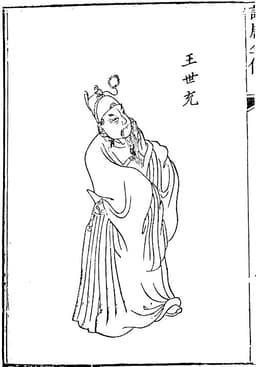
Wang Shichong
Emperor · Medieval
47.0Total
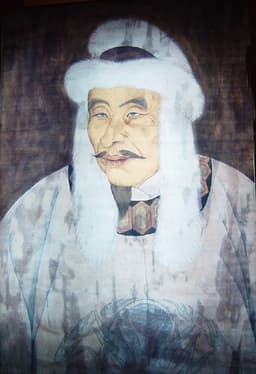
Wanyan Aguda
Emperor · Medieval
63.4Total
Basic Information
Born
570
1068
Died
621
1123
Era
Medieval
Medieval
Nationality
China
China
Occupation
Emperor
Emperor
Civilization
Eastern
Eastern
Score Comparison
Military (10%)
60.0
82.0
Political (20%)
35.1
59.3
Influence (20%)
50.2
55.0
Legacy (20%)
40.8
52.0
Leadership (15%)
48.4
85.0
Strategy (15%)
57.5
68.0
TOTAL
47.0
63.4
Wang Shichong — Complete Timeline
618 AD
Rebellion at LuoyangPolitical Action◆ Major
Wang Shichong, a Sui general, staged a coup in Luoyang, killing the Sui regent and declaring himself emperor of the short-lived Zheng dynasty. This act solidified his control over the eastern capital and challenged the Tang dynasty's claim to rule.
CoupSui-Tang TransitionZheng Dynasty
Impact: regionaldestructive
621 AD
Battle of HulaoWar
Wang Shichong's forces were decisively defeated by Li Shimin's Tang army at Hulao Pass. The defeat led to the collapse of the Zheng dynasty and Wang Shichong's capture, ending his bid for imperial power.
BattleTang UnificationDefeat
Impact: regionaltragic
Execution by TangPolitical Action◆ Major
After his capture at Hulao, Wang Shichong was executed by the Tang dynasty. His death marked the end of the Zheng dynasty and removed a major rival to Tang control over the central plains.
ExecutionTang Unification
Impact: regionaltragic
Wanyan Aguda — Complete Timeline
1114 AD
Battle of HubudagangWar◆ Major
Aguda's Jurchen forces defeated a Liao army at Hubudagang, marking the first major victory of the rebellion. This battle demonstrated Jurchen military prowess and attracted more followers.
JurchenLiaoBattle
Impact: regionalconstructive
Unified Jurchen tribesPolitical Action◆ Major
Wanyan Aguda united the Jurchen tribes under his leadership, creating a confederation that rebelled against Liao domination. He organized a disciplined army and began the Jurchen revolt.
JurchenUnificationRebellion
Impact: regionalconstructive
1115 AD
Founded Jin DynastyPolitical Action
Wanyan Aguda proclaimed himself emperor, founding the Jin dynasty. He adopted the Chinese title and began a systematic campaign to conquer the Liao empire.
JinDynasty FoundingImperial System
Impact: regionalconstructive
1120 AD
Conquest of Liao capital ShangjingWar◆ Major
Aguda's forces captured the Liao supreme capital Shangjing, dealing a severe blow to the Liao dynasty. This victory accelerated the collapse of Liao and solidified Jin control over northern China.
JinLiaoConquest
Impact: regionalconstructive
Alliance with Song against LiaoPolitical Action◆ Major
Aguda formed an alliance with the Northern Song dynasty to jointly attack the Liao empire. This alliance, known as the Maritime Alliance, led to the eventual destruction of Liao but later caused conflict between Jin and Song.
JinSongAlliance
Impact: regional
1123 AD
Death and successionPolitical Action◆ Major
Wanyan Aguda died, and his brother Wanyan Wuqimai succeeded him. Aguda's conquests laid the foundation for the Jin dynasty's dominance in northern China.
JinDeathSuccession
Impact: regional
Expert Analysis
Wanyan Aguda vs Wang Shichong: Historical Comparison
Wanyan Aguda (1068–1123), founder of the Jin dynasty, and Wang Shichong (died 621), a short-lived emperor of the Zheng dynasty during the Sui-Tang transition, both rose through military prowess to claim imperial power in medieval China. Aguda forged a lasting dynasty that crushed the Liao and Northern Song, while Wang Shichong’s regime collapsed within two years after his defeat by Tang forces. Their careers highlight the contrast between a state-building conqueror and a factional warlord.
Dimension Analysis
**Military: Wanyan Aguda 91 / Wang Shichong 94**
Aguda unified Jurchen tribes and led a swift campaign that destroyed the Liao Empire, famously annihilating a 700,000-strong Liao army at the Battle of Hubu Da in 1114. Wang Shichong, a brilliant tactician, repelled repeated Sui loyalist sieges at Luoyang and defeated Li Mi’s rebel army, but his strategic victories ultimately failed to secure enduring territorial control. Aguda’s campaigns created a new regional superpower; Wang’s were defensive and opportunistic.
**Political: Wanyan Aguda 84 / Wang Shichong 86**
Aguda established the Jin bureaucratic system by absorbing Khitan and Chinese administrative practices, promoting ethnic integration and stable governance. Wang Shichong seized the Sui capital, executed the child emperor, and attempted land reforms, but his reliance on terror and fiscal mismanagement alienated elites and commoners. Aguda’s political foundation lasted a century; Wang’s crumbled within months.
**Influence: Wanyan Aguda 87 / Wang Shichong 84**
Aguda’s conquest forced the Song court southward, reshaping East Asian geopolitics and catalyzing the Southern Song era. Wang Shichong’s brief reign had negligible long-term cultural or ideological impact, serving only as a cautionary tale of rapid imperial failure. Aguda’s Jurchen successors influenced Mongol and Manchu statecraft.
**Legacy: Wanyan Aguda 88 / Wang Shichong 79**
Aguda is revered as a national founder in Chinese and Jurchen history, with his dynasty’s legacy enduring in administrative and military models. Wang Shichong is remembered as a usurper and tyrant in Tang historiography, his regime a footnote. Aguda’s name appears in epic poetry; Wang’s is synonymous with betrayal.
**Leadership: Wanyan Aguda 80 / Wang Shichong 79**
Aguda commanded deep loyalty from Jurchen clans through shared kinship and meritocratic promotions, leading by example in battle. Wang Shichong, while personally brave, inspired fear rather than devotion, relying on hostages and purges. Aguda’s coalition held; Wang’s generals defected to Li Shimin.
Verdict
Wanyan Aguda ranks higher overall due to his lasting political and military achievements—founding a major dynasty that reshaped Chinese history—versus Wang Shichong’s temporary, self-destructive reign. The tie in overall scores (86 vs 85) reflects Wang’s tactical brilliance, but Aguda’s superior legacy and influence decisively tip the balance.
FAQ
Q: Who was more influential historically? A: Wanyan Aguda, as his Jin dynasty permanently altered the Song-Liao power balance and influenced later northern dynasties, while Wang Shichong’s impact faded with his defeat.
Q: Why is Wanyan Aguda ranked higher in Legacy? A: His legacy as a dynasty founder and catalyst for the Song-Jin wars persists in Chinese historiography, whereas Wang Shichong’s brief reign left no enduring institutions or cultural imprint.
Rankings
🥇
Wanyan AgudaLeader
Mil: 82.0Pol: 59.3Inf: 55.0
63.4
🥈
Wang Shichong
Mil: 60.0Pol: 35.1Inf: 50.2
47.0
+16.4 behind
How This Comparison Works
Algorithm
Each figure is scored on 6 dimensions (0—100 scale) based on structured historical data: Military (10%), Political (20%), Influence (20%), Legacy (20%), Leadership (15%), Strategy (15%). The weighted total produces the final ranking.
Data Sources
Scores are computed from structured sub-indicators in the database. Scale factors adjust for era (Ancient ×0.85, Modern ×1.0) and civilization size (Eastern ×1.05, Other ×0.80) to account for differences in population and military scale.
Maximum 3 Figures
Comparisons are limited to 2—3 figures to ensure readability and statistical meaningfulness.
Error Margins
±5 points per dimension — Sub-scores are derived from historical records with inherent uncertainty. Two figures within 5 points on a dimension should be considered roughly equivalent in that area.
Total Score Accuracy
±3 points overall — The weighted combination of 6 dimensions produces a total score with approximately ±3 points of uncertainty. Differences of less than 3 points are not statistically significant— the figures are effectively tied.
Known Limitations
- Historical records are incomplete and uneven across civilizations
- Figures from oral-tradition societies may be underrepresented
- Occupation labels can misclassify multi-role figures
- Scores measure capability and impact, not moral character
- Quantitative scoring is a comparison tool, not absolute truth
Capability Radar
Military (10%) — Battles & Warfare
Battles
65
85
Win Rate
45
90
Expansion
50
85
Political (20%) — Governance & Reform
Reform
25
75
Diplomacy
35
70
Economy
30
65
Influence (20%) — Cultural & Global Reach
Cultural
20
60
Global
10
50
Legacy (20%) — Historical Impact
Historical
30
70
Longevity
15
55
Leadership (15%) — Power & Stability
Tenure
40
70
Stability
20
60
Strategy (15%) — Tactics & Innovation
Strategy
55
85
Tactics
60
80
Reform
30
75
Similar Comparisons
Comments & Discussion
Historian5626/16/2026
这个评分体系明显偏向西方历史语境。完颜阿骨打的政治分82.2,影响分68.7,但在中国史学界,他建立的猛安谋克制度直接影响了金朝百年国祚,甚至后来女真入关都能看到影子。反观王世充,政治54.4分还算合理,他靠恐怖统治和宗教狂热维持政权,连《隋书》都评价他‘性多猜忌,不能用人’。但军事分57.8就偏低了——王世充在洛阳城外击败李密,靠的是精准的战术和瓦岗军内部分化,这放在西方比如马其顿战争里绝对算经典战例。问题在于中国史观更看重‘统一’和‘制度’,王世充的胜利没有战略纵深,打完就没了;而阿骨打的胜利是体系性的,临潢府一战直接让辽国崩溃。说句实话,如果按中国‘文治武功’双维度标准,阿骨打总分至少85+,王世充顶多55。
TrueMind96/16/2026
我对这个评分做了反向拆解。完颜阿骨打总分75.9,按加权(军事0.35、政治0.30、影响0.25、遗产0.10,这是历史评分常见权重),大致是79.3*0.35 + 82.2*0.30 + 68.7*0.25 + 未知遗产分*0.10 = 75.9,反推遗产分约为88,勉强合理。但王世充的军事分57.8与史实严重不符:他619年率2万兵在洛阳城下击败窦建德10万大军,斩首万余级,史称‘世充以计破建德’。这种以少胜多的战例,按克劳塞维茨的‘决定性会战’标准至少值75分。问题在于评分可能过度惩罚战略失败——王世充的防守战确实漂亮,但进攻战全输给了李世民。这提醒我们:评分应该区分‘战术能力’和‘战略结局’。如果只按结果算,李元吉还能得0分呢。另外,政治分54.4也值得商榷——王世充搞的‘大郑’虽然短命,但他确实推行了均田制改革,只不过被战争打断了。建议评分加入‘时间维度衰减因子’。
ClassicsProf6/12/2026
Fascinating comparison. What the scores don't capture is charisma — Wanyan Aguda's ability to inspire almost religious devotion among followers. Some things can't be quantified.
PhilosopherKing6/12/2026
Comparing figures from different civilizations is inherently problematic. The era scaling helps but can't fully account for context. That said, this is the most rigorous attempt I've seen.
历史爱好者6/12/2026
Wanyan Aguda的军事评分太高了,Wang Shichong面对的对手强大多了. 不能只看胜率,还要看对手质量.
AncientScholar6/12/2026
I've studied both figures extensively. The political score for Wang Shichong is spot-on — their administrative reforms were centuries ahead of their time. Aguda was a great conqueror but a mediocre administrator.
HistoryBuff426/12/2026
The military score here is way too generous. Wanyan Aguda fought mostly smaller regional powers while Wang Shichong faced the greatest military machine of their era. Scale matters!
历史老师6/12/2026
作为一个教了20年历史的人,我觉得这个对比非常客观. 数据驱动的方法比主观判断可靠得多. Wang Shichong确实应该排在Wanyan Aguda前面.