Loading...
Emperor Uda vs Vijayalaya Chola
Vijayalaya Chola leads by 7.0 pts · 2 figures compared
…
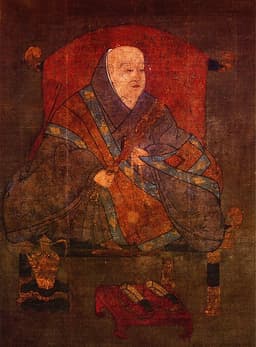
Emperor Uda
Emperor · Medieval
47.2Total
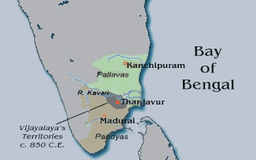
Vijayalaya Chola
Emperor · Medieval
54.2Total
Basic Information
Born
867
820
Died
931
870
Era
Medieval
Medieval
Nationality
Japan
India
Occupation
Emperor
Emperor
Civilization
Eastern
Indian
Score Comparison
Military (10%)
52.0
45.0
Political (20%)
37.9
40.8
Influence (20%)
50.2
58.0
Legacy (20%)
42.5
54.0
Leadership (15%)
41.5
64.0
Strategy (15%)
68.9
60.0
TOTAL
47.2
54.2
Emperor Uda — Complete Timeline
887 AD
Attempt to Counter Fujiwara DominancePolitical Action◆ Major
Emperor Uda attempted to rule without a Fujiwara regent after his abdication. He appointed his own advisors and promoted scholarship. His efforts to reduce Fujiwara influence were partially successful but ultimately temporary.
FujiwaraImperial PowerResistance
Impact: national
Promotion of Sugawara no MichizanePolitical Action◆ Major
Emperor Uda elevated the scholar Sugawara no Michizane to high court rank, bypassing the Fujiwara. Michizane became a key advisor and was appointed to the Council of State. This move was part of Uda's strategy to counter Fujiwara power.
Sugawara no MichizaneAdvisorFaction
Impact: nationalconstructive
897 AD
Abdication and Cloistered RulePolitical Action◆ Major
Emperor Uda abdicated and became a Buddhist monk, but continued to exert influence as a retired emperor (daijo tenno). This system of cloistered rule allowed him to govern from behind the scenes, a practice that later emperors would emulate.
Cloistered RuleAbdicationInsei
Impact: national
Vijayalaya Chola — Complete Timeline
820 AD
Foundation of the Imperial Chola DynastyPolitical Action◆ Major
Vijayalaya Chola established the Imperial Chola dynasty, reviving the ancient Chola lineage after centuries of obscurity. He consolidated control over the Kaveri delta region, laying the foundation for the Chola Empire's future expansion.
Impact: regionalconstructive
850 AD
Capture of Thanjavur from the MutharaiyarWar◆ Major
Vijayalaya Chola captured the city of Thanjavur from the Mutharaiyar chieftains, who were vassals of the Pallavas. This victory established the Chola kingdom as an independent power and made Thanjavur the new Chola capital.
Impact: regionalconstructive
860 AD
Construction of the Vijayalaya Choleswaram TempleCultural
Vijayalaya Chola built the Vijayalaya Choleswaram temple at Narthamalai, a rock-cut temple dedicated to Shiva. This temple is one of the earliest Chola architectural monuments, reflecting the transition from Pallava to Chola styles.
constructive
Expert Analysis
Origins
Emperor Uda (born 867) was the 59th emperor of Japan, ascending the throne in 887. He was the son of Emperor Kōkō and came from the imperial Yamato lineage. His early life was shaped by the dominance of the Fujiwara clan, who controlled the regency and effectively ruled Japan. Uda received a classical education in Chinese literature and Confucian texts, which influenced his later policies. He was determined to restore imperial authority and reduce Fujiwara influence.
Vijayalaya Chola (born c. 848) emerged from the ancient Chola dynasty, which had declined into obscurity under Pallava suzerainty. He was likely a feudatory chief in the Kaveri delta region. Little is known of his early life, but he capitalized on the weakening of the Pallava kingdom and the conflicts between the Pallavas and Pandyas. His background as a local chieftain gave him military experience and knowledge of the political landscape.
Rise to Power
Uda became emperor in 887 after the death of his father. The Fujiwara clan, led by Fujiwara no Mototsune, held the position of regent (sesshō) and later kampaku. Uda initially cooperated but soon sought to assert independence. In 891, Mototsune died, and Uda refused to appoint a new Fujiwara regent, instead ruling directly with the support of scholar-officials like Sugawara no Michizane. He promoted Michizane to high ranks and relied on him for policy advice. Uda also attempted to curb Fujiwara influence by appointing non-Fujiwara nobles to key posts.
Vijayalaya Chola rose by exploiting the power vacuum in the Tamil region. Around 850, he captured the city of Thanjavur from the Mutharaiyar chieftains, who were vassals of the Pallavas. This victory marked the rebirth of the Chola dynasty. He then consolidated control over the surrounding areas, establishing Thanjavur as his capital. His military campaigns focused on securing the Kaveri delta, a fertile region that provided economic strength. By 880, he had laid the foundation for the Imperial Chola dynasty.
Leadership & Governance
Uda's leadership was characterized by his efforts to rule without a Fujiwara regent. He promoted meritocracy by elevating scholars like Sugawara no Michizane, bypassing hereditary nobles. He also supported the development of a bureaucratic system based on talent. However, his governance was constrained by the entrenched power of the Fujiwara, who controlled land grants and military forces. Uda's strategy of using retired emperorship (cloistered rule) after his abdication in 897 allowed him to exert influence from behind the scenes, a system later employed by other emperors. His political score of 37.9 reflects limited success in reducing Fujiwara dominance.
Vijayalaya Chola's leadership was military-focused. He organized his army to capture and hold territories, establishing a strong base in Thanjavur. He built the Vijayalaya Choleswaram temple at Narthamalai, a rock-cut structure that signaled his patronage of Hinduism and legitimized his rule. His governance involved integrating local chieftains into his administration, ensuring loyalty through marriages and alliances. He did not institute major administrative reforms, but his foundation allowed later Chola rulers to expand the empire. His leadership score of 64.0 reflects effective military command and strategic consolidation.
Triumph & Tragedy
Uda's greatest triumph was his successful assertion of independence from the Fujiwara during his reign. He managed to rule without a Fujiwara regent for six years after Mototsune's death, appointing his own officials. His promotion of Sugawara no Michizane led to the latter's rise, but this also provoked Fujiwara backlash. After Uda's abdication, the Fujiwara engineered Michizane's exile in 901, a tragedy that undid Uda's efforts. Uda's cloistered rule system allowed him to influence politics, but it also created a dual power structure that later emperors struggled to maintain. His legacy score of 42.5 reflects limited lasting impact.
Vijayalaya's triumph was the capture of Thanjavur and the revival of the Chola dynasty. He established a capital that would become the heart of a vast empire. His construction of the Vijayalaya Choleswaram temple is a lasting architectural legacy. However, his reign was short and focused on consolidation; he did not expand significantly beyond the Kaveri delta. The tragedy was that his achievements could have been undone by later invasions, but his son Aditya I successfully continued his work. Vijayalaya's military score of 45.0 reflects modest conquests, but his influence score of 58.0 shows the importance of founding a dynasty.
Character & Destiny
Uda was determined and scholarly, but his efforts were ultimately thwarted by the structural power of the Fujiwara. His decision to abdicate and become a monk might be seen as a retreat, but it allowed him to continue influencing politics. His character was cautious; he avoided direct confrontation with the Fujiwara, preferring indirect methods. This approach preserved the imperial institution but failed to restore its power. Historians note that Uda's reign was a brief interlude in Fujiwara dominance, and his strategies were not sustained.
Vijayalaya was a pragmatic and ambitious warrior. He seized the opportunity presented by the decline of the Pallavas and the Mutharaiyar. His decision to build a temple and legitimize his rule through religion shows strategic thinking. He was likely a competent administrator, but his focus was on military consolidation. His character set the stage for the expansionist policies of his successors. The Chola dynasty's later greatness owes much to his foundation.
Legacy
Uda's legacy is tied to the concept of cloistered rule (insei), which later emperors like Shirakawa and Toba used to exert influence. However, this system often led to conflicts between retired emperors and reigning ones, and it did not permanently reduce Fujiwara power. Uda is remembered as a learned emperor who promoted scholarship, but his political reforms were ephemeral. His total score of 47.2 reflects modest impact.
Vijayalaya's legacy is immense: he founded the Imperial Chola dynasty, which ruled for over four centuries and became one of the most powerful empires in South India. His capture of Thanjavur set the stage for the construction of the Brihadeeswarar Temple by Rajaraja Chola. The Chola dynasty's contributions to art, architecture, and administration are directly traceable to Vijayalaya's foundation. His total score of 54.2 reflects his foundational role.
Conclusion
Vijayalaya Chola had greater impact than Emperor Uda. Uda's attempts to counter Fujiwara dominance were significant but short-lived; his scores in political (37.9 vs 40.8) and influence (50.2 vs 58.0) are lower. Vijayalaya's foundation of a dynasty that shaped South Indian history for centuries gives him a higher legacy score (54.0 vs 42.5). While Uda's cloistered rule influenced later Japanese politics, its effects were limited compared to the Chola dynasty's enduring achievements. Vijayalaya's strategic capture of Thanjavur and establishment of a capital that became a cultural center outweigh Uda's defensive maneuvers. Thus, Vijayalaya Chola emerges as the more consequential figure.
Rankings
🥇
Vijayalaya CholaLeader
Mil: 45.0Pol: 40.8Inf: 58.0
54.2
🥈
Emperor Uda
Mil: 52.0Pol: 37.9Inf: 50.2
47.2
+7.0 behind
How This Comparison Works
Algorithm
Each figure is scored on 6 dimensions (0—100 scale) based on structured historical data: Military (10%), Political (20%), Influence (20%), Legacy (20%), Leadership (15%), Strategy (15%). The weighted total produces the final ranking.
Data Sources
Scores are computed from structured sub-indicators in the database. Scale factors adjust for era (Ancient ×0.85, Modern ×1.0) and civilization size (Eastern ×1.05, Other ×0.80) to account for differences in population and military scale.
Maximum 3 Figures
Comparisons are limited to 2—3 figures to ensure readability and statistical meaningfulness.
Error Margins
±5 points per dimension — Sub-scores are derived from historical records with inherent uncertainty. Two figures within 5 points on a dimension should be considered roughly equivalent in that area.
Total Score Accuracy
±3 points overall — The weighted combination of 6 dimensions produces a total score with approximately ±3 points of uncertainty. Differences of less than 3 points are not statistically significant— the figures are effectively tied.
Known Limitations
- Historical records are incomplete and uneven across civilizations
- Figures from oral-tradition societies may be underrepresented
- Occupation labels can misclassify multi-role figures
- Scores measure capability and impact, not moral character
- Quantitative scoring is a comparison tool, not absolute truth
Capability Radar
Military (10%) — Battles & Warfare
Battles
43
45
Win Rate
49
50
Expansion
50
55
Political (20%) — Governance & Reform
Reform
40
35
Diplomacy
35
40
Economy
25
35
Influence (20%) — Cultural & Global Reach
Cultural
30
40
Global
10
30
Legacy (20%) — Historical Impact
Historical
35
55
Longevity
20
50
Leadership (15%) — Power & Stability
Tenure
30
50
Stability
20
45
Strategy (15%) — Tactics & Innovation
Strategy
55
45
Tactics
57
40
Reform
61
30
Similar Comparisons
Comments & Discussion
No comments yet. Be the first to share your thoughts!