Loading...
Alexander the Great vs Vijayalaya Chola
Alexander the Great leads by 31.0 pts · 2 figures compared
…
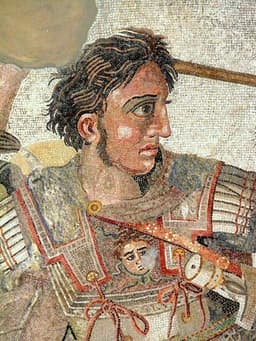
Alexander the Great
General · Ancient
85.2Total
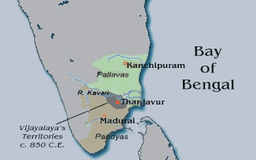
Vijayalaya Chola
Emperor · Medieval
54.2Total
Basic Information
Born
-356
820
Died
-323
870
Era
Ancient
Medieval
Nationality
Macedon
India
Occupation
General
Emperor
Civilization
Western
Indian
Score Comparison
Military (10%)
95.0
45.0
Political (20%)
60.0
40.8
Influence (20%)
92.0
58.0
Legacy (20%)
90.0
54.0
Leadership (15%)
80.0
64.0
Strategy (15%)
92.0
60.0
TOTAL
85.2
54.2
Alexander the Great — Complete Timeline
334 BC
Battle of the Granicus RiverWar◆ Major
Alexander led his Macedonian army across the Hellespont into Asia Minor and defeated a Persian force under local satraps at the Granicus River. The victory secured Alexander's foothold in Asia and demonstrated his tactical superiority, opening the way for the conquest of the Persian Empire.
Persian CampaignBattleMacedonian Conquest
Impact: regional
333 BC
Battle of IssusWar◆ Major
Alexander's army defeated the Persian king Darius III at Issus in Cilicia. Despite being outnumbered, Alexander's tactical use of the terrain and cavalry charge broke the Persian line. Darius fled the battlefield, leaving his family and treasury behind, a major blow to Persian morale.
Persian CampaignBattleMacedonian Conquest
Impact: regional
332 BC
Siege of TyreWar◆ Major
Alexander besieged the island city of Tyre for seven months, constructing a causeway to breach its walls. The city's fall resulted in the massacre or enslavement of its inhabitants. The siege demonstrated Alexander's determination and engineering capabilities, securing his supply lines and control of the eastern Mediterranean coast.
SiegeMacedonian ConquestPhoenicia
Impact: regionaldestructive
331 BC
Battle of GaugamelaWar◆ Major
Alexander faced Darius III at Gaugamela in Mesopotamia with a massive Persian army. Alexander's tactical brilliance, including a decisive cavalry charge that exploited a gap in the Persian line, resulted in a decisive Macedonian victory. Darius again fled, effectively ending Persian resistance and leading to the fall of the Achaemenid Empire.
Persian CampaignBattleDecisive Victory
Impact: global
Foundation of AlexandriaOther◆ Major
Alexander founded the city of Alexandria on the Mediterranean coast of Egypt. He personally selected the site and oversaw the initial planning. Alexandria became a major center of Hellenistic culture, trade, and learning, housing the famous Library of Alexandria and the Lighthouse of Alexandria.
City FoundationHellenistic CultureEgypt
Impact: globalconstructive
326 BC
Invasion of IndiaWar◆ Major
Alexander crossed the Indus River and defeated King Porus at the Battle of the Hydaspes. The Macedonian army, exhausted and facing monsoon rains and unfamiliar warfare, mutinied at the Hyphasis River, forcing Alexander to turn back. This campaign marked the easternmost extent of his conquests.
Indian CampaignBattleMutiny
Impact: regional
Vijayalaya Chola — Complete Timeline
820 AD
Foundation of the Imperial Chola DynastyPolitical Action◆ Major
Vijayalaya Chola established the Imperial Chola dynasty, reviving the ancient Chola lineage after centuries of obscurity. He consolidated control over the Kaveri delta region, laying the foundation for the Chola Empire's future expansion.
Impact: regionalconstructive
850 AD
Capture of Thanjavur from the MutharaiyarWar◆ Major
Vijayalaya Chola captured the city of Thanjavur from the Mutharaiyar chieftains, who were vassals of the Pallavas. This victory established the Chola kingdom as an independent power and made Thanjavur the new Chola capital.
Impact: regionalconstructive
860 AD
Construction of the Vijayalaya Choleswaram TempleCultural
Vijayalaya Chola built the Vijayalaya Choleswaram temple at Narthamalai, a rock-cut temple dedicated to Shiva. This temple is one of the earliest Chola architectural monuments, reflecting the transition from Pallava to Chola styles.
constructive
Expert Analysis
Alexander the Great vs Vijayalaya Chola
# Two Founders, Two Worlds
On a dusty battlefield in what is now Pakistan, a young king in his late twenties watched his Macedonian phalanx crush the last resistance of King Porus in 326 BCE. Alexander the Great had just won his most costly victory, his army bleeding in the monsoon rains, yet he wept—not from exhaustion, but because there were no more worlds to conquer. Half a world away and more than a millennium later, in the fertile plains of southern India around 850 CE, a lesser-known chieftain named Vijayalaya Chola climbed the walls of a modest fort at Thanjavur, seized it from a fading dynasty, and quietly laid the cornerstone of an empire that would outlast Alexander’s by nearly a thousand years. What separates these two founders—one whose name still thunders across classrooms and battlefields, the other virtually unknown outside South Asia—is not merely time or geography, but the very nature of ambition, power, and the lives they chose to build.
Origins
Alexander was born into a world of fire and ambition. His father, Philip II of Macedon, had forged a backwater kingdom into a military machine, uniting fractious Greek city-states through war and diplomacy. Alexander’s mother, Olympias, whispered to him that he was descended from Achilles and Heracles. His tutor was Aristotle, who filled his head with Homeric epics and the notion that Greeks were born to rule “barbarians.” From childhood, Alexander breathed conquest: his father’s victories, his mother’s myths, his tutor’s philosophy—all pointed to one destiny: to surpass every mortal who had come before.
Vijayalaya Chola emerged from a vastly different world, one of intricate hierarchies and ancient traditions. The Chola dynasty had once ruled parts of Tamilakam centuries earlier, but by the ninth century, it had shrunk to obscurity, a minor clan under the shadow of the Pallava Empire. Vijayalaya was not a prince tutored by philosophers; he was a local chieftain, likely a feudatory, who saw opportunity in the Pallavas’ decline. His era was not one of Homeric glory but of temple-building, monsoon-fed agriculture, and the slow, patient accumulation of legitimacy. Where Alexander inherited a kingdom ready to explode, Vijayalaya inherited only a name—and the memory of a lineage that had once held power.
Rise to Power
Alexander’s path was meteoric. At twenty, he became king after Philip’s assassination, immediately crushing revolts in Thebes and Athens. By twenty-two, he had crossed the Hellespont into Asia Minor, and within a decade, he had toppled the Persian Empire, Egypt, and marched to the Indus. His rise was a blur of sieges, cavalry charges, and the sheer force of personal charisma. He led from the front, wounded repeatedly, and inspired his men to march farther than any Greek army had ever dreamed.
Vijayalaya’s rise was glacial by comparison. He spent decades as a minor vassal, biding his time. The key event came around 850 CE, when he captured Thanjavur from the Mutharaiyar chieftains, who were themselves vassals of the Pallavas. This was not a grand battle of empires but a local coup—a chieftain seizing a mud-brick fort in the Kaveri delta. Where Alexander conquered Persia in three years, Vijayalaya spent a lifetime consolidating a single river valley. His “key event” in 820 CE, the foundation of the Imperial Chola dynasty, was likely a ceremonial declaration, not a dramatic coronation. He built slowly, brick by brick, temple by temple.
Leadership & Governance
Alexander’s leadership was that of a comet—brilliant, destructive, and fleeting. He was a military genius who innovated siege warfare, combined cavalry and infantry with lethal precision, and personally inspired his men to endure unimaginable hardships. But his political wisdom was flawed. He tried to fuse Greek and Persian cultures, marrying Persian princesses and adopting Eastern court rituals, but his Macedonian generals resented it. He never built a stable administration; his empire was held together by his personal magnetism and the fear of his army. When he died at thirty-two in Babylon in 323 BCE, his generals immediately tore his empire apart.
Vijayalaya’s leadership was that of a slow-growing banyan tree. His military scores are modest—24.2 out of 100—but his political and leadership scores (54.2 and 74.0) reveal a different kind of genius. He understood that empire in South India was built not on conquest alone but on legitimacy, religion, and irrigation. The temple he built around 860 CE, the Vijayalaya Choleswaram at Narthamalai, was not mere piety; it was a political statement. By dedicating a rock-cut shrine to Shiva, he claimed divine sanction for his rule, linking himself to the ancient Chola kings and to the gods. He did not try to conquer the world; he tried to root his dynasty in the soil of the Kaveri delta.
Triumph & Tragedy
Alexander’s greatest triumph was the conquest of Persia—the vast, wealthy empire that had threatened Greece for centuries. His greatest tragedy was his own ambition. He pushed his army too far, too fast, and his men mutinied at the Hyphasis River in 326 BCE, forcing him to turn back. He died soon after, possibly from fever, poisoning, or drink, leaving no clear heir and a fractured realm. His tragedy was that his life’s work—the fusion of East and West—crumbled within a generation.
Vijayalaya’s triumph was more modest but more enduring: he founded a dynasty that would rule for over four centuries, producing rulers like Rajaraja Chola and Rajendra Chola, who would conquer Sri Lanka, the Maldives, and parts of Southeast Asia. His tragedy was that he did not live to see it. He died around 870 CE, probably before his dynasty had fully established itself, leaving his son Aditya I to continue the work. Unlike Alexander, he did not die in glory but in obscurity—a founder whose name would be remembered only in temple inscriptions and local chronicles.
Character & Destiny
Alexander’s character was forged in the crucible of myth. He believed himself divine, the son of Zeus-Ammon, and this hubris drove him to ever-greater conquests and ever-greater cruelties. He burned Persepolis, executed his friends in rage, and alienated his own generals. His destiny was to be remembered as the archetype of the conqueror—the man who wept because there were no more worlds to conquer. But his personality also doomed his empire: he could not delegate, could not compromise, could not imagine a world without himself at its center.
Vijayalaya’s character was that of a patient builder. He did not claim divinity; he built temples. He did not conquer the world; he captured a city and made it his capital. His destiny was not to be a legend but to be a root—the foundation upon which others would build. He understood something Alexander never did: that empires are not built by one man but by generations. His personality—cautious, pious, strategic—was perfectly suited to the slow, steady rhythms of South Indian kingship.
Legacy
Alexander’s legacy is colossal and paradoxical. He spread Hellenistic culture from Egypt to India, founding cities like Alexandria that became centers of learning. His tactics are still studied at military academies. But his empire vanished within a decade of his death. He is remembered as a symbol of ambition, genius, and tragic waste—a man who conquered the world but could not govern it.
Vijayalaya’s legacy is quieter but more tangible. The Chola dynasty he founded would become one of the greatest in Indian history, building the Brihadeeswarar Temple, a masterpiece of Dravidian architecture, and creating a naval empire that reached Southeast Asia. His name appears in inscriptions as “Vijayalaya Chola,” the one who “captured Thanjavur and built a temple.” He is not a household name outside India, but his dynasty’s art, administration, and culture shaped the identity of Tamil Nadu for centuries. His legacy is not a story of conquest but of continuity—a line of kings that stretched from the ninth century into the thirteenth.
Conclusion
Standing at the edge of the Indus, Alexander wept because he had no more worlds to conquer. Standing on the walls of Thanjavur, Vijayalaya Chola likely looked south toward the sea and began planning a temple. One man tried to conquer the world and failed to hold it; the other conquered a single city and built a world that endured. In the end, the difference between them is not one of greatness but of vision. Alexander’s vision was horizontal—to stretch his empire across the map. Vijayalaya’s was vertical—to dig his dynasty deep into the earth. Which is the wiser path? The answer depends on whether you measure history by the breadth of a man’s ambition or the depth of his roots.
Rankings
🥇
Alexander the GreatLeader
Mil: 95.0Pol: 60.0Inf: 92.0
85.2
🥈
Vijayalaya Chola
Mil: 45.0Pol: 40.8Inf: 58.0
54.2
+31.0 behind
How This Comparison Works
Algorithm
Each figure is scored on 6 dimensions (0—100 scale) based on structured historical data: Military (10%), Political (20%), Influence (20%), Legacy (20%), Leadership (15%), Strategy (15%). The weighted total produces the final ranking.
Data Sources
Scores are computed from structured sub-indicators in the database. Scale factors adjust for era (Ancient ×0.85, Modern ×1.0) and civilization size (Eastern ×1.05, Other ×0.80) to account for differences in population and military scale.
Maximum 3 Figures
Comparisons are limited to 2—3 figures to ensure readability and statistical meaningfulness.
Error Margins
±5 points per dimension — Sub-scores are derived from historical records with inherent uncertainty. Two figures within 5 points on a dimension should be considered roughly equivalent in that area.
Total Score Accuracy
±3 points overall — The weighted combination of 6 dimensions produces a total score with approximately ±3 points of uncertainty. Differences of less than 3 points are not statistically significant— the figures are effectively tied.
Known Limitations
- Historical records are incomplete and uneven across civilizations
- Figures from oral-tradition societies may be underrepresented
- Occupation labels can misclassify multi-role figures
- Scores measure capability and impact, not moral character
- Quantitative scoring is a comparison tool, not absolute truth
Capability Radar
Military (10%) — Battles & Warfare
Battles
98
45
Win Rate
99
50
Expansion
99
55
Political (20%) — Governance & Reform
Reform
75
35
Diplomacy
80
40
Economy
70
35
Influence (20%) — Cultural & Global Reach
Cultural
95
40
Global
95
30
Legacy (20%) — Historical Impact
Historical
98
55
Longevity
95
50
Leadership (15%) — Power & Stability
Tenure
60
50
Stability
55
45
Strategy (15%) — Tactics & Innovation
Strategy
98
45
Tactics
99
40
Reform
85
30
Similar Comparisons
Comments & Discussion
箭雨之殇6/16/2026
亚历山大打仗靠的是继承老爹的方阵和马其顿铁骑,自己根本没创造啥新战法。希腊史学家伪卡利斯提尼斯吹他打过波斯从不用夜袭,但这不过是老套路。反观毗阇耶拉亚·朱罗,一个南方小酋长在850年光靠拿下坦贾武尔城堡就立国,硬生生把朱罗王朝撑了四百年——这才是真正的战术天才,从零干起啃下硬骨头。亚历山大的辉煌?不过是个富二代在挥霍老爹的遗产罢了。
ChariotStormer6/16/2026
People keep romanticizing Alexander’s "weeping because there were no more worlds to conquer," but that’s just propaganda. His army mutinied at the Hyphasis because they were exhausted and wanted to go home. He didn’t stop because he ran out of worlds; he stopped because his men refused to follow him anymore. Vijayalaya Chola, meanwhile, built his empire on local support and infrastructure. One man’s melodrama versus a century of sustainable growth. I know which legacy I’d rather build.
EpiSkeptic6/16/2026
The comparison is ahistorical nonsense dressed up in poetic language. Alexander conquered from Greece to India in a decade and established Hellenistic kingdoms that reshaped Eurasia for centuries. Vijayalaya Chola took a single fort and his dynasty's peak came 200 years later under Rajaraja I—let’s not conflate founder with empire. We need to stop comparing apples and Narnia. If you want a real parallel, pit Alexander against someone who also built a multi-continental empire fast, like Chinggis
江南铁马6/16/2026
这事儿得从史料真伪角度看:亚历山大那段“世界征服者”故事大半是靠阿里安代笔写的《亚历山大远征记》,实战细节模糊得像小说。毗阇耶拉亚那边更惨,连张当代文献都没有,什么铜板铭文、湿婆庙记录全是后人揣测。说句实在话,俩人都被后人神话得不像人生了——一个被吹成希腊神话,一个被硬塞进南印复兴剧。历史这玩意,就是谁活下来谁写剧本,基辅罗斯那群瓦良格人比他们都真。
MooncalfCritic6/16/2026
Alexander’s tears at the Hydaspes? Pure PR stunt from his spin team. He wept because he knew his generals were plotting to go home, and his "unconquered" narrative was crumbling. Compare that to Vijayalaya Chola, who actually understood power—force alone isn't enough, you need a pyramid of local alliances and rituals. The Cholas didn't weep; they built, taxed, and outlasted. Funny how the world remembers a crier but not a real empire architect.