Loading...
This comparison has not been analyzed yet.
One-time AI generation (~1 minute). Scores and timeline are already available below.
Emperor Wen of Han vs Nyuserre Ini
Emperor Wen of Han leads by 10.8 pts · 2 figures compared
…
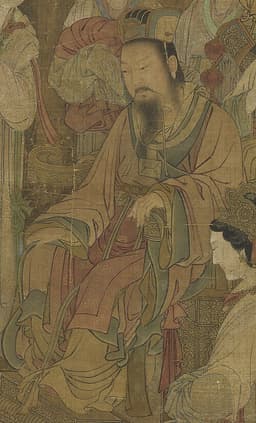
Emperor Wen of Han
Emperor · Ancient
57.1Total

Nyuserre Ini
Emperor · Ancient
46.3Total
Basic Information
Born
-202
-2420
Died
-157
-2390
Era
Ancient
Ancient
Nationality
China
Old Kingdom Egypt
Occupation
Emperor
Emperor
Civilization
Eastern
Middle Eastern
Score Comparison
Military (10%)
22.6
10.2
Political (20%)
72.0
46.6
Influence (20%)
62.0
50.2
Legacy (20%)
52.0
41.7
Leadership (15%)
80.0
72.0
Strategy (15%)
35.7
45.0
TOTAL
57.1
46.3
Emperor Wen of Han — Complete Timeline
180 BC
Promotion of Frugality and SimplicityCultural
Emperor Wen personally practiced frugality, wearing simple clothes and refusing to build extravagant palaces. He set an example for officials and the court, reducing government spending and corruption. This austerity helped restore the economy after the Qin dynasty's excesses.
FrugalityGovernanceEconomic Recovery
Impact: nationalconstructive
179 BC
Abolition of Collective Punishment LawsReform◆ Major
Emperor Wen abolished the Qin-era laws that punished entire families for crimes committed by one member. This reform reduced the harshness of the legal code and was part of his broader effort to restore stability and win popular support after the Qin collapse.
Legal ReformHumanitarianismHan Dynasty
Impact: nationalprogressive
168 BC
Reduction of Tax RatesReform◆ Major
Emperor Wen reduced the agricultural tax from one-fifteenth to one-thirtieth of crop yields, and later temporarily abolished it entirely. This policy stimulated agricultural production, increased state revenue through voluntary contributions, and alleviated peasant burdens.
Tax ReformAgricultureEconomic Policy
Impact: nationalconstructive
167 BC
Abolition of Corporal PunishmentsReform◆ Major
Emperor Wen abolished the mutilation punishments of tattooing, nose-cutting, and foot-cutting, replacing them with beatings and hard labor. This reform was prompted by a filial daughter's plea and marked a significant step toward a more humane legal system.
Legal ReformHumanitarianismPunishment
Impact: nationalprogressive
Nyuserre Ini — Complete Timeline
2420 BC
Military campaigns in the Sinai and NubiaWar
Nyuserre conducted military expeditions to the Sinai to protect mining operations and to Nubia to secure trade routes. Reliefs from his pyramid complex depict the king smiting Libyan and Asiatic enemies, though the scale of these campaigns is uncertain.
MilitarySinaiNubia
Impact: regional
Construction of the Pyramid of Nyuserre at AbusirCultural◆ Major
Nyuserre Ini built his pyramid complex at Abusir, one of the best-preserved of the Fifth Dynasty. The pyramid originally reached about 50 meters in height and was faced with fine white limestone. The complex included a valley temple, causeway, and a large mortuary temple.
ArchitecturePyramidAbusir
Impact: nationalconstructive
Completion of the sun temple of Nyuserre at Abu GhurabCultural◆ Major
Nyuserre built a large sun temple dedicated to Ra at Abu Ghurab, near Abusir. The temple featured a massive obelisk on a podium, an alabaster altar, and extensive reliefs depicting the king's jubilee festival. It is the best-preserved sun temple from the Old Kingdom.
ReligionSun TempleArchitecture
Impact: nationalconstructive
Long reign and stabilization of Dynasty VPolitical Action◆ Major
Nyuserre Ini reigned for approximately 30 years, the longest of any Fifth Dynasty pharaoh. His reign brought stability after the short reigns of his predecessors, allowing for extensive building projects and the consolidation of royal power.
StabilityLong ReignDynasty V
Impact: nationalconstructive
This comparison has not been analyzed yet.
One-time AI generation (~1 minute). Scores and timeline are already available below.
Rankings
🥇
Emperor Wen of HanLeader
Mil: 22.6Pol: 72.0Inf: 62.0
57.1
🥈
Nyuserre Ini
Mil: 10.2Pol: 46.6Inf: 50.2
46.3
+10.8 behind
How This Comparison Works
Algorithm
Each figure is scored on 6 dimensions (0—100 scale) based on structured historical data: Military (10%), Political (20%), Influence (20%), Legacy (20%), Leadership (15%), Strategy (15%). The weighted total produces the final ranking.
Data Sources
Scores are computed from structured sub-indicators in the database. Scale factors adjust for era (Ancient ×0.85, Modern ×1.0) and civilization size (Eastern ×1.05, Other ×0.80) to account for differences in population and military scale.
Maximum 3 Figures
Comparisons are limited to 2—3 figures to ensure readability and statistical meaningfulness.
Error Margins
±5 points per dimension — Sub-scores are derived from historical records with inherent uncertainty. Two figures within 5 points on a dimension should be considered roughly equivalent in that area.
Total Score Accuracy
±3 points overall — The weighted combination of 6 dimensions produces a total score with approximately ±3 points of uncertainty. Differences of less than 3 points are not statistically significant— the figures are effectively tied.
Known Limitations
- Historical records are incomplete and uneven across civilizations
- Figures from oral-tradition societies may be underrepresented
- Occupation labels can misclassify multi-role figures
- Scores measure capability and impact, not moral character
- Quantitative scoring is a comparison tool, not absolute truth
Capability Radar
Military (10%) — Battles & Warfare
Battles
10
5
Win Rate
10
5
Expansion
5
5
Political (20%) — Governance & Reform
Reform
80
40
Diplomacy
75
40
Economy
85
50
Influence (20%) — Cultural & Global Reach
Cultural
70
40
Global
60
20
Legacy (20%) — Historical Impact
Historical
75
30
Longevity
80
30
Leadership (15%) — Power & Stability
Tenure
85
70
Stability
90
60
Strategy (15%) — Tactics & Innovation
Strategy
15
5
Tactics
10
5
Reform
20
5
Similar Comparisons
Comments & Discussion
No comments yet. Be the first to share your thoughts!